Role / Credits
Concept proposal developed on behalf of Eco-Reach Architects, under the supervision of our Patron Dr. Martin Larbi.
The work was primarily authored by me, including concept development, research, spatial strategy, 3D modelling, visualization, diagrams, and copywriting.
Concept proposal developed on behalf of Eco-Reach Architects, under the supervision of our Patron Dr. Martin Larbi.
The work was primarily authored by me, including concept development, research, spatial strategy, 3D modelling, visualization, diagrams, and copywriting.
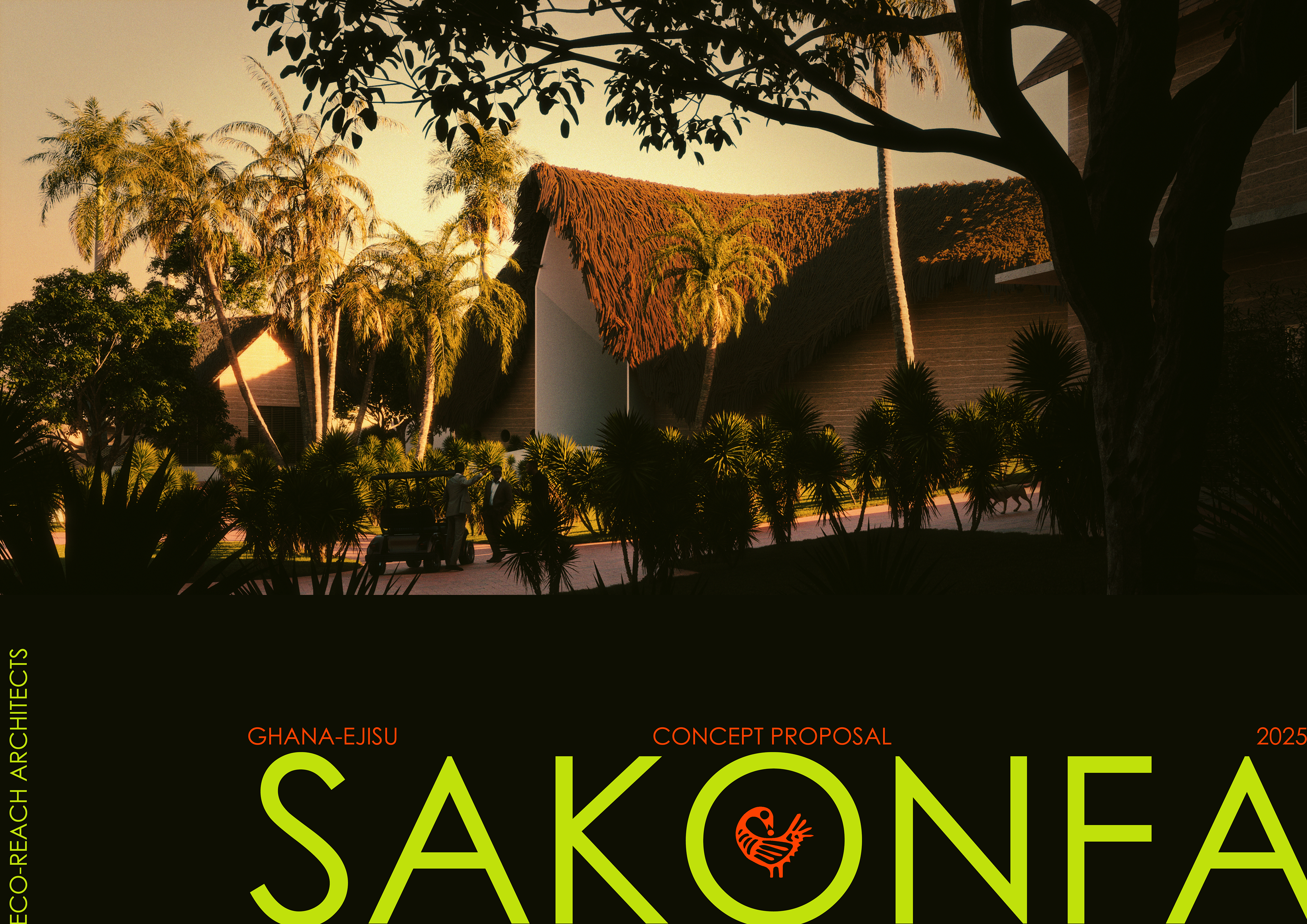
SANKOFA — Visitor Centre Concept Proposal (Ejisu, Ghana)
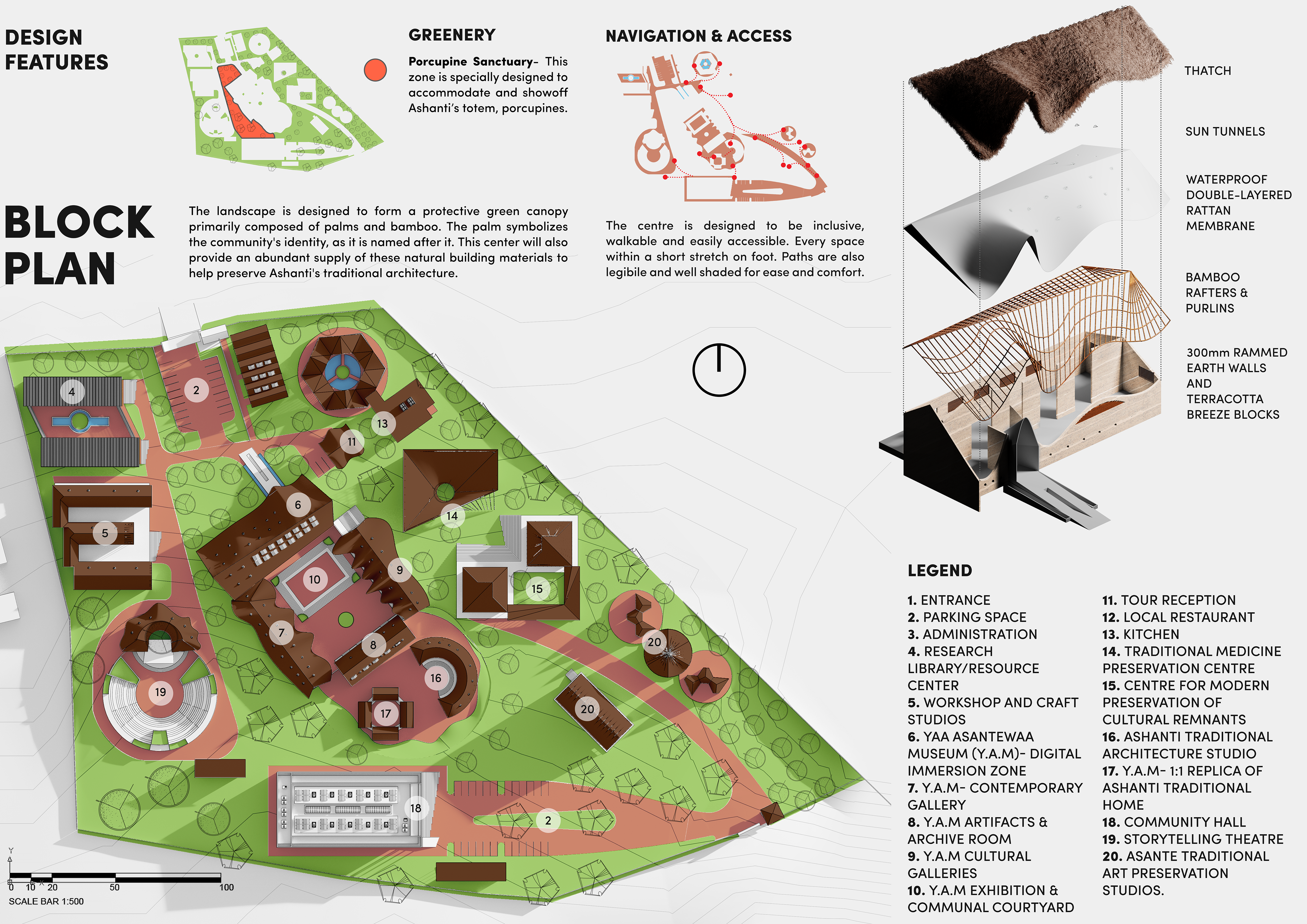
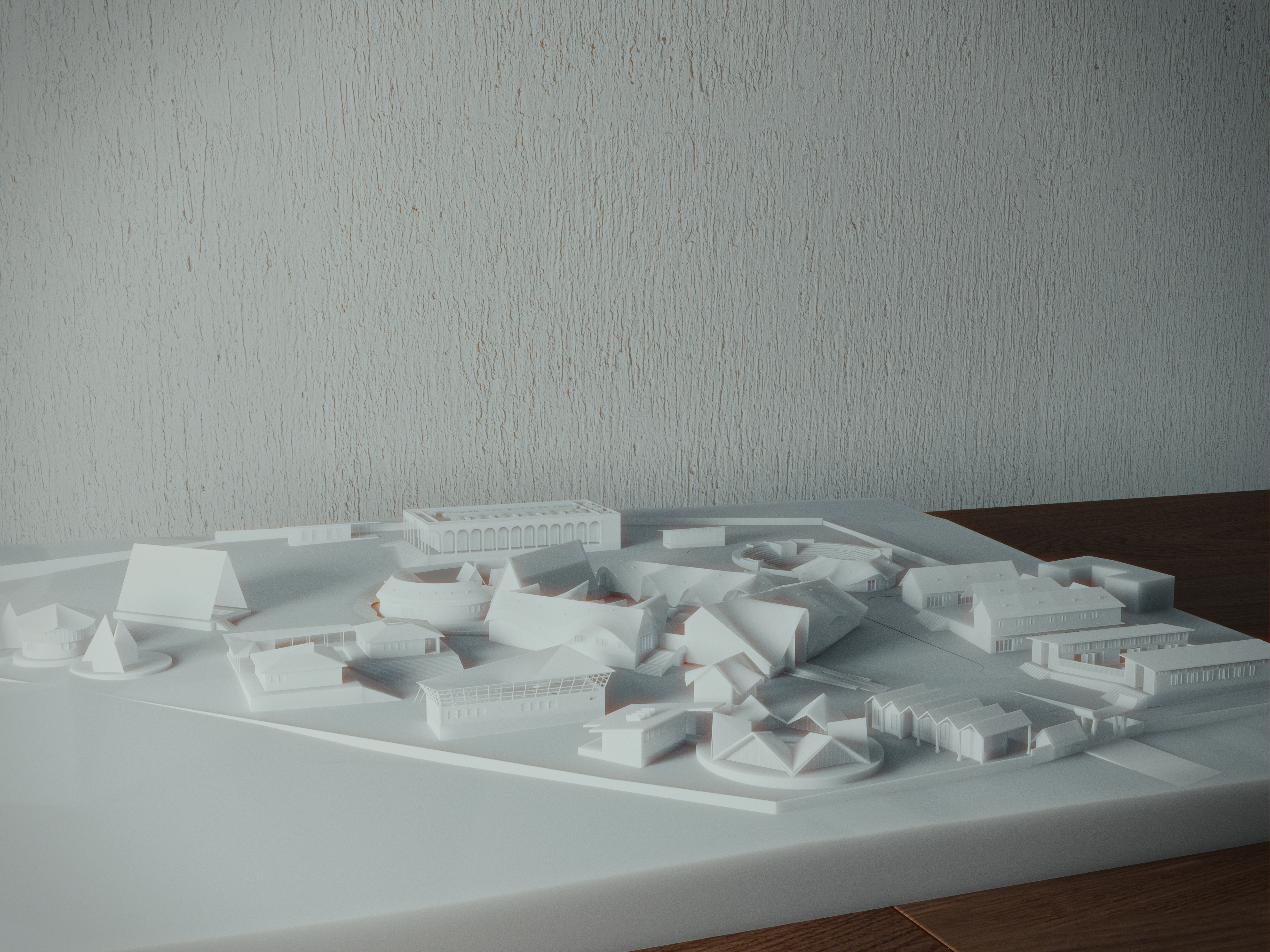
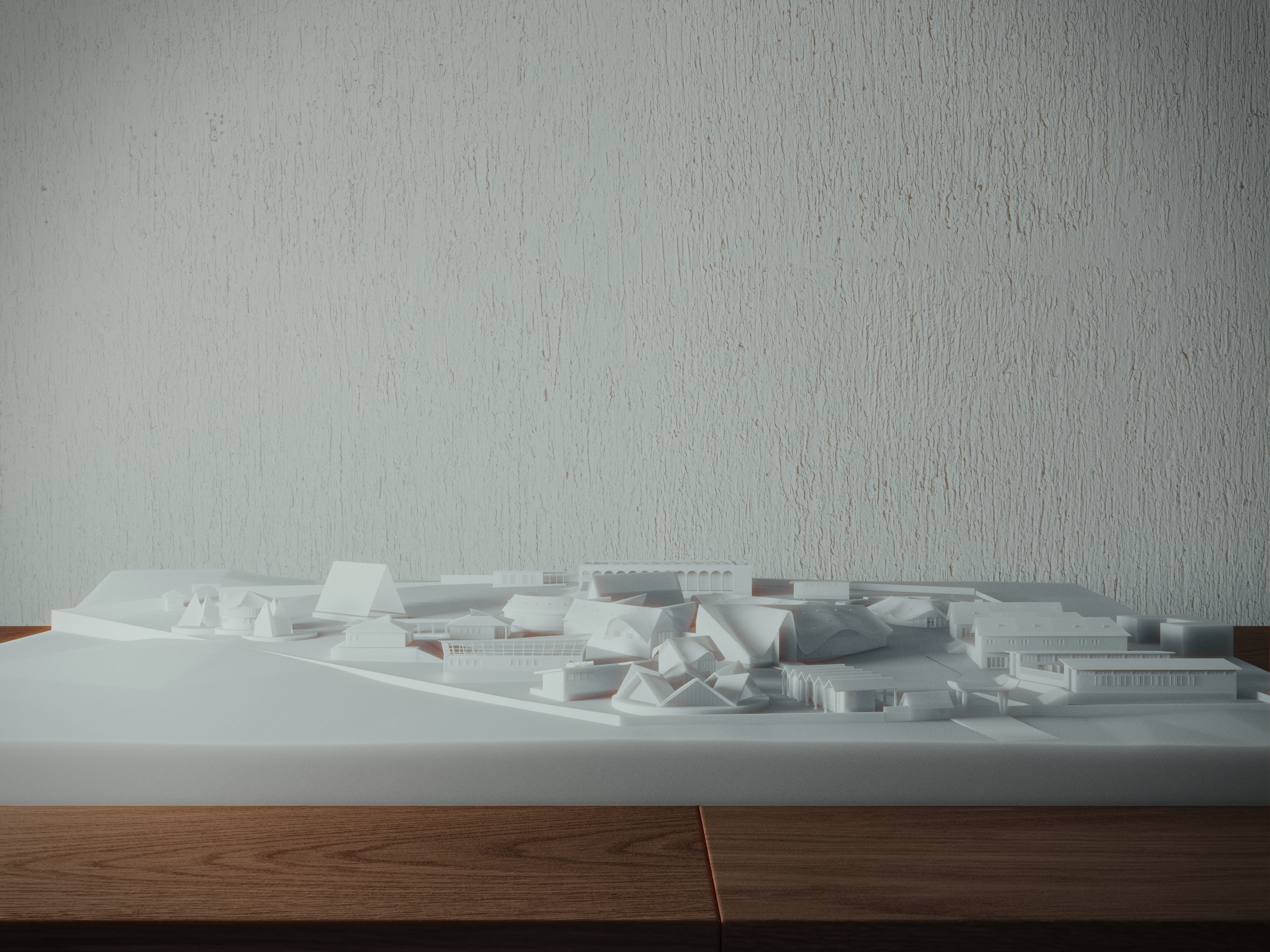
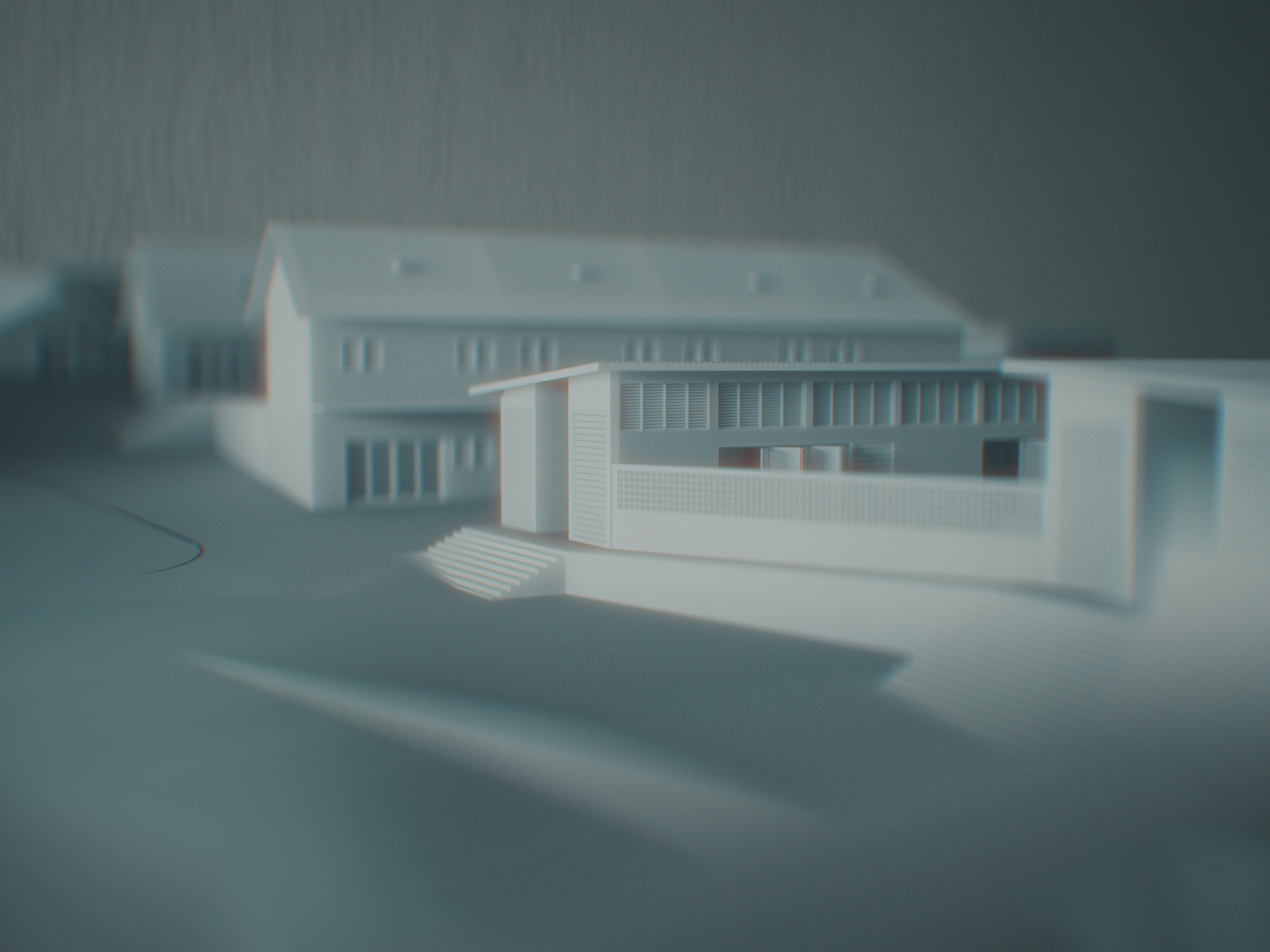
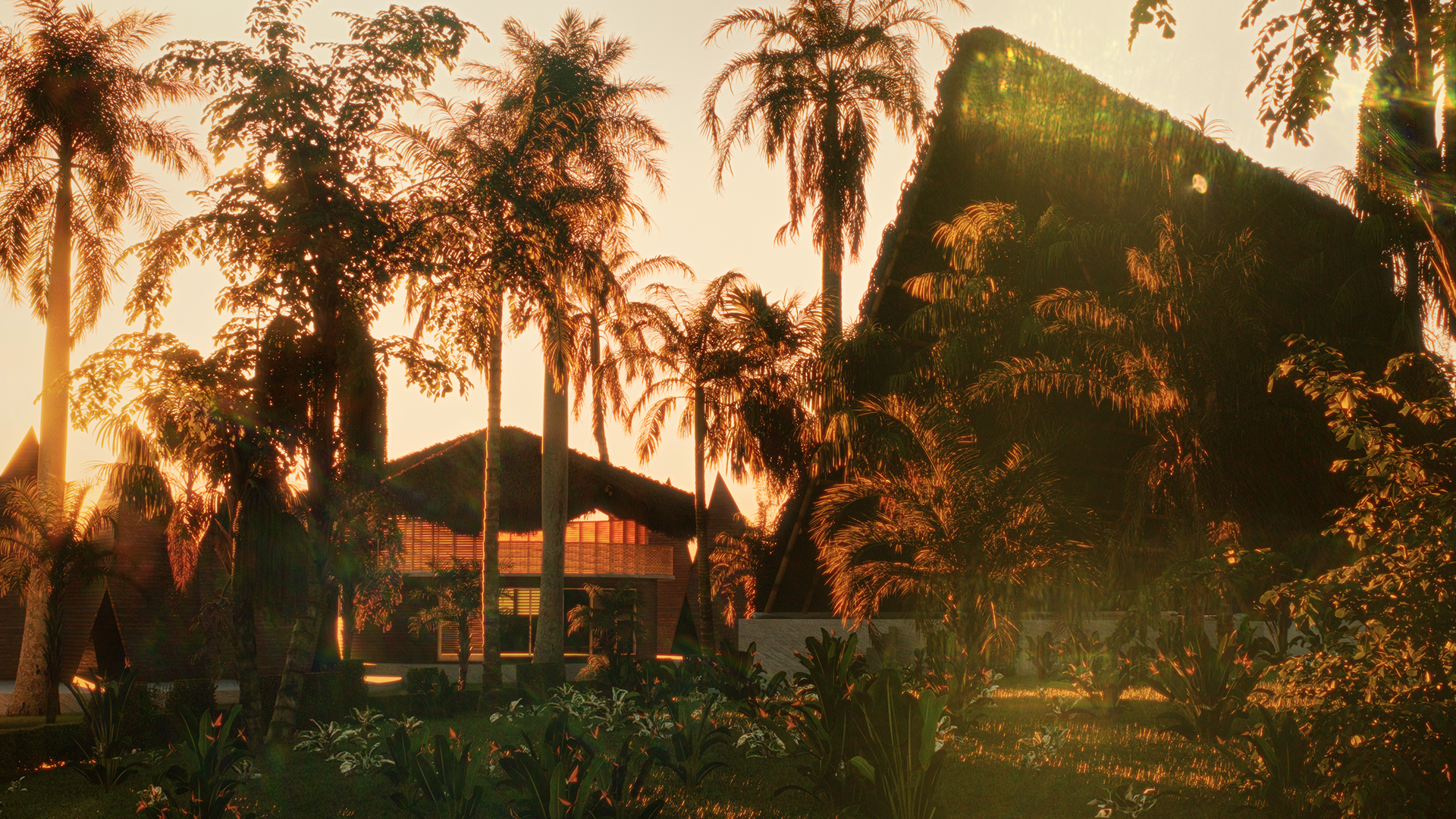
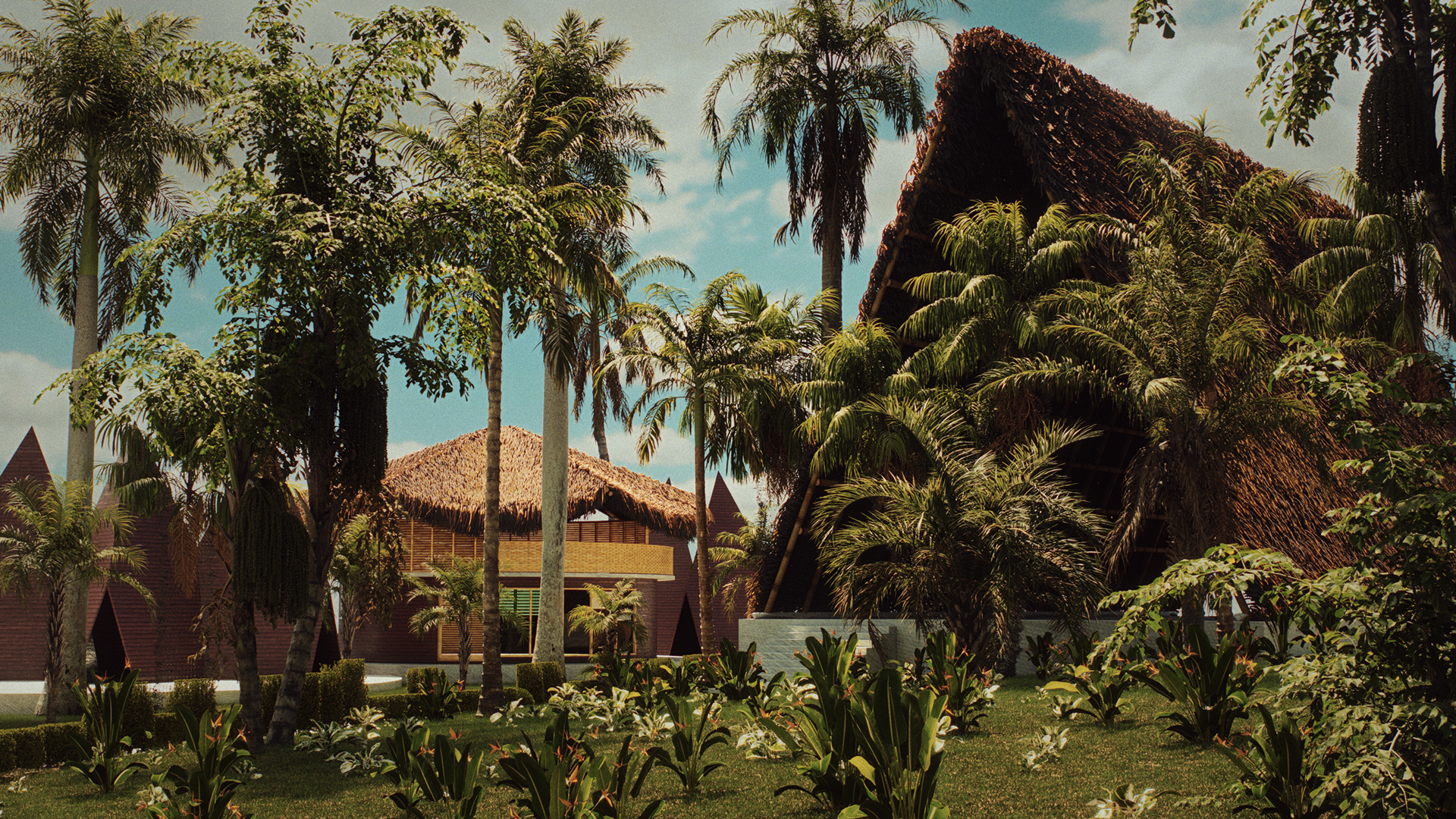
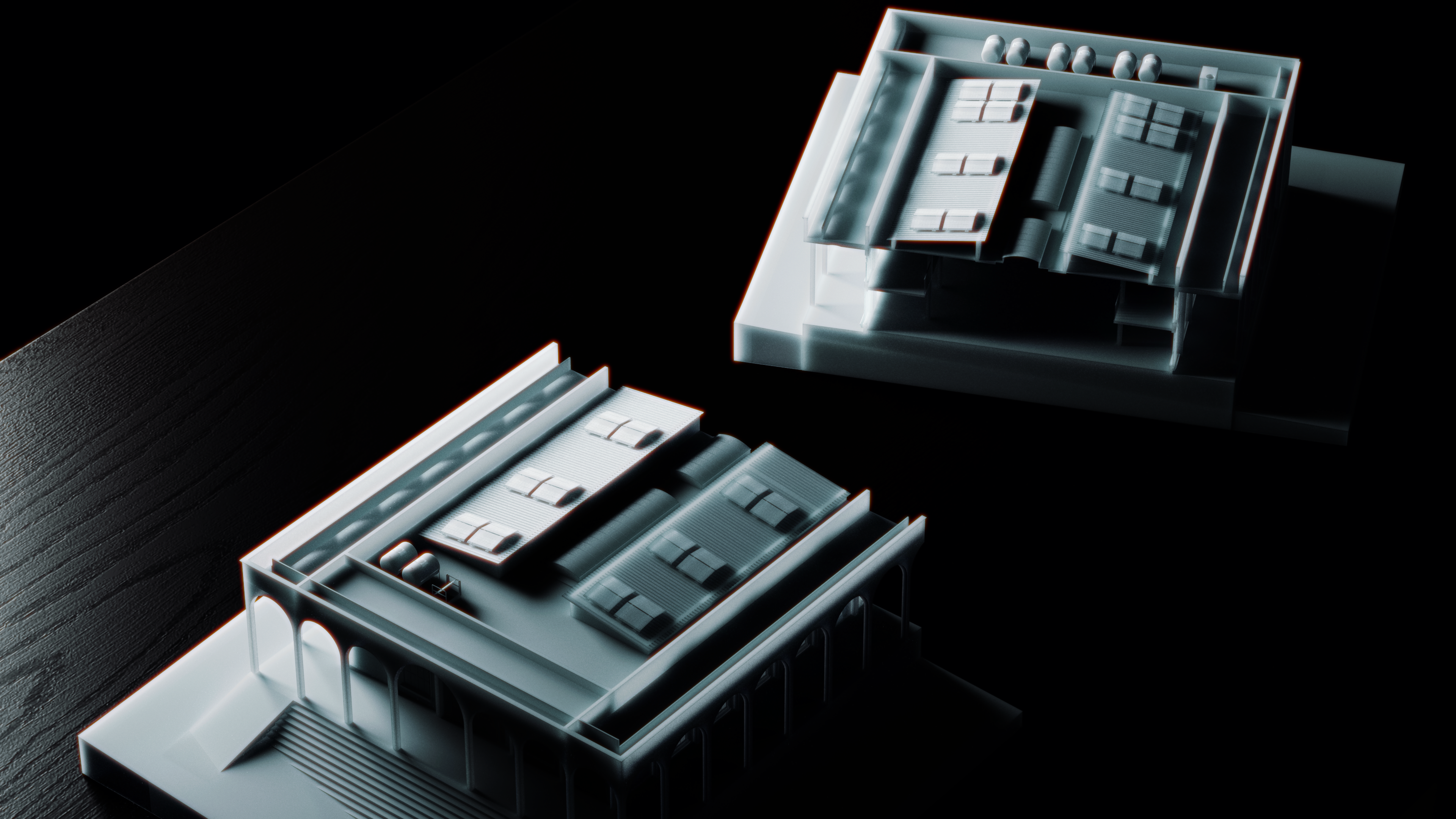
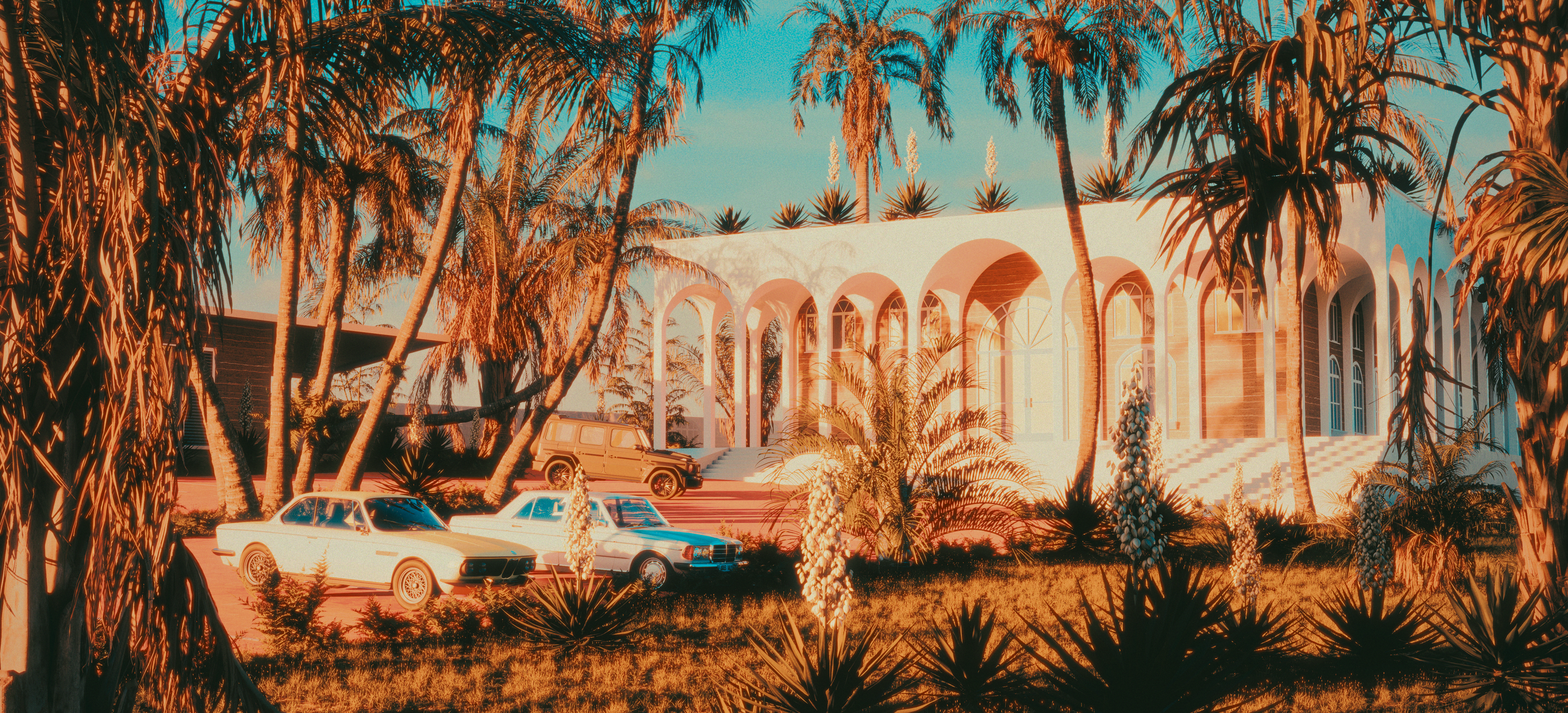
SANKOFA begins with a discipline that is older than architecture: remembering as an act of care. In Ejisu—birthplace of Yaa Asantewaa and a reservoir of Asante building wisdom—the project proposes a visitor centre that is not a monument in isolation, but a living instrument: one that protects heritage by rebuilding the ecological and social systems that carry it.
The context: when heritage is threatened by what surrounds it
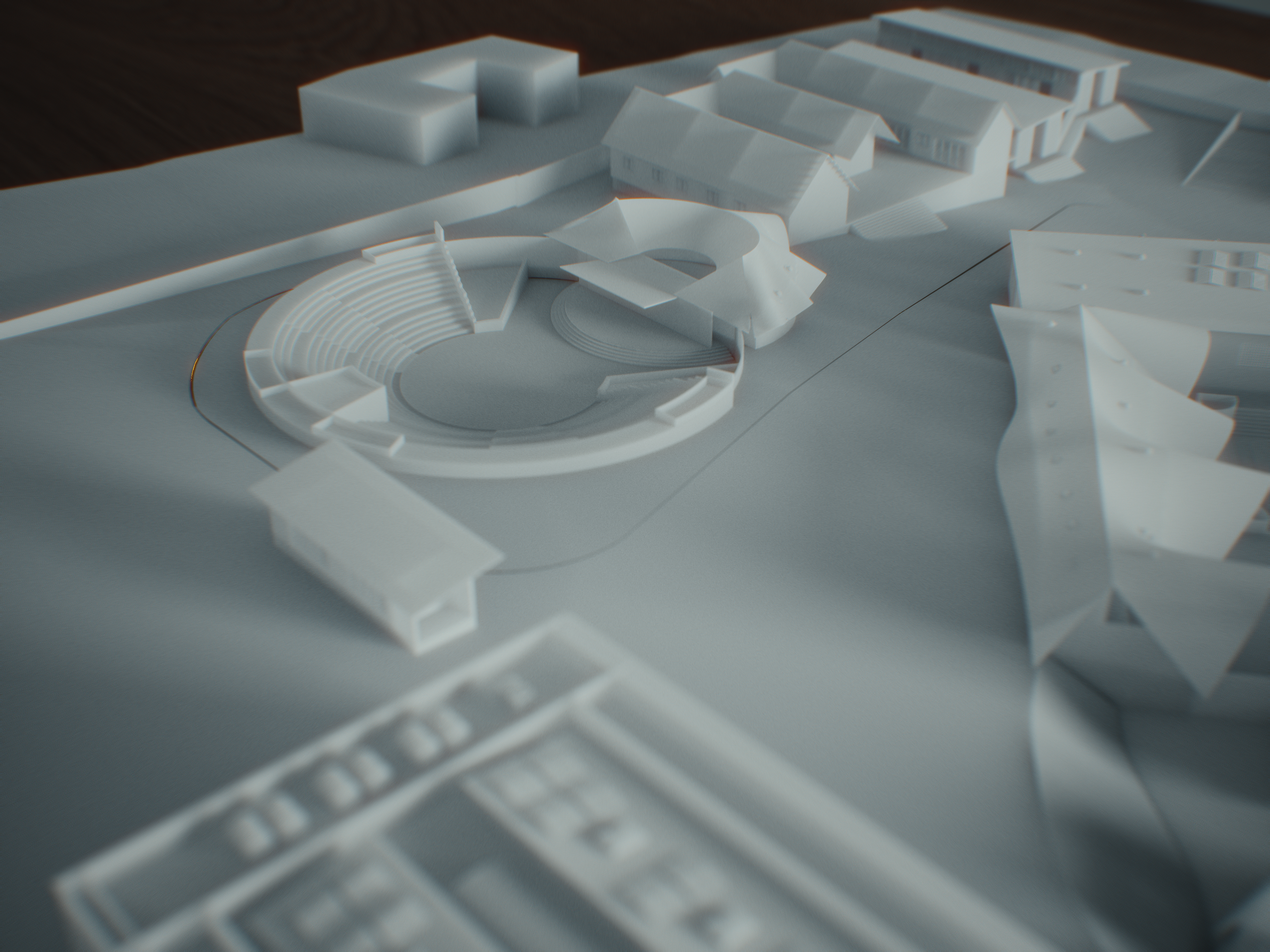
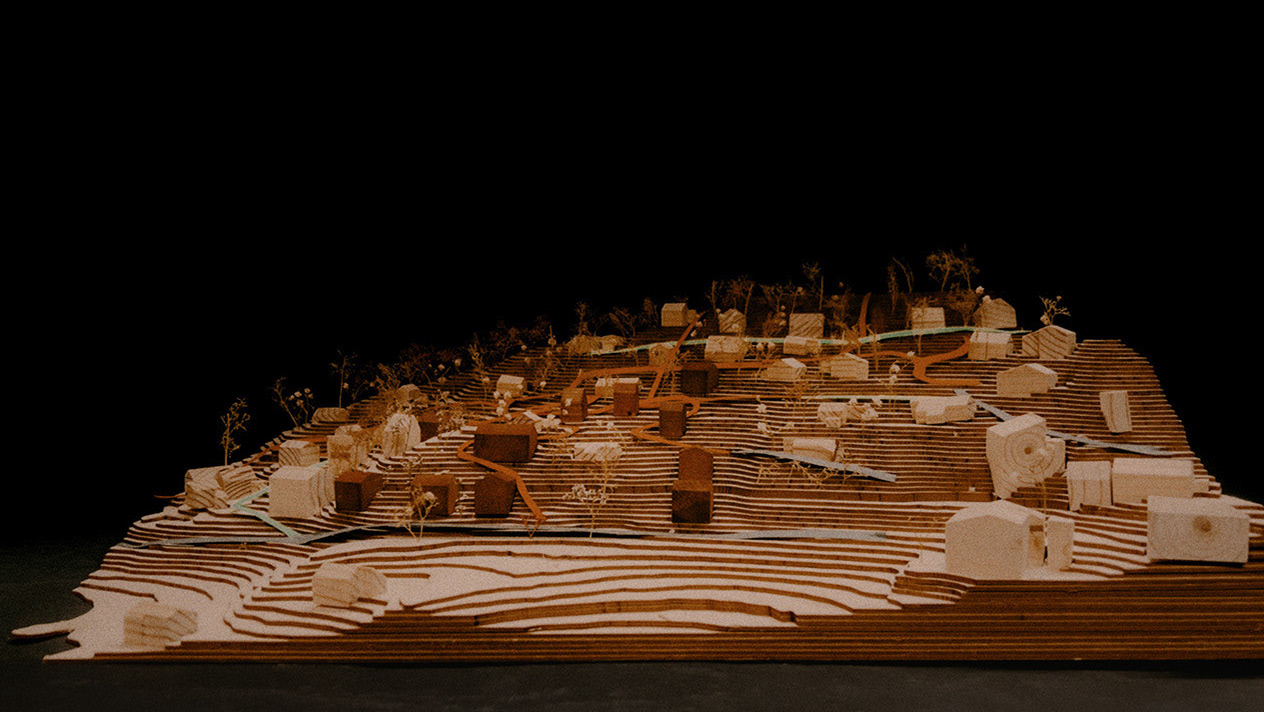
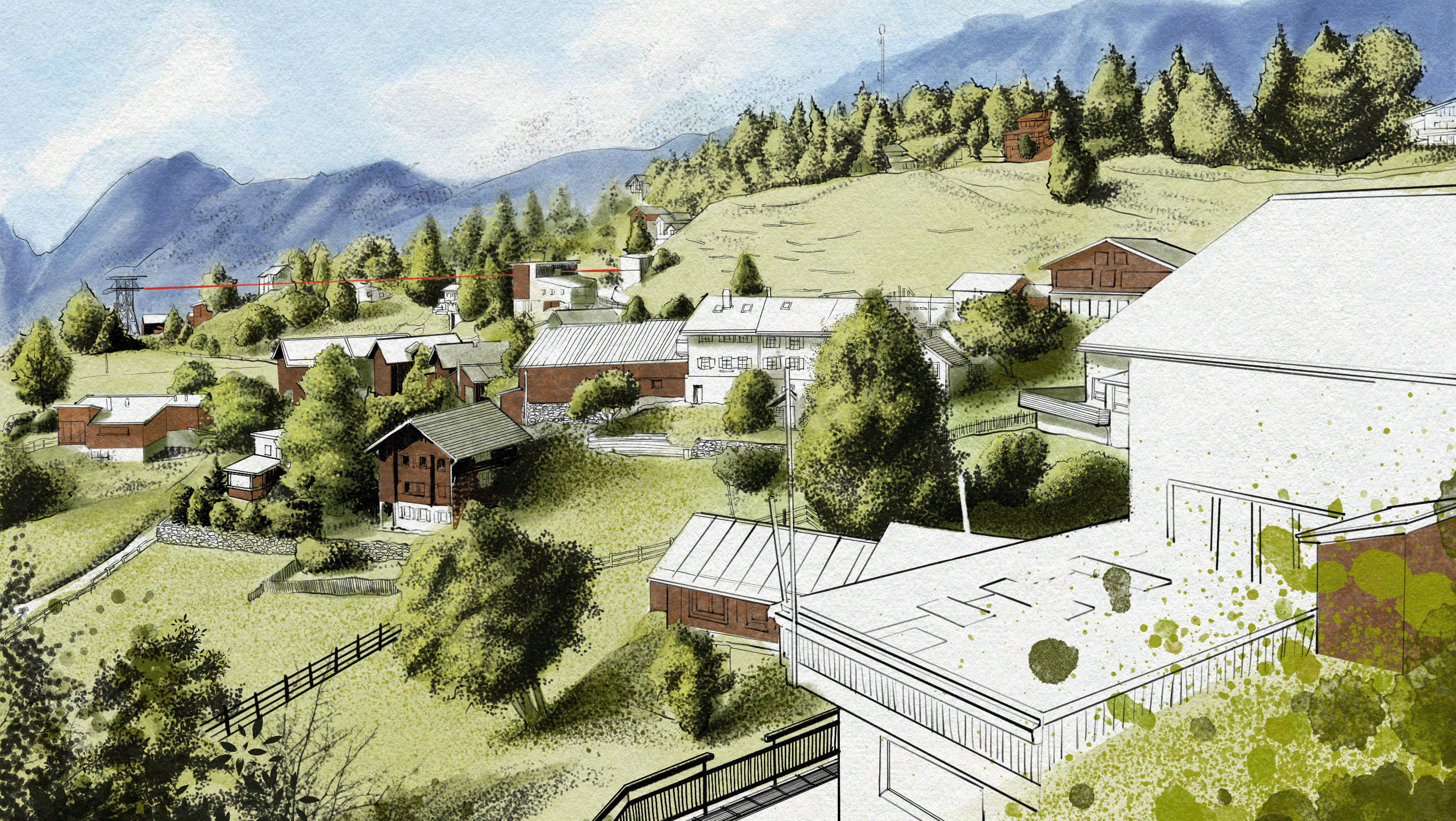
Heritage doesn’t disappear only through demolition. It erodes through deforestation, soil exhaustion, heat stress, and the slow weakening of communal memory when place becomes scenery rather than practice. SANKOFA responds to that erosion by treating the visitor centre as a civic threshold—a place that welcomes, teaches, and sustains—while anchoring a wider landscape strategy that restores the site’s ecological capital.
The question is not “How do we design a building that represents Asante culture?” but rather:
How do we design a place where Asante culture can keep living?
How do we design a place where Asante culture can keep living?
An ethic of design: respect what was before, build what is needed now
SANKOFA is guided by three commitments:
1) Continuity rather than imitation
The project does not copy historical forms as decoration. It continues their intelligence: deep shade, breathable enclosures, layered thresholds, and material honesty. The aim is to let architecture behave like memory—present, useful, and quietly resilient.
2) Landscape as primary architecture
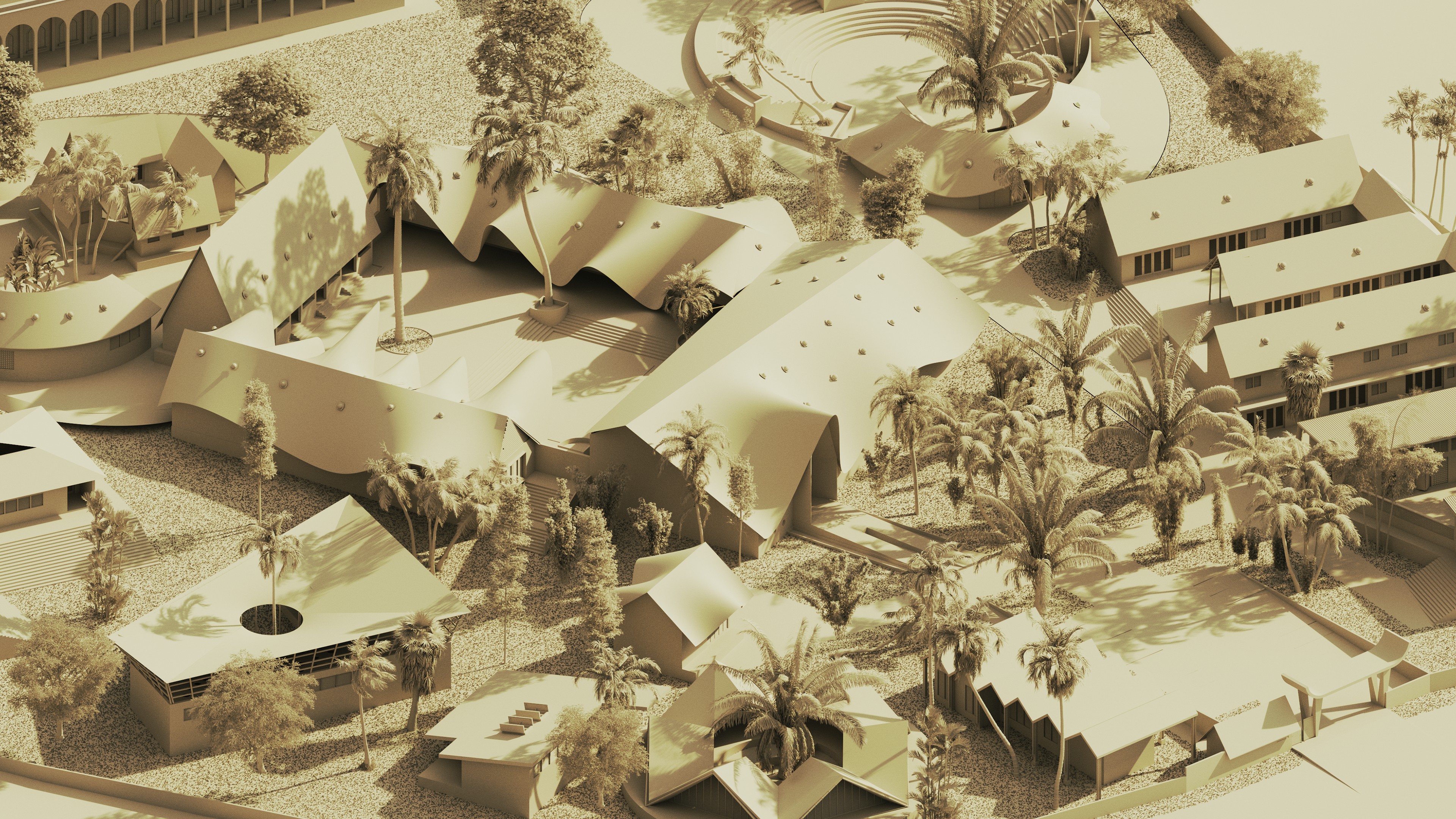
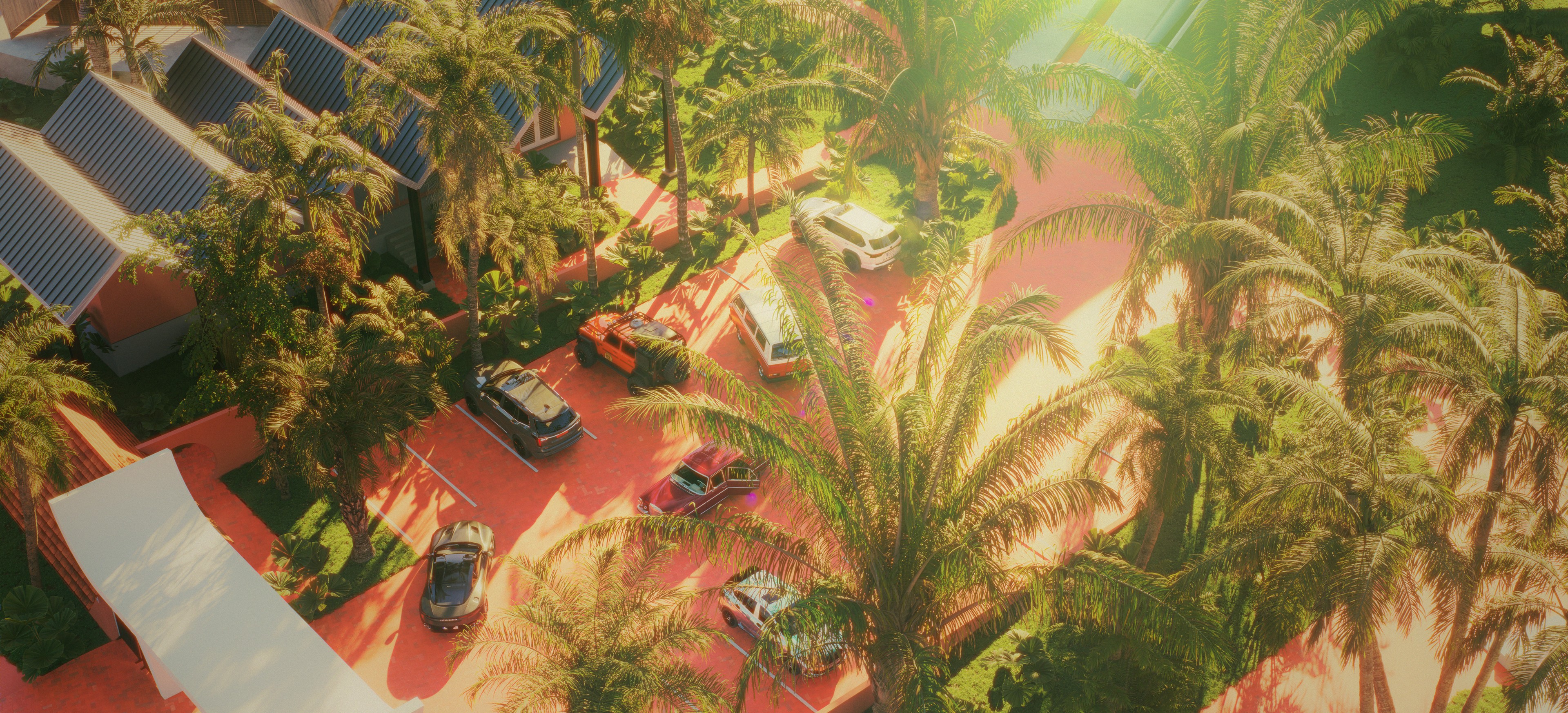
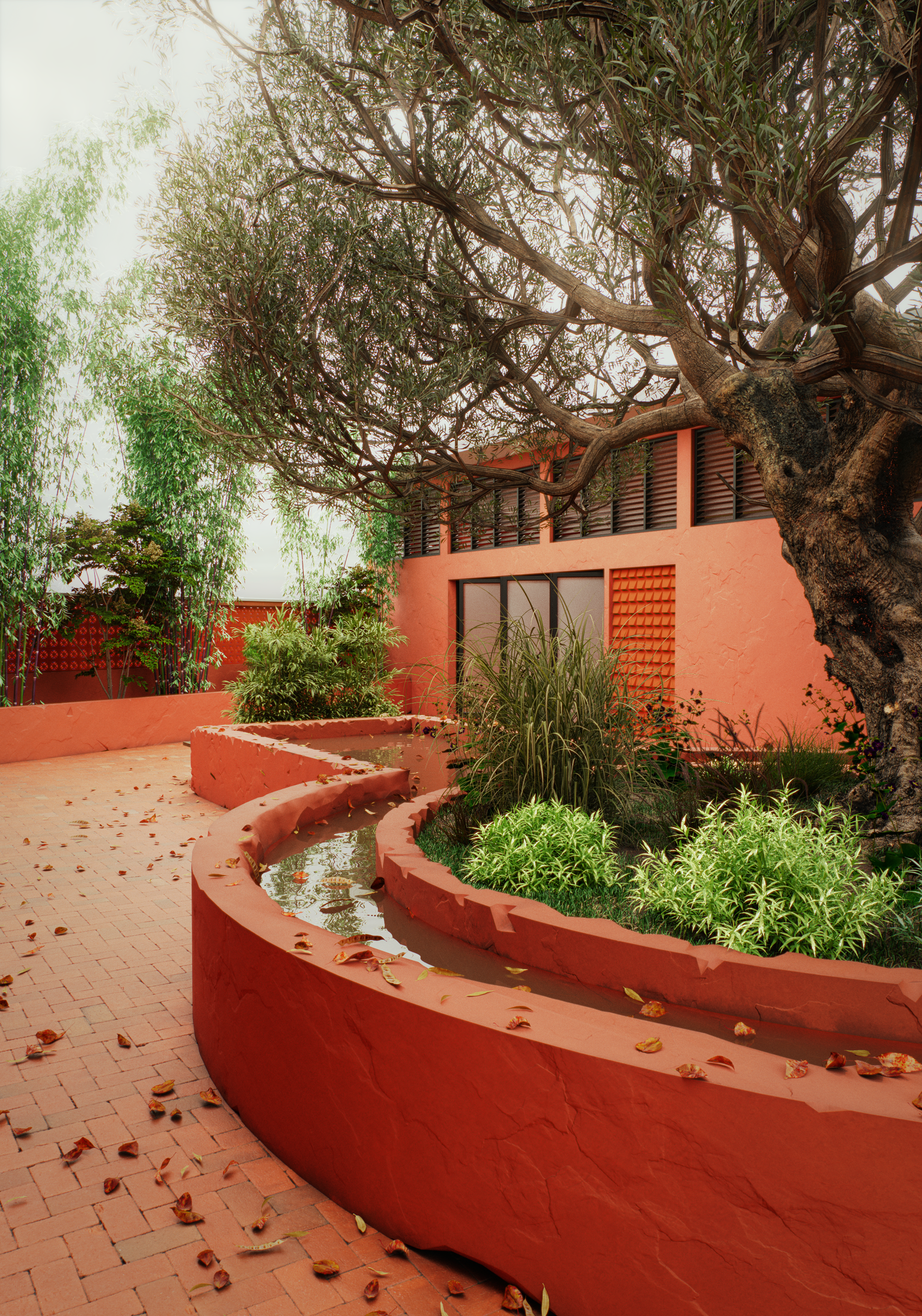
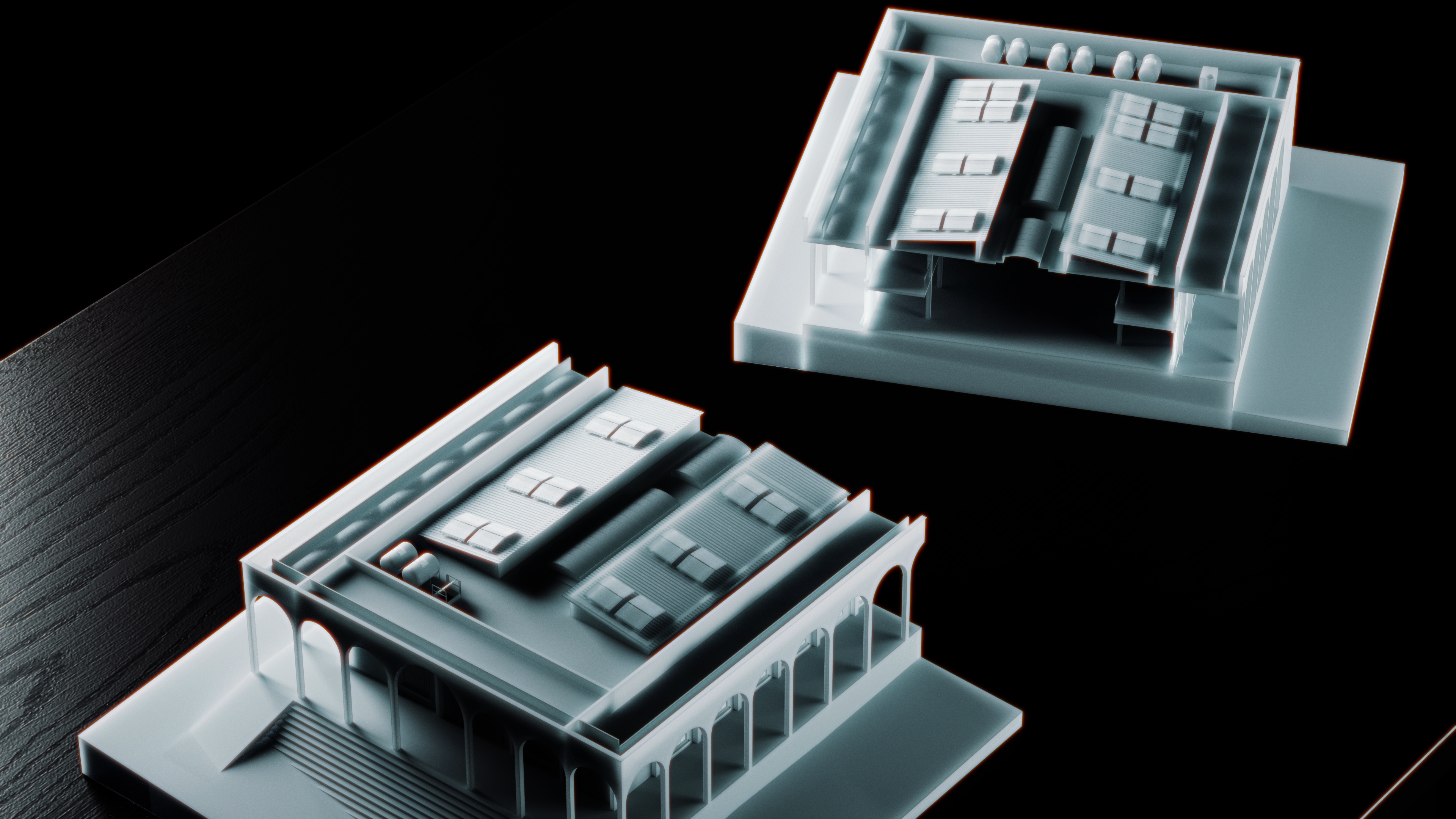
Instead of treating greenery as background, SANKOFA places landscape at the center: reforestation as climate repair, paths as pedagogy, and planted systems as living infrastructure. Where the land has been weakened, the design makes restoration visible—so stewardship becomes part of the visitor experience rather than a hidden technical exercise.
3) A visitor centre that performs socially and climatically
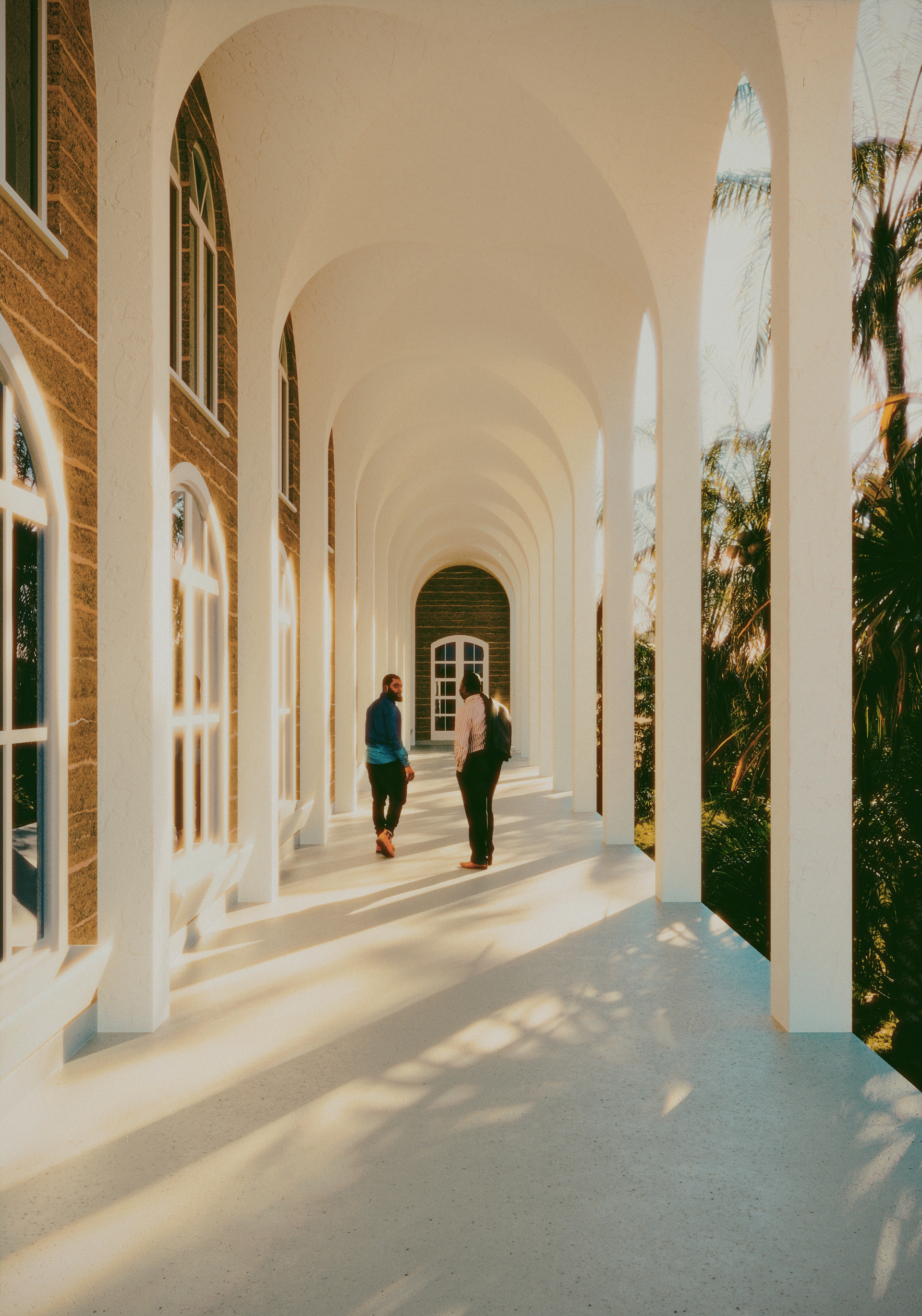
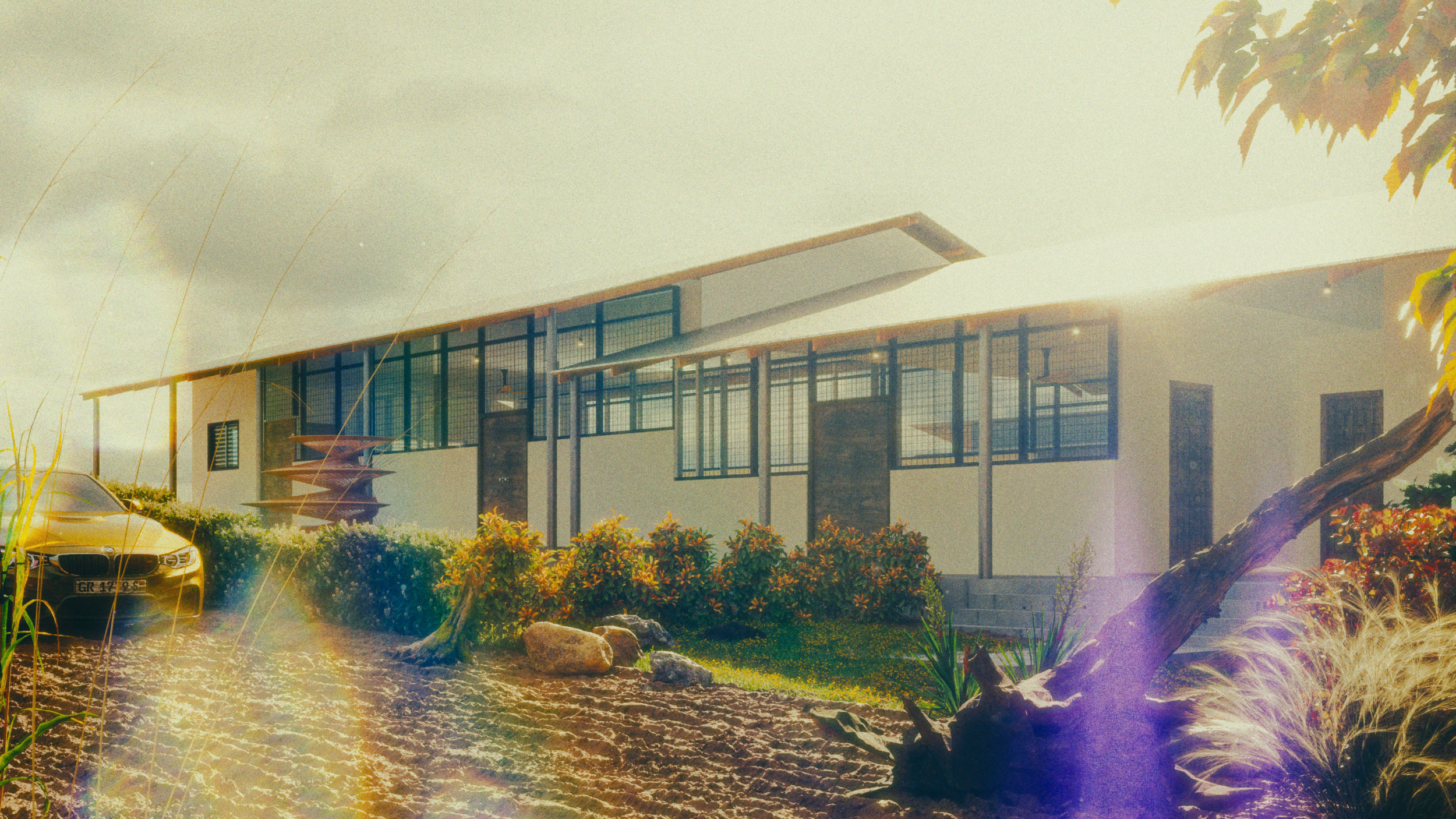
A visitor centre should do more than host. It should calm, orient, and connect. SANKOFA sets out to provide comfort in Ghana’s heat through passive means—shade-first planning, ventilation-led sections, and daylight controlled to avoid glare—so the building becomes a refuge without depending on fragile mechanical excess.
Spatial strategy: thresholds, gathering, and the dignity of arrival
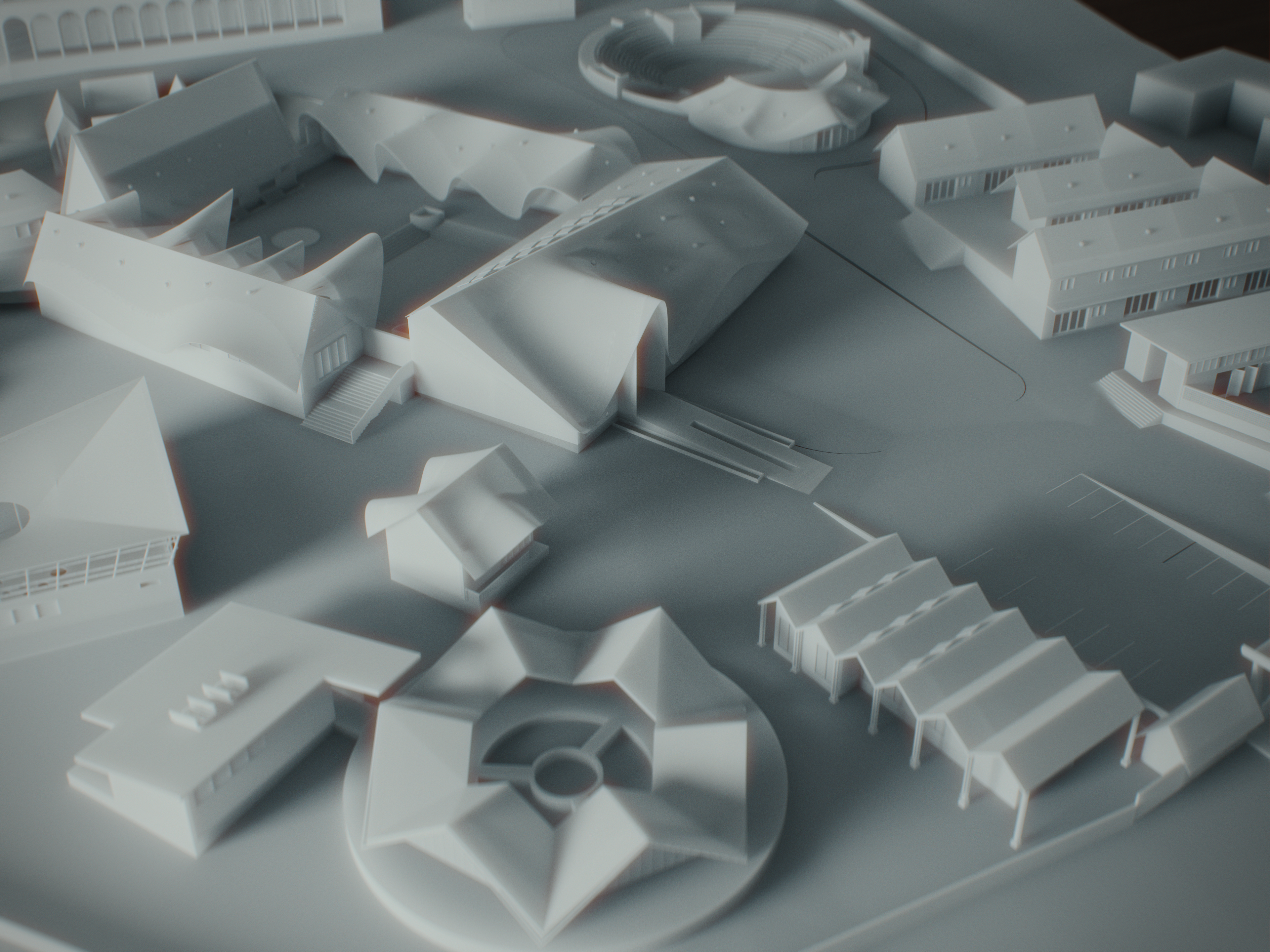
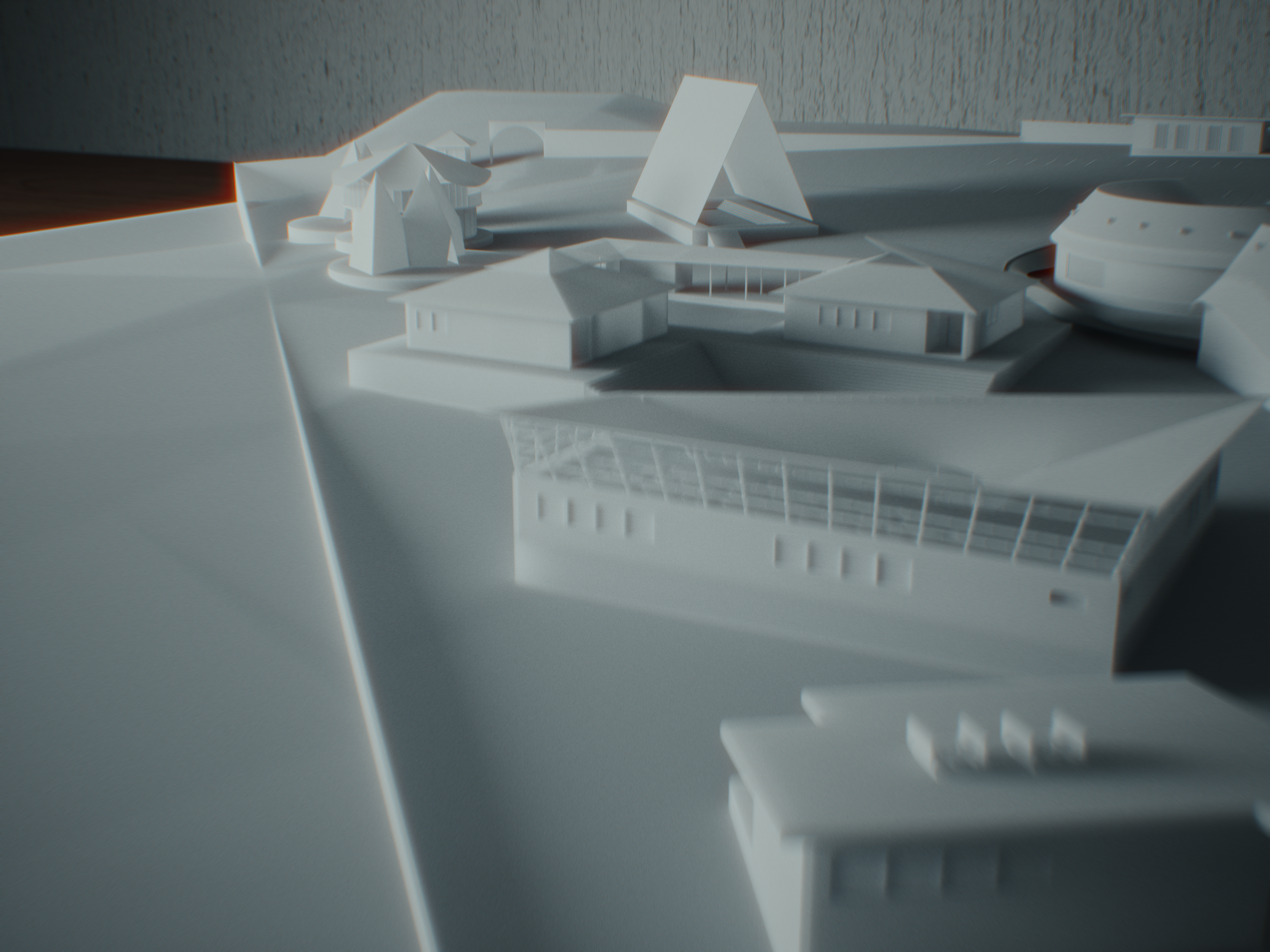
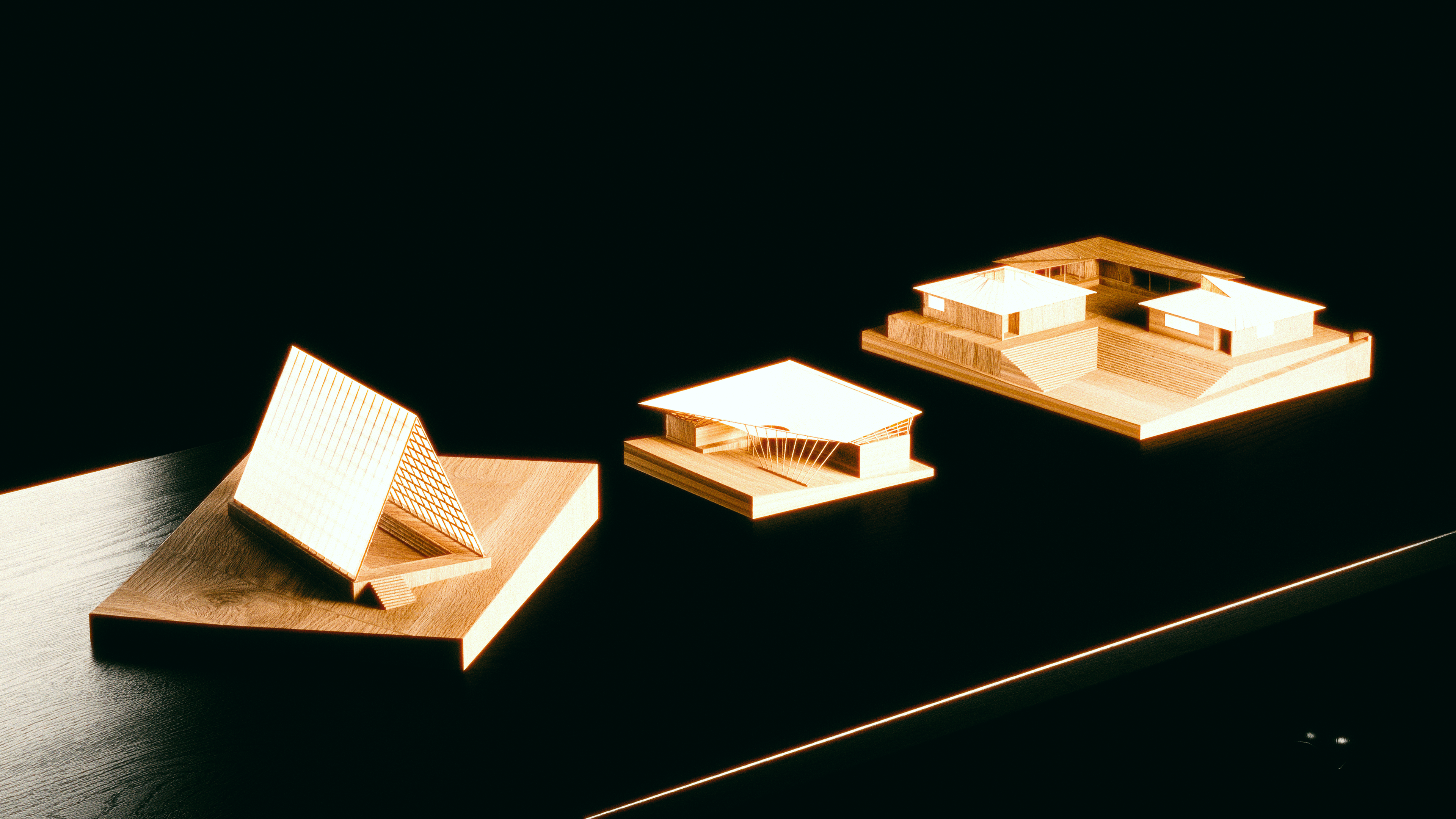
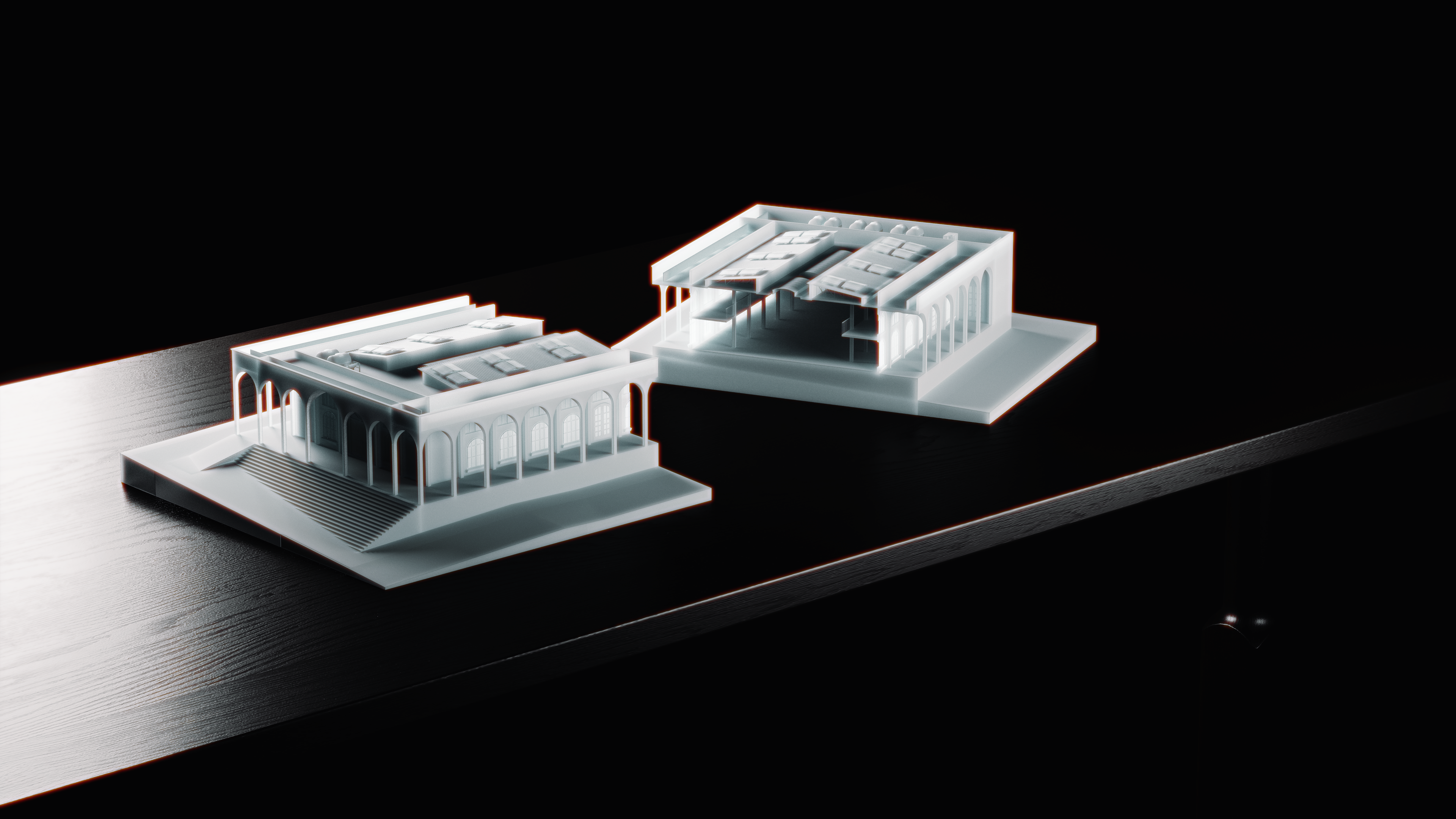
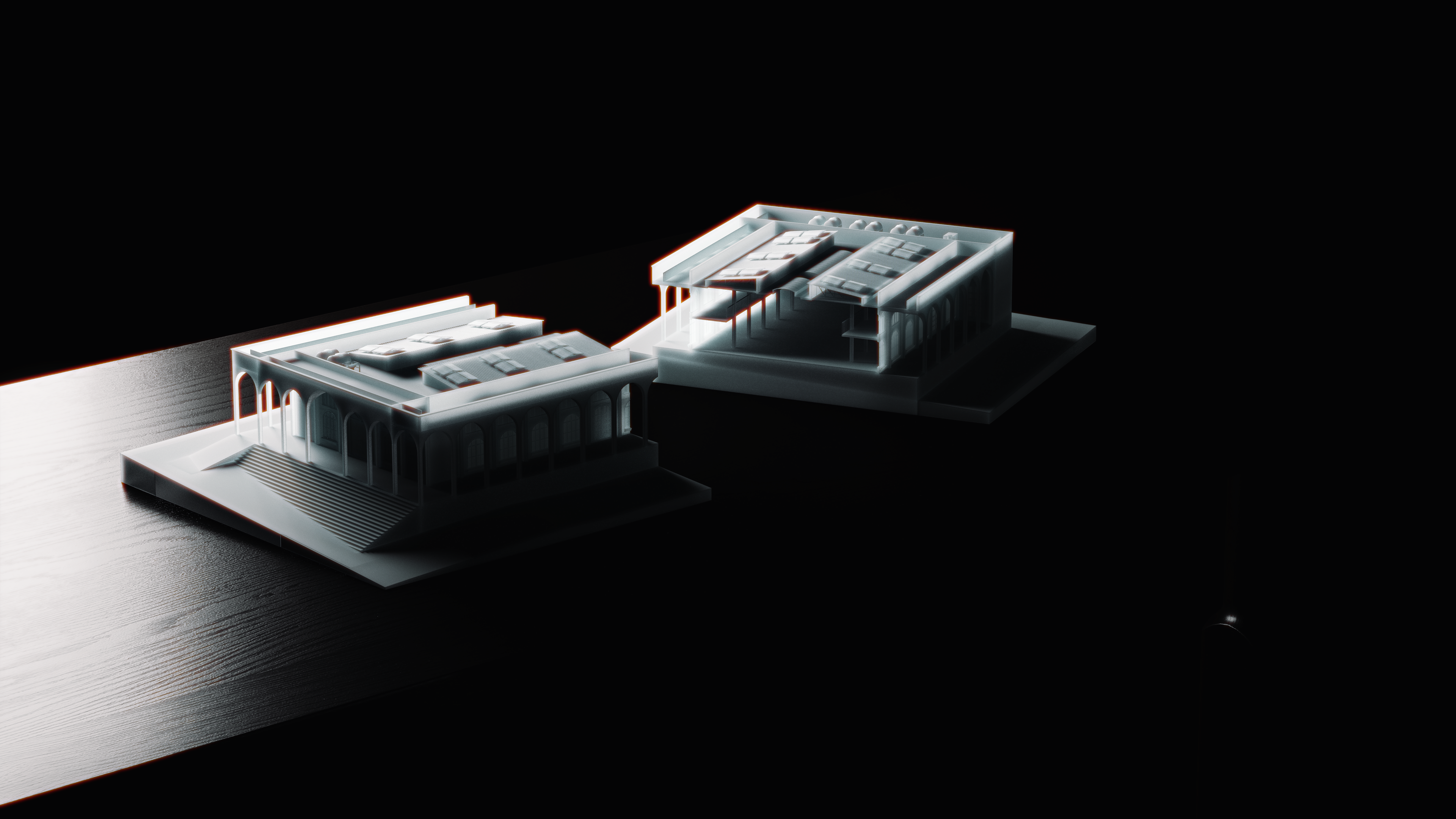
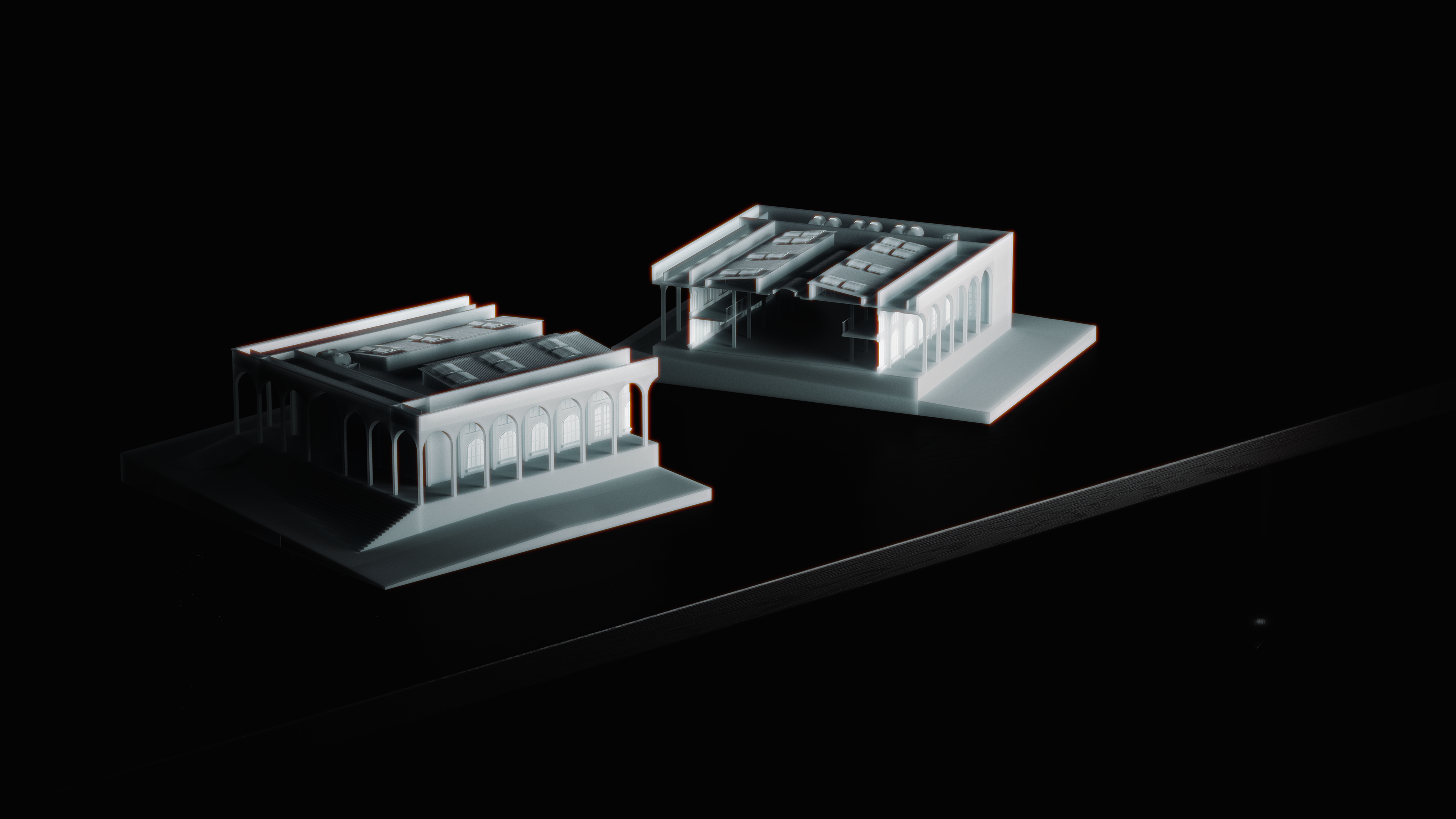
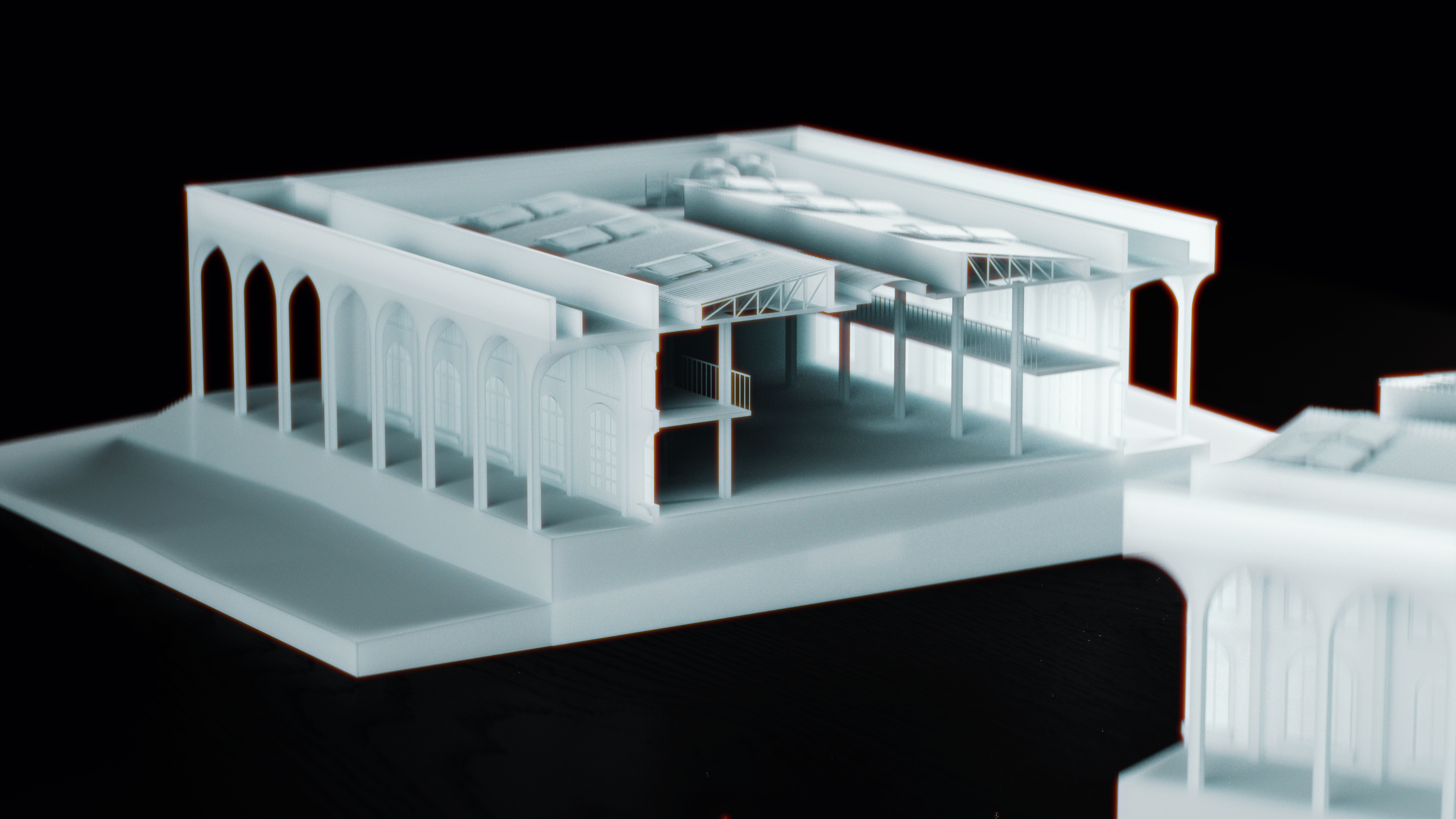
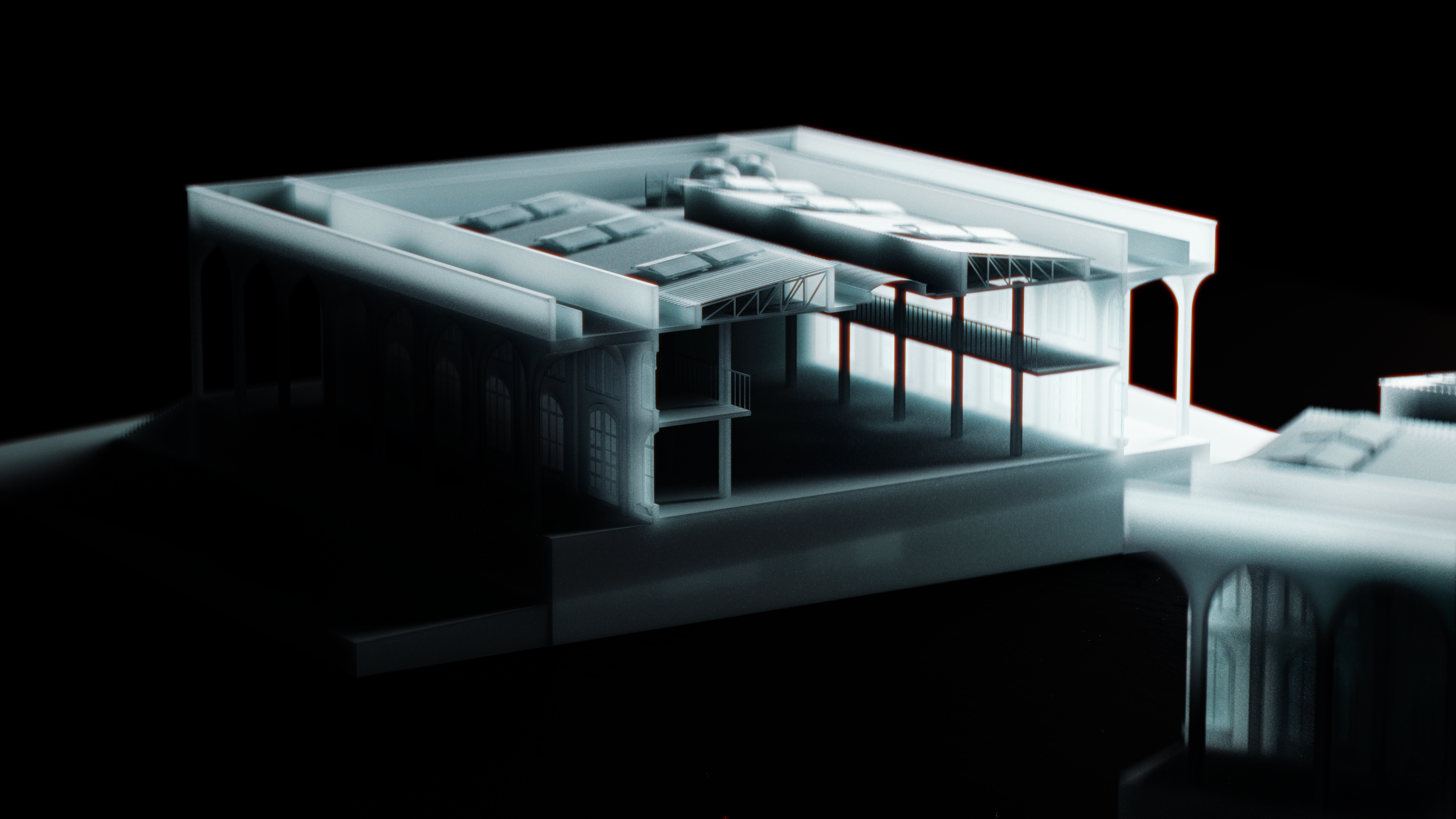
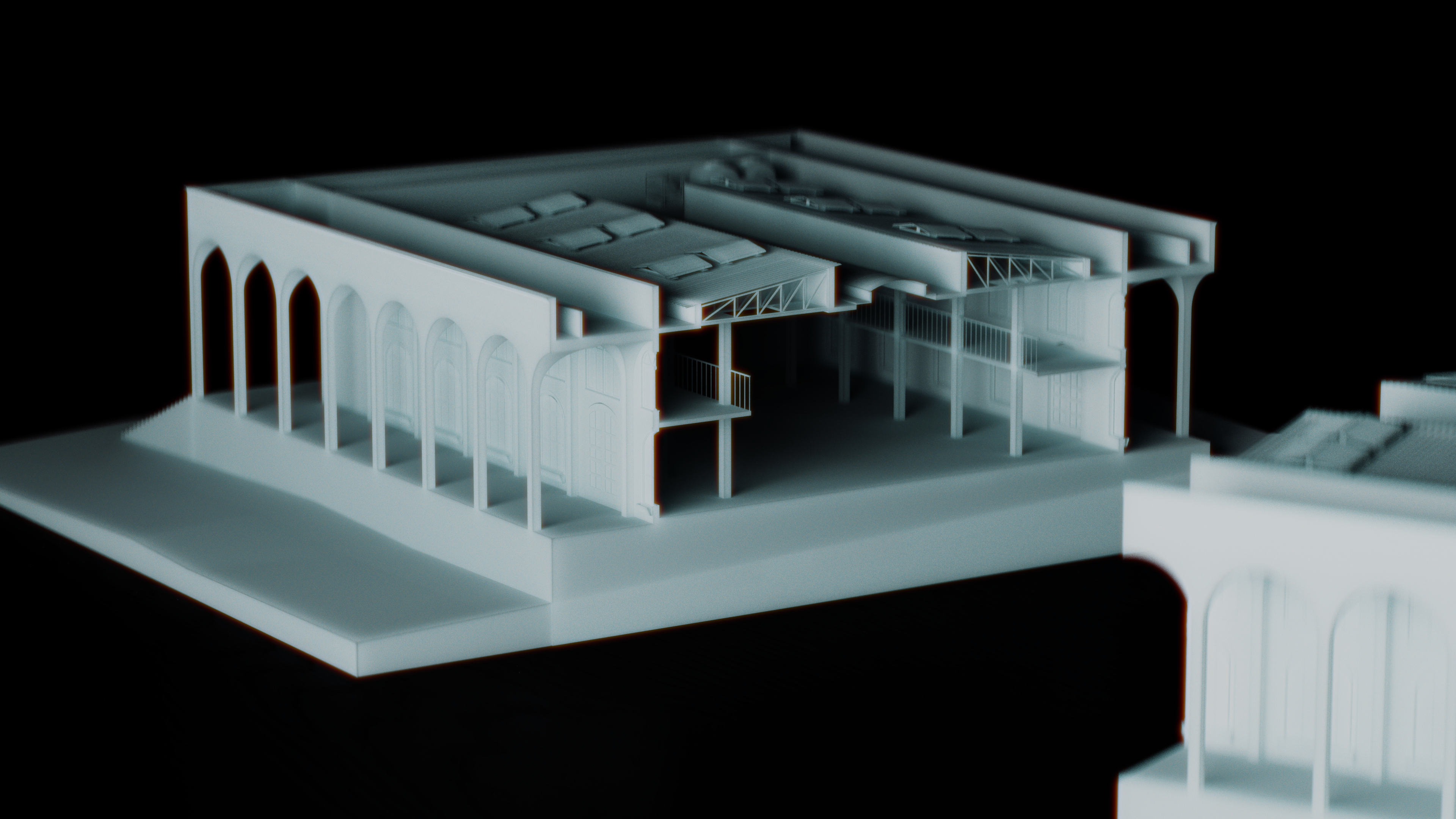
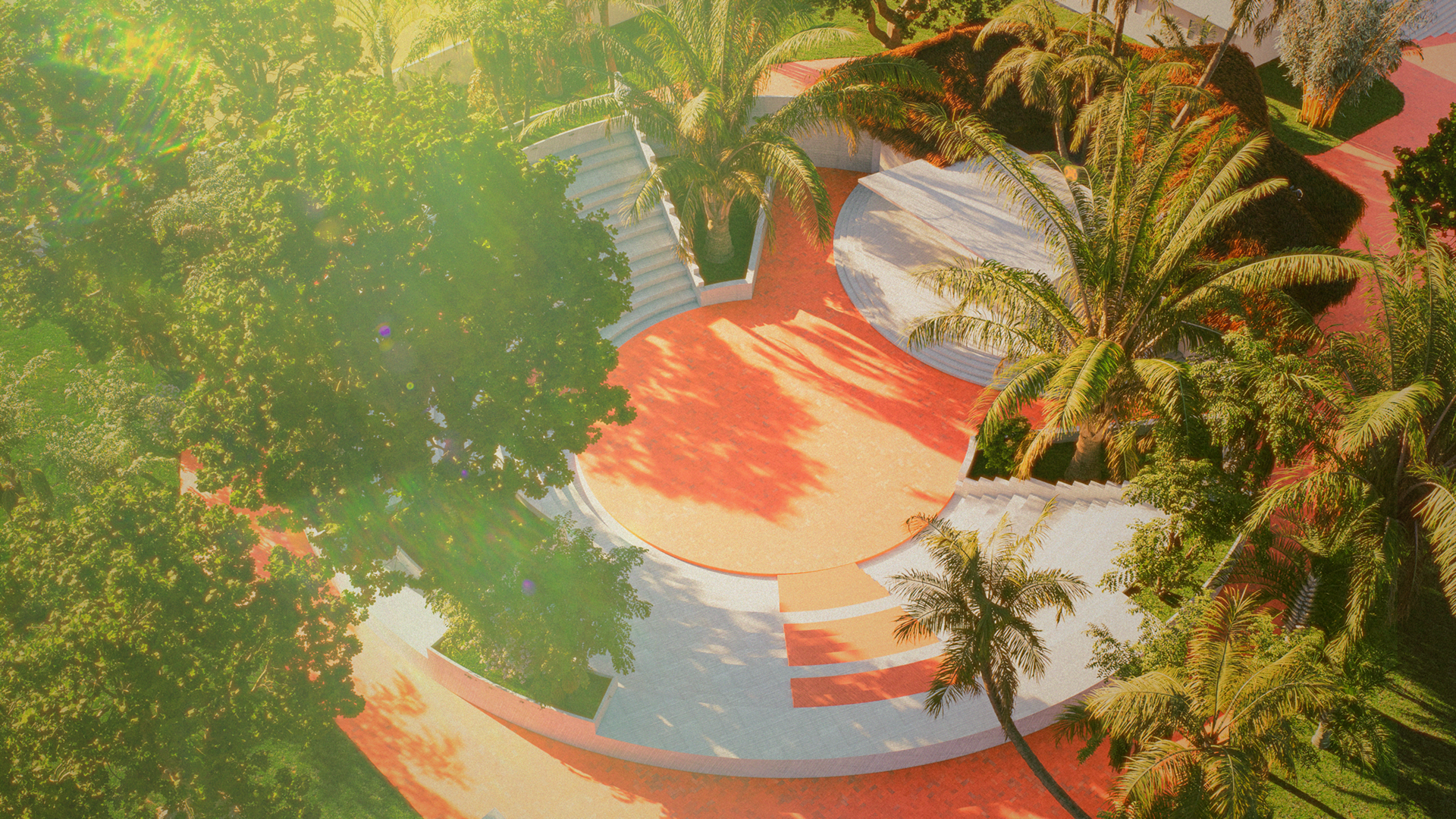
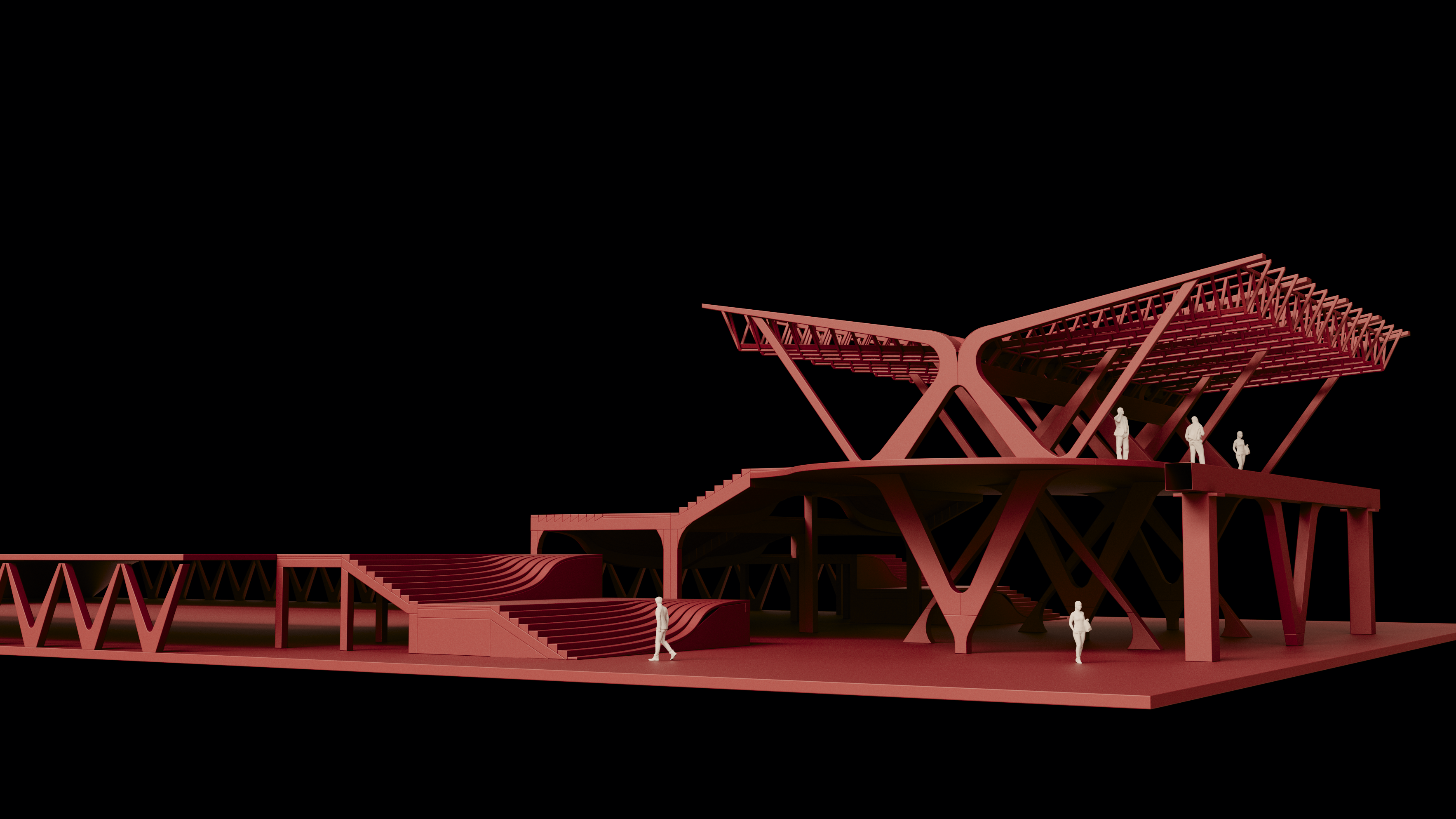
The design is composed as a sequence of thresholds—moving from the public edge into more shaded, protected space. This sequence does cultural work: it slows the body, prepares the mind, and allows the site’s story to unfold with dignity. Architecture here is not an object to be consumed, but a rhythm to be entered.
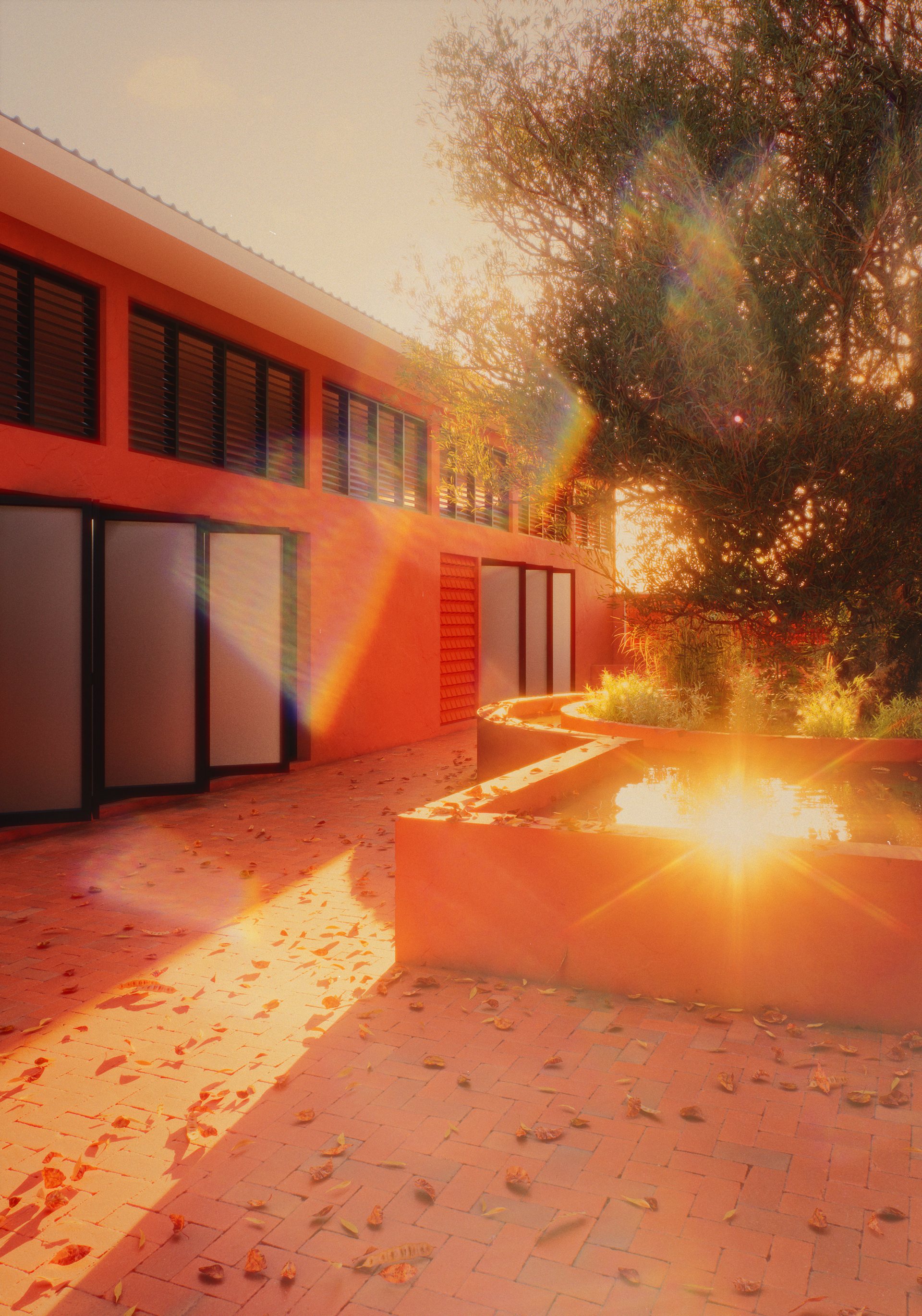
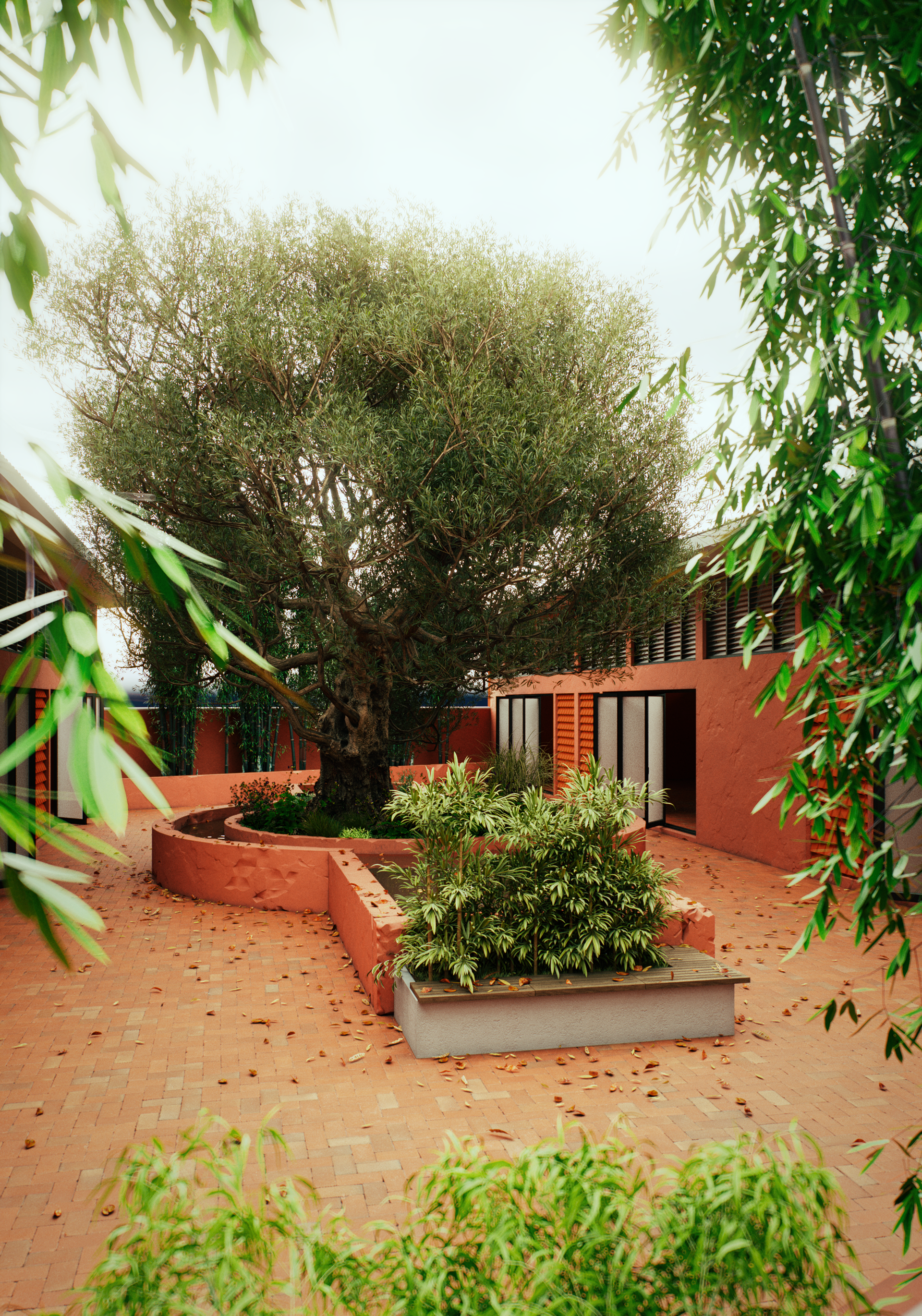
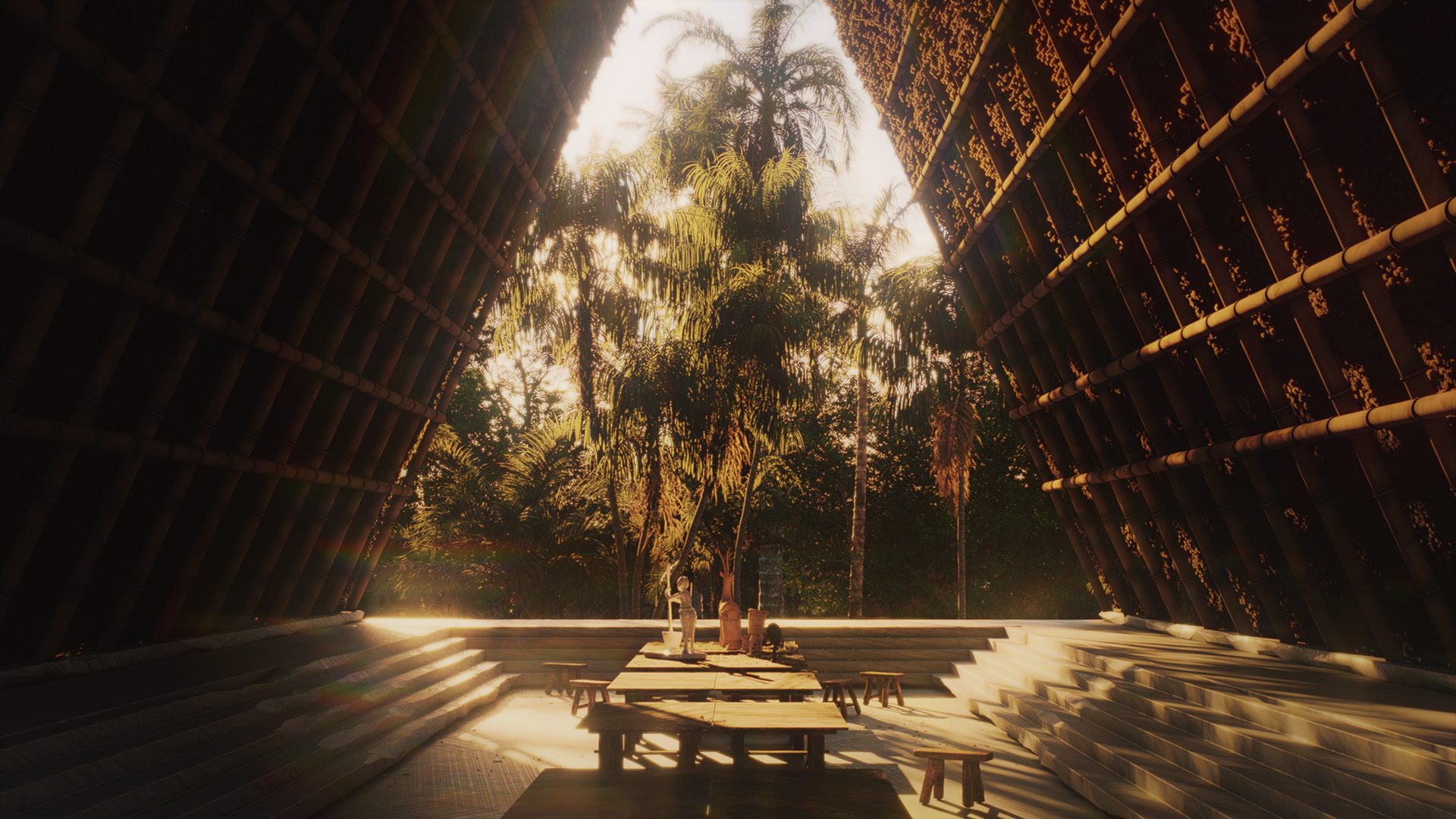
At the centre sits a civic heart: a shaded gathering space that can host orientation, storytelling, small exhibitions, and community events. The building becomes a platform for learning and exchange, not a sealed institution.
Material logic: building as craft, not image
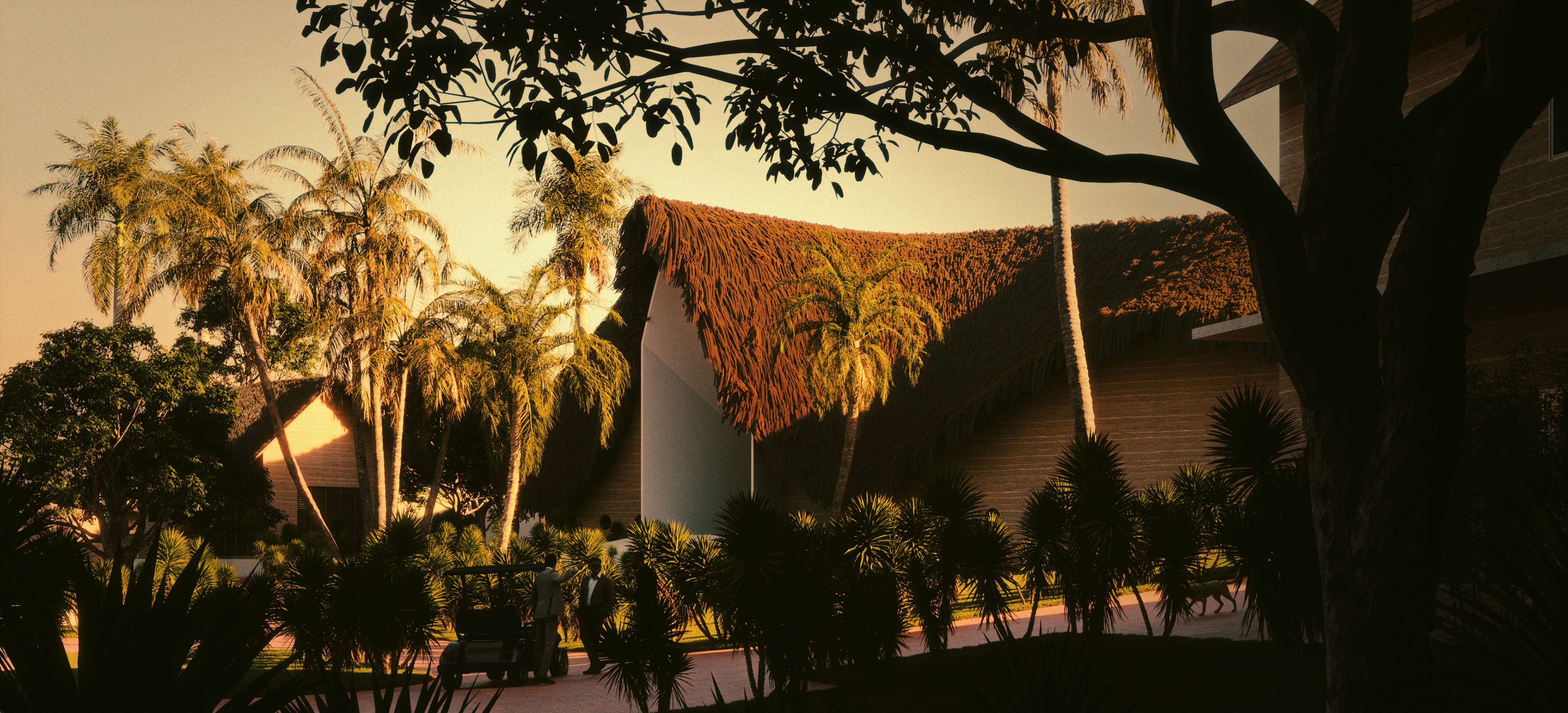
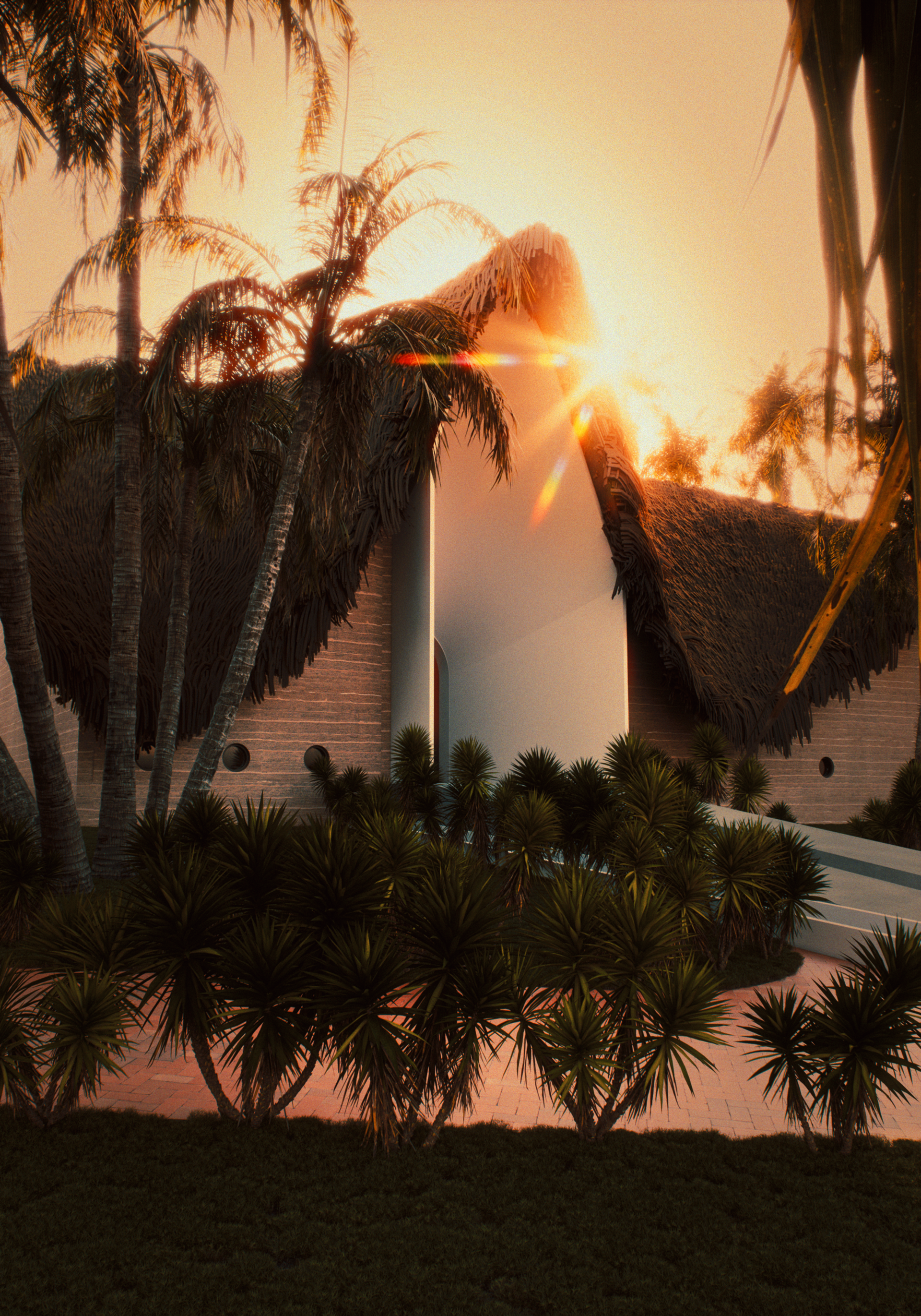
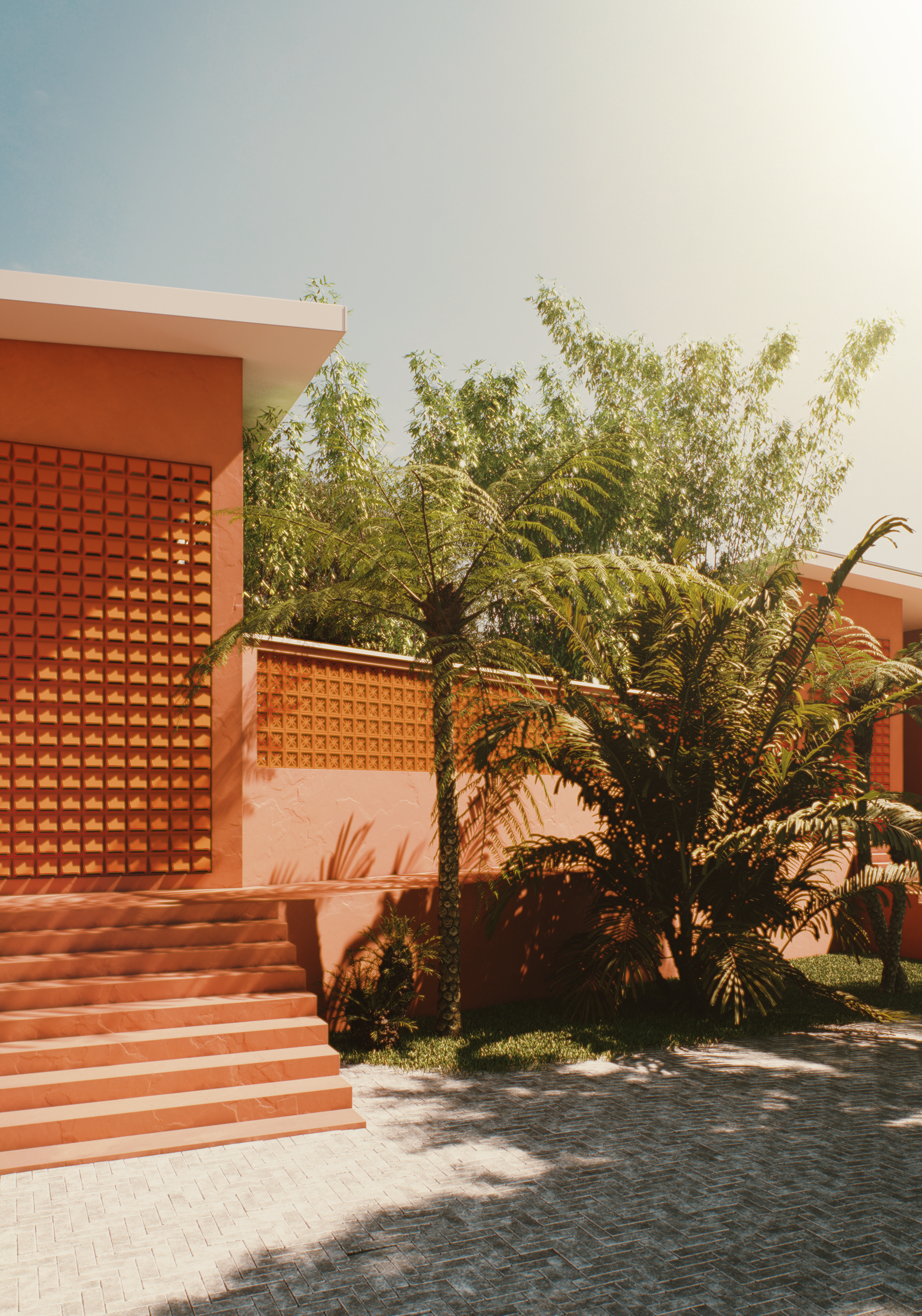
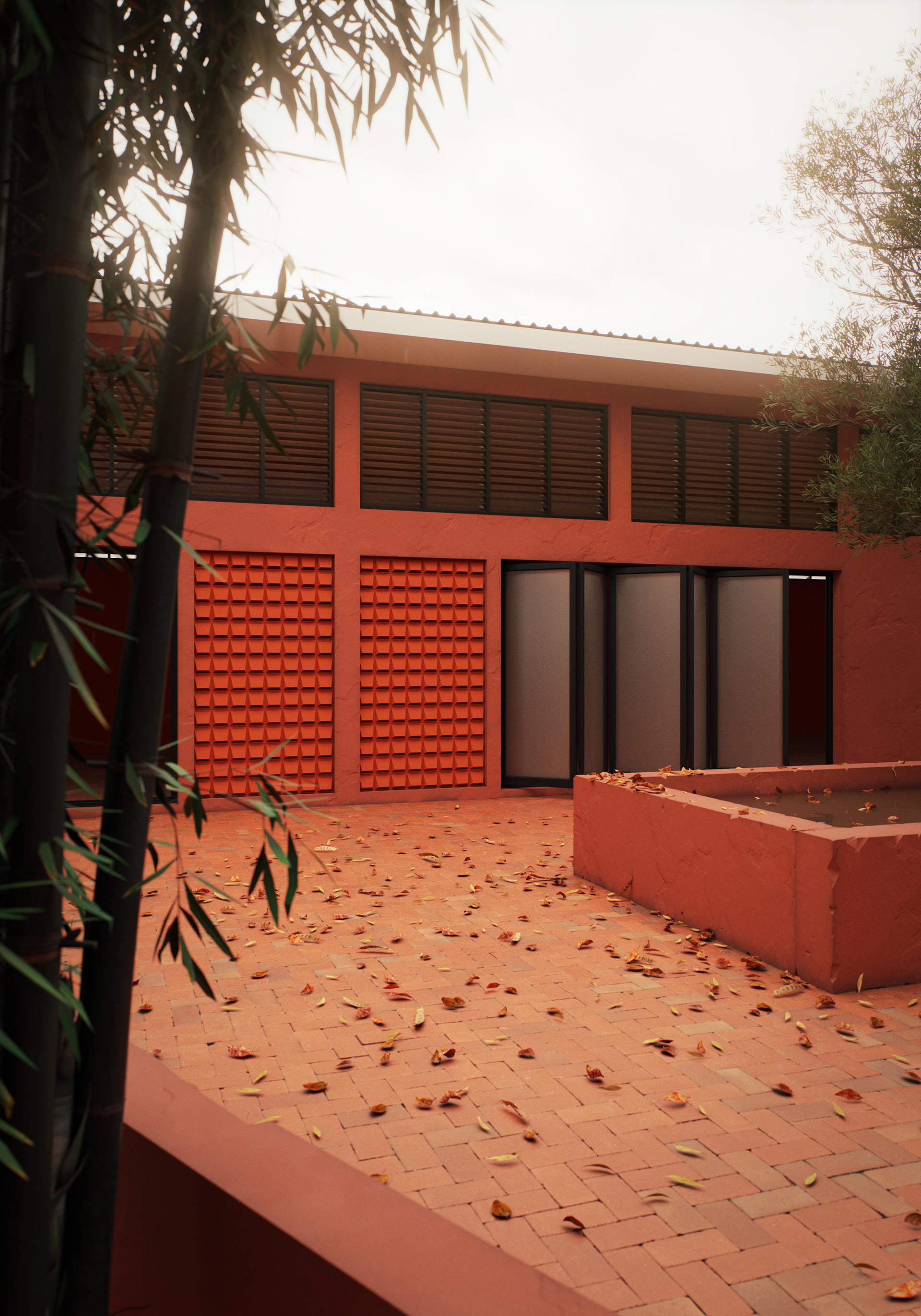
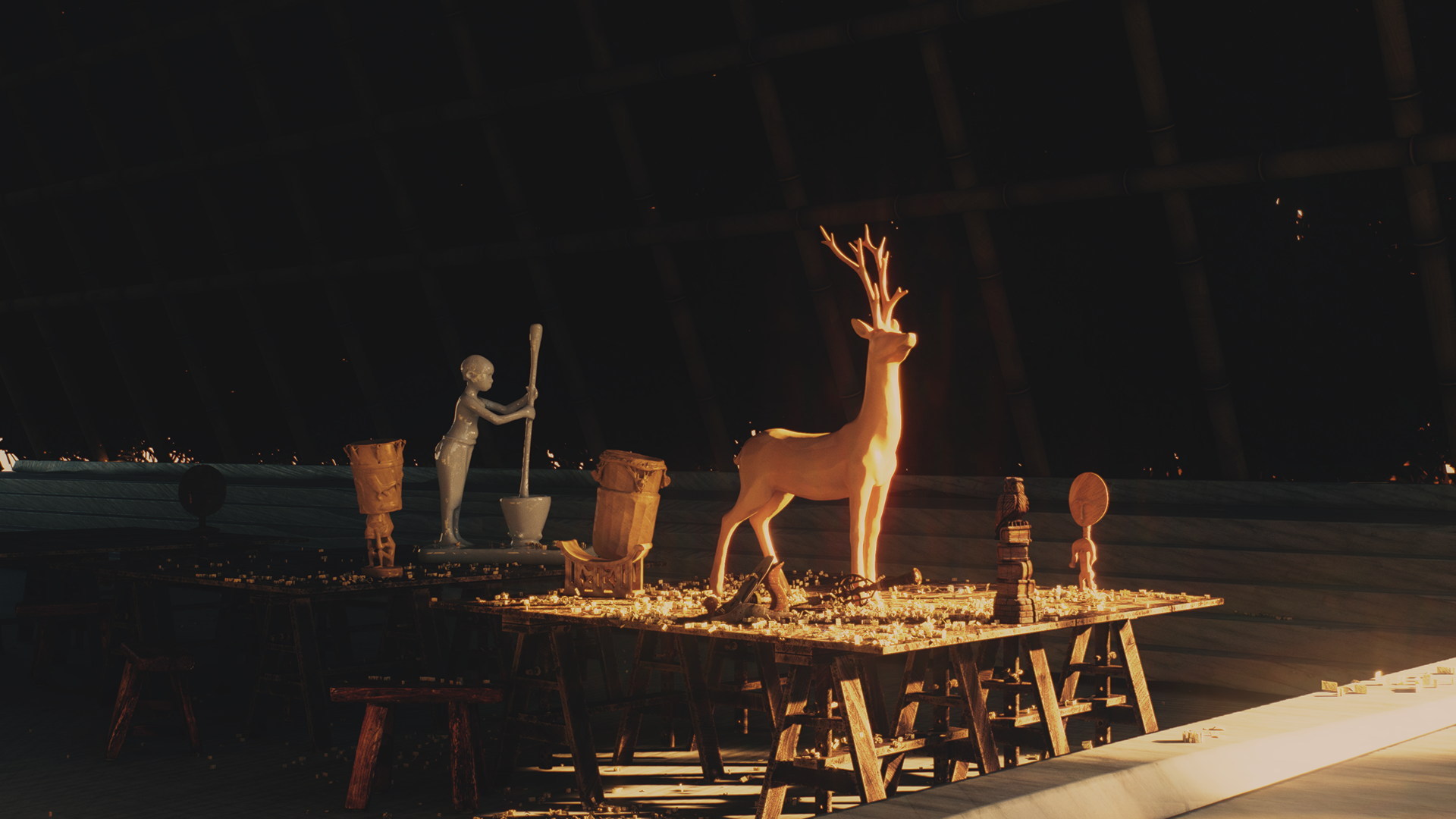
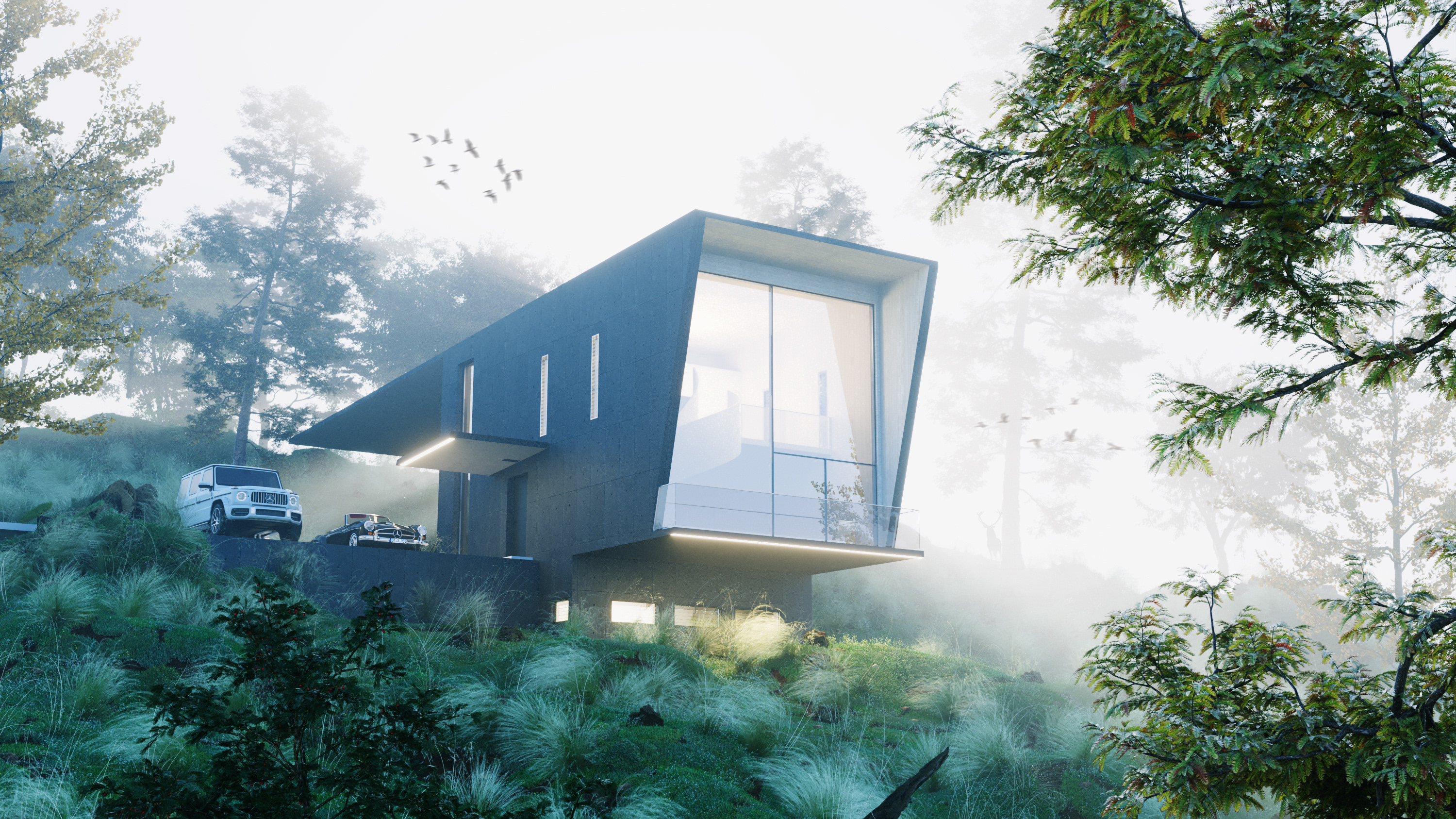
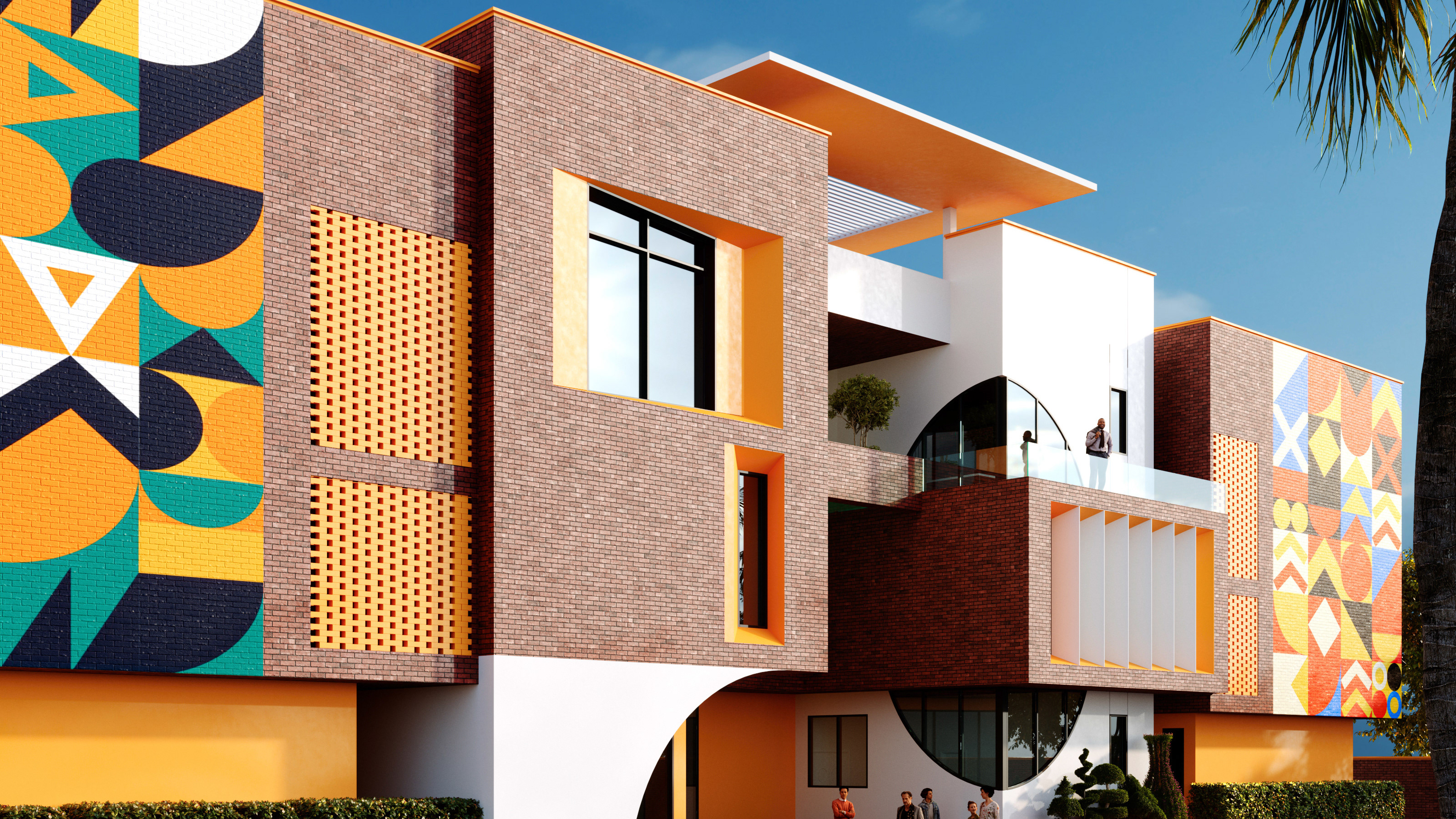
SANKOFA’s material palette is chosen for both meaning and performance: thatch, bamboo structure, rammed earth walls, and terracotta breeze blocks—materials that breathe, cast shade, buffer heat, and age with honesty. They are not “rustic.” They are climatically intelligent and locally legible, supporting an architecture that can be built, maintained, and adapted by local skill.
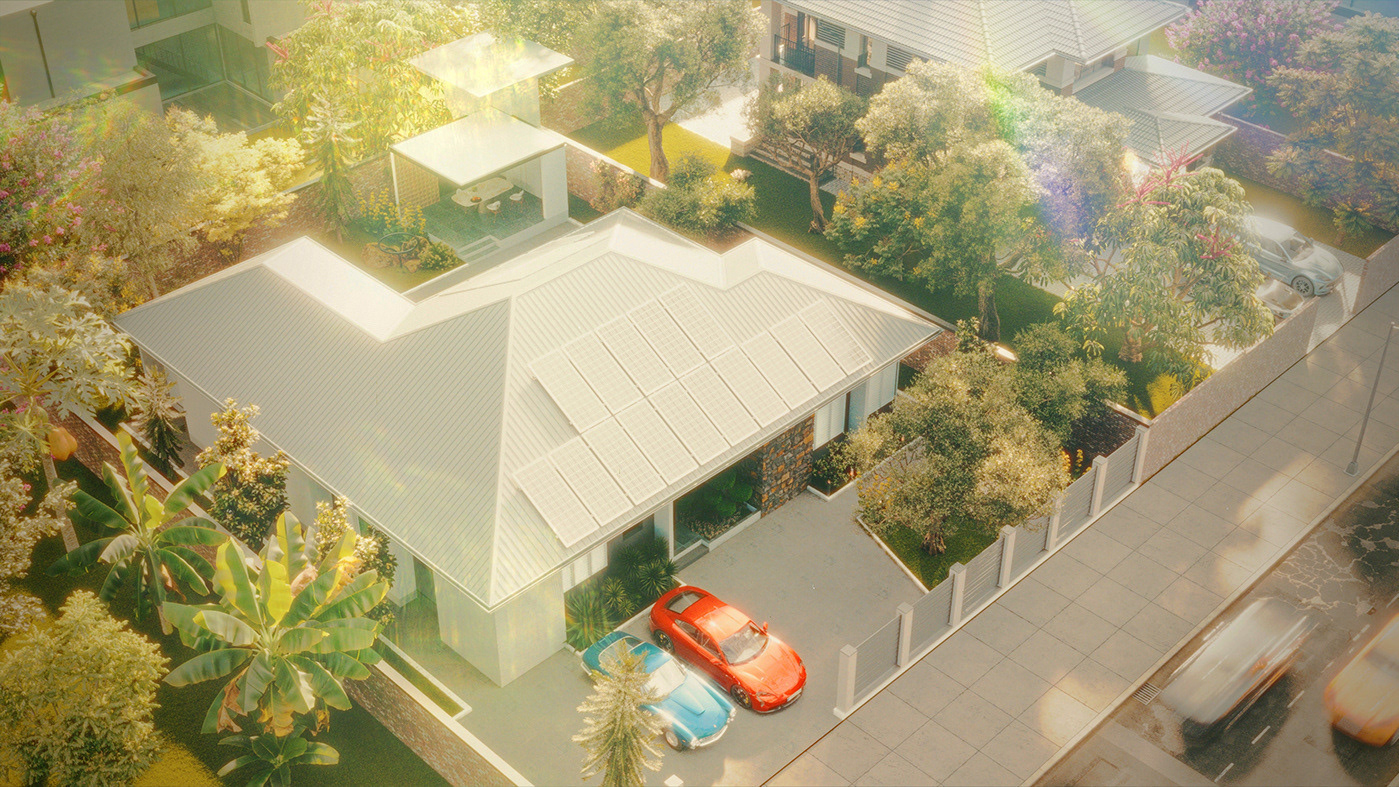
Where modern systems are introduced, they are treated as accountable infrastructure rather than aesthetic accessories: solar as capacity, rainwater harvesting as resilience, and landscape as cooling and ecological repair.
Sustainability as restoration: moving beyond mitigation
The project refuses the shallow sustainability of “less harm.” It aims for net repair: rebuilding canopy and biodiversity, stabilizing soil, managing stormwater through planted systems, and turning the visitor journey into an education in ecological stewardship.
This matters because Ejisu’s heritage is not only in artifacts. It is in forests, soils, crafts, and rituals of use. When ecology collapses, culture becomes performance; when ecology is restored, culture becomes life again.
What success looks like
Success is not measured only in visitor numbers. It is measured in:
1. cooler microclimates and deeper shade that make public life possible again;
2. materials that can be repaired rather than replaced;
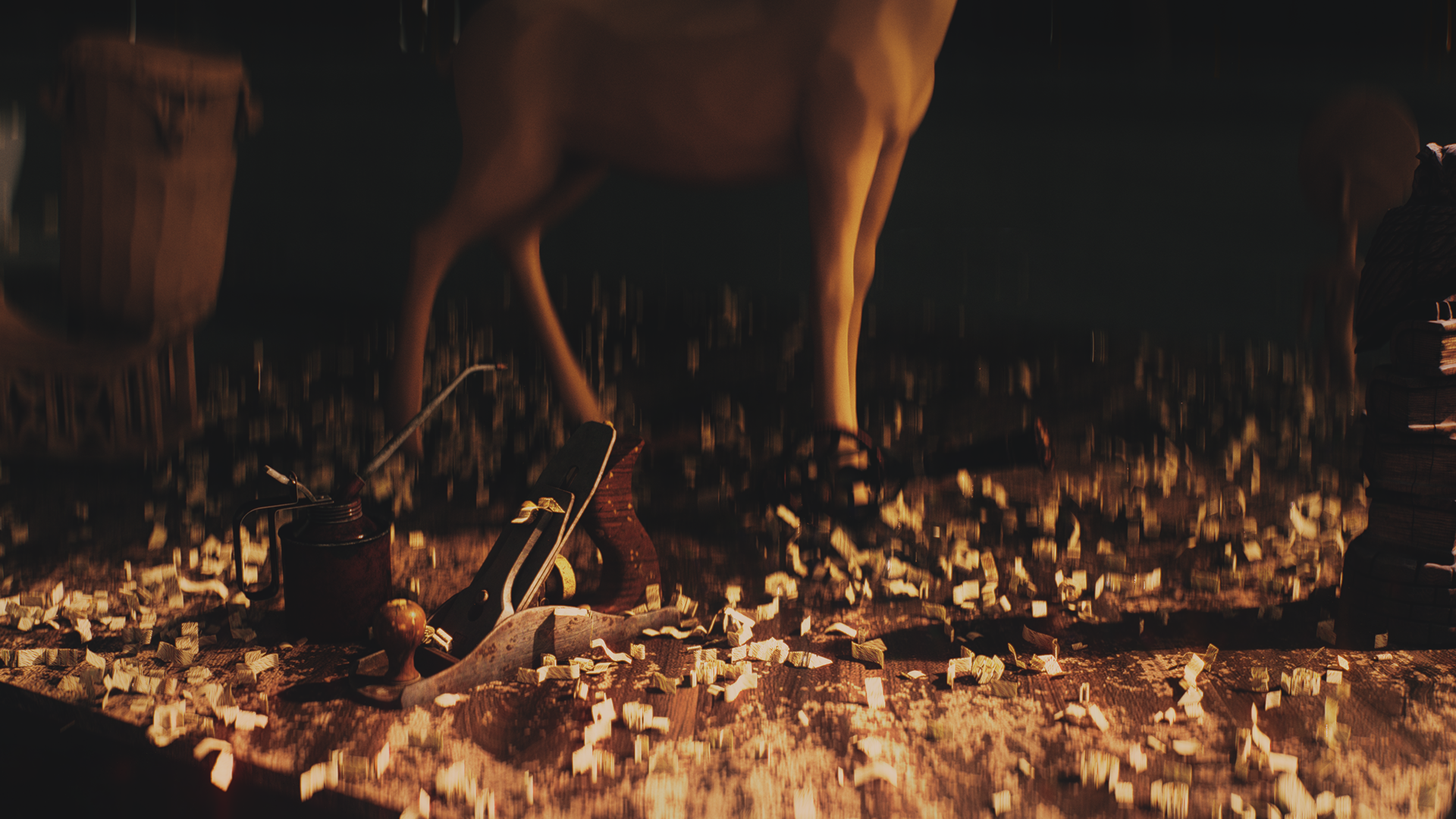
3. local craft embedded in contemporary construction logic;
4. a community that benefits economically without being displaced culturally;
5. and a visitor who leaves with something more valuable than an image: a renewed sense of responsibility to place.