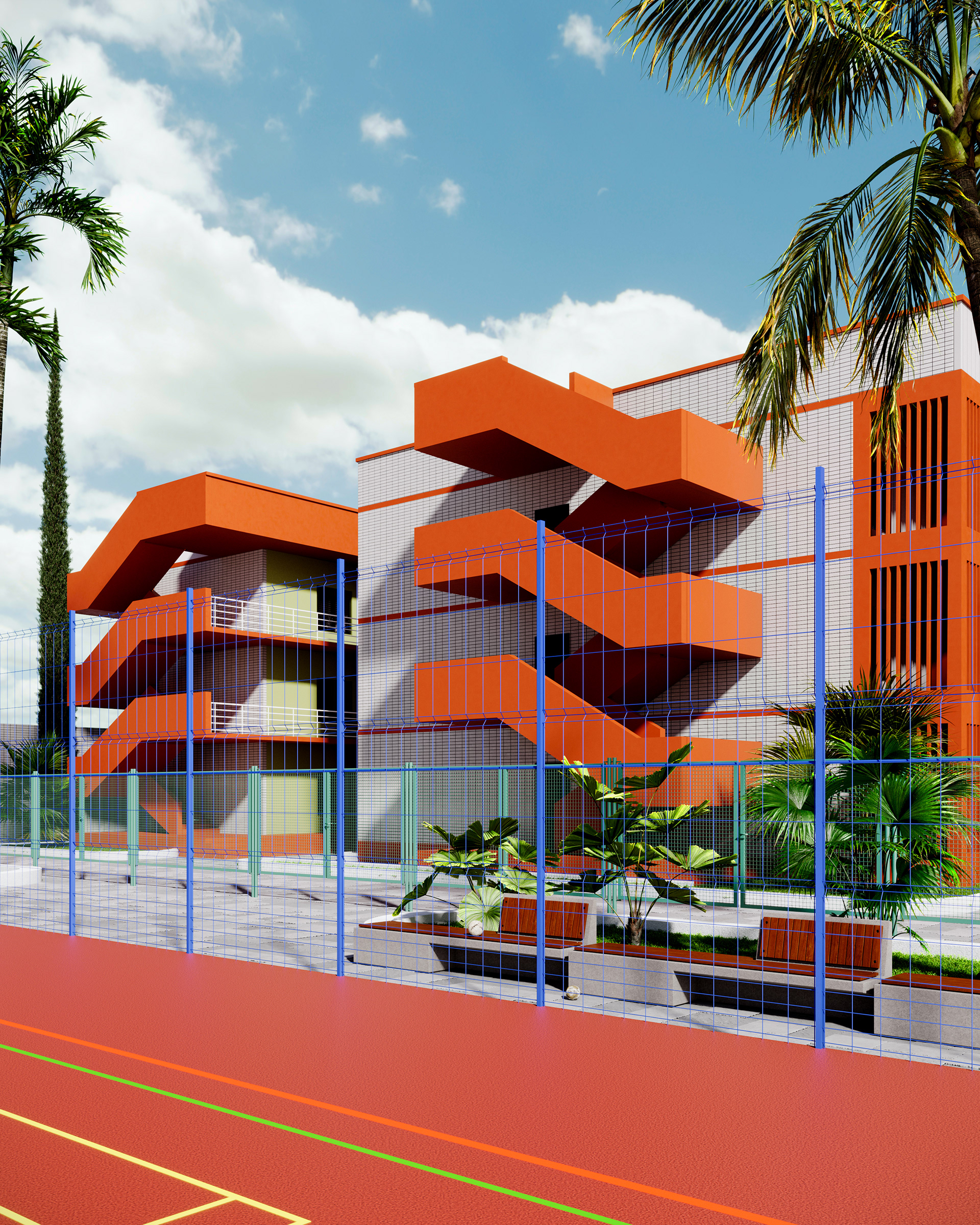
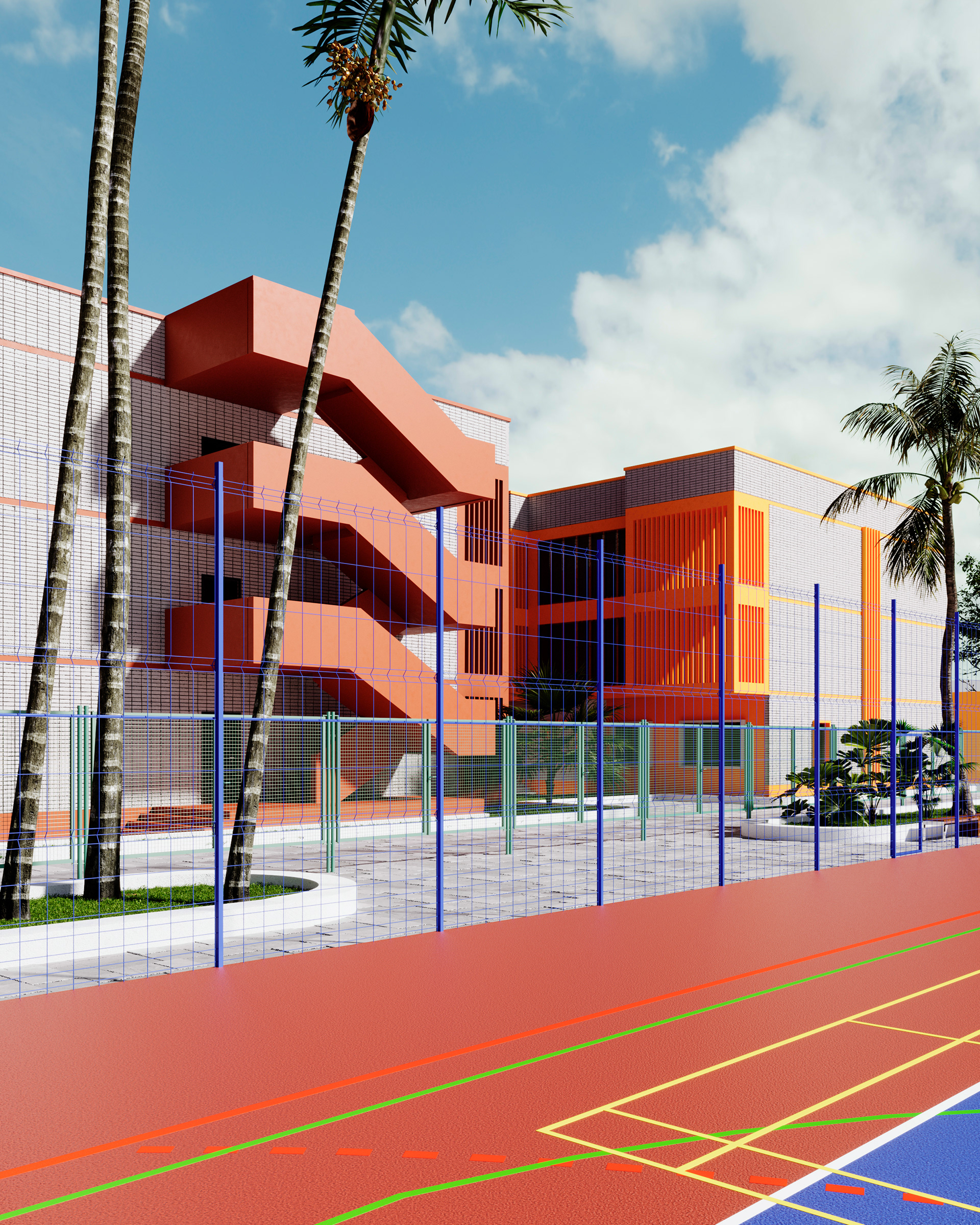
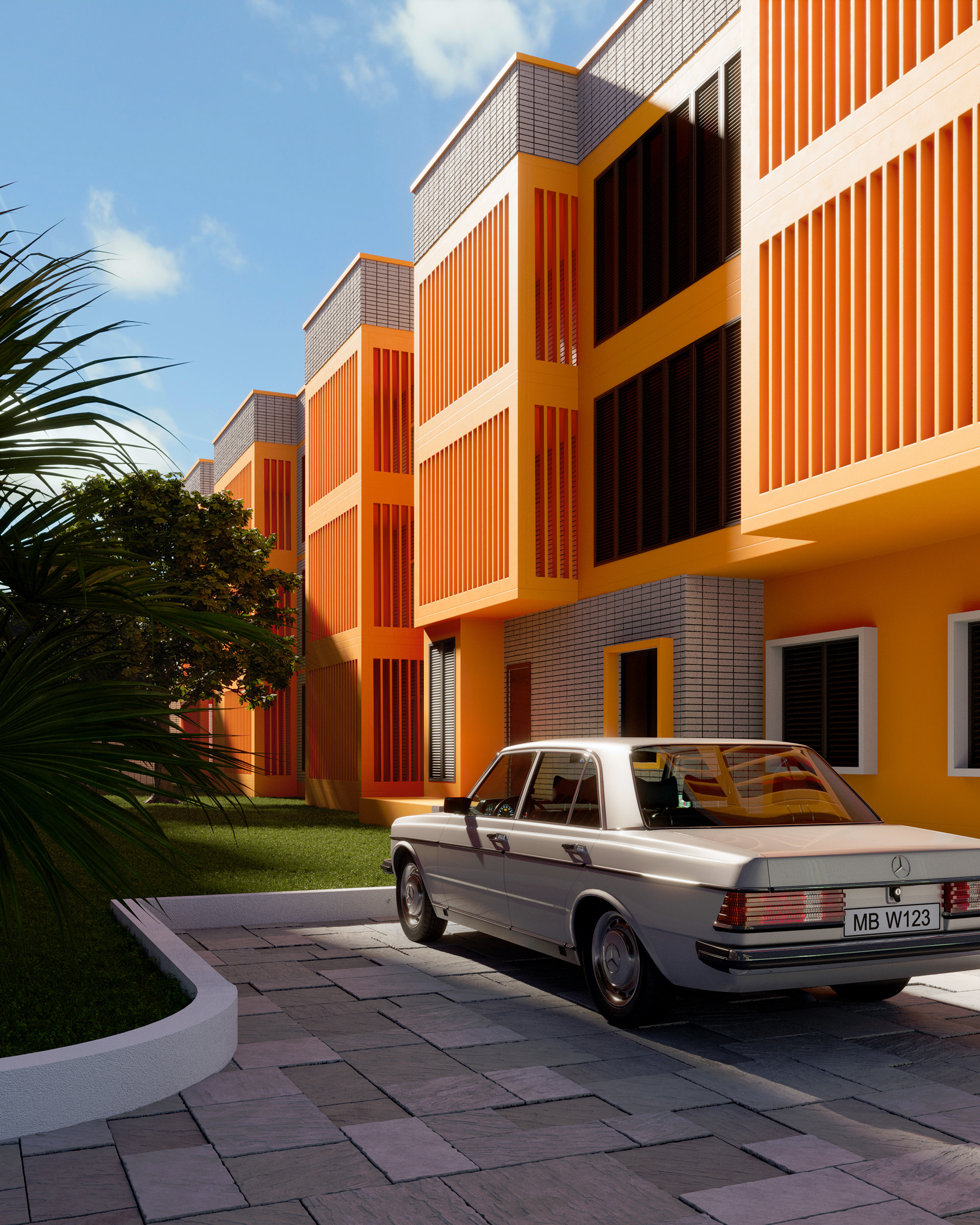
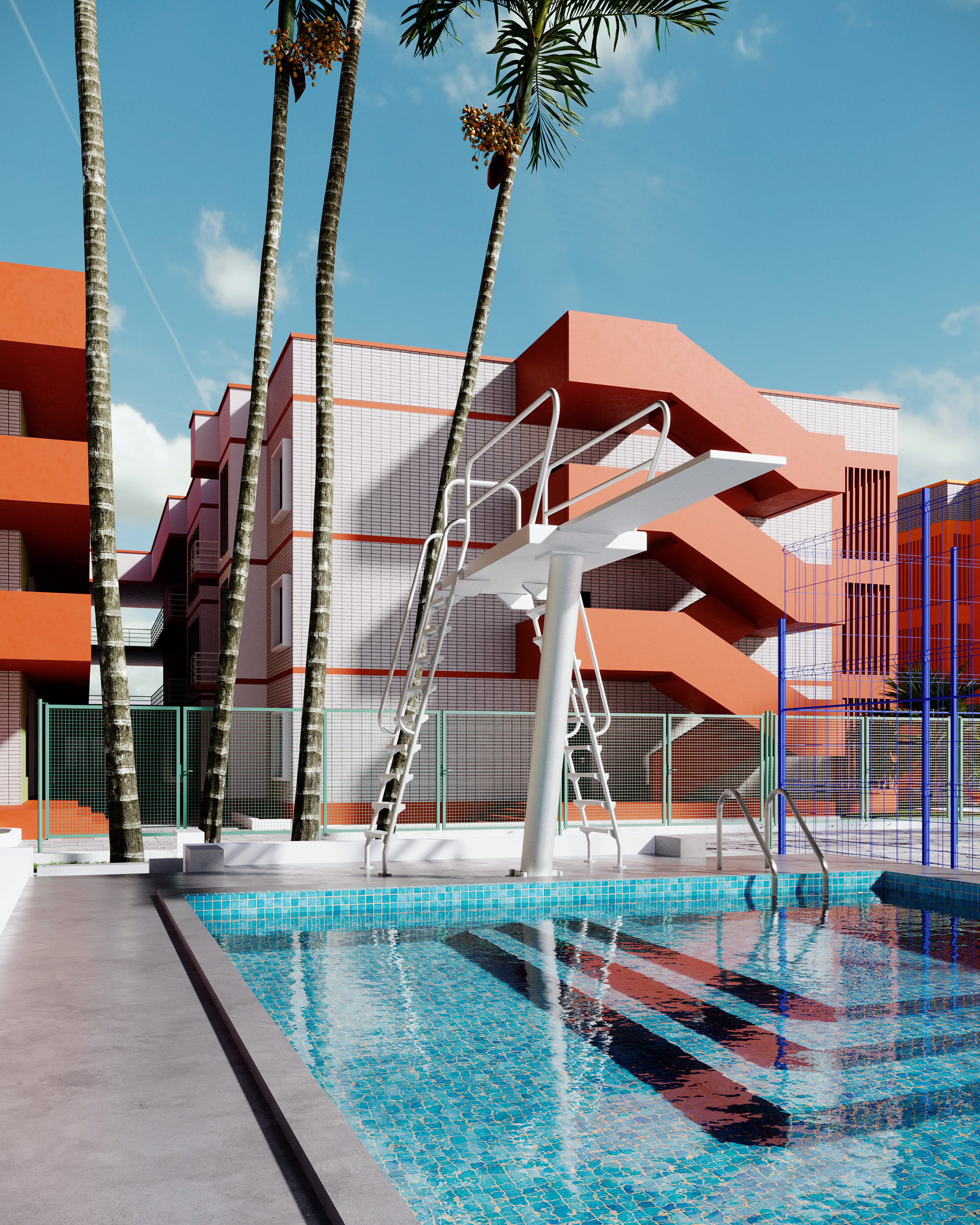
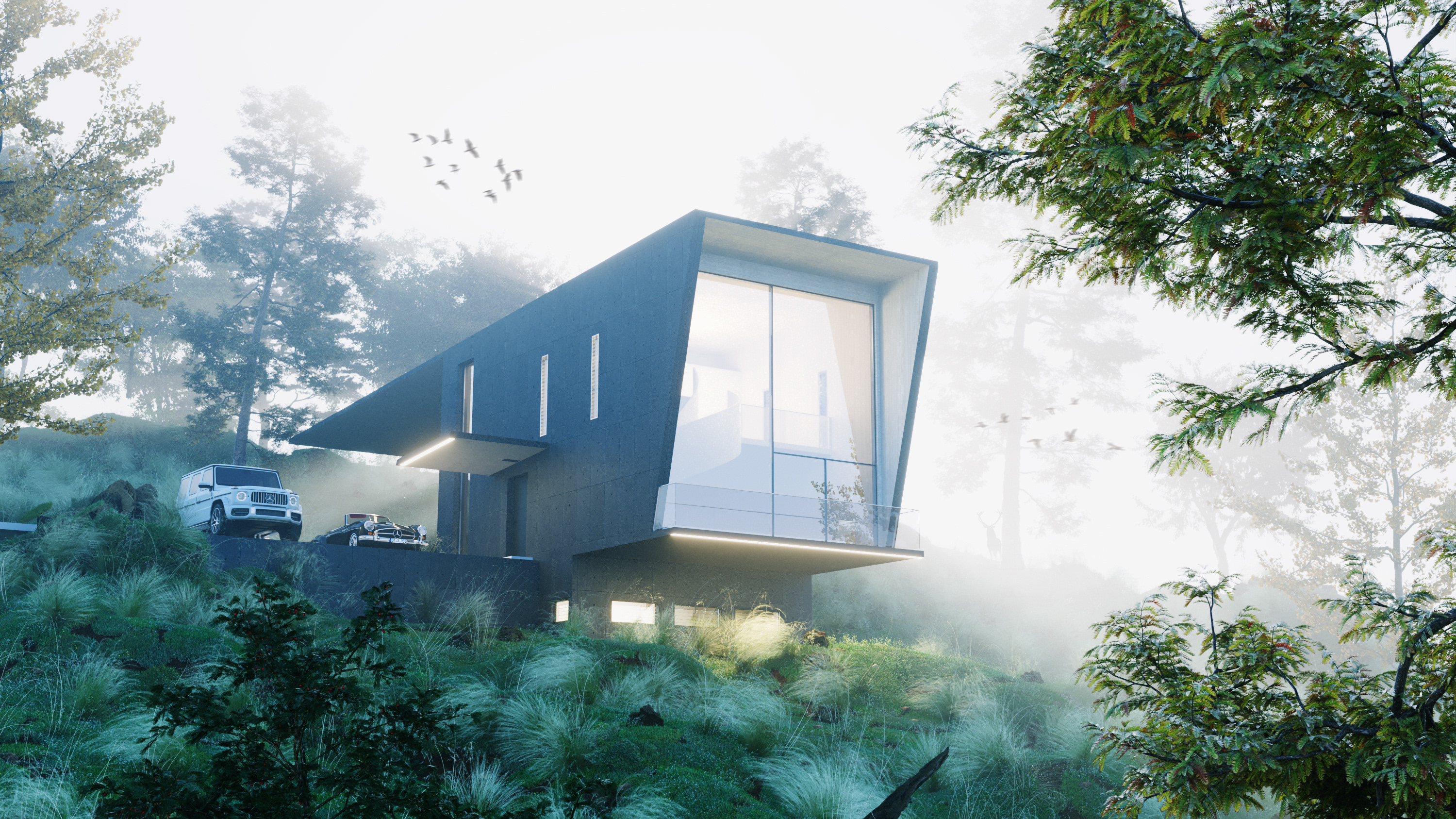
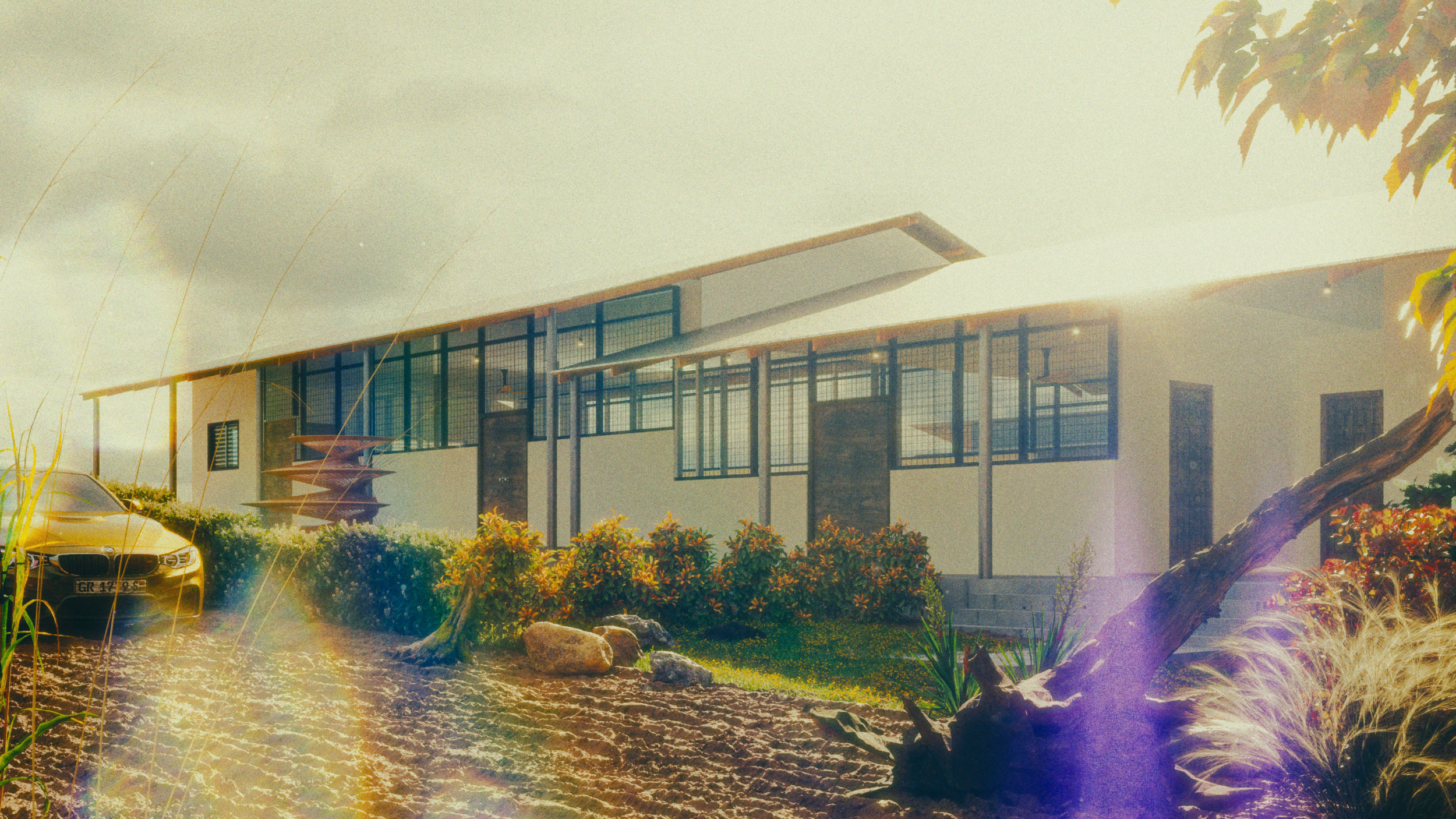
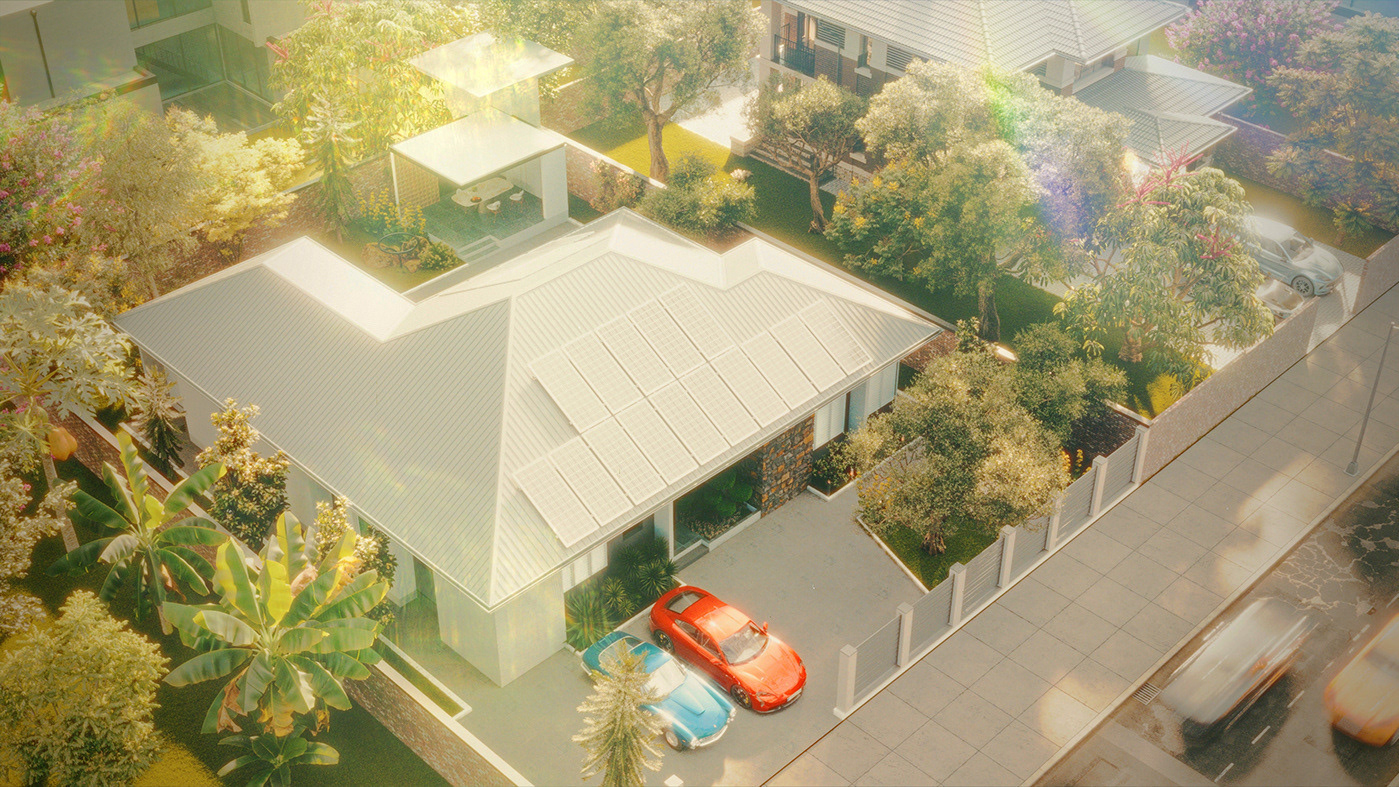
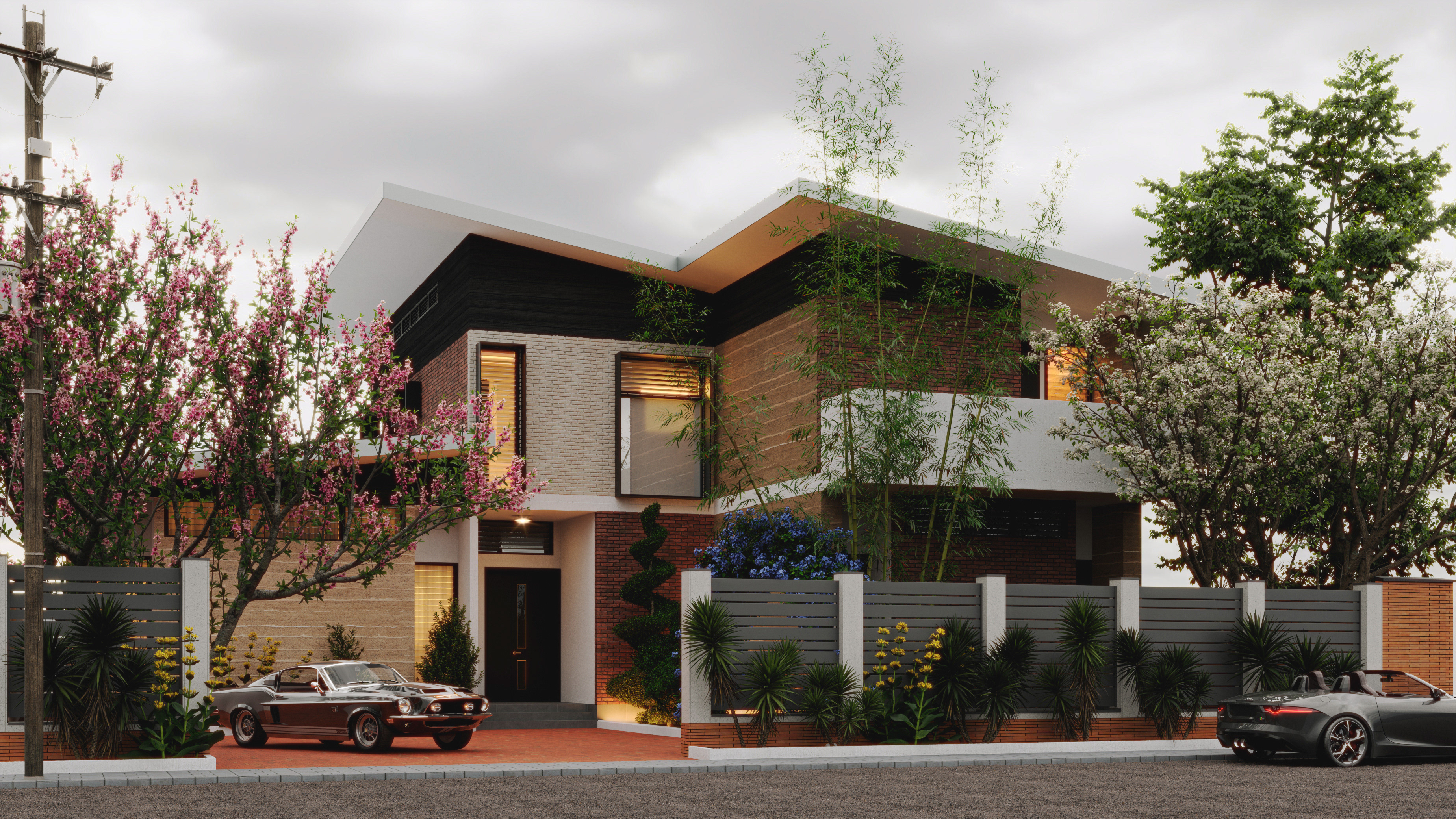
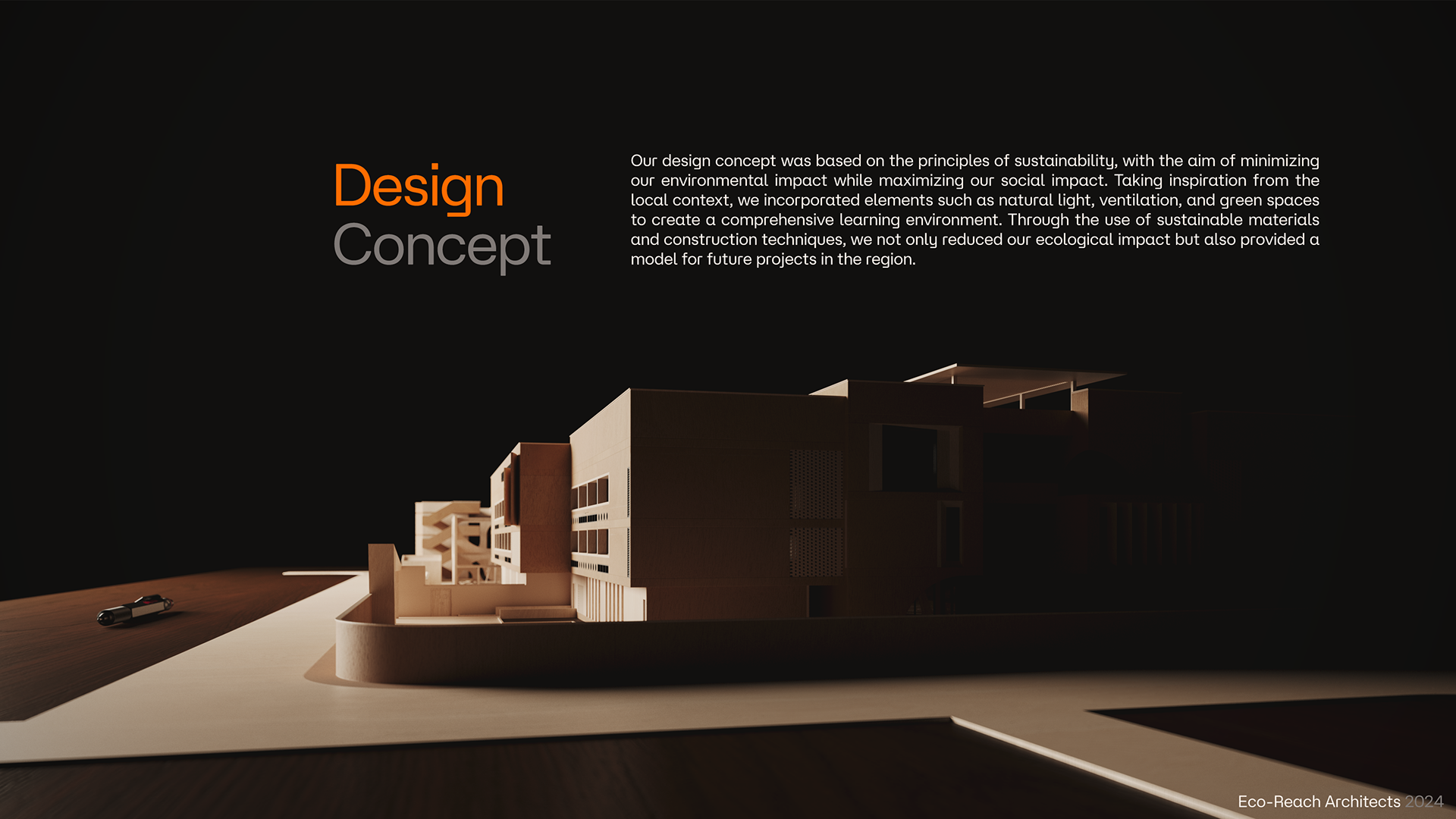
PAEL is conceived as an operational mindset for Eco-Reach Architects: a way of designing that is accountable to climate, community, and long-term maintenance. It begins with the recognition that sustainability often fails when it is treated as a label. Here, it is treated as a sequence of decisions—each one measurable in impact and legible in experience.
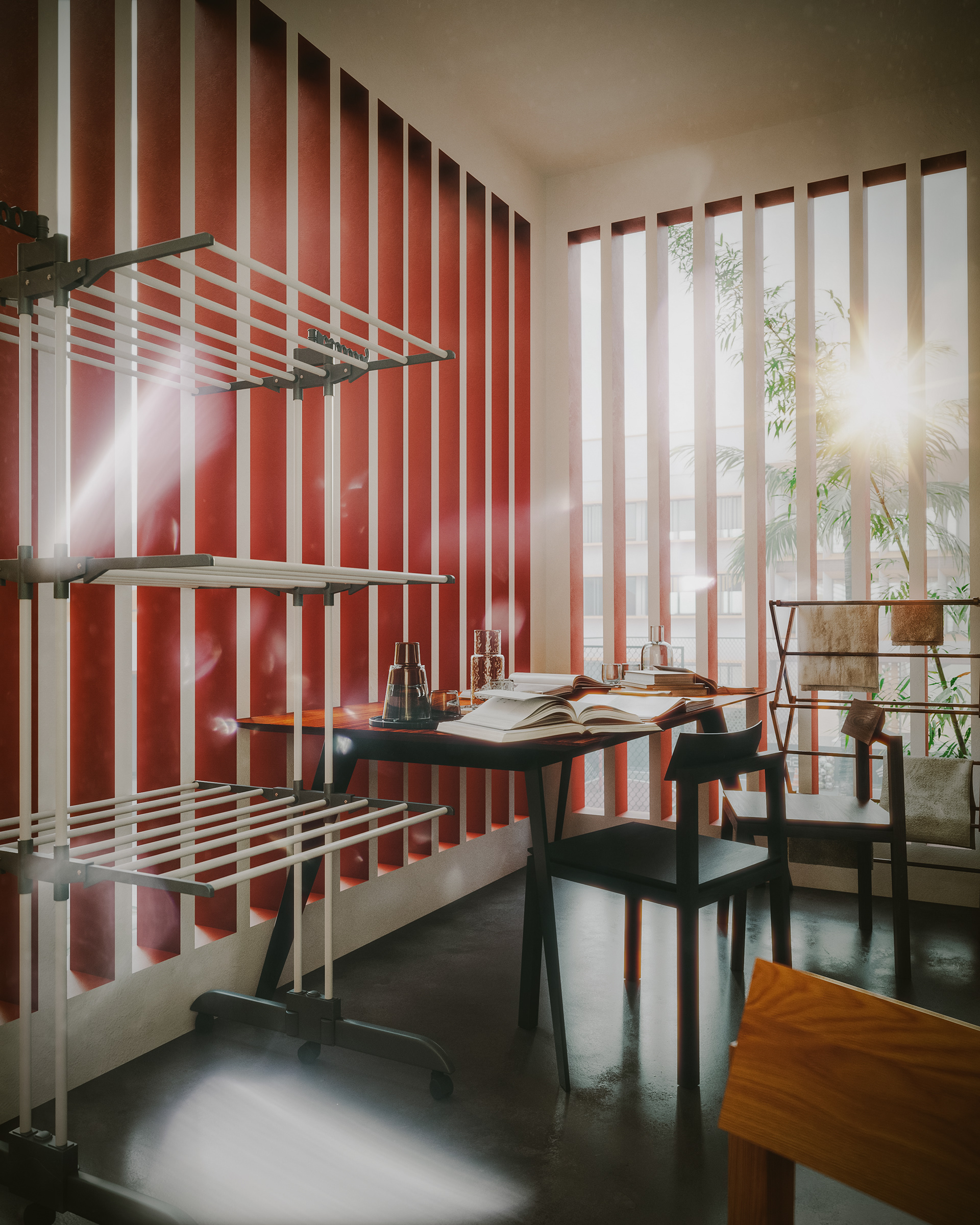
The framework prioritizes passive performance first. Shade is designed as structure; air movement is planned as a spatial driver; daylight is calibrated to reduce glare and heat while improving wellbeing. The aim is comfort that does not depend on fragile systems—especially in contexts where power and maintenance can be inconsistent.
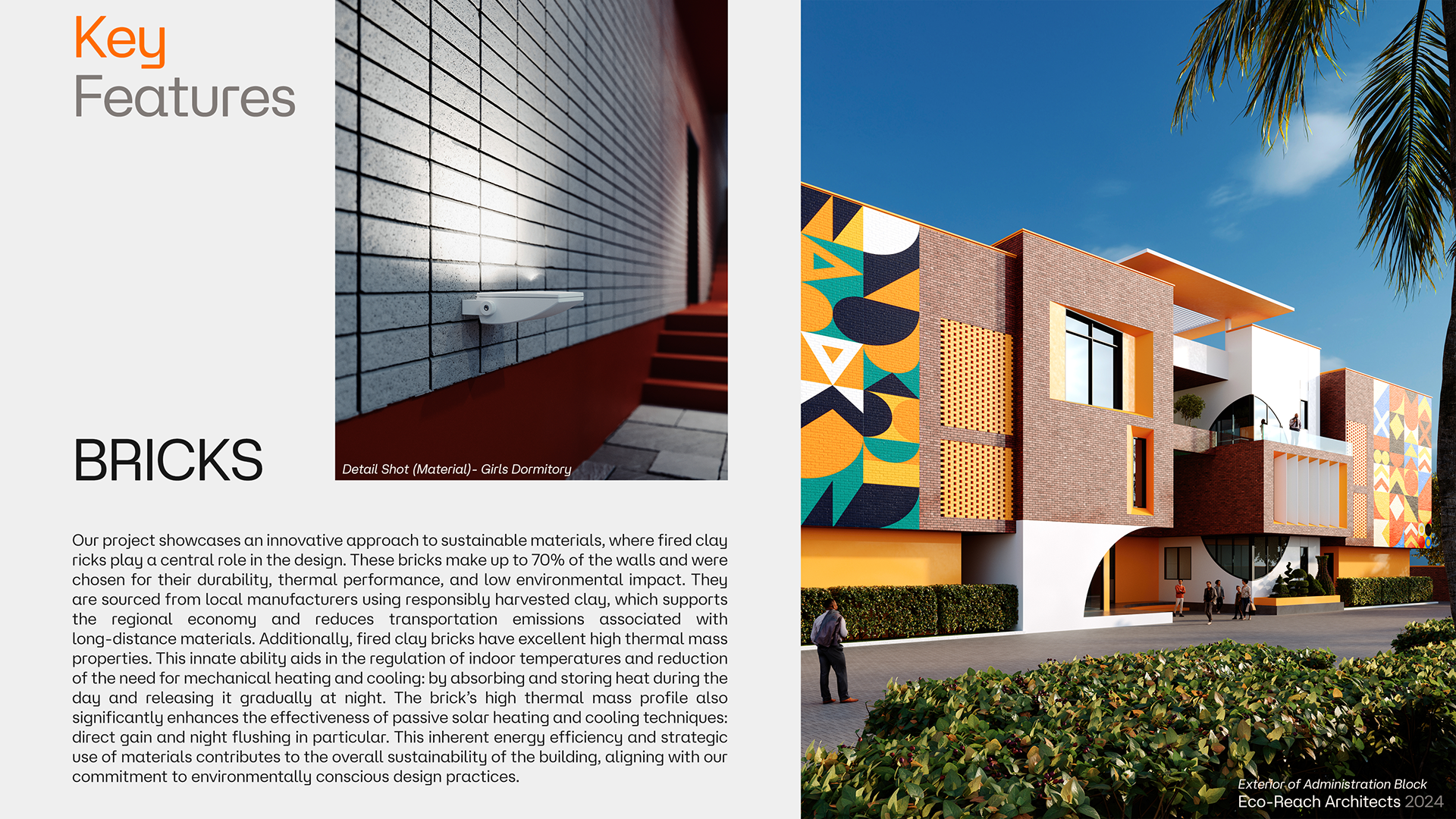
Material choices are guided by two ethics: low impact and long life. The intention is not purity; it is responsibility. Where local, low-carbon materials can carry structure and climate moderation, they are prioritized. Where permanence and moisture resistance demand harder materials, they are used selectively and honestly. Assemblies are conceived for repair: components that can be replaced, surfaces that can be maintained, and details that do not punish future users.
PAEL also treats landscape as a working layer—cooling, filtering, and managing water—so architecture participates in ecological repair rather than ecological extraction. Finally, it insists on feedback. Post-project evaluation is not optional; it is the mechanism by which design becomes smarter, more humane, and more truthful over time.
PAEL is, at its core, an act of respect: for what existed before, for the realities of the present, and for the future bodies who will live inside these decisions
Role: second lead / research / architectural & Interior design / modelling / visuals / writing / production drawing / environmental/narrative articulation.
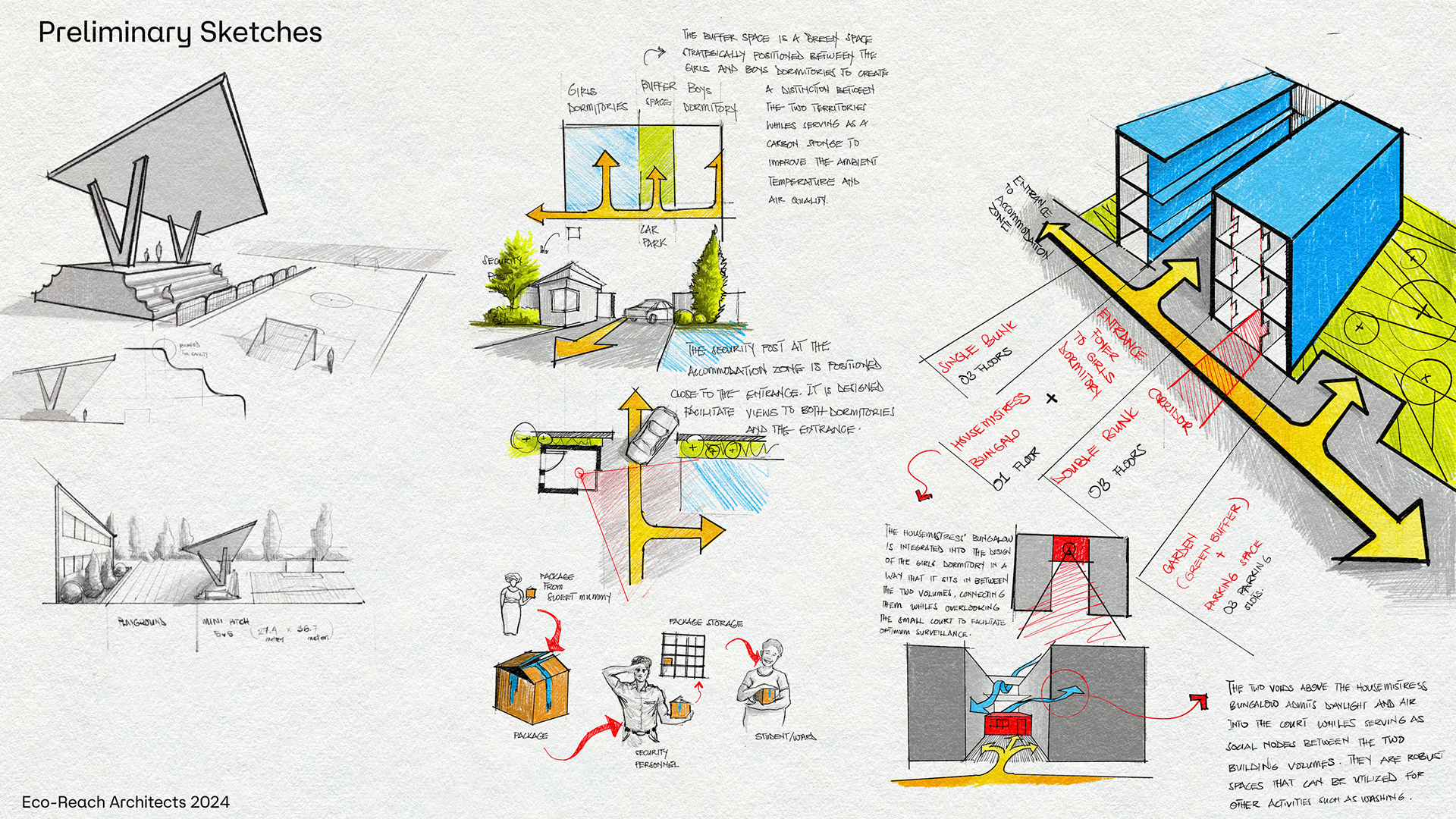
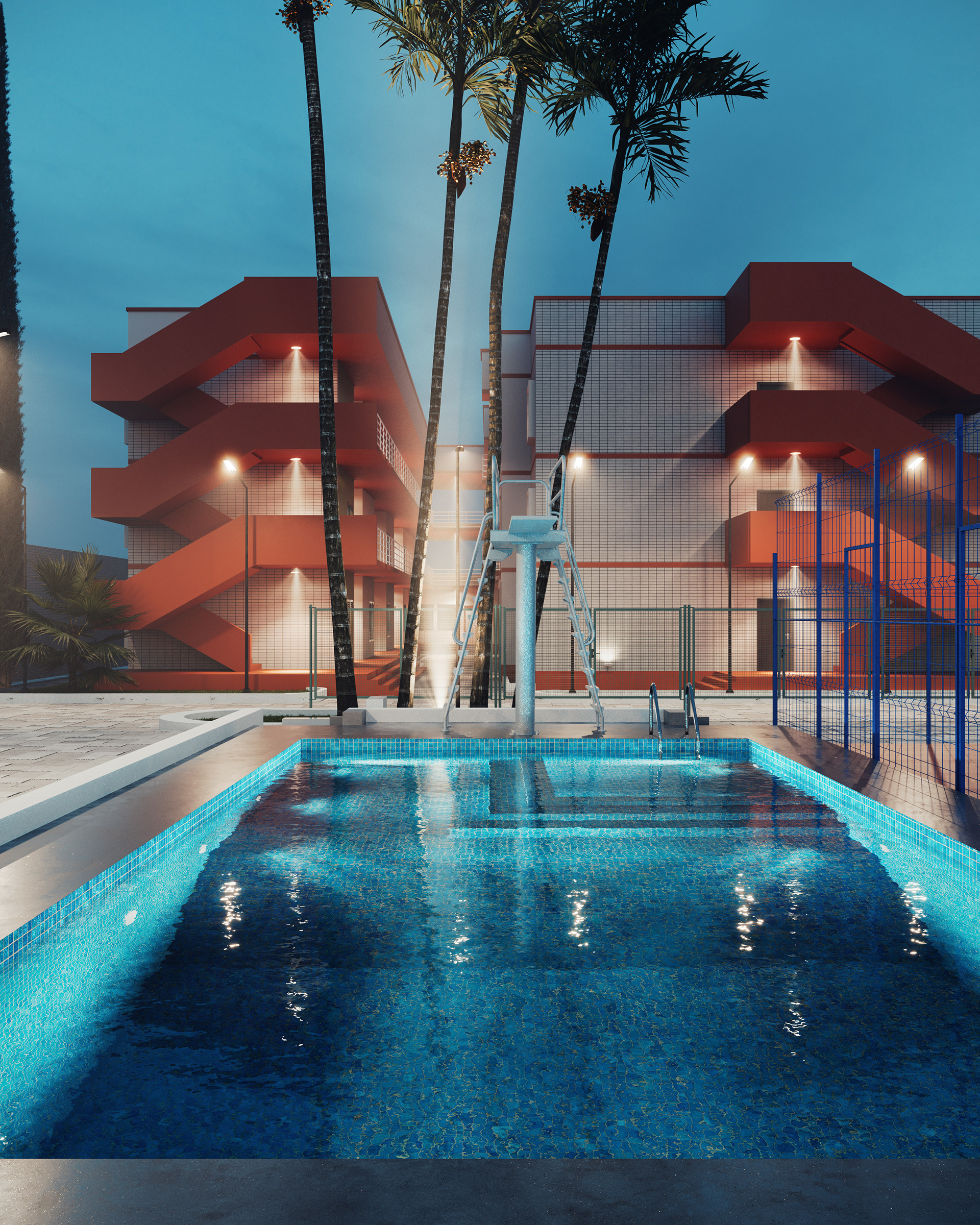
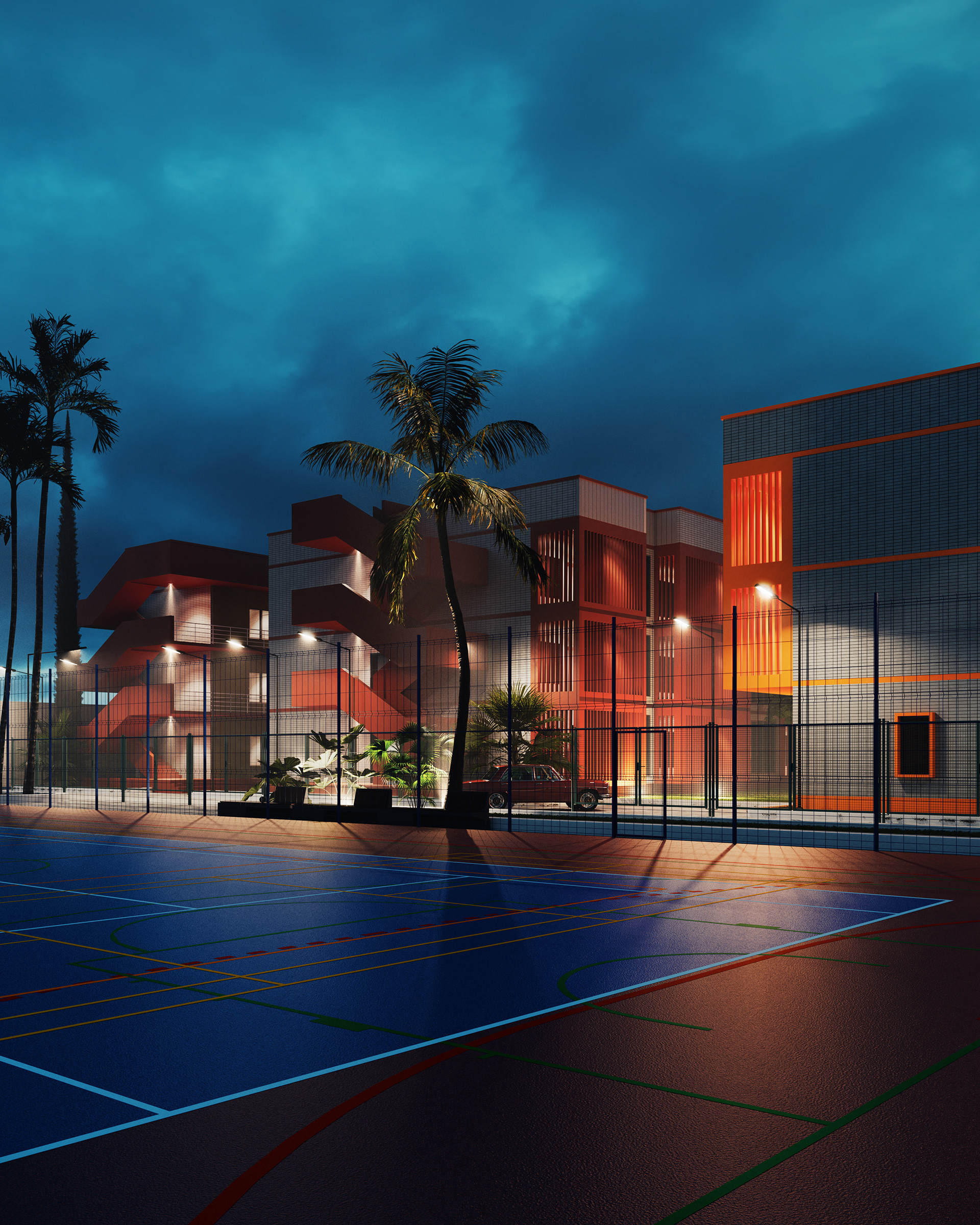
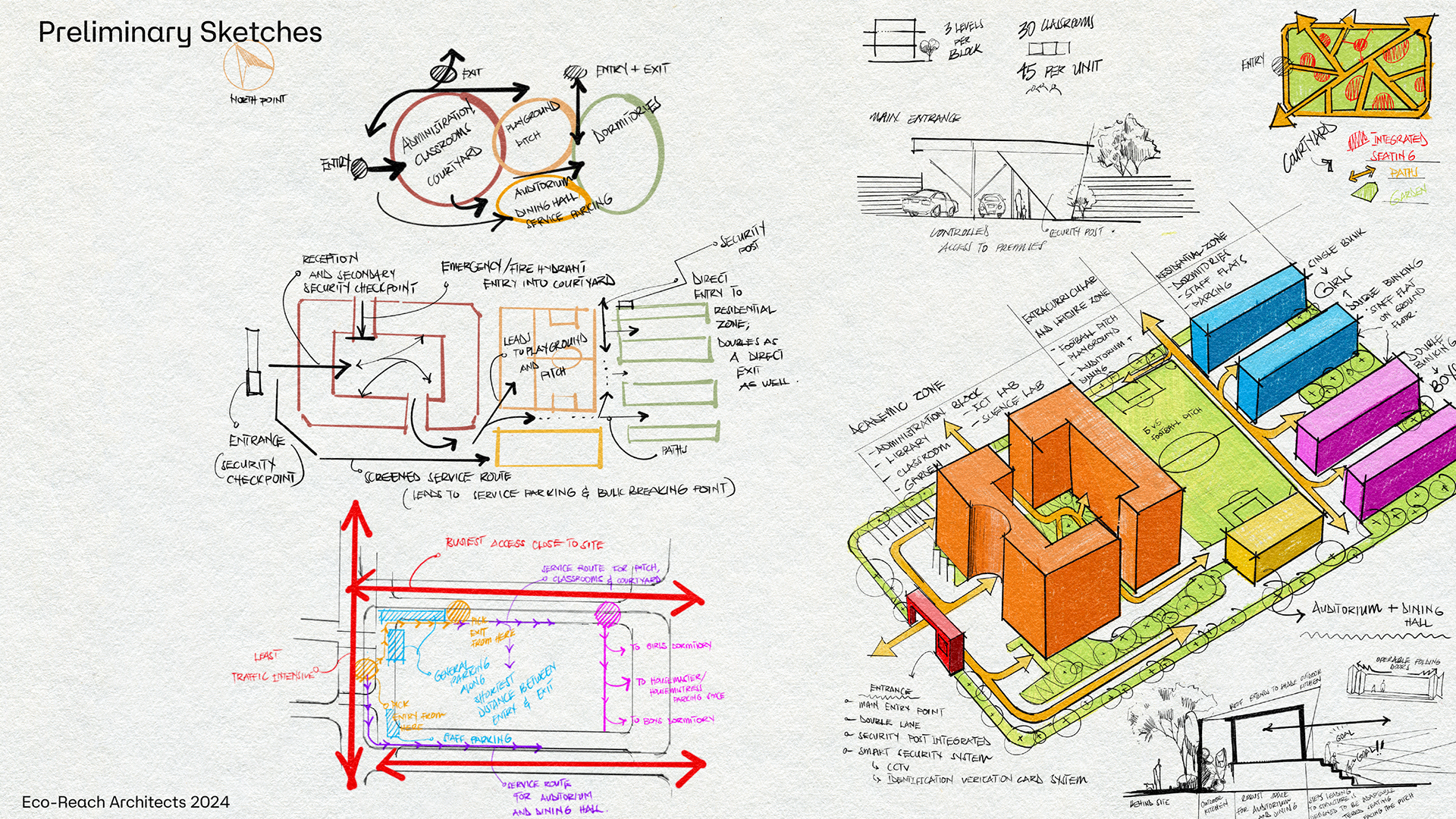
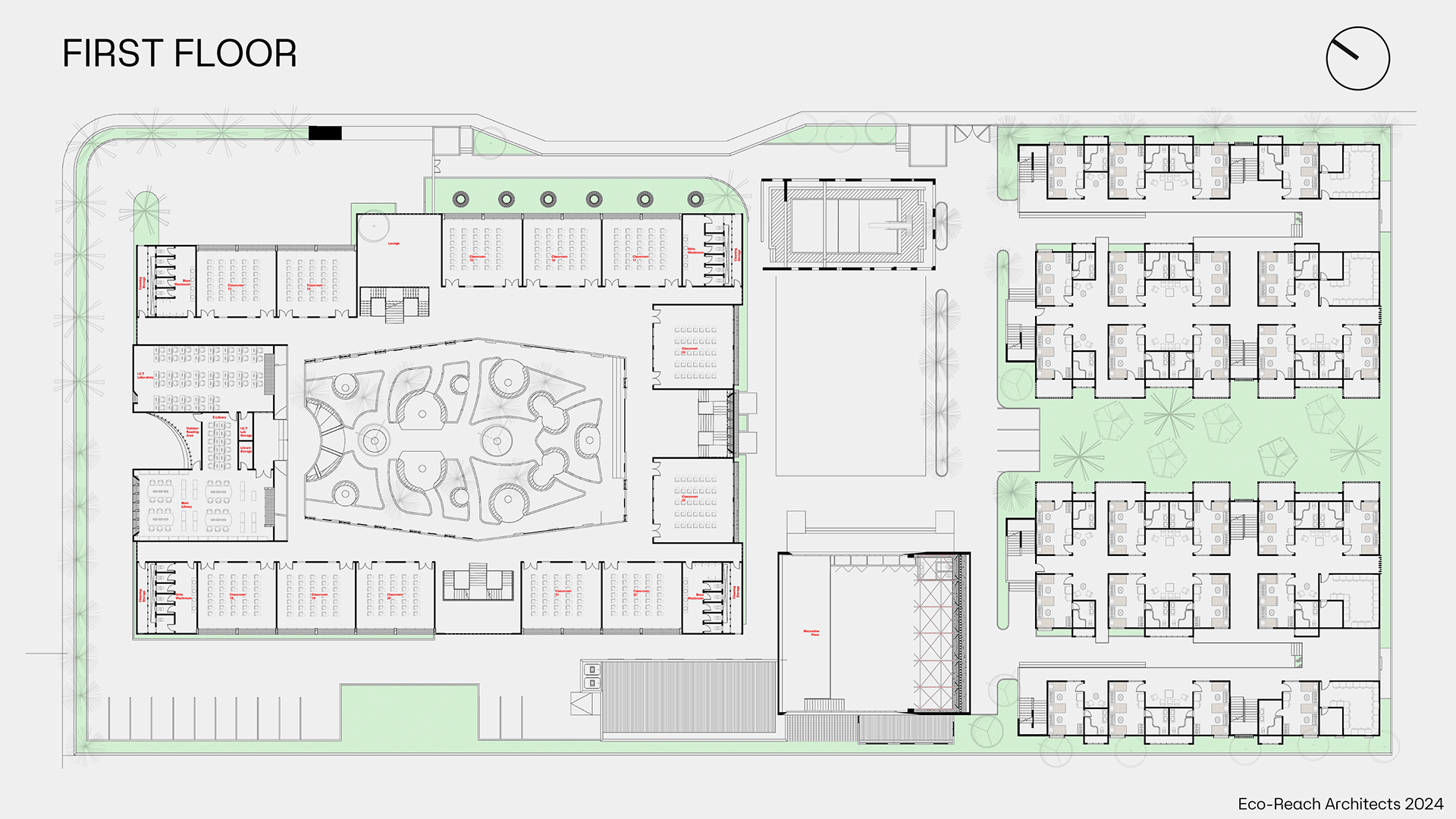
PAEL is structured around a simple conviction: learning improves when spaces are legible, breathable, and emotionally steady. I shaped the arrival sequence of the academic zone to be welcoming and universally accessible, with landscape doing real work—shade, comfort, orientation, and psychological decompression. Pedestrian and vehicular flows are considered with clarity to reduce conflict and preserve safety without over-signage or spatial anxiety.
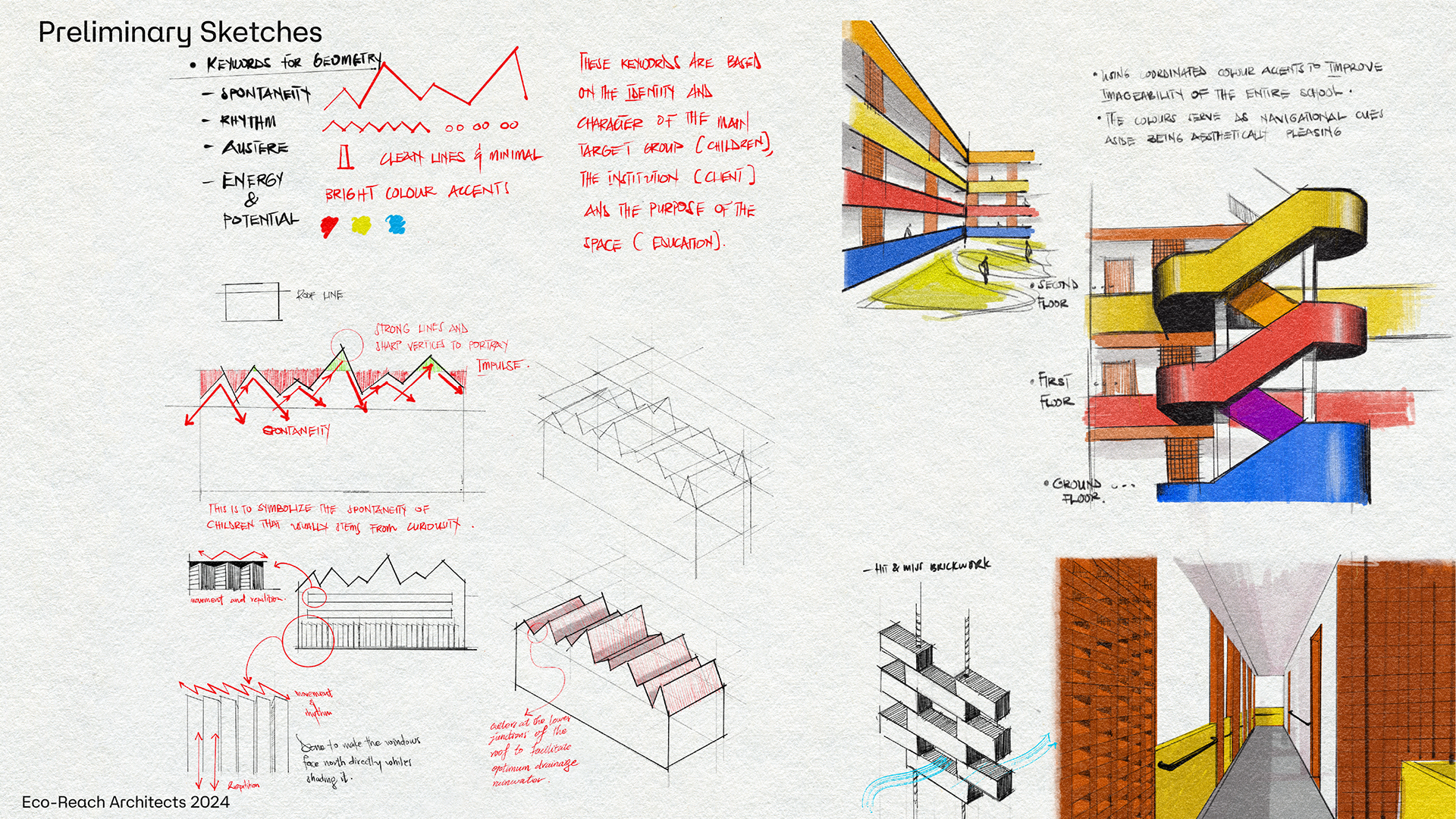
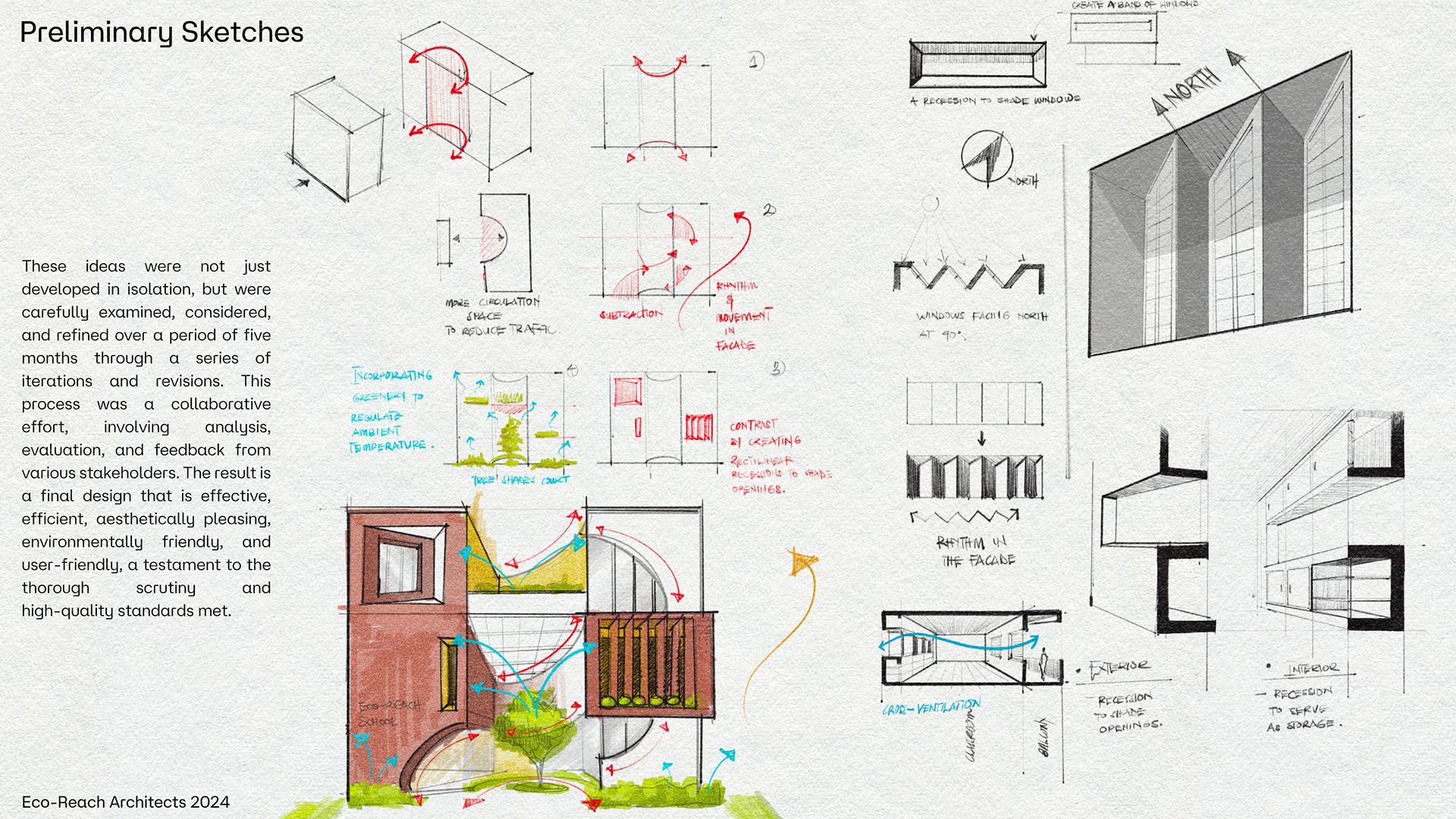
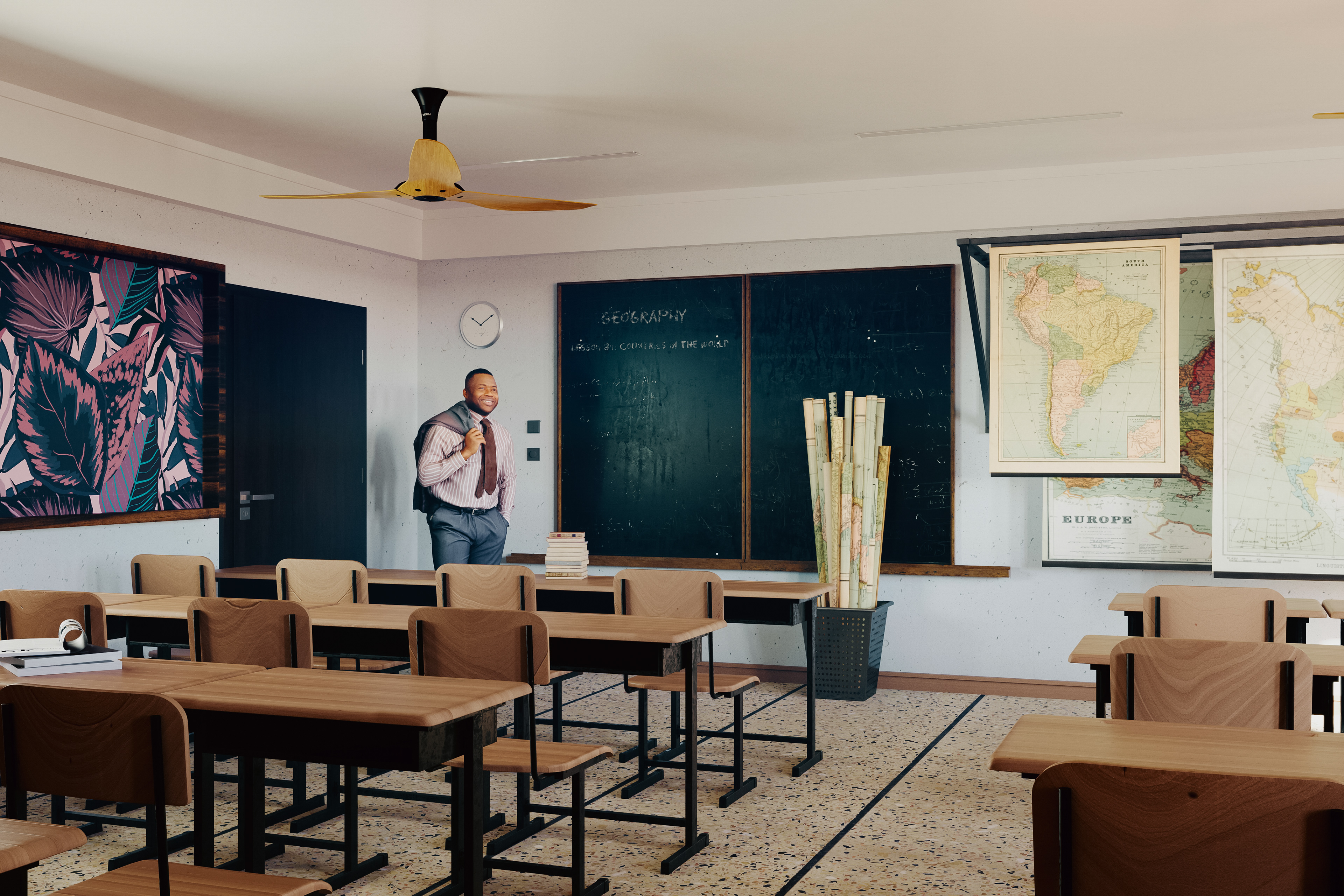
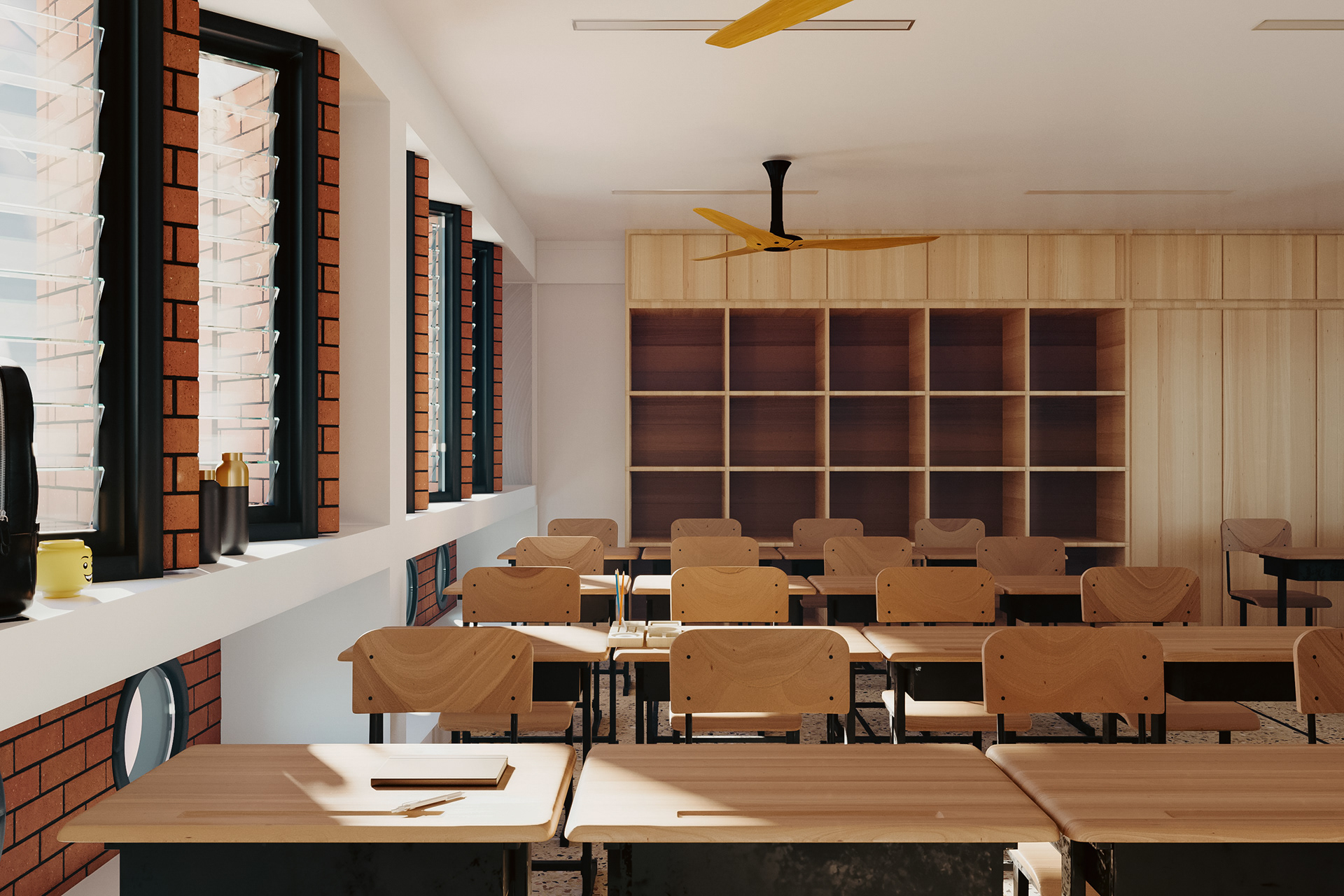
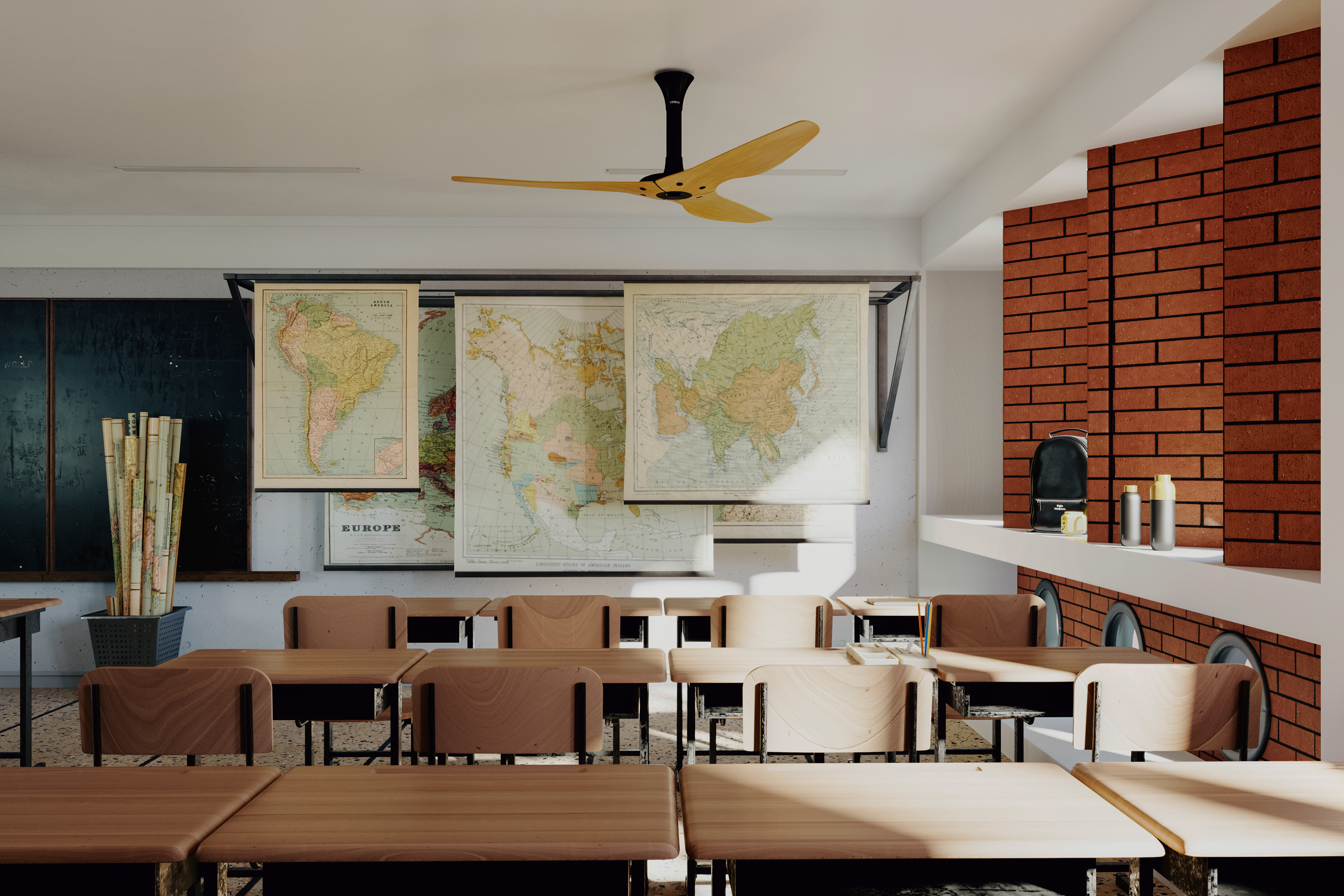
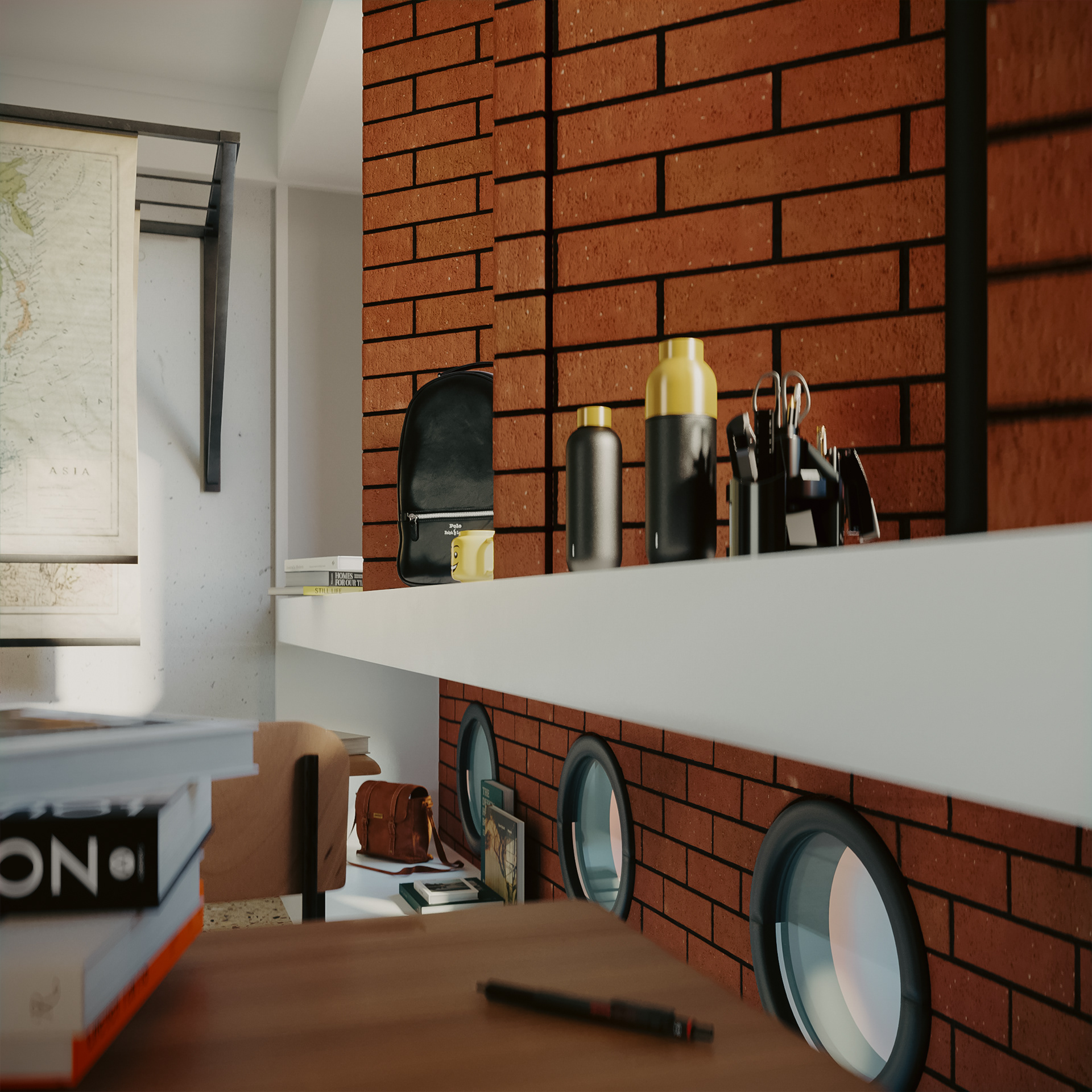
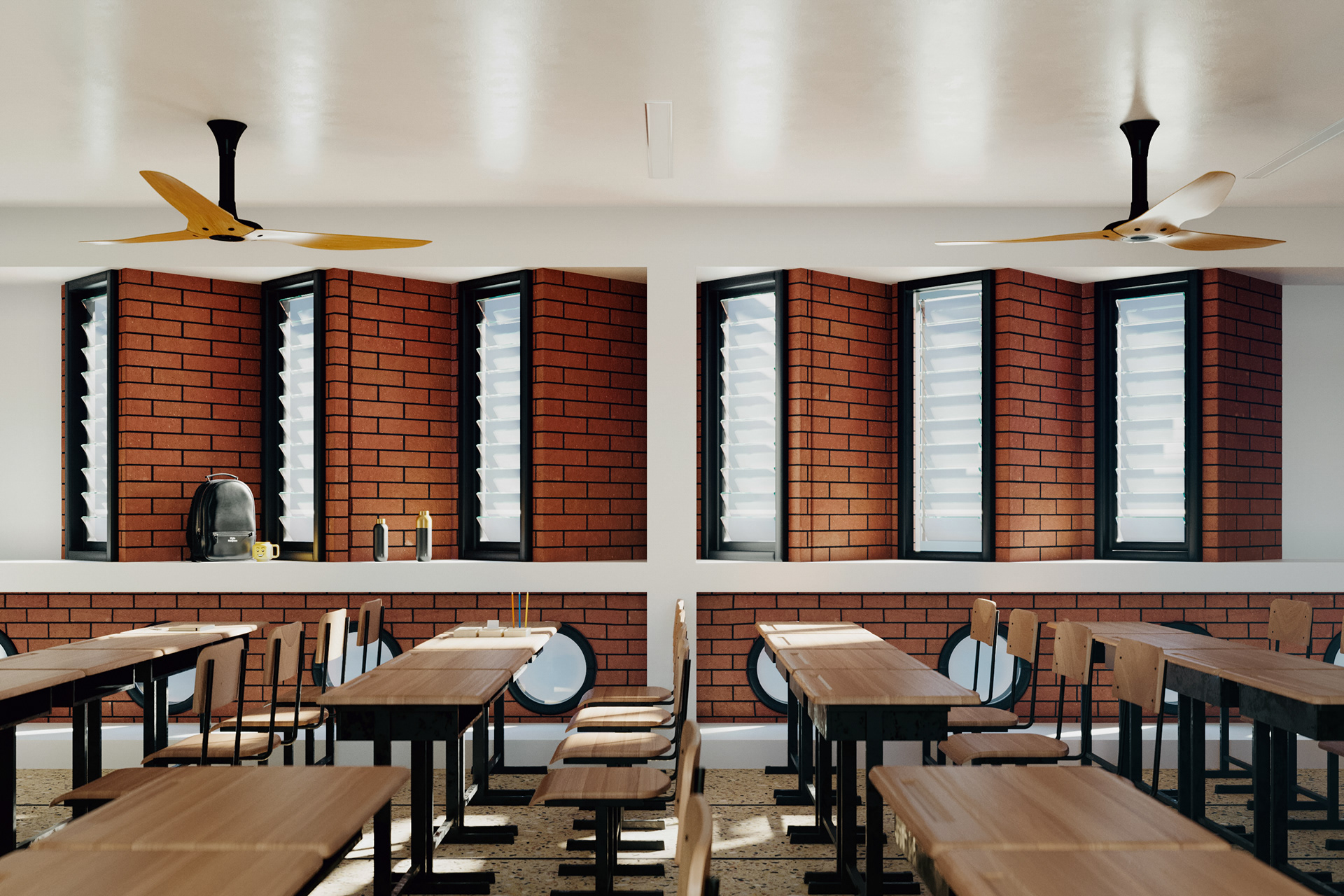
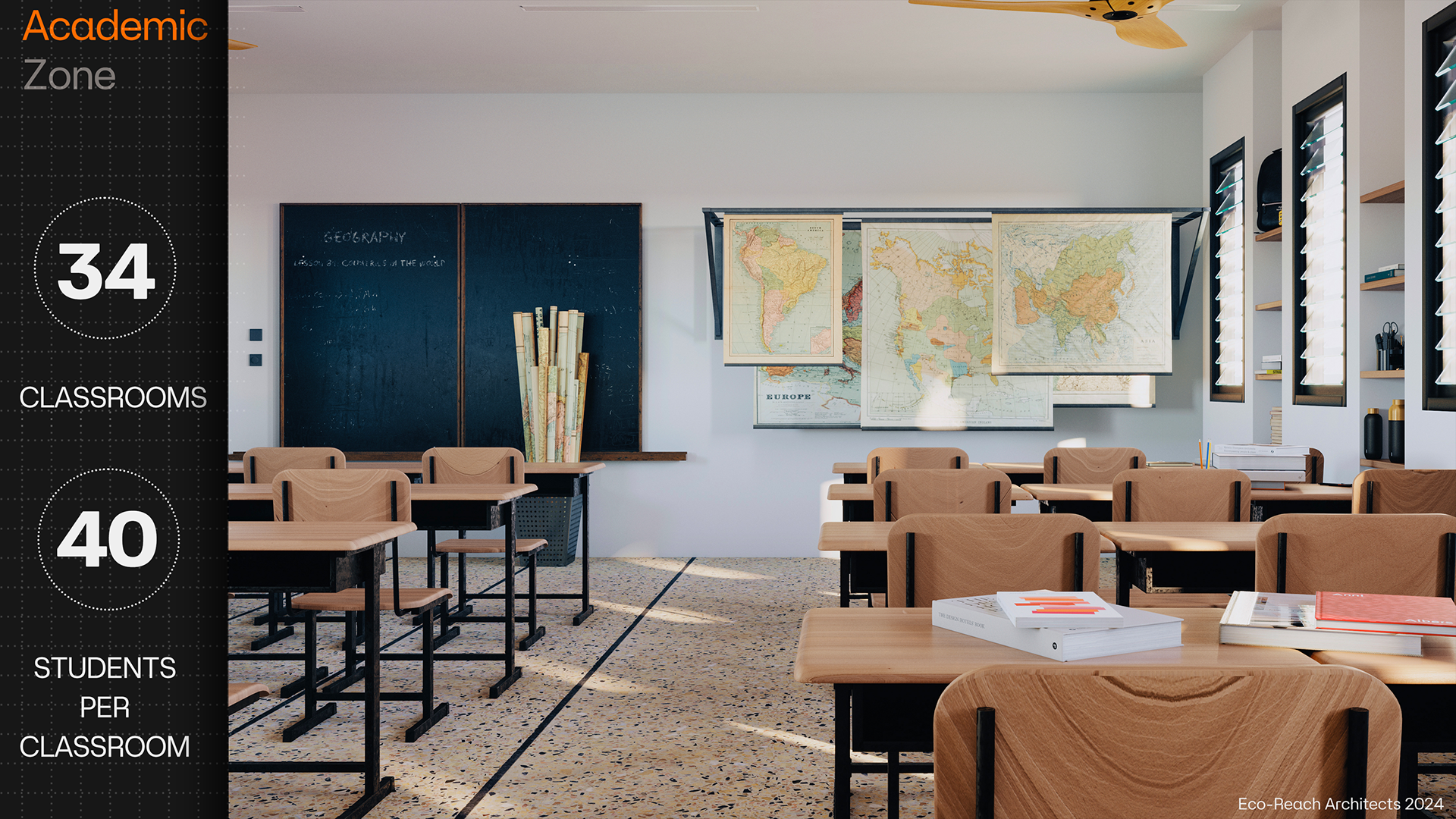
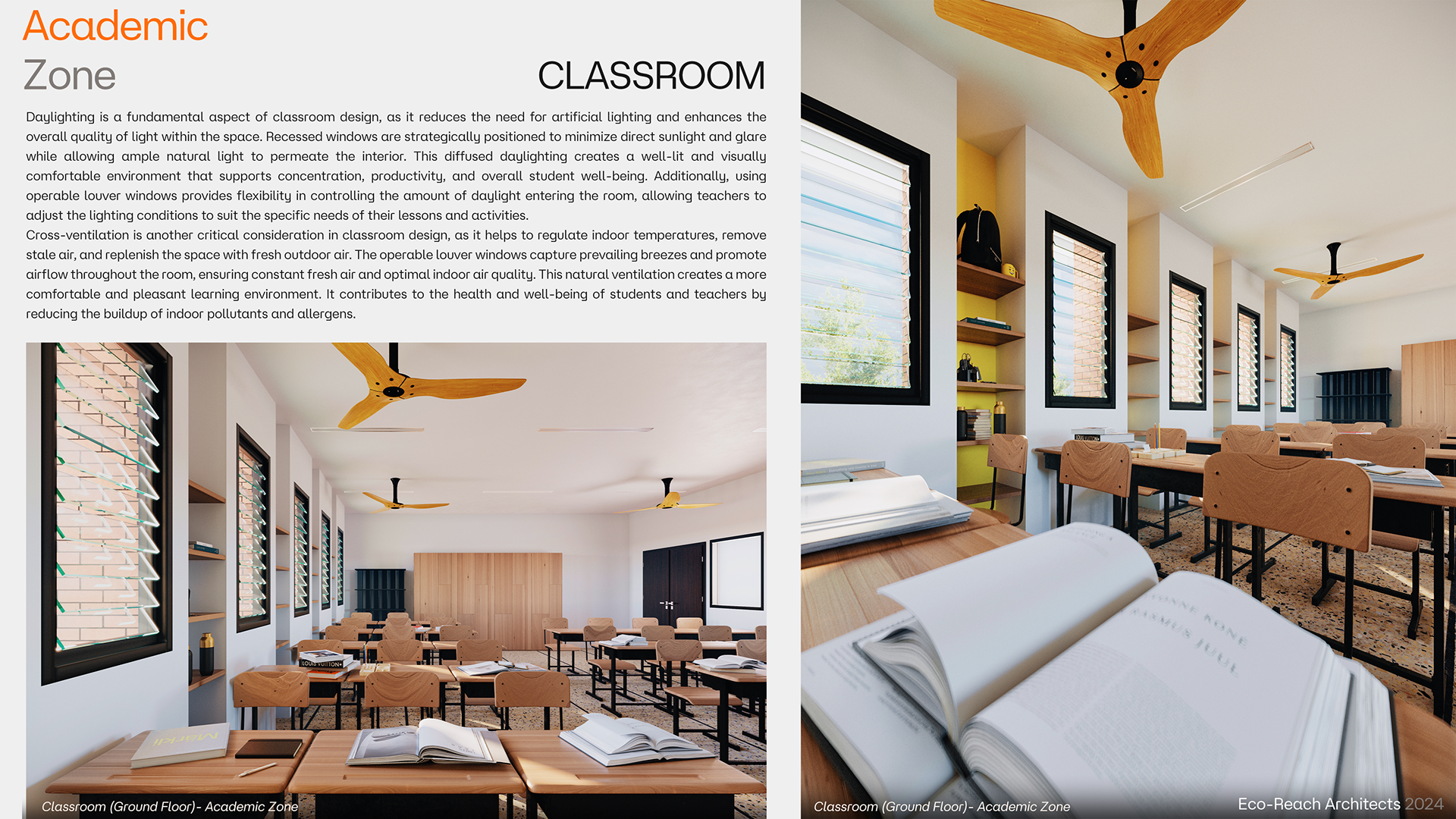
Inside the academic zone, environmental comfort is treated as part of pedagogy: naturally lit teaching spaces, operable recessed windows that encourage cross-ventilation, and durable floor finishes that can take the honest wear of daily use.
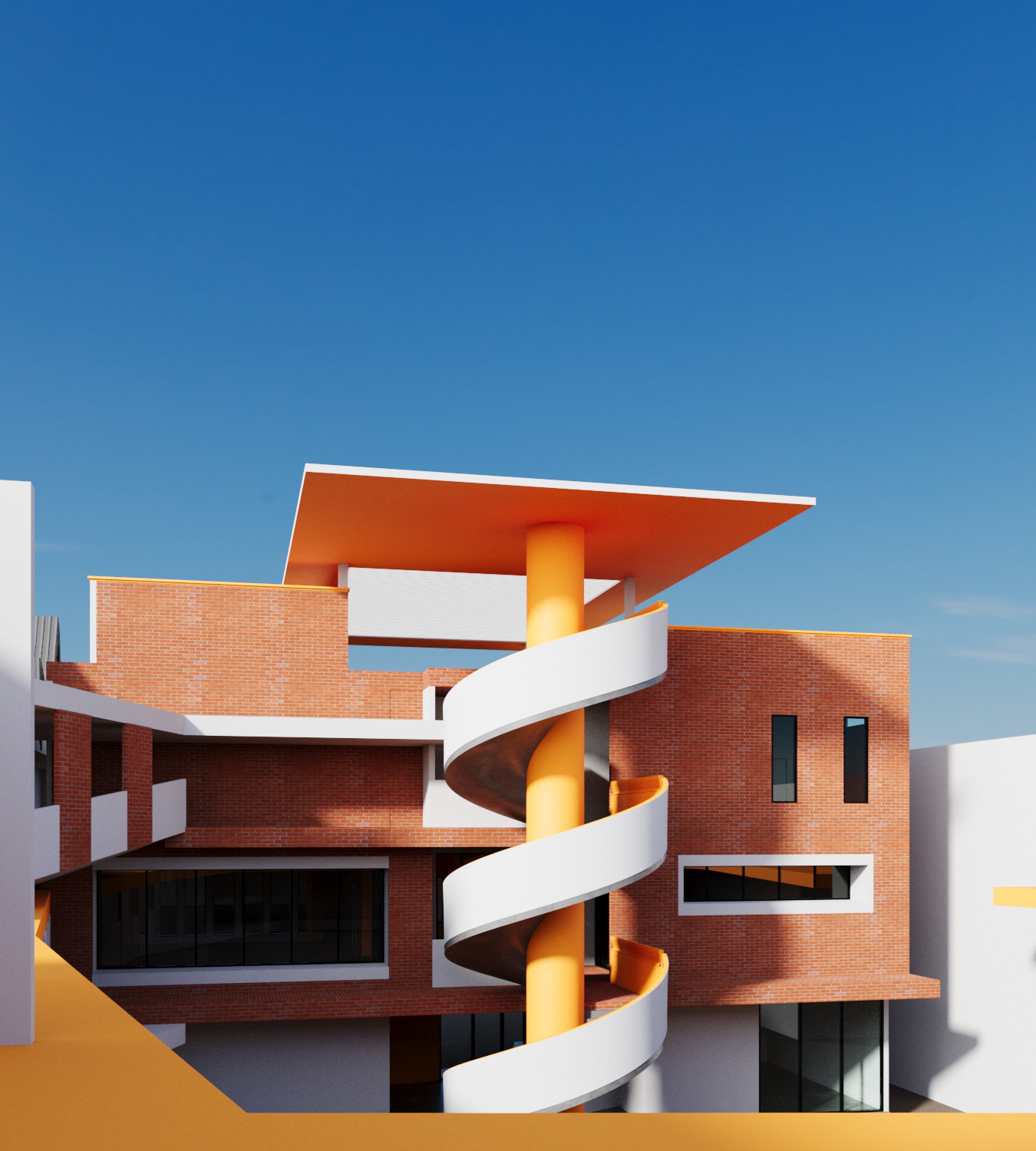
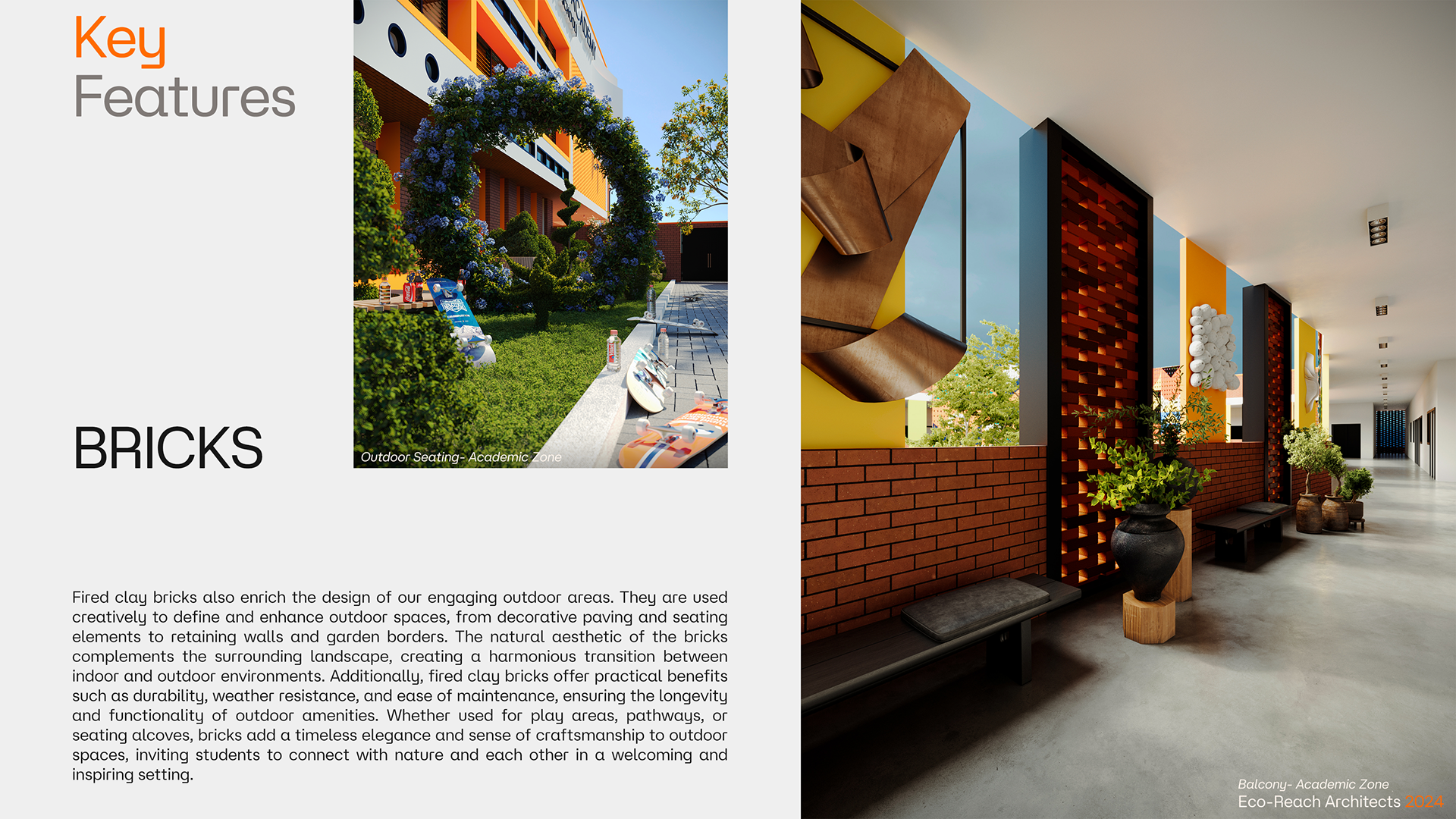
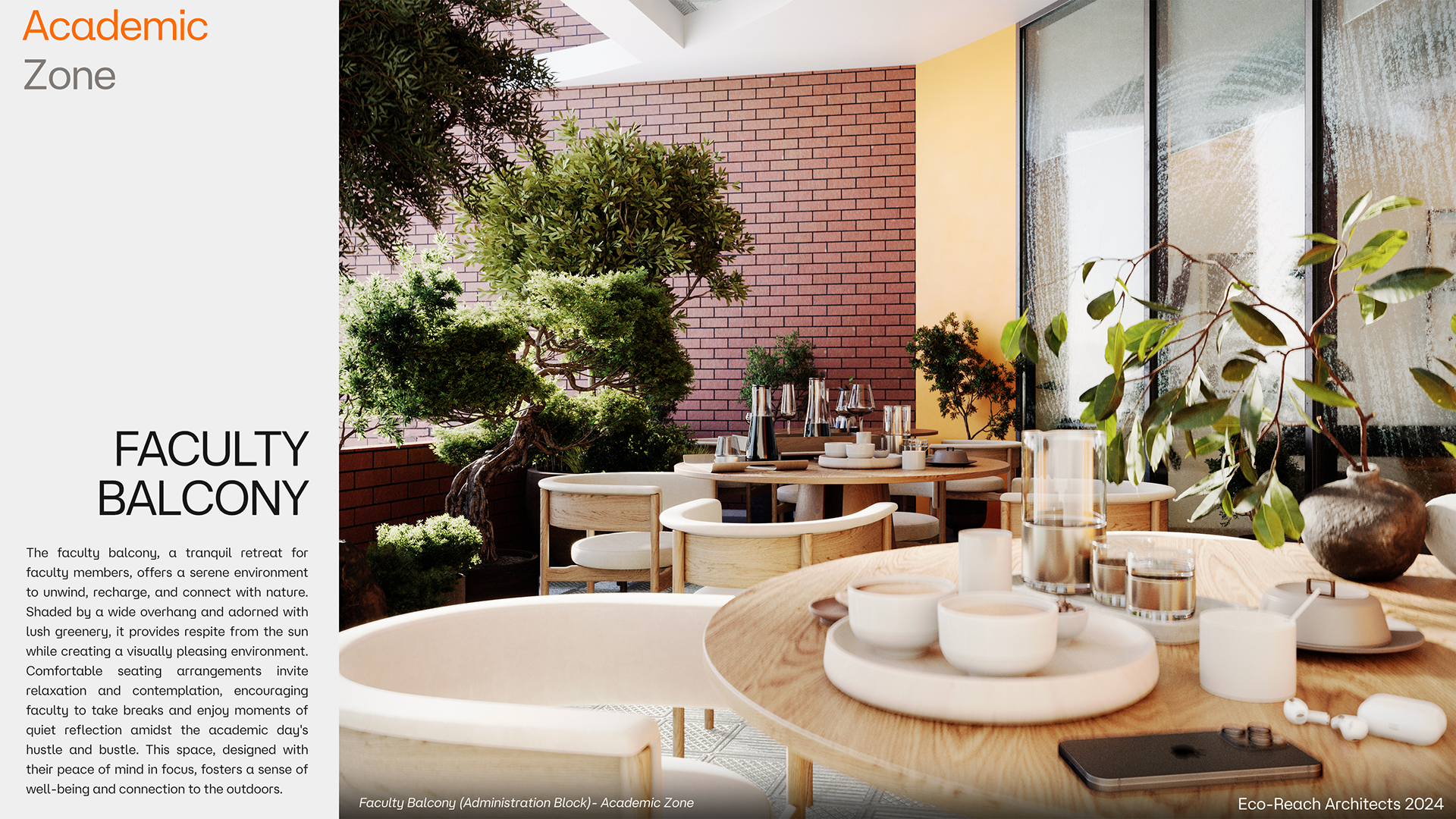
The project’s heart is a central courtyard approached through a threshold flanked by two living walls—an intentional moment where the building briefly stops being an object and becomes an atmosphere. The courtyard then performs at multiple scales: microclimate regulation, informal learning, reflection, and the kind of unplanned conversation that quietly shapes a campus culture. Shaded balconies extend this social-spatial gradient, offering outdoor study and recovery spaces that also help moderate heat.
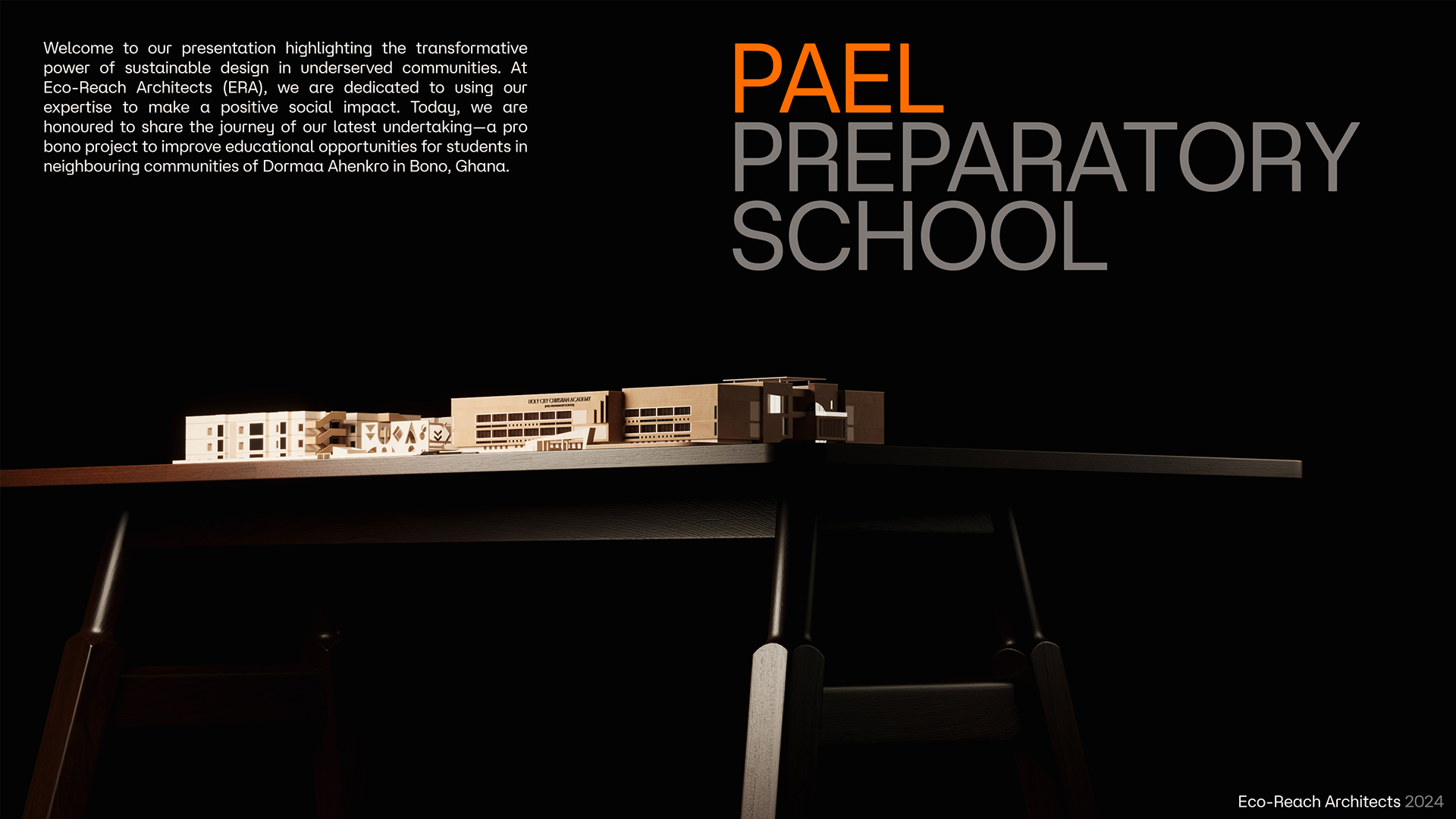
Design moves
Passive-first comfort: shade, air, and daylight before machines
Material accountability: low-impact where possible, durable where necessary
Repairable assemblies: details designed for maintenance, not replacement
Landscape as infrastructure: cooling + water logic + biodiversity support
Post-occupancy evaluation: learning loop to improve real performance
Comfort / performance strategy
Ventilation logic: cross-flow planning + high-level exhaust paths to reduce heat buildup
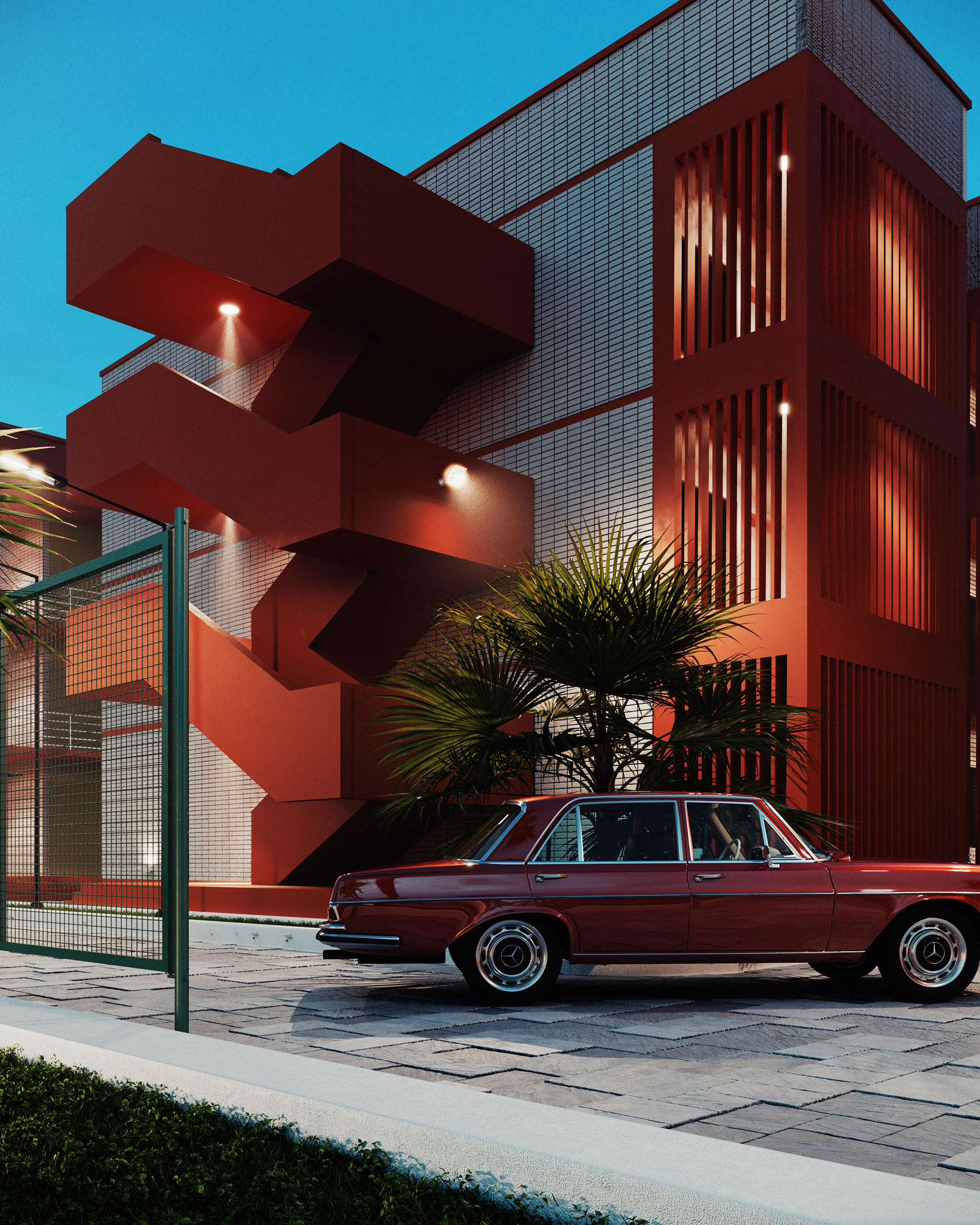
Shading discipline: deep overhangs, screens, and vegetative buffers to cut glare/solar gain
Daylight calibration: bright interiors with controlled openings to avoid overheating
Water stewardship: rain capture, infiltration, and landscape cooling where feasible
Healthy materials: low-VOC finishes and breathable assemblies (where appropriate)
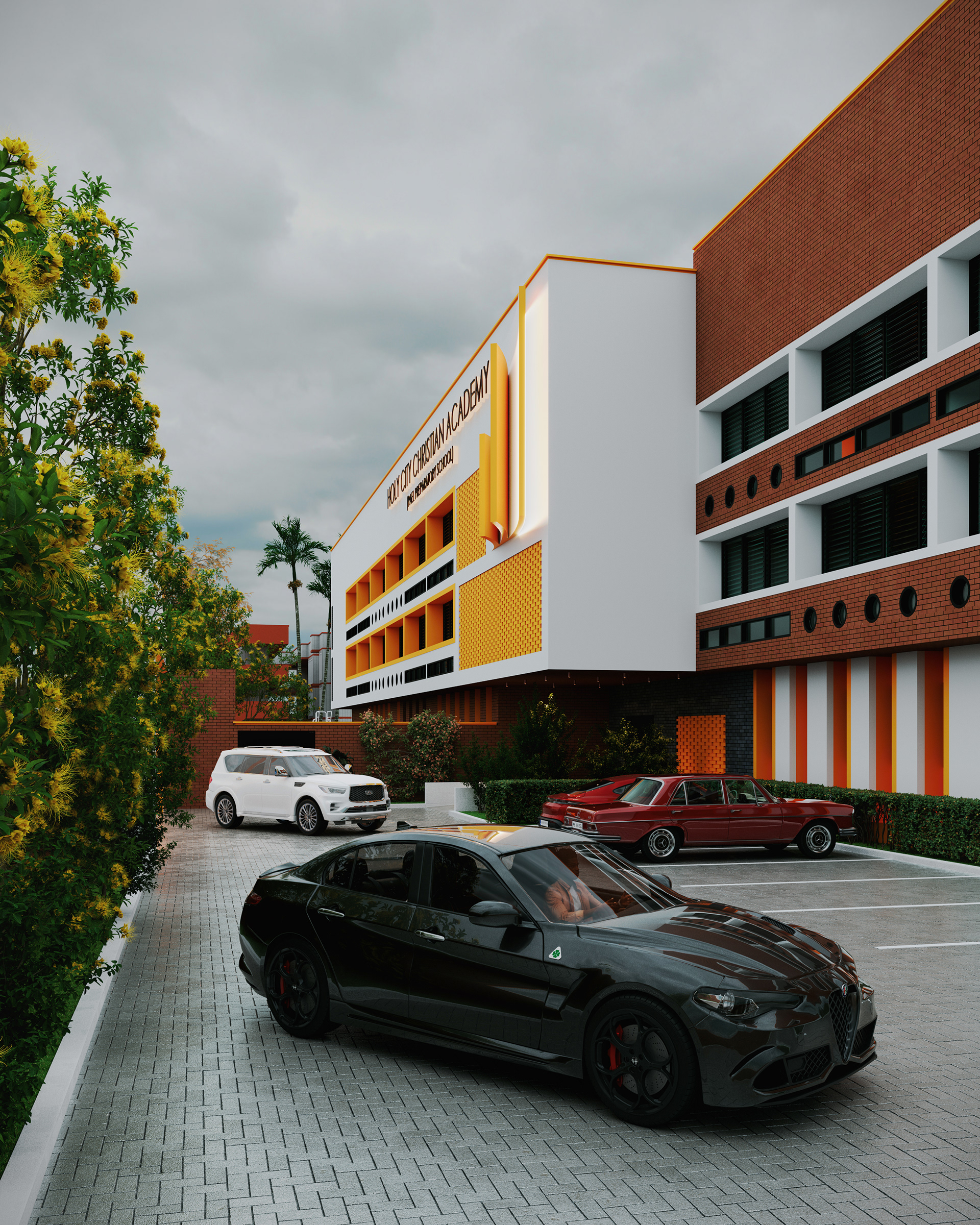
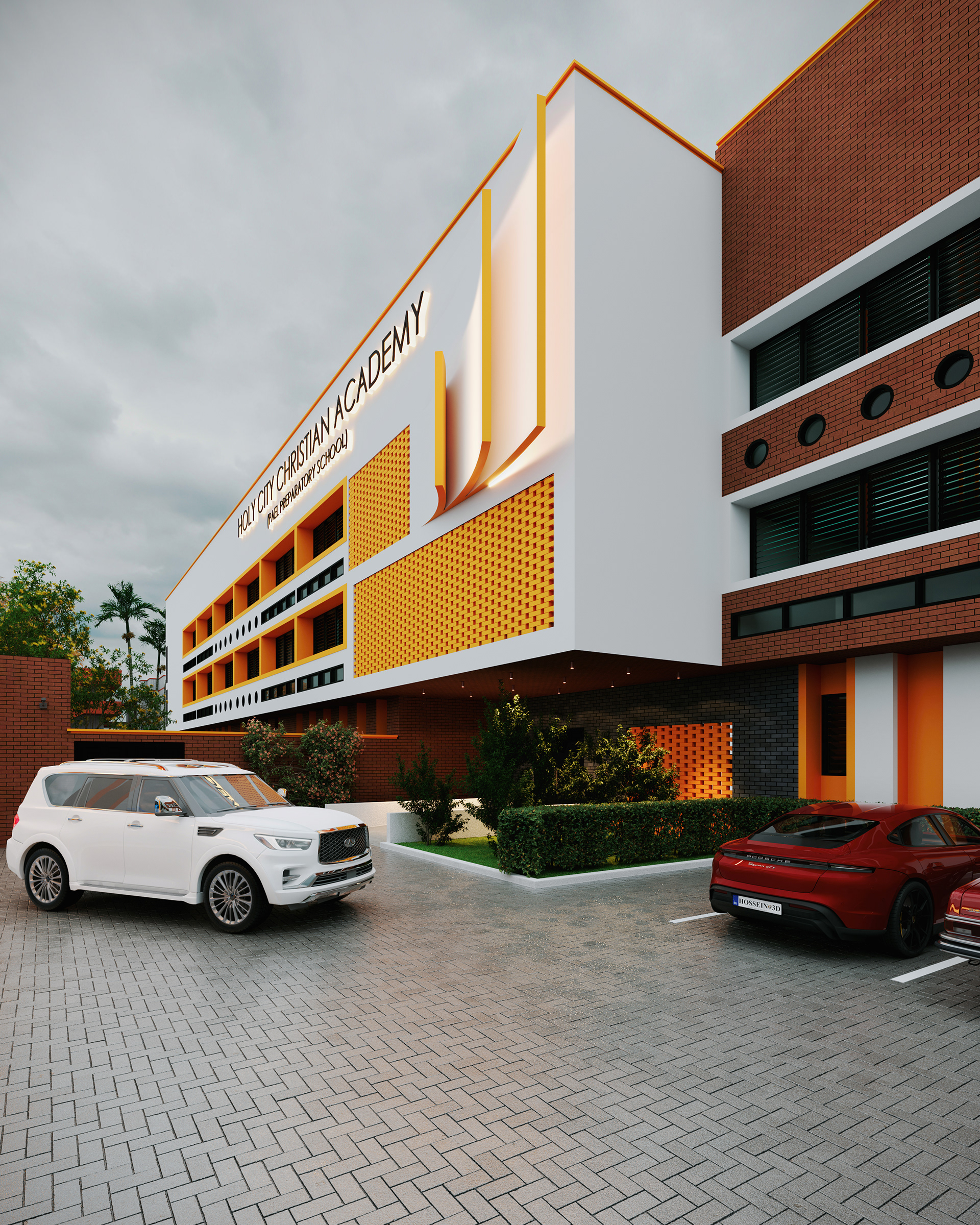
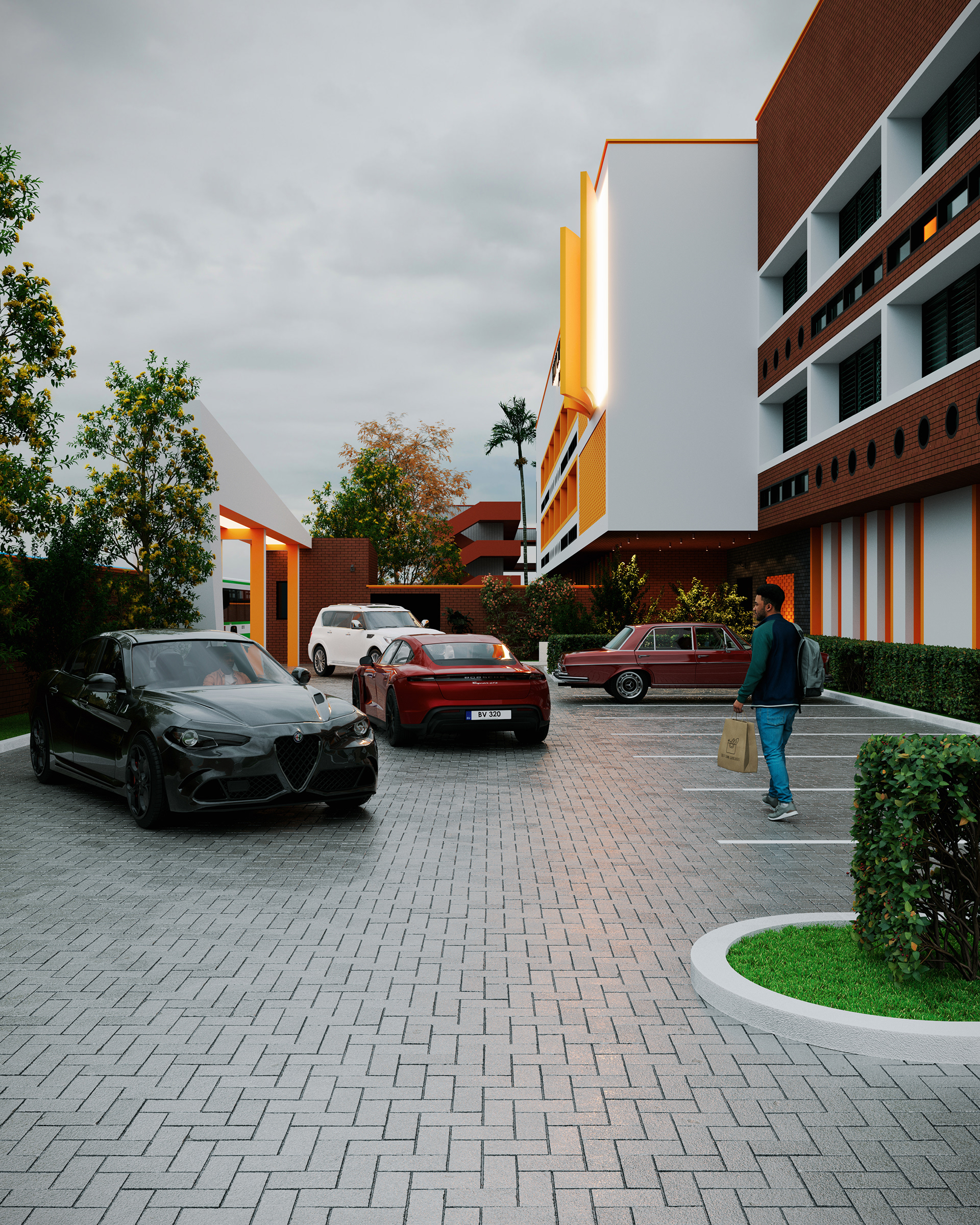
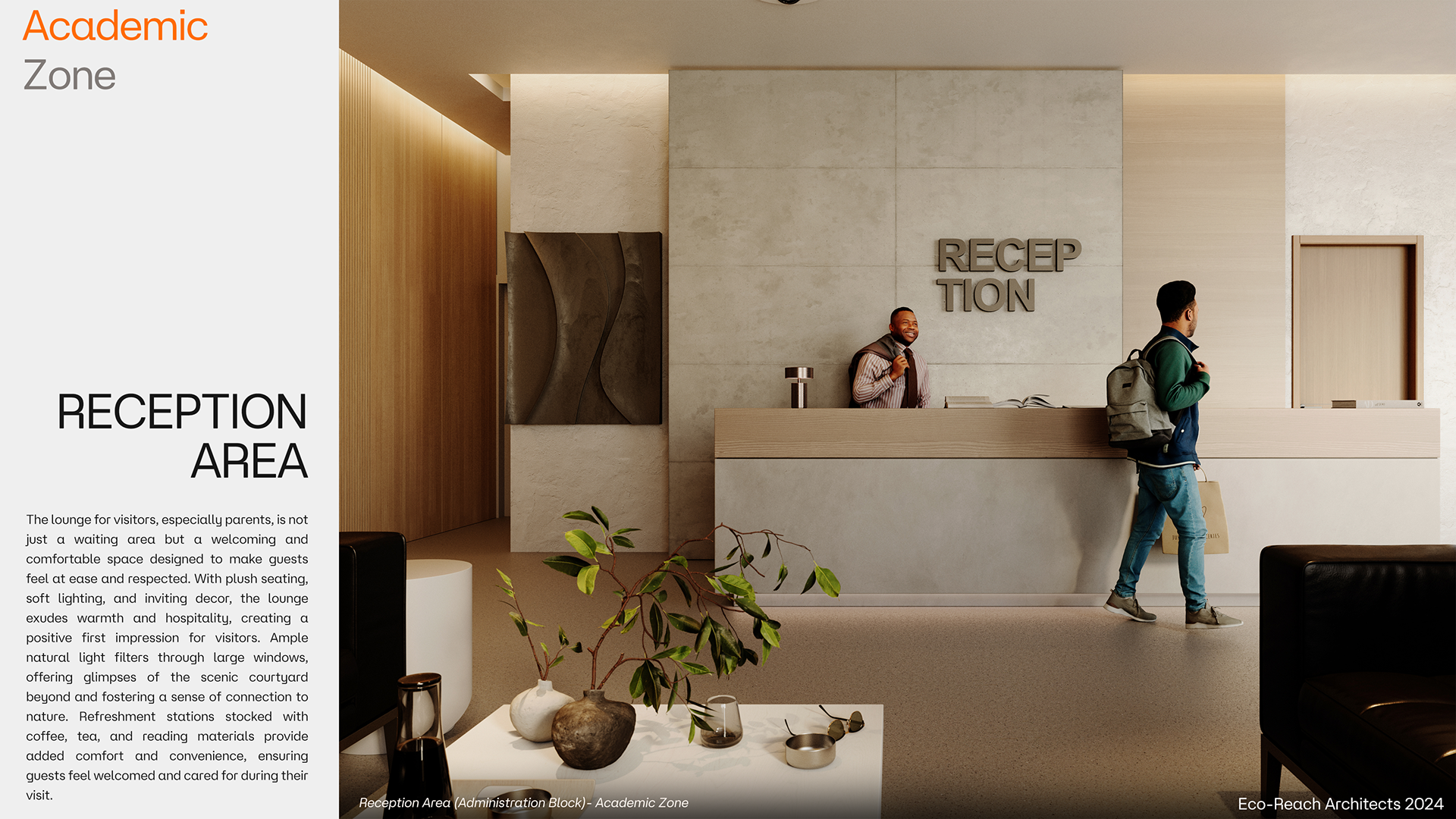
The entrance foyer of the academic zone is designed to be welcoming and easily accessible for everyone. Lush landscaping surrounds the area, providing refreshing shade while contributing to a tranquil and invigorating ambiance. Careful consideration was given to the flow of pedestrian and vehicular movements; pathways are designed with clarity in mind, ensuring seamless navigation and unobstructed sightlines to minimize any potential conflicts between foot traffic and vehicle routes.
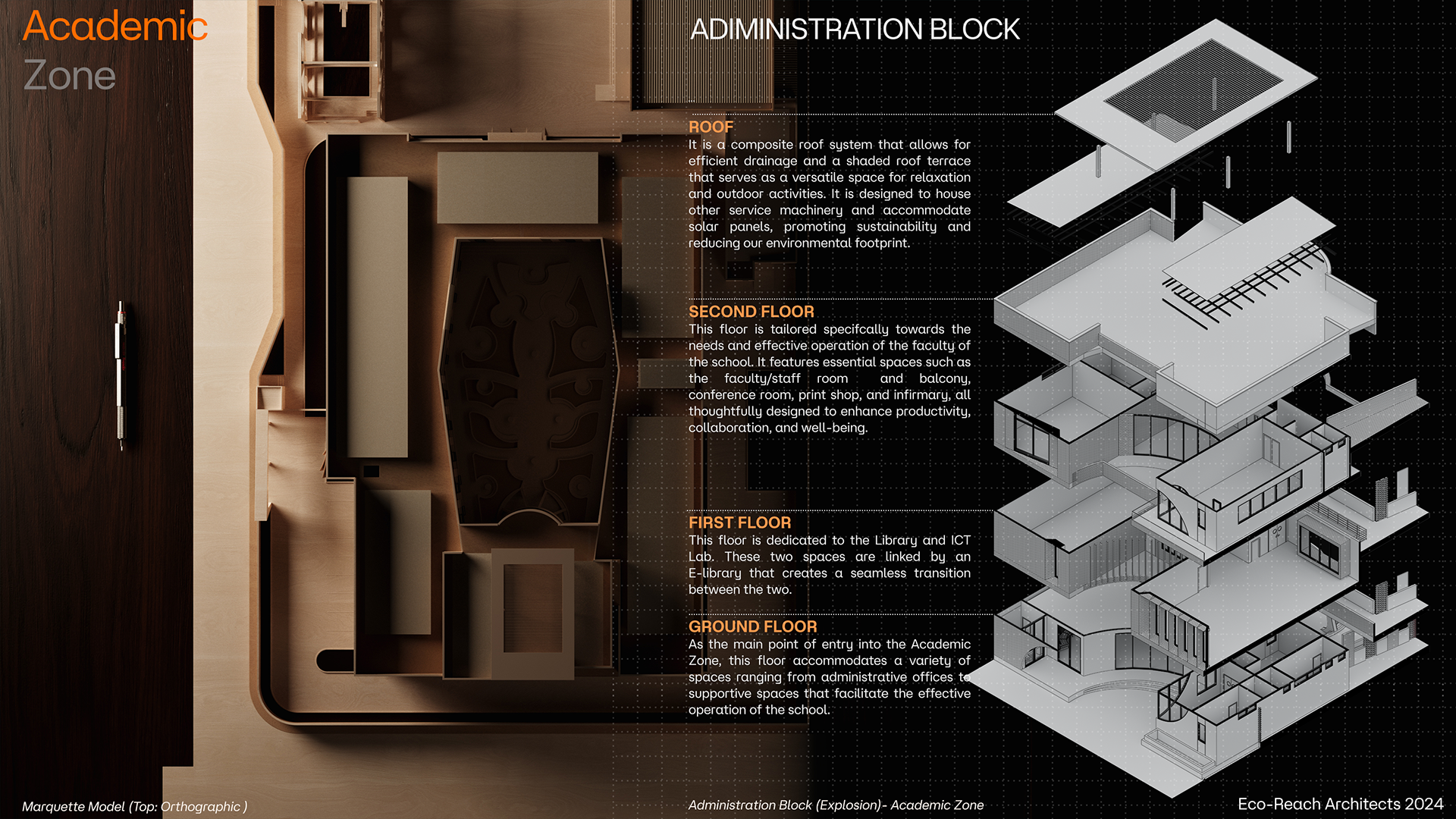
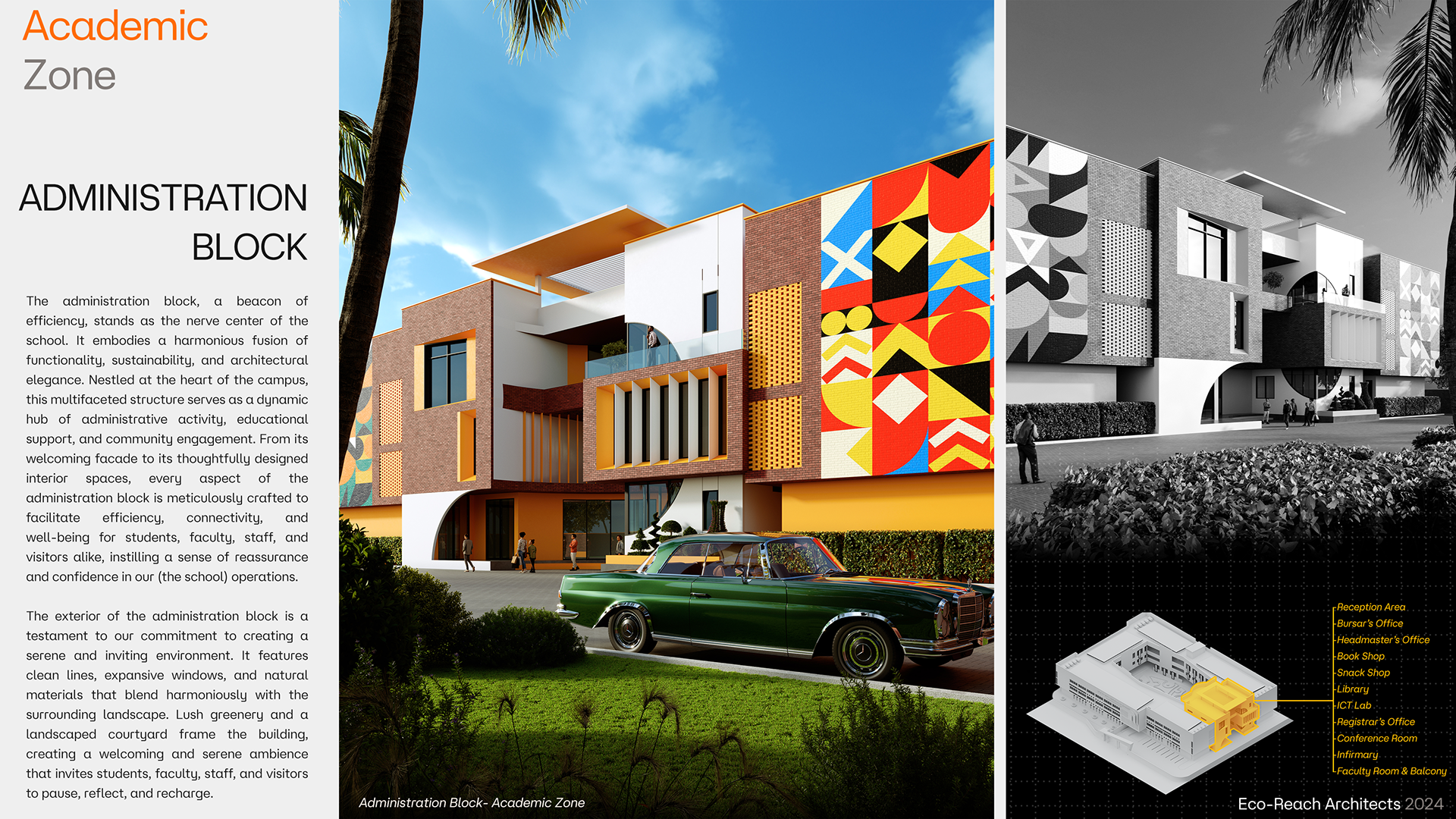
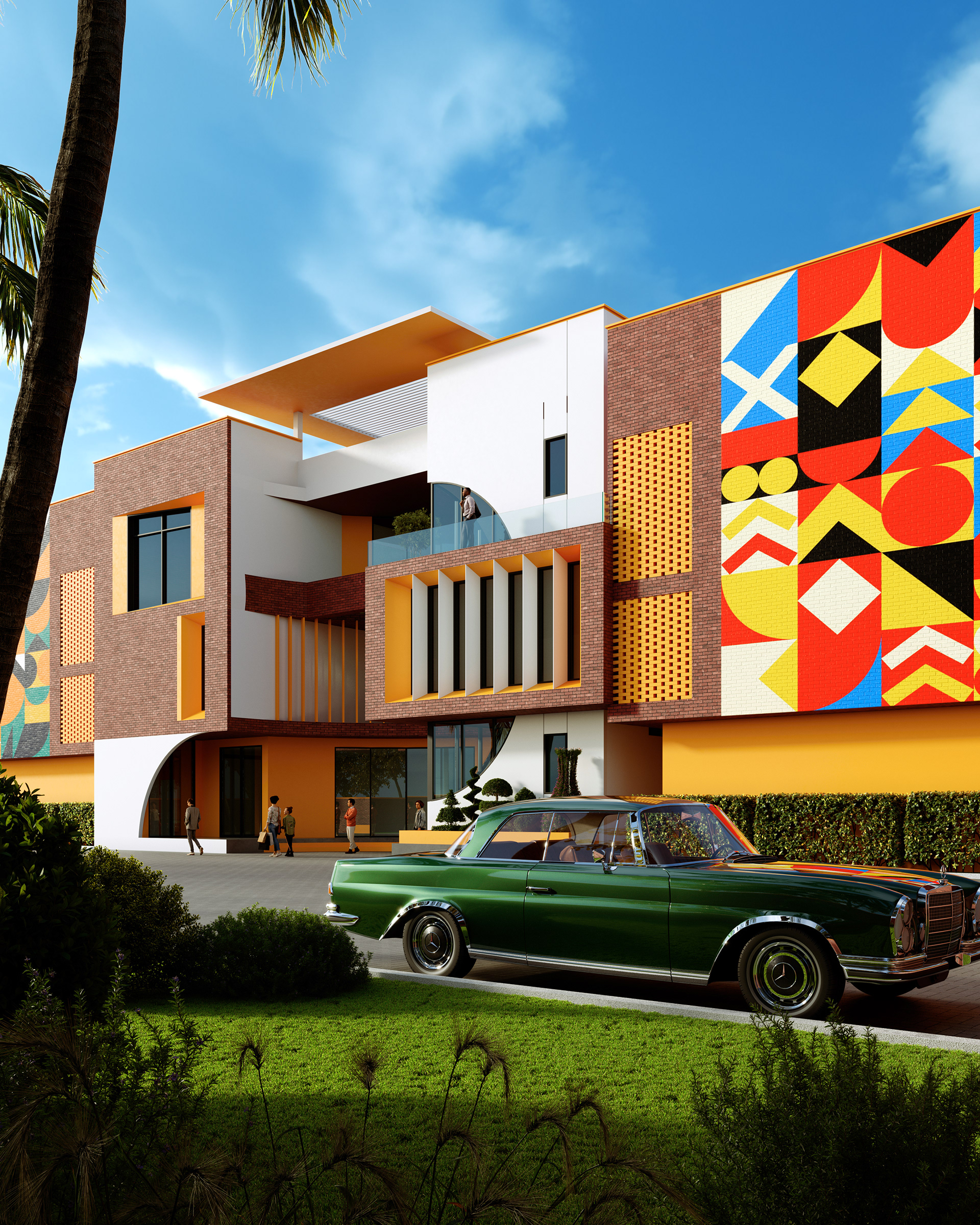
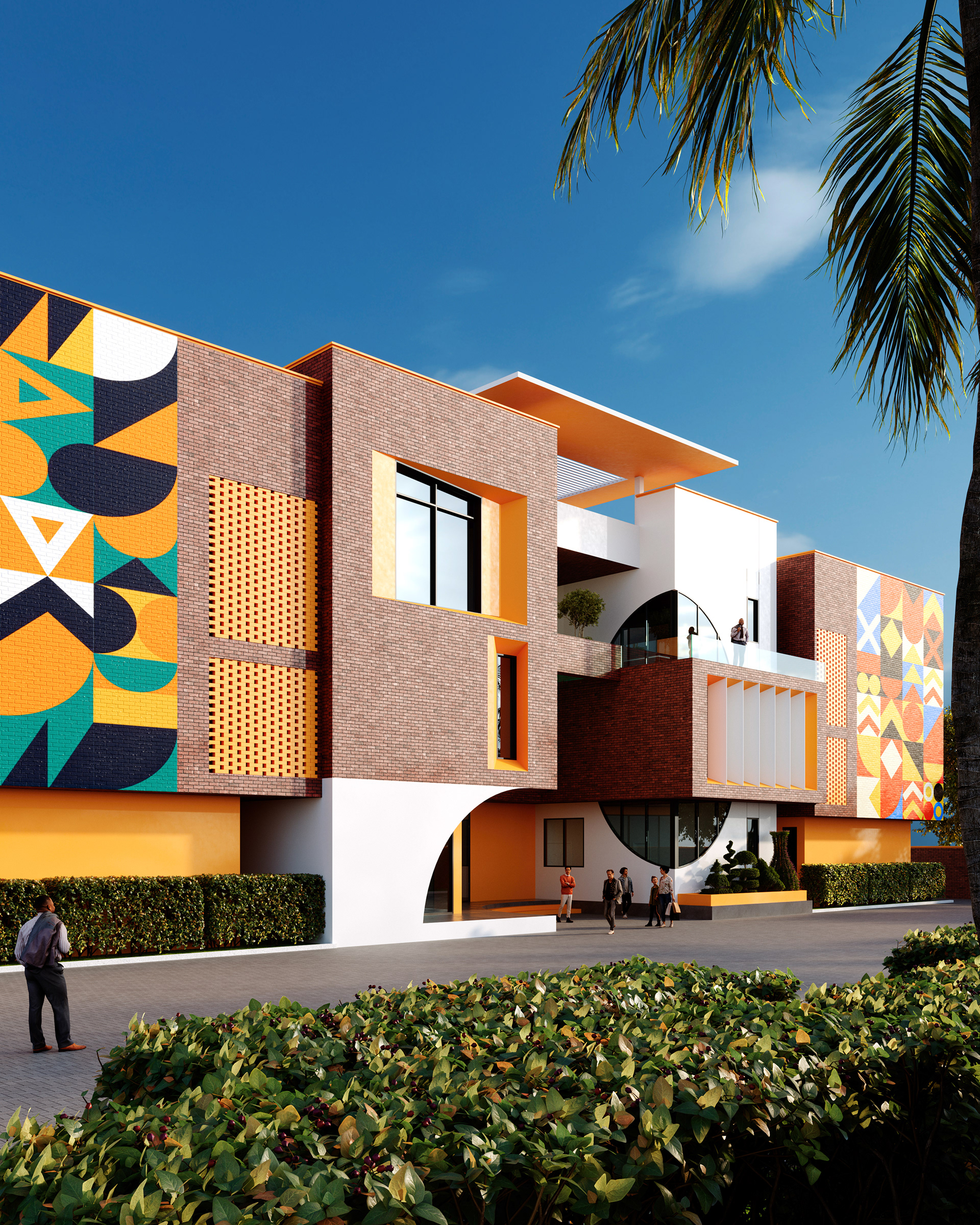
The Academic Zone is designed to optimize learning environments through thoughtful architectural features. It includes naturally lit classrooms, enhancing the atmosphere for teaching and learning. The terrazzo floors provide a durable yet aesthetically pleasing surface, while the recessed operable windows allow for effective cross-ventilation, promoting fresh air circulation.
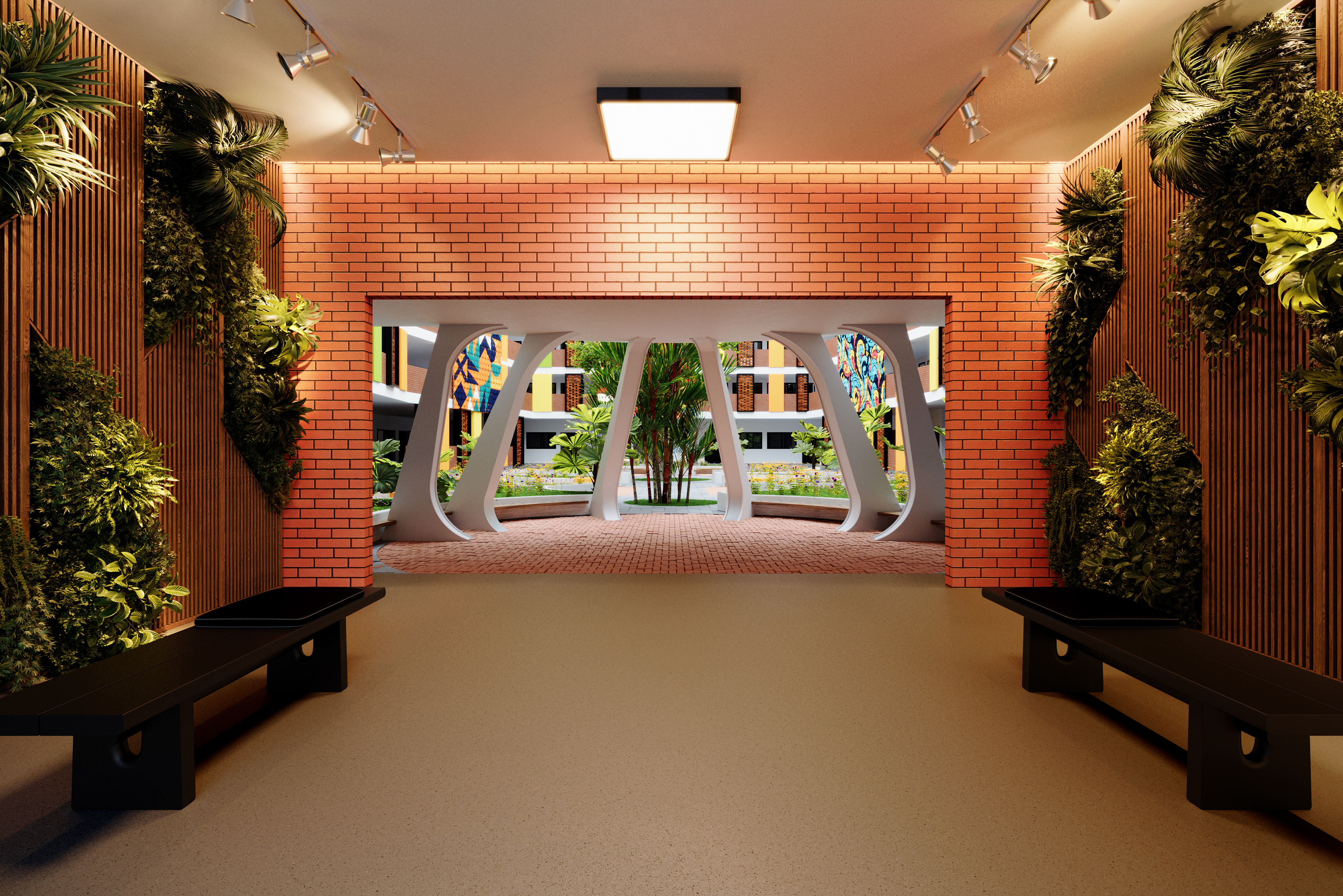
The hallway to the central courtyard is flanked by two living walls, lush with greenery and vegetation, creating a striking visual backdrop connecting occupants with nature. These living walls serve as living works of art, purifying the air, reducing noise pollution, and promoting well-being and tranquillity. As occupants traverse the hallway, they are enveloped by the sights, sounds, and scents of the natural world, enhancing the overall sensory experience and fostering a deeper connection to the outdoor environment. The living walls frame the entrance to the courtyard, drawing occupants towards the vibrant green oasis beyond and serving as a gateway to relaxation, recreation, and rejuvenation, offering a peaceful escape from the daily hustle and bustle.
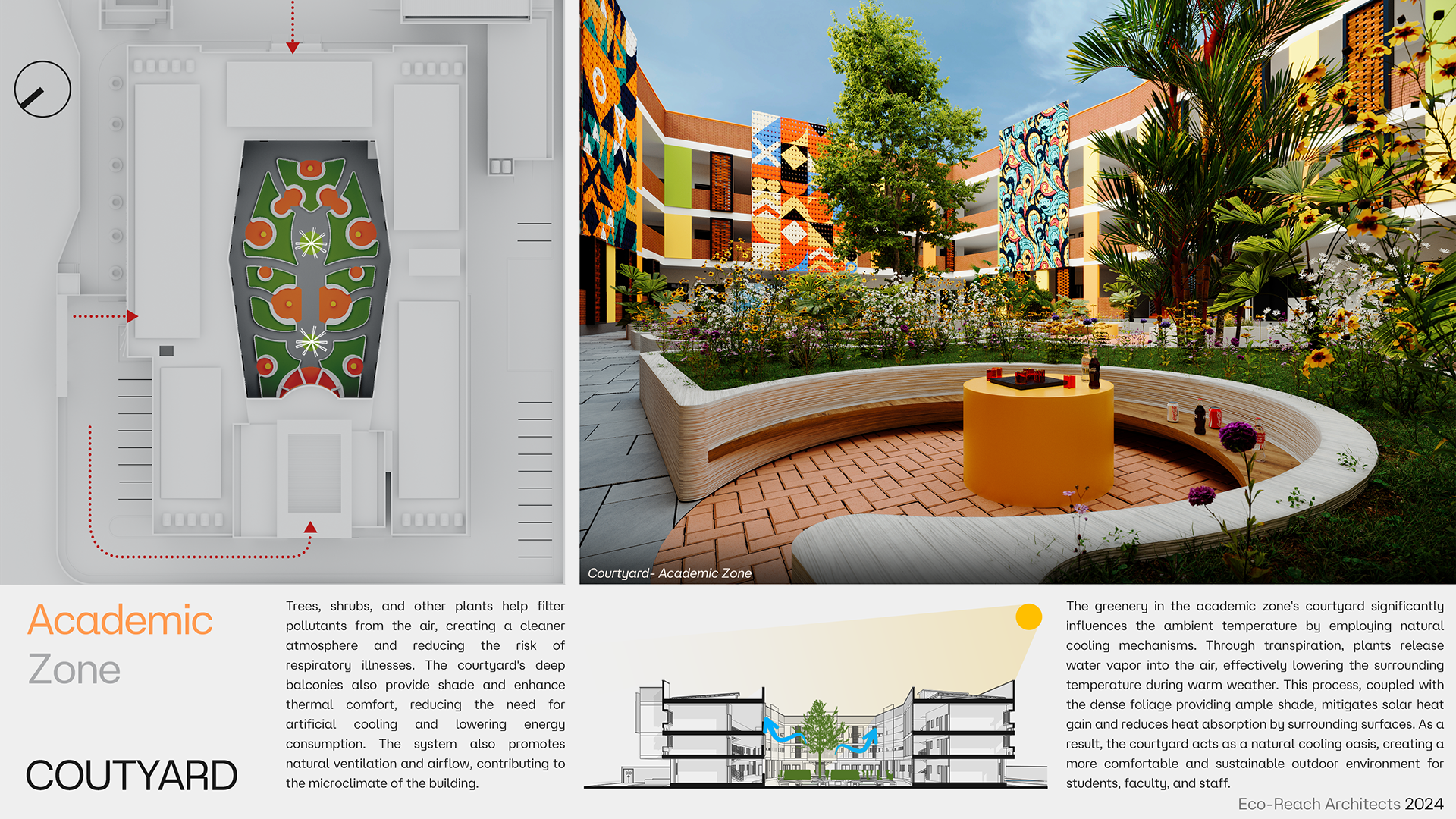
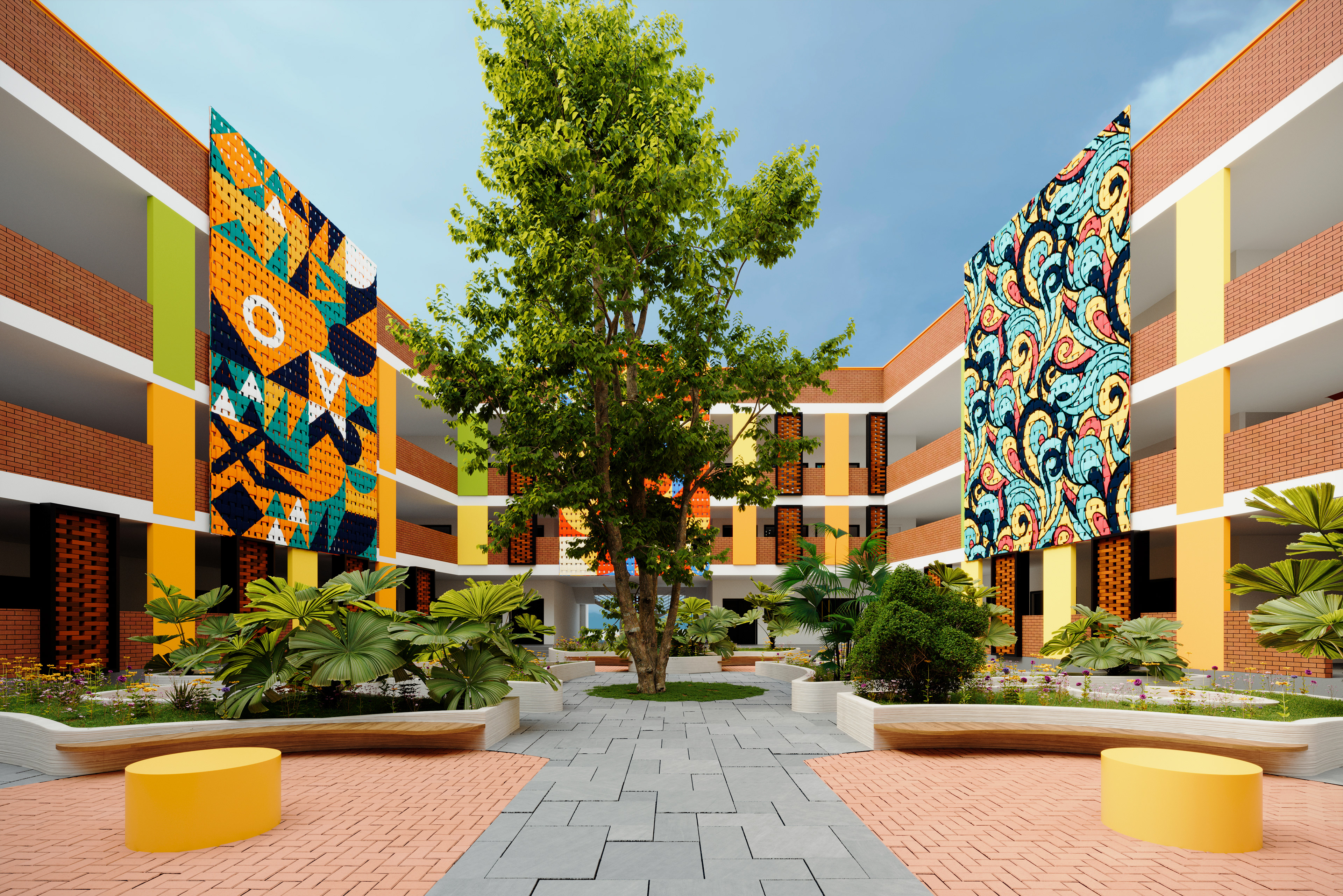
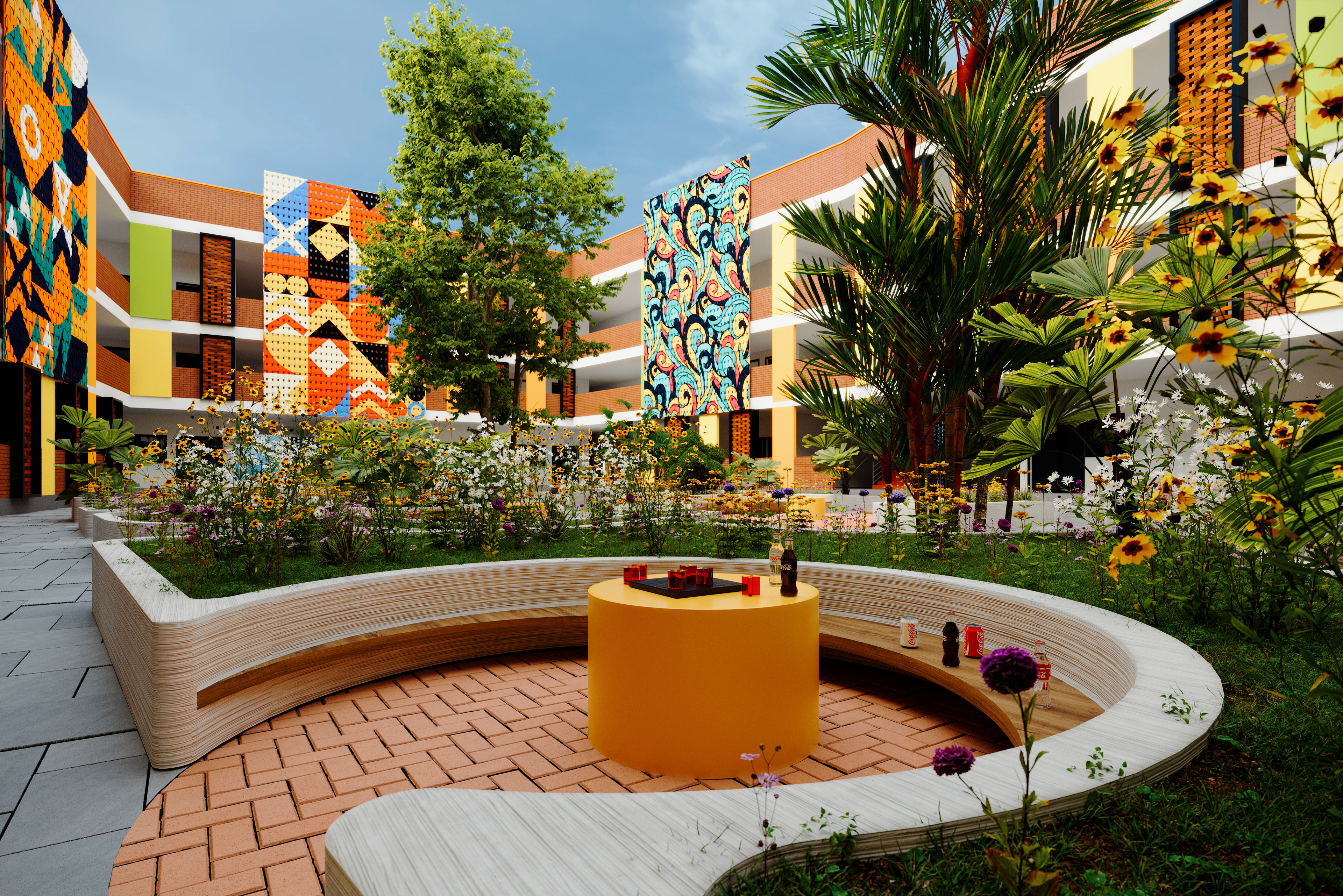
The expansive courtyard, not just a microclimatic hub, but also a vibrant social area, improving air quality and fostering creativity. This space enhances the campus’s physical environment and encourages informal learning and reflection among students, making it an integral part of the educational experience.
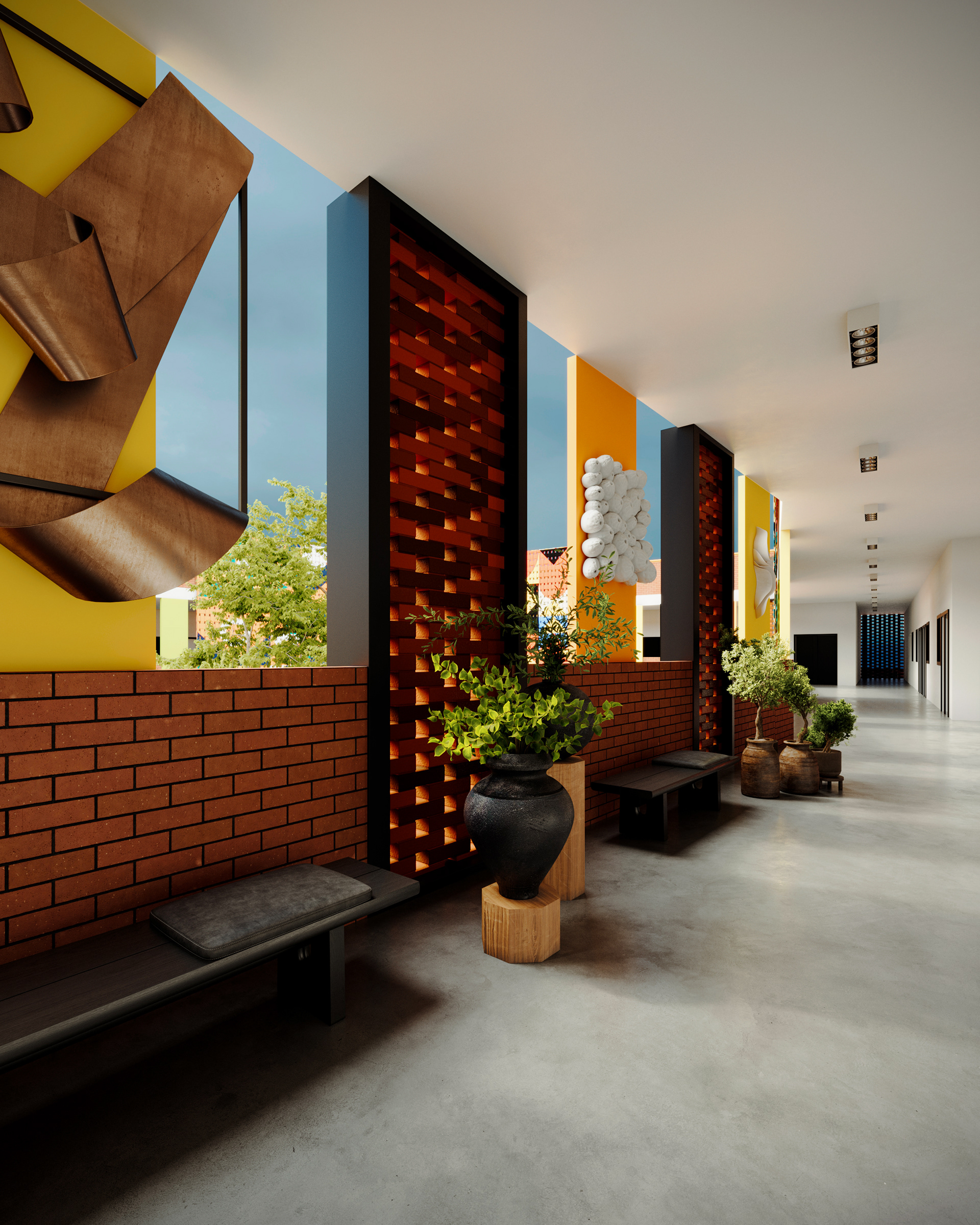
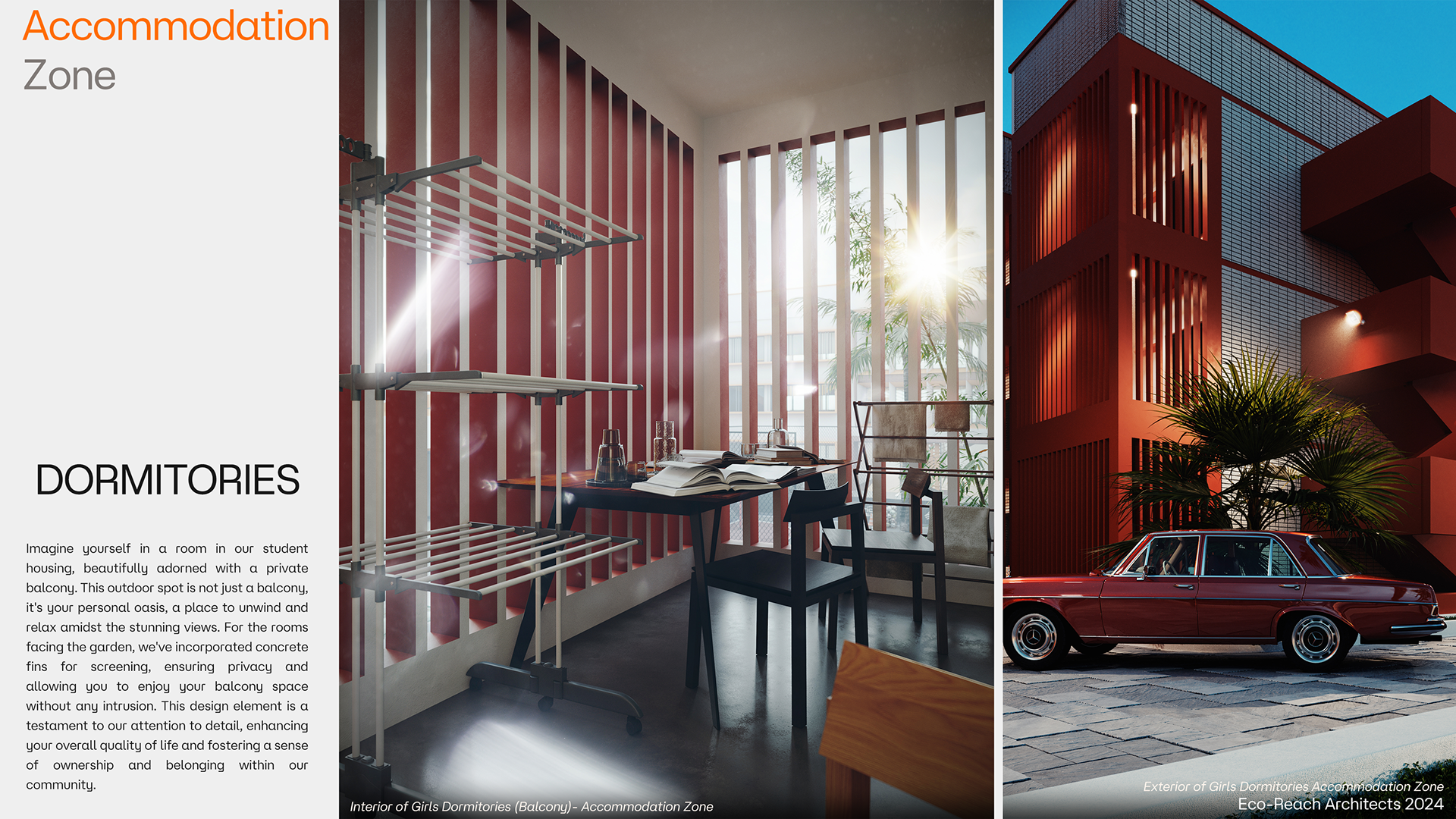
Shaded balconies offer a comfortable outdoor space that helps regulate temperature and provides a place for relaxation or informal study.
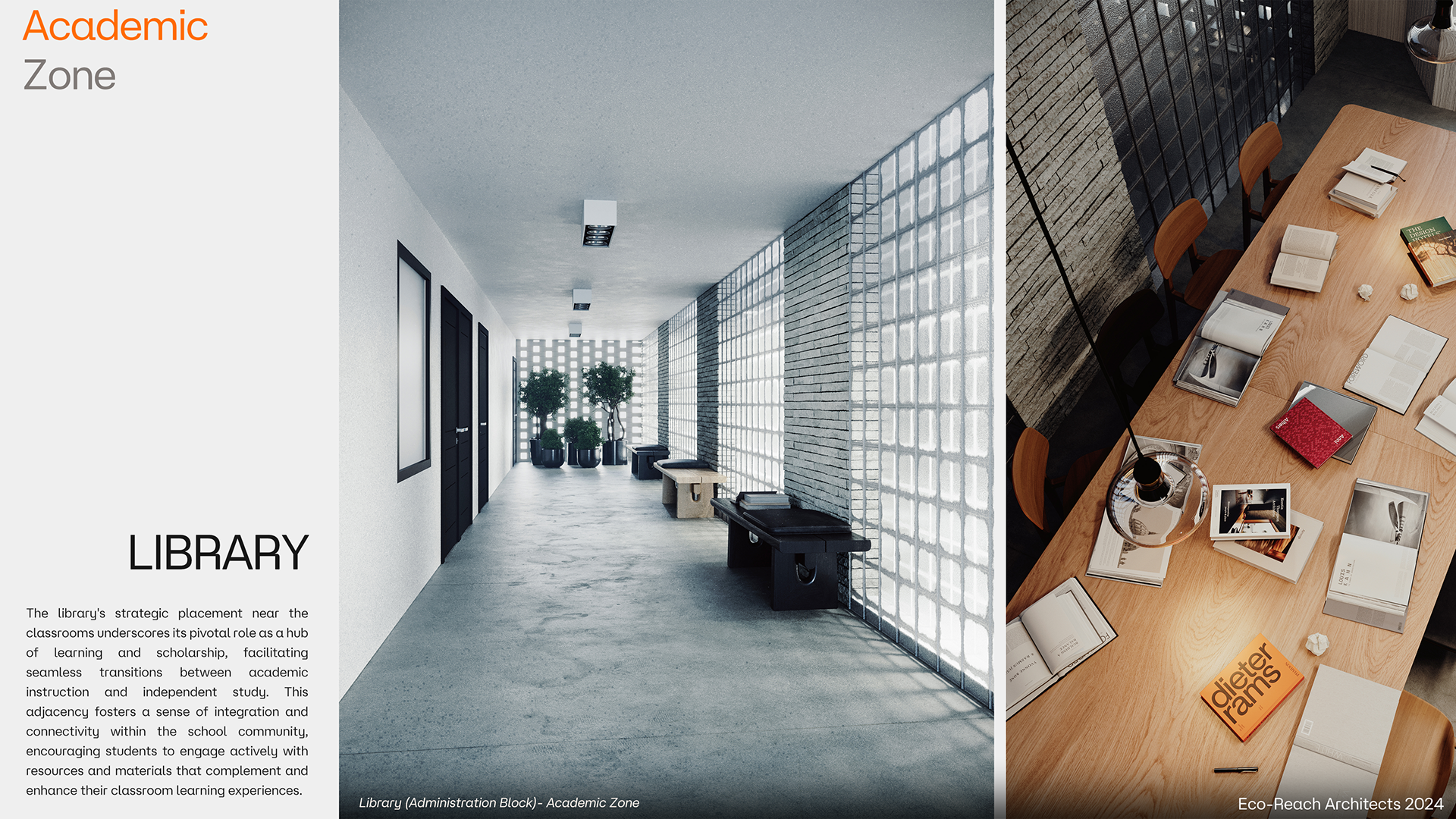
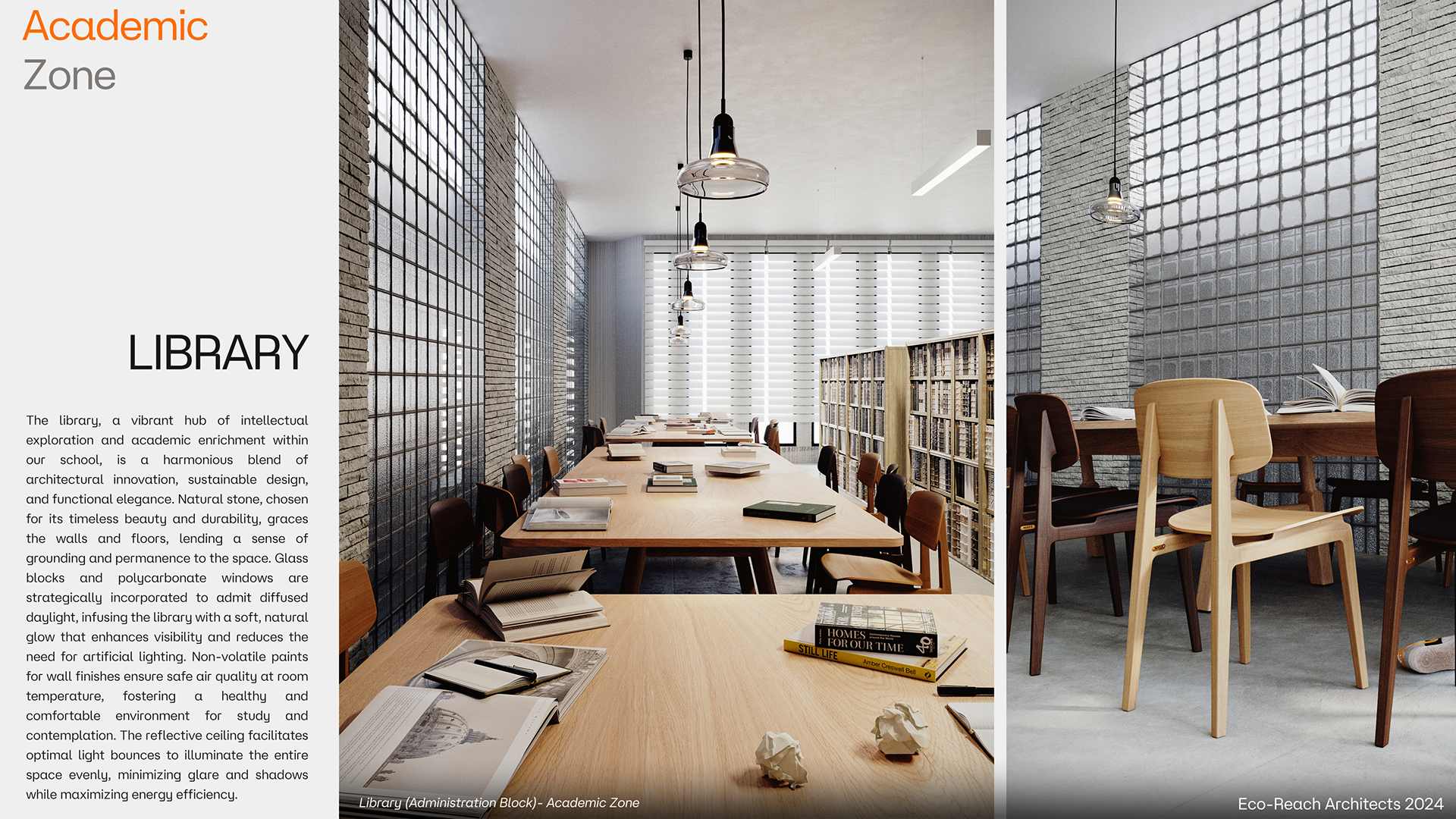
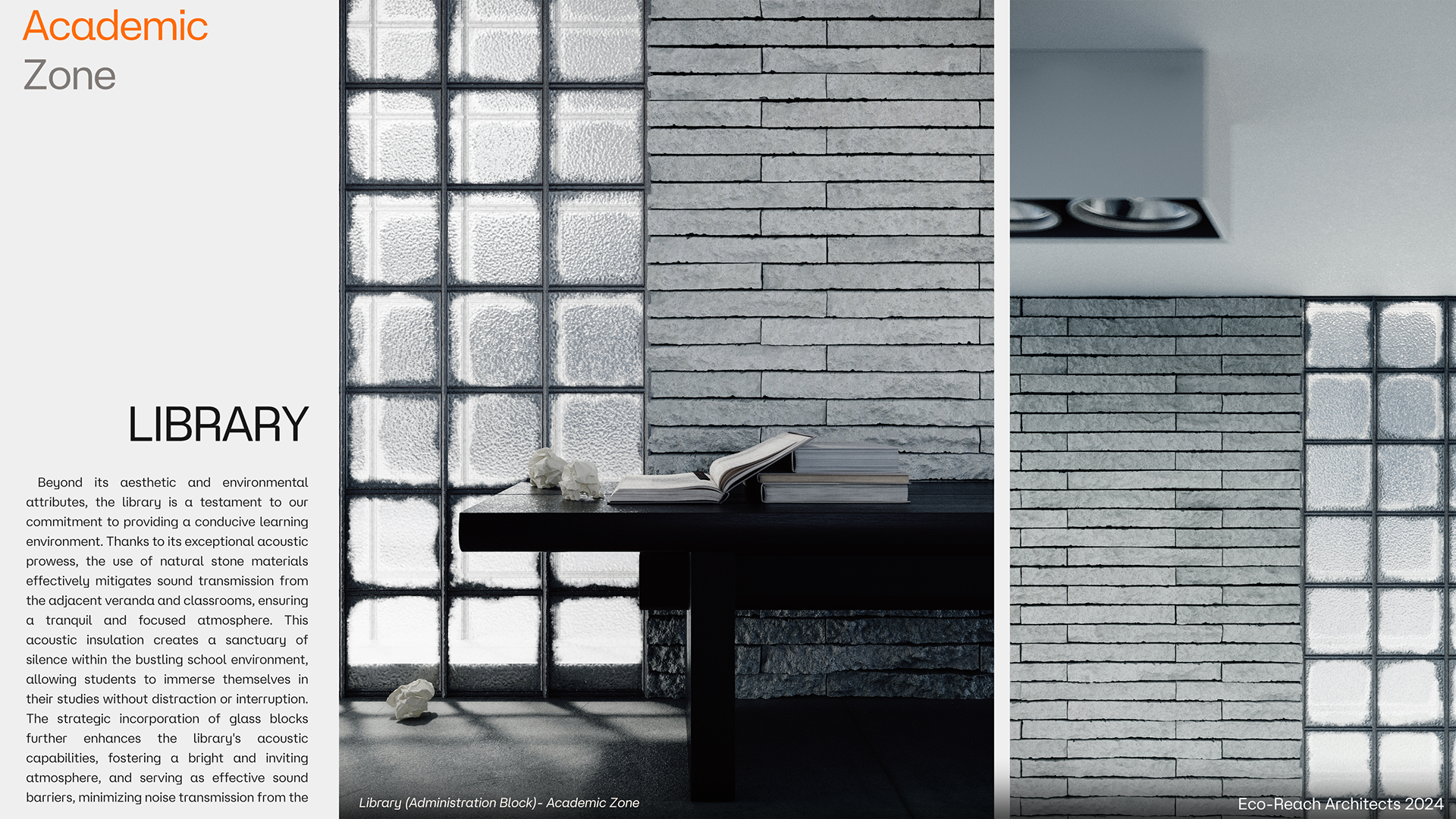
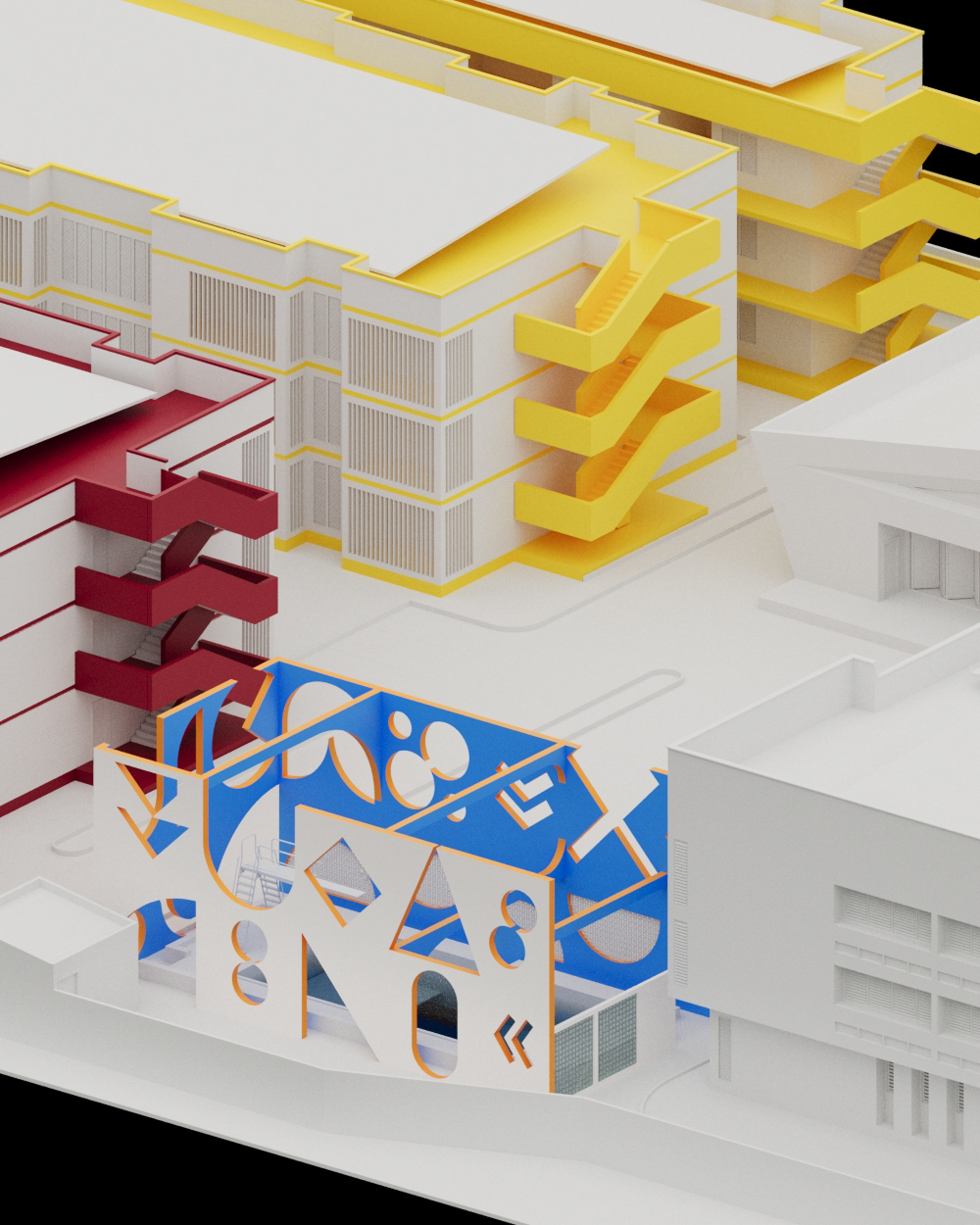
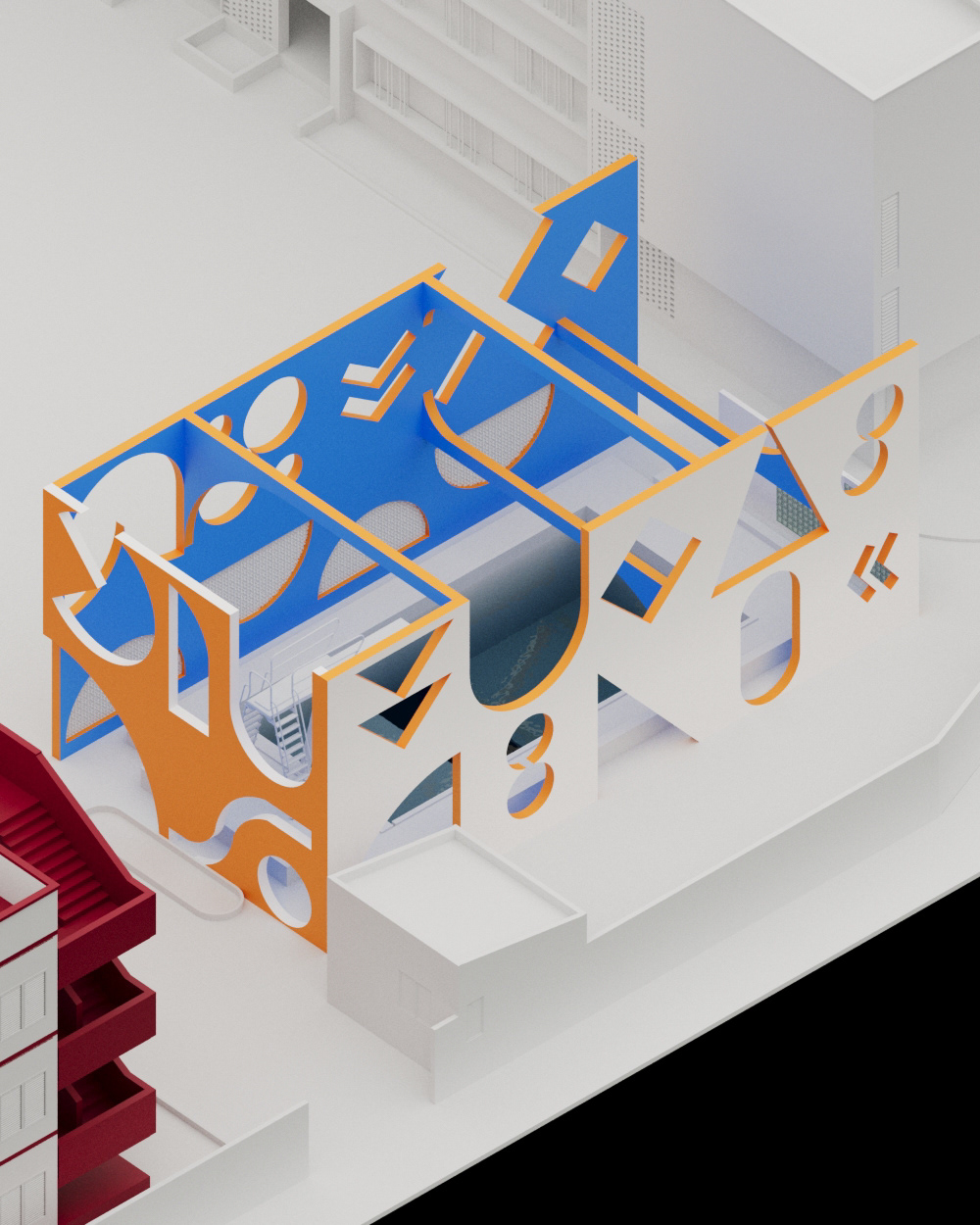
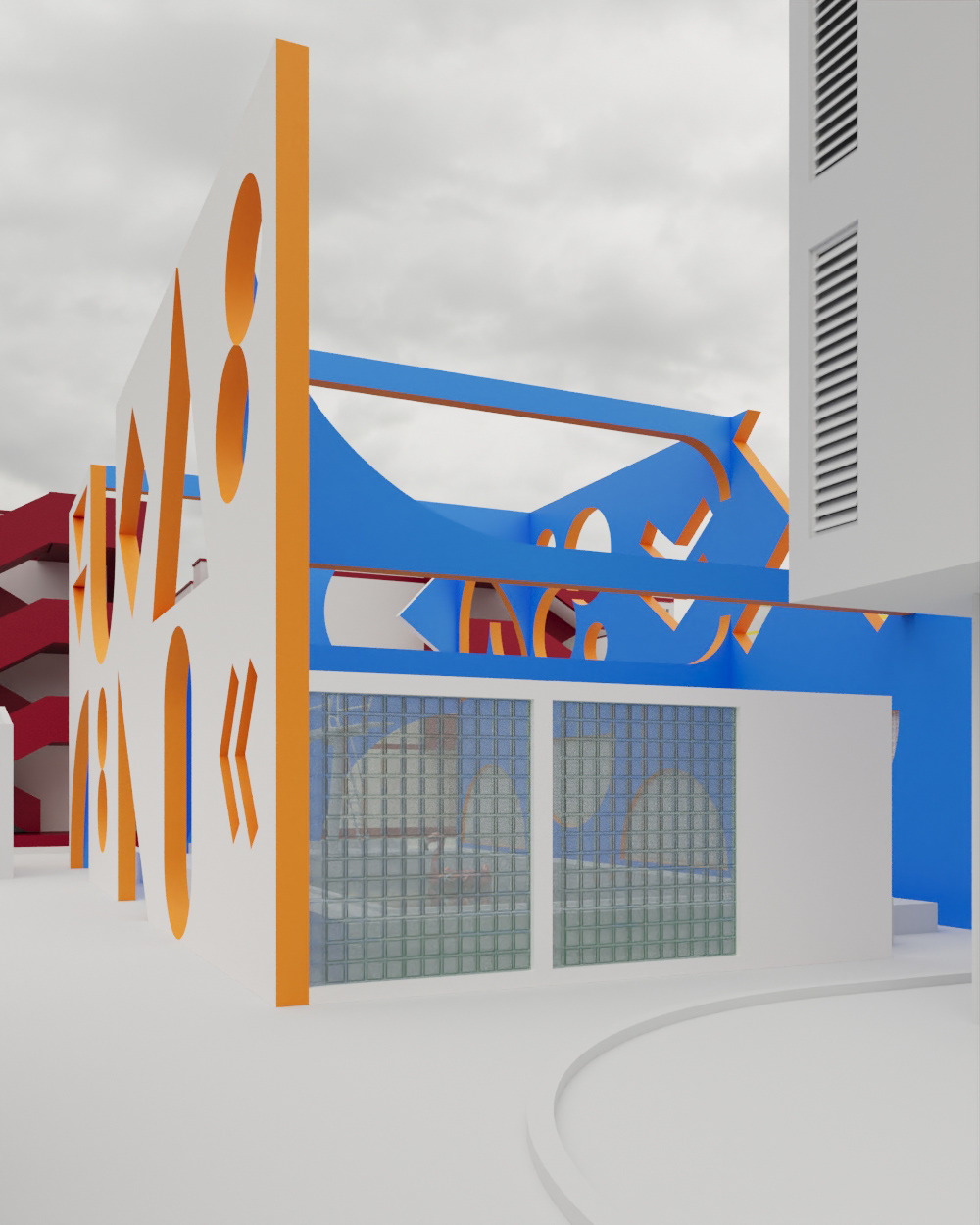
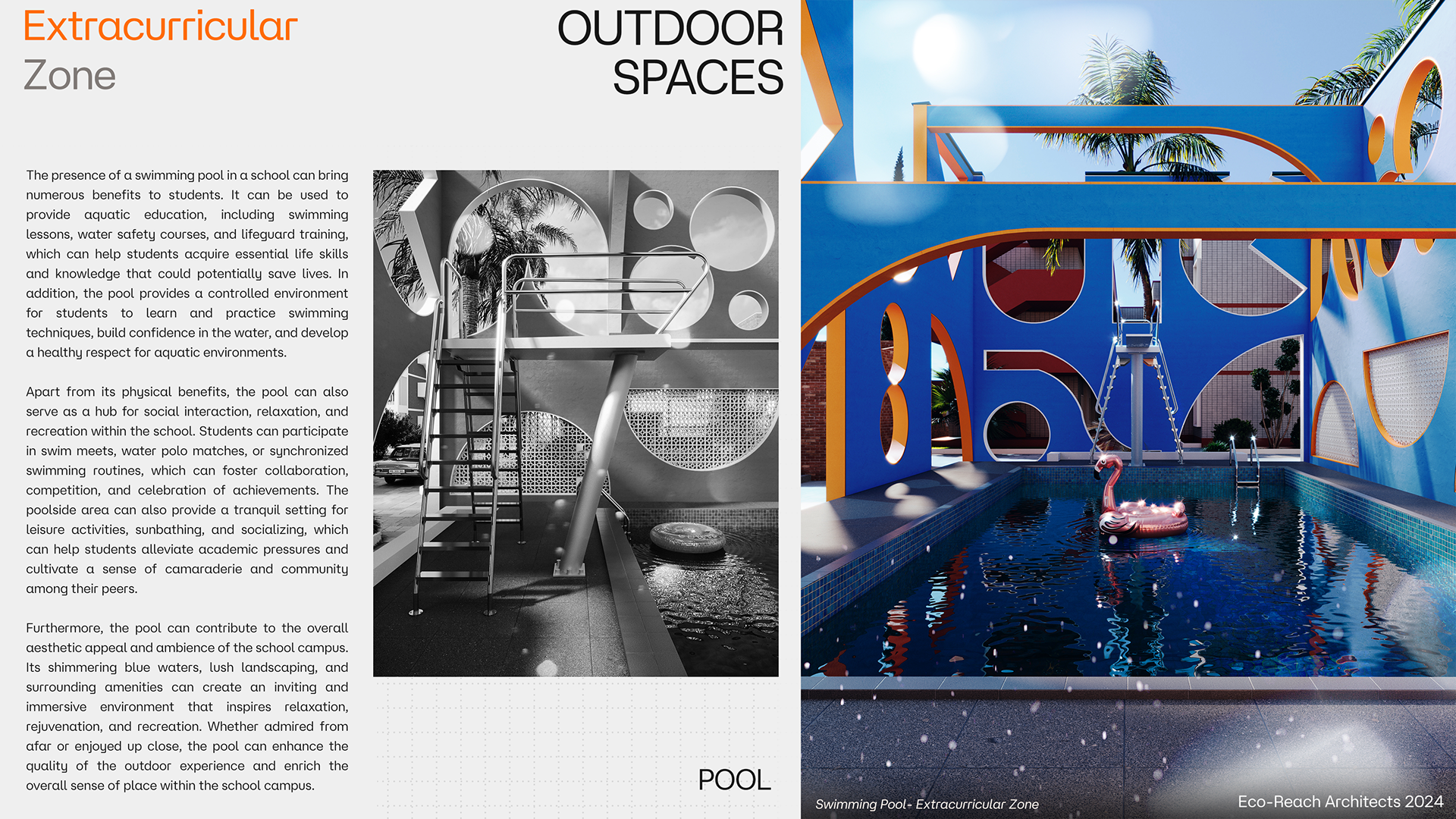
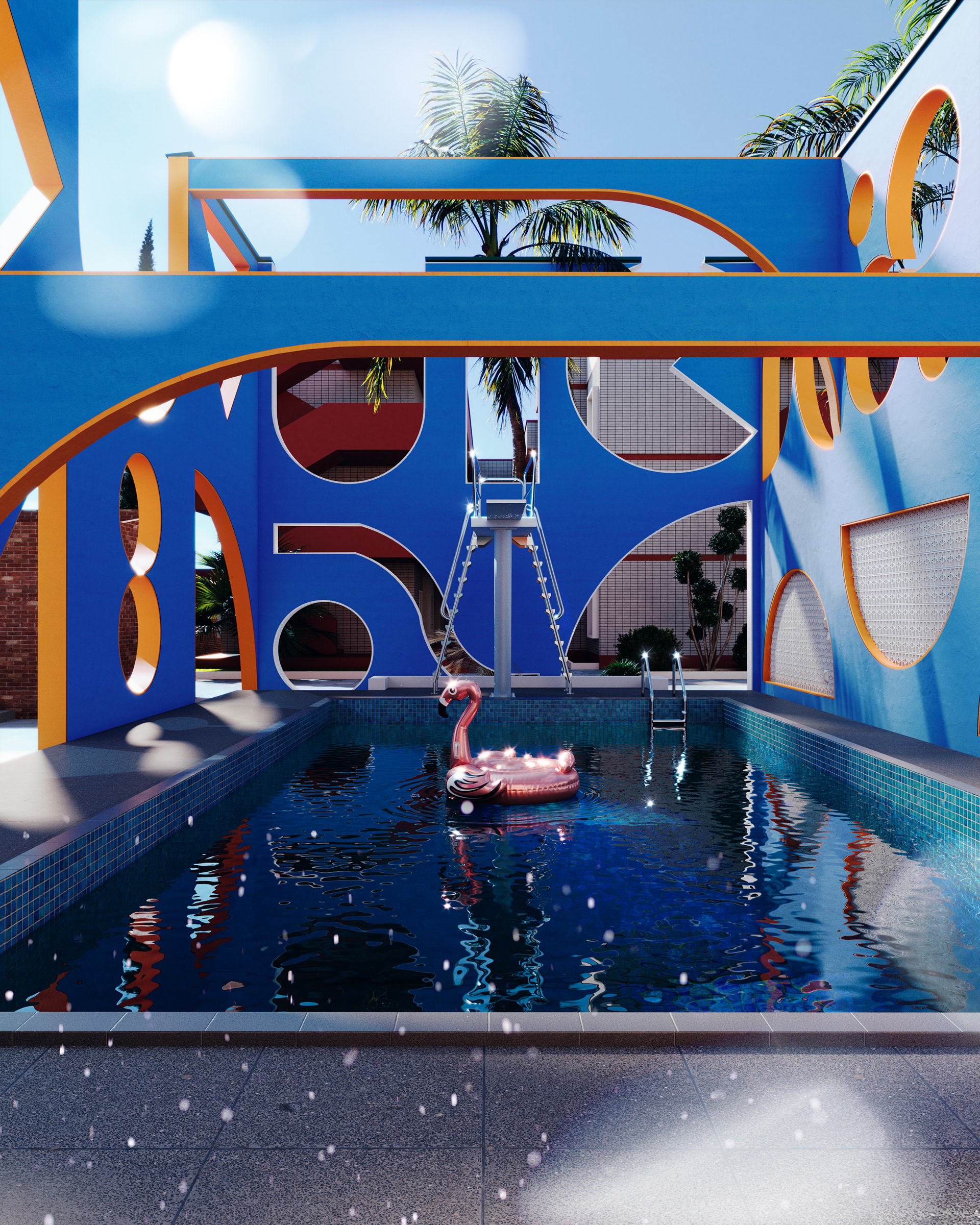
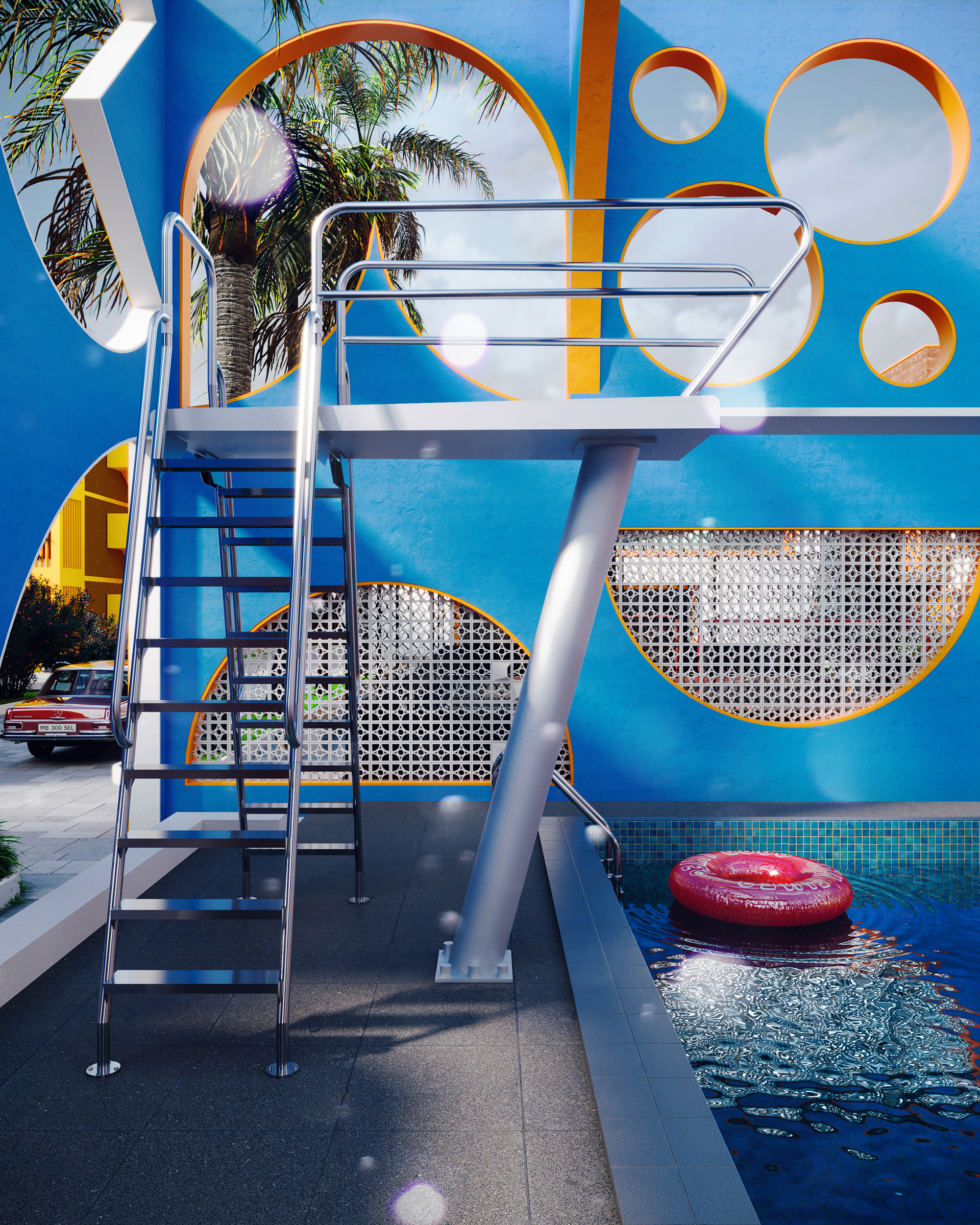
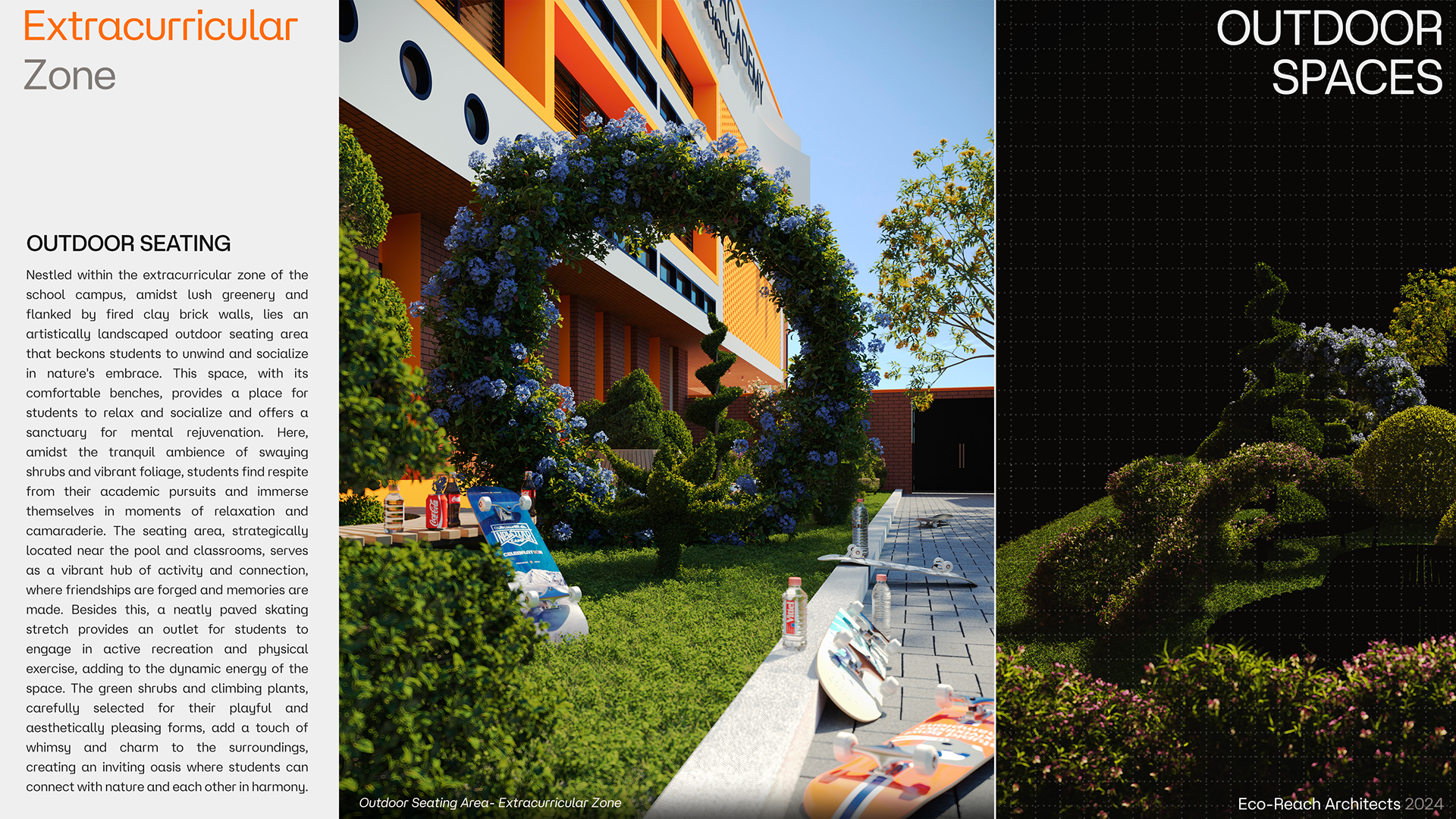
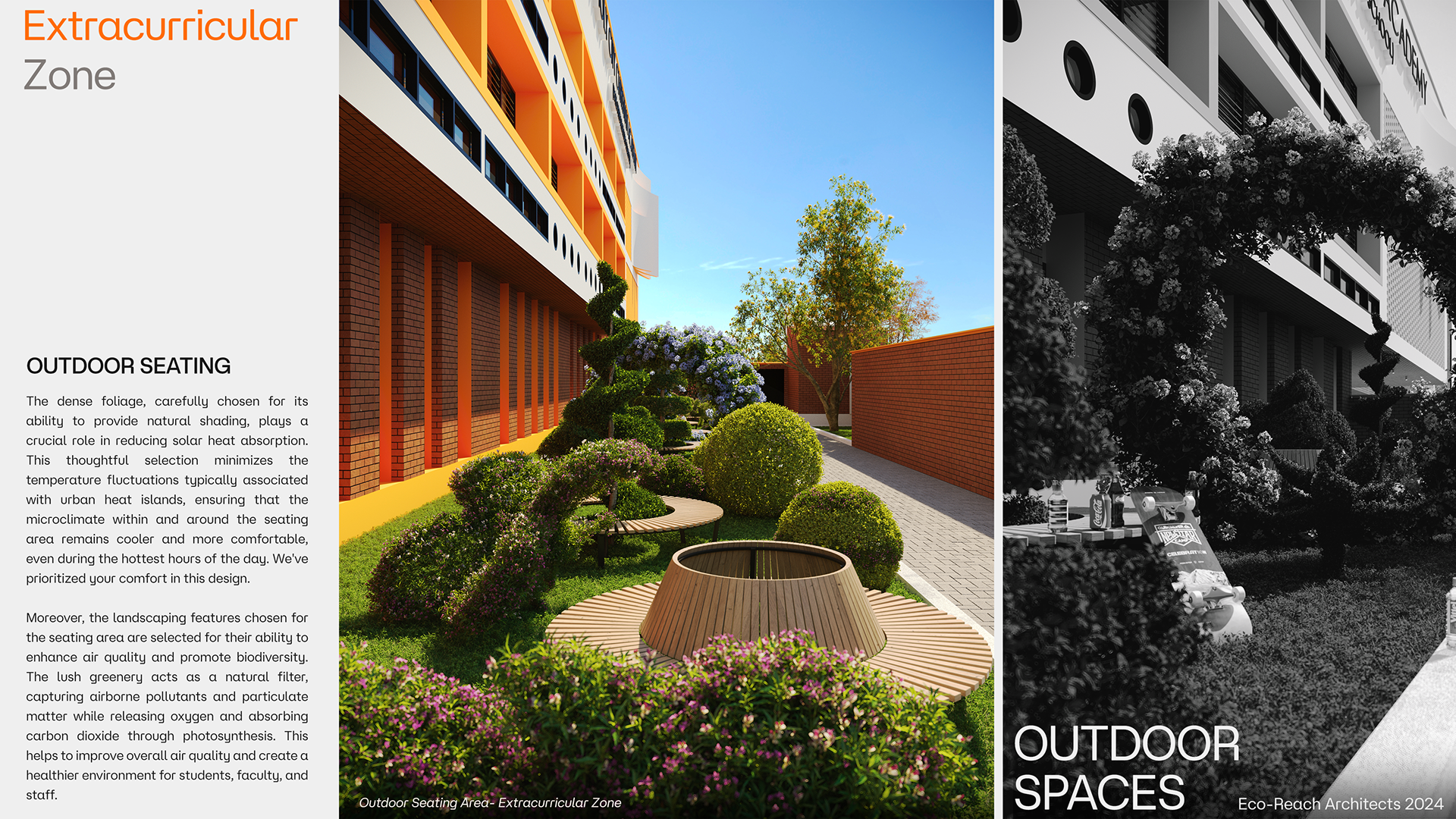
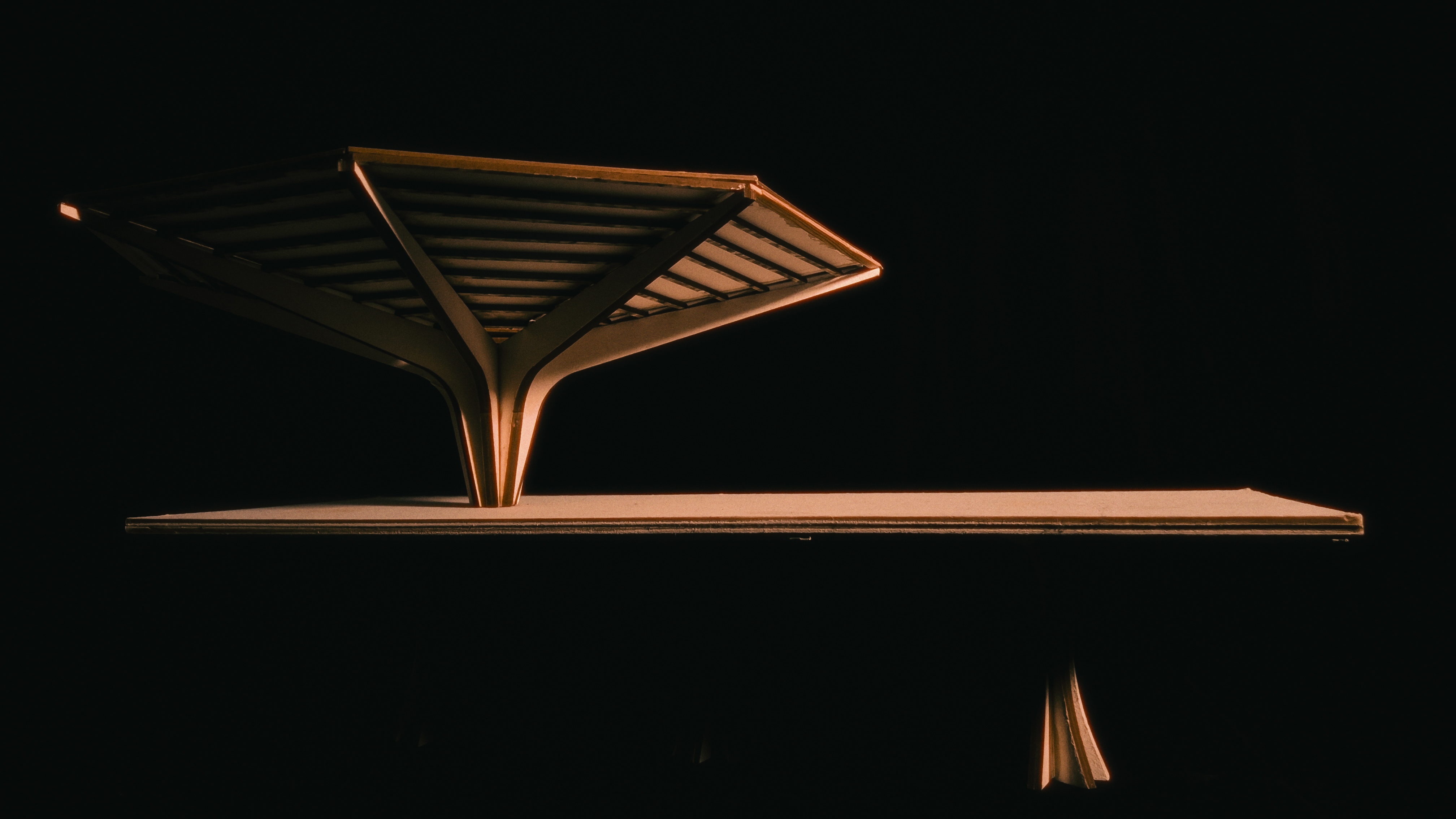
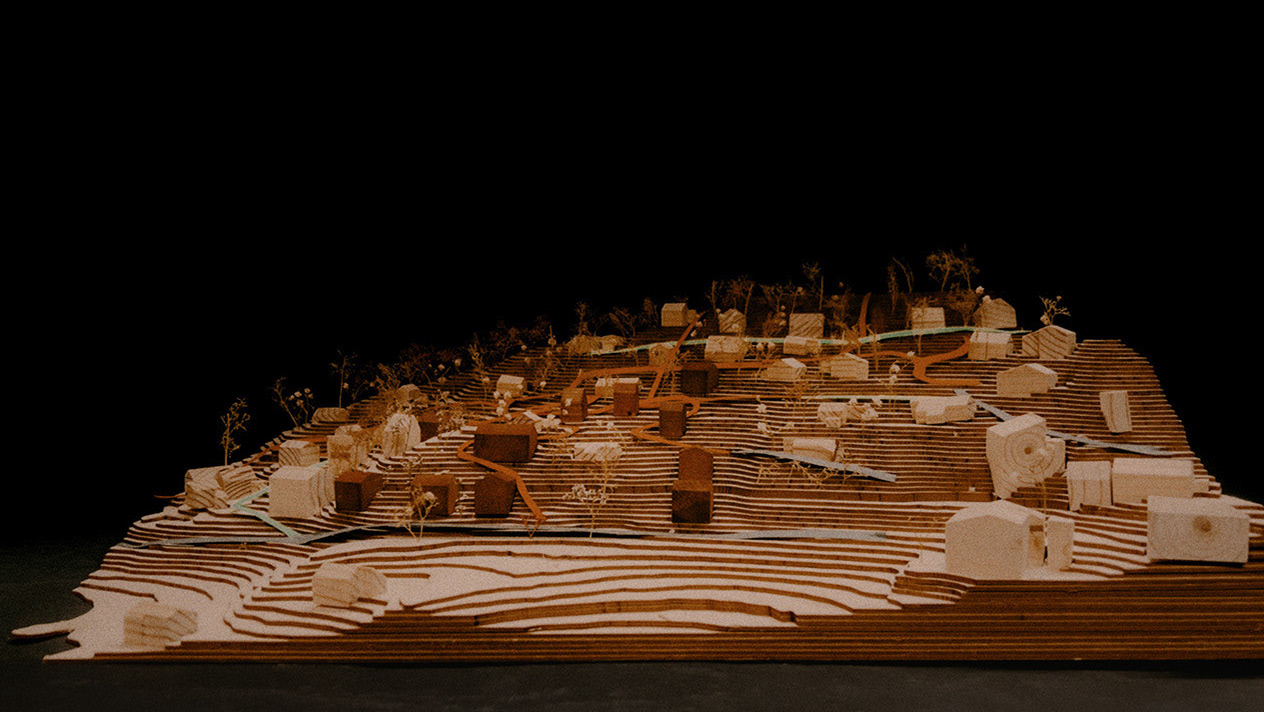
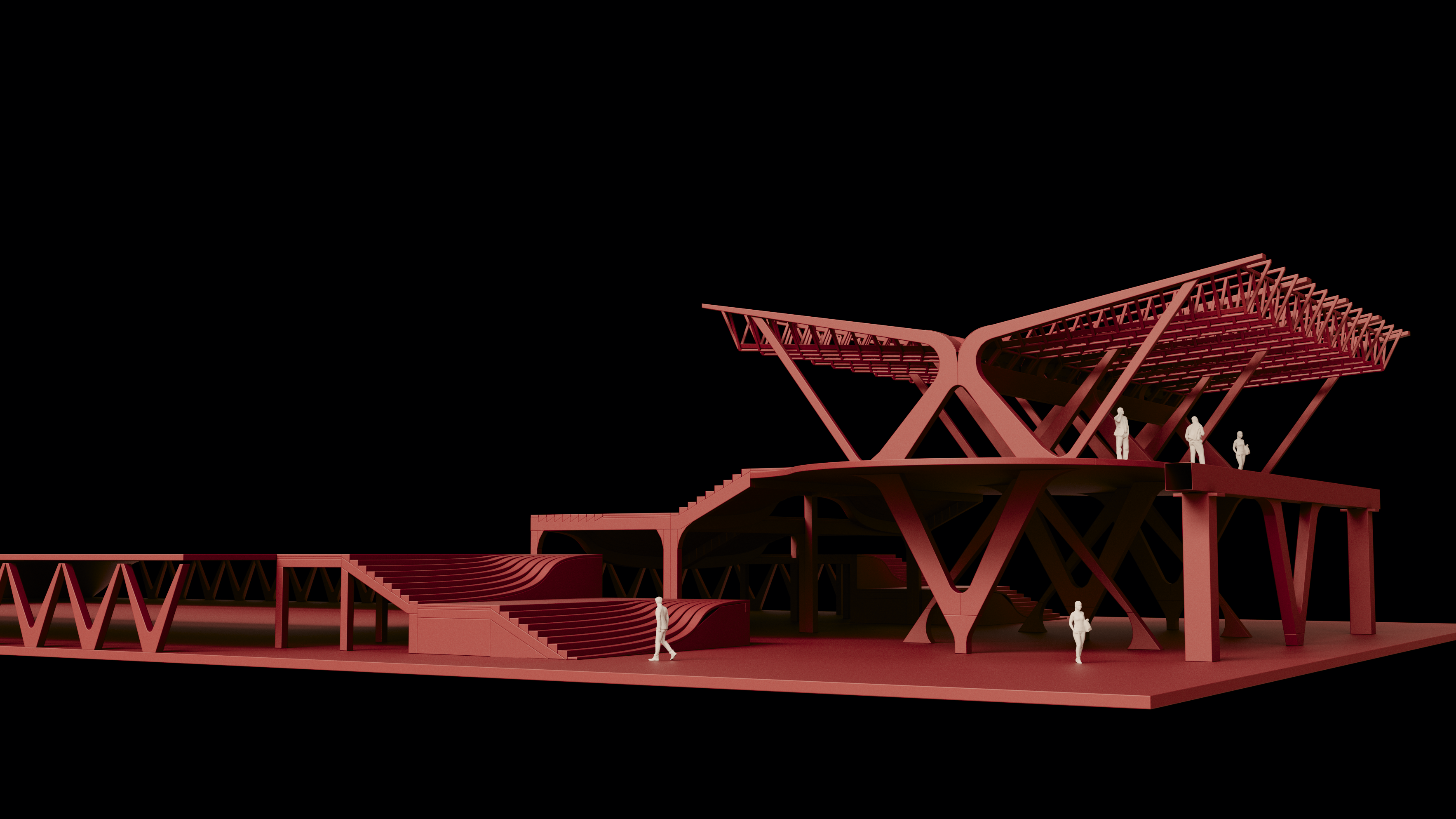
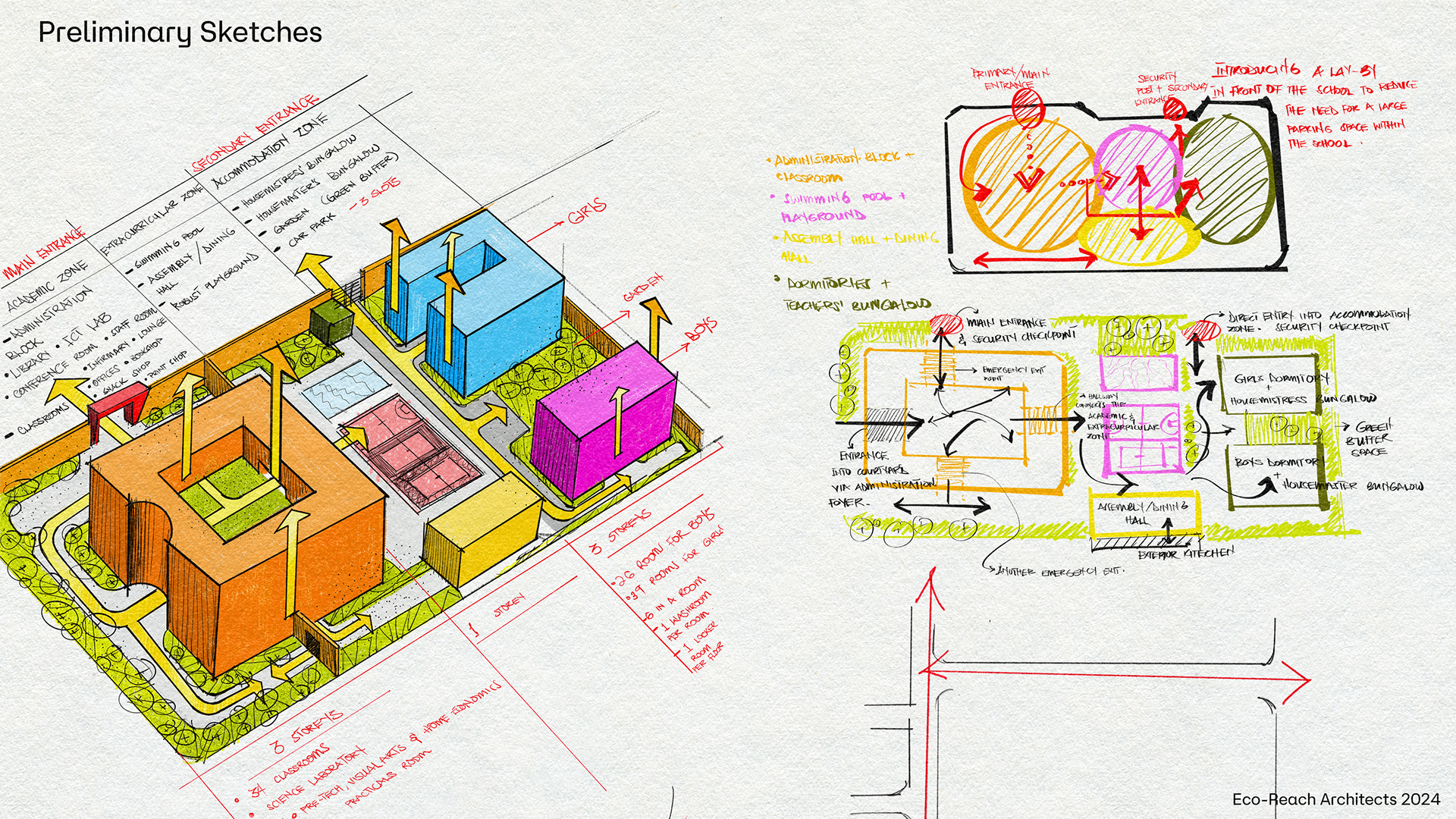
BELOW ARE THE CONCEPTS AND DESIGN PROPOSALS THAT WHERE DISCARDED DURING THE DESIGN PROCESS.