FOCUS — A Small House for a Digital Artist, Le Bouveret, Switzerland
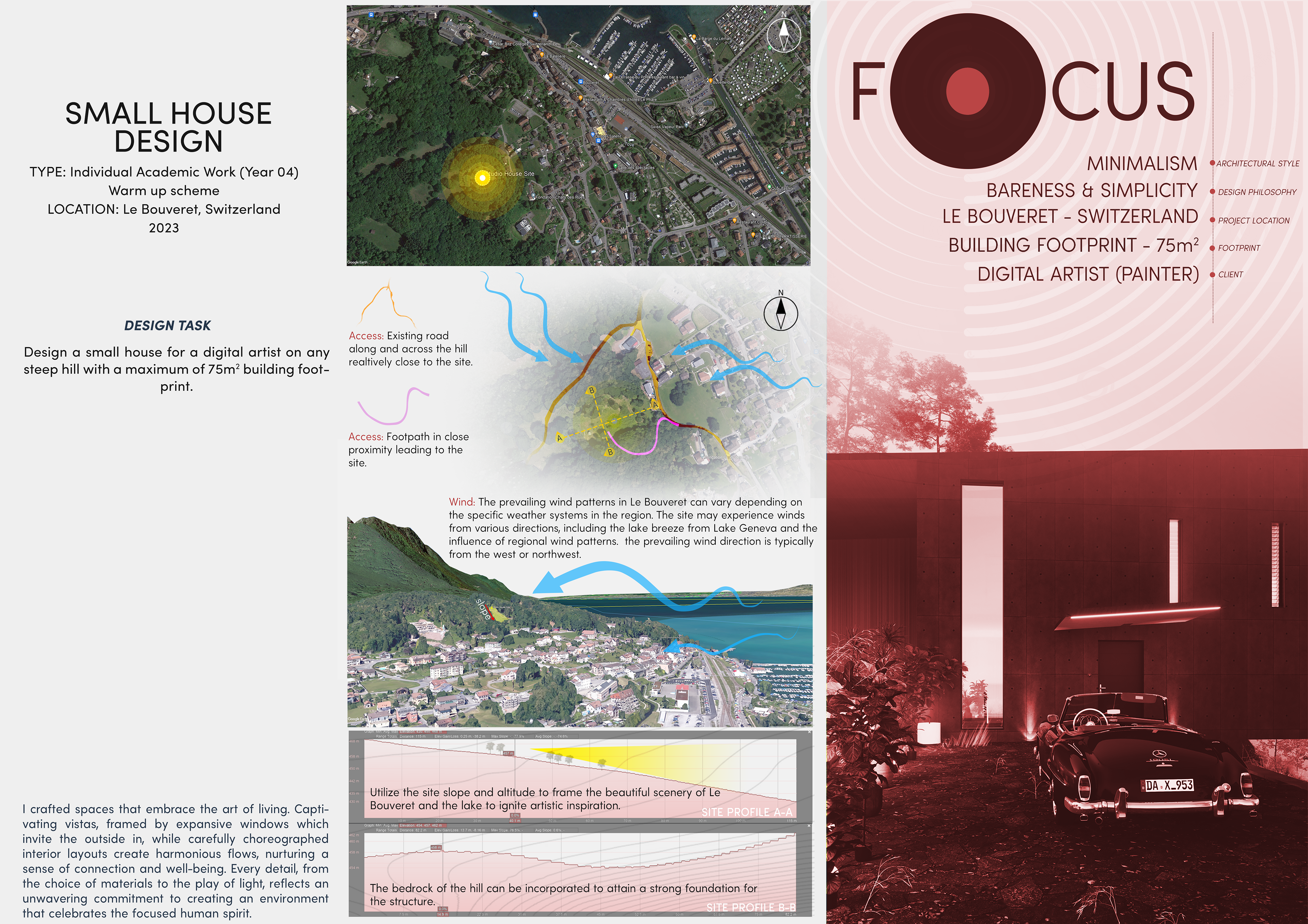
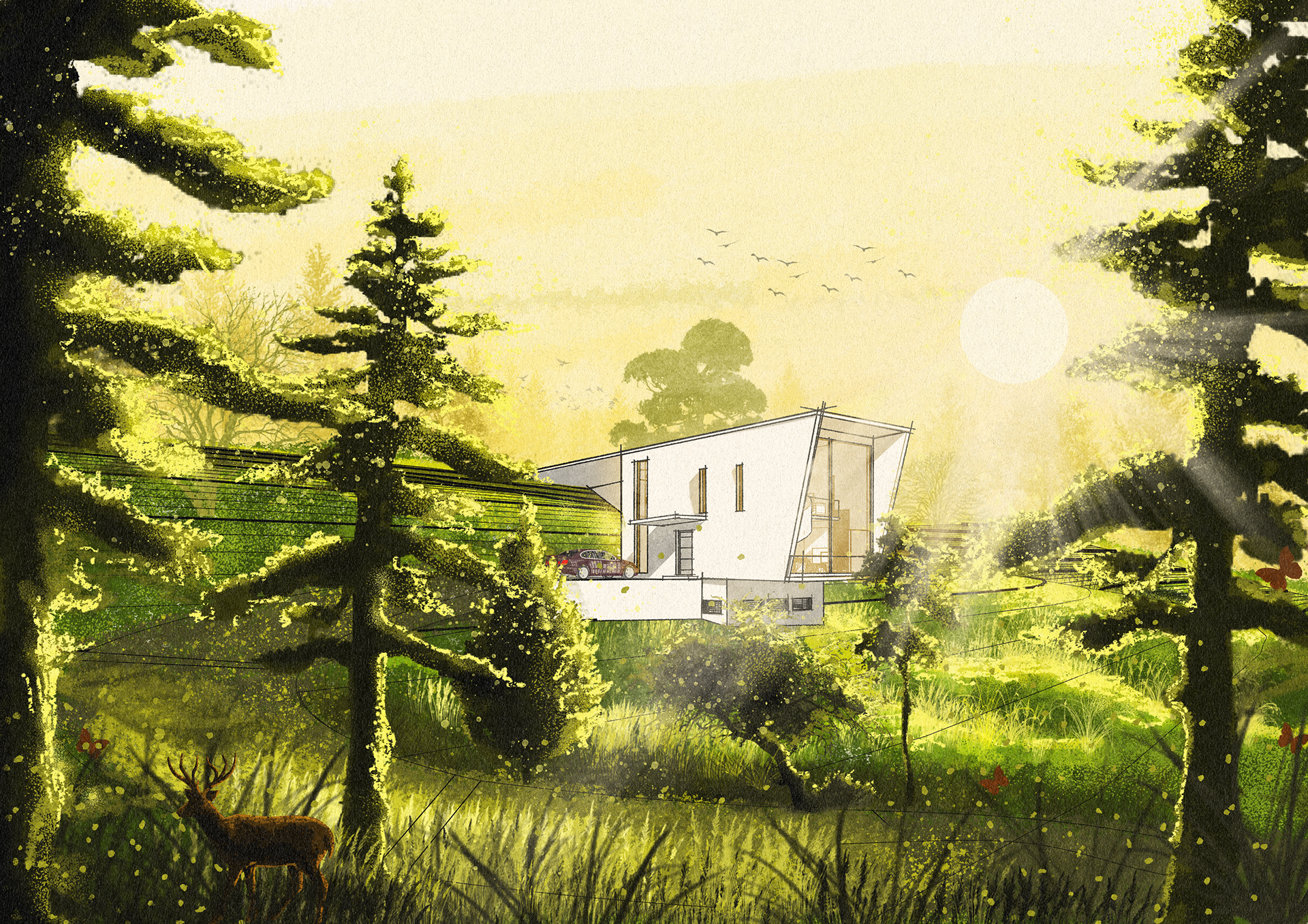
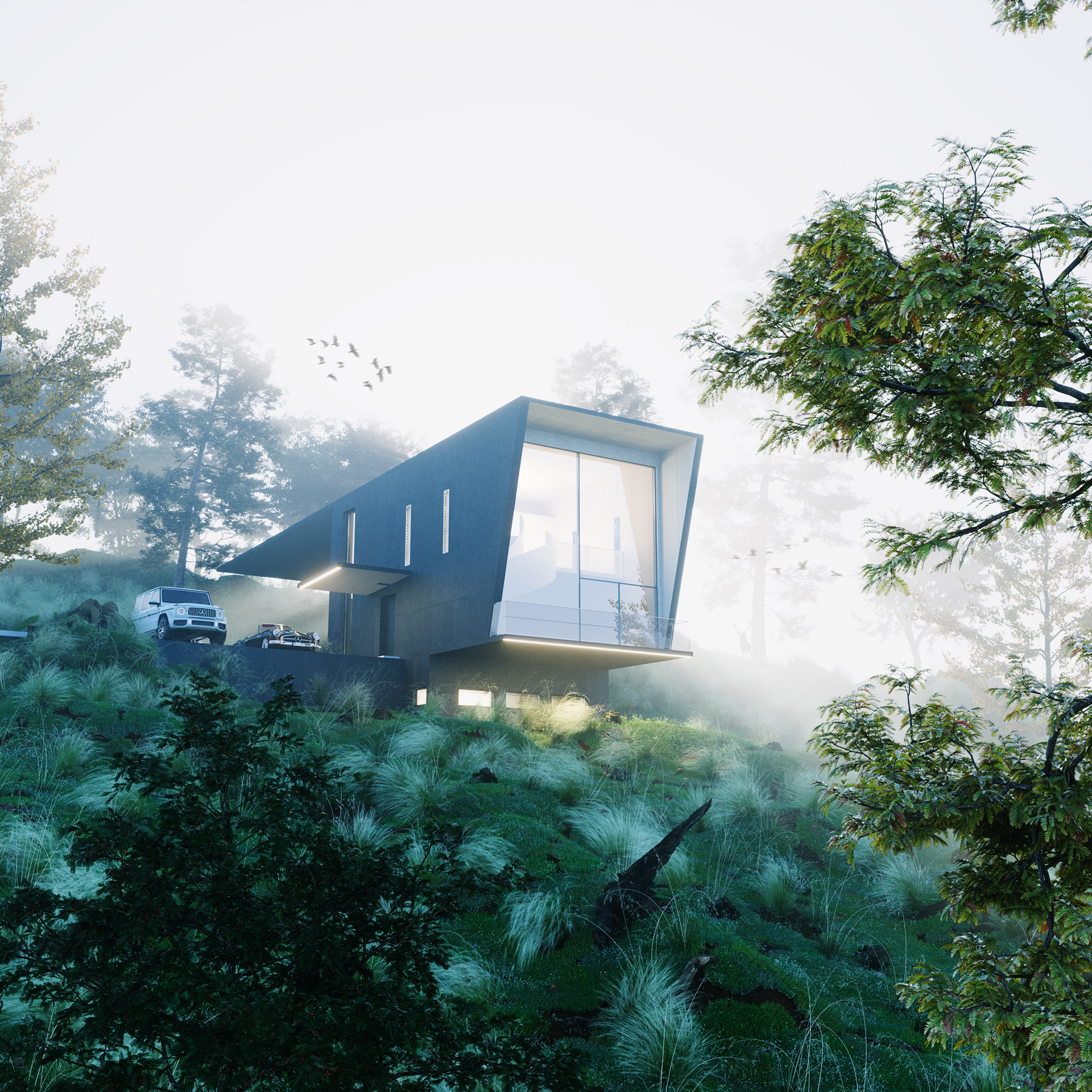
Architecture is not always about grandeur. Sometimes it is about silence, containment, and precision—about giving a single human being the right kind of solitude. FOCUS is born from that belief. It is a compact house designed for a digital artist, resting on the steep terrain of Le Bouveret, Switzerland, where the Alps meet Lake Geneva.
The project explores how minimal space can generate maximum experience, and how architecture, when stripped to its essence, can elevate everyday existence into a continuous act of focus.
The Idea: A Retreat for Creation
Designed for an artist who paints digitally, the house is conceived as a spatial metaphor for the creative process itself—oscillating between clarity and chaos, introspection and expression. Every gesture of the building embodies the act of concentration: it filters distractions, orchestrates light, and choreographs stillness.
The brief called for a small house of no more than 75 m² footprint, on a steep hillside with panoramic views of Le Bouveret. Rather than resisting the slope, the design embraces the topography, using it to define the building’s spatial and psychological rhythm—from the solid, grounded basement gym to the luminous upper living and working areas that float toward the view.
Site Response: Anchored in the Hill, Open to the Horizon
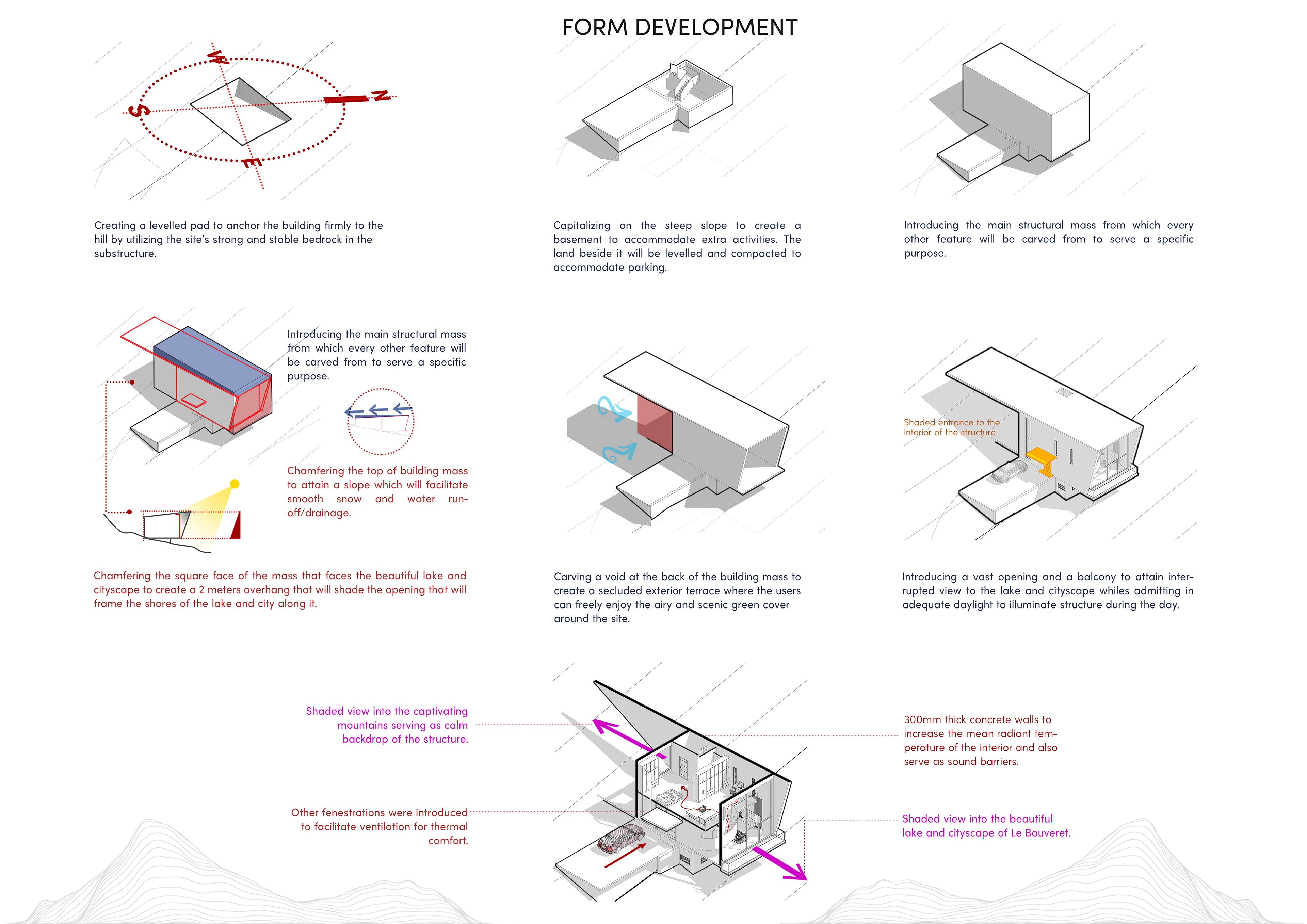
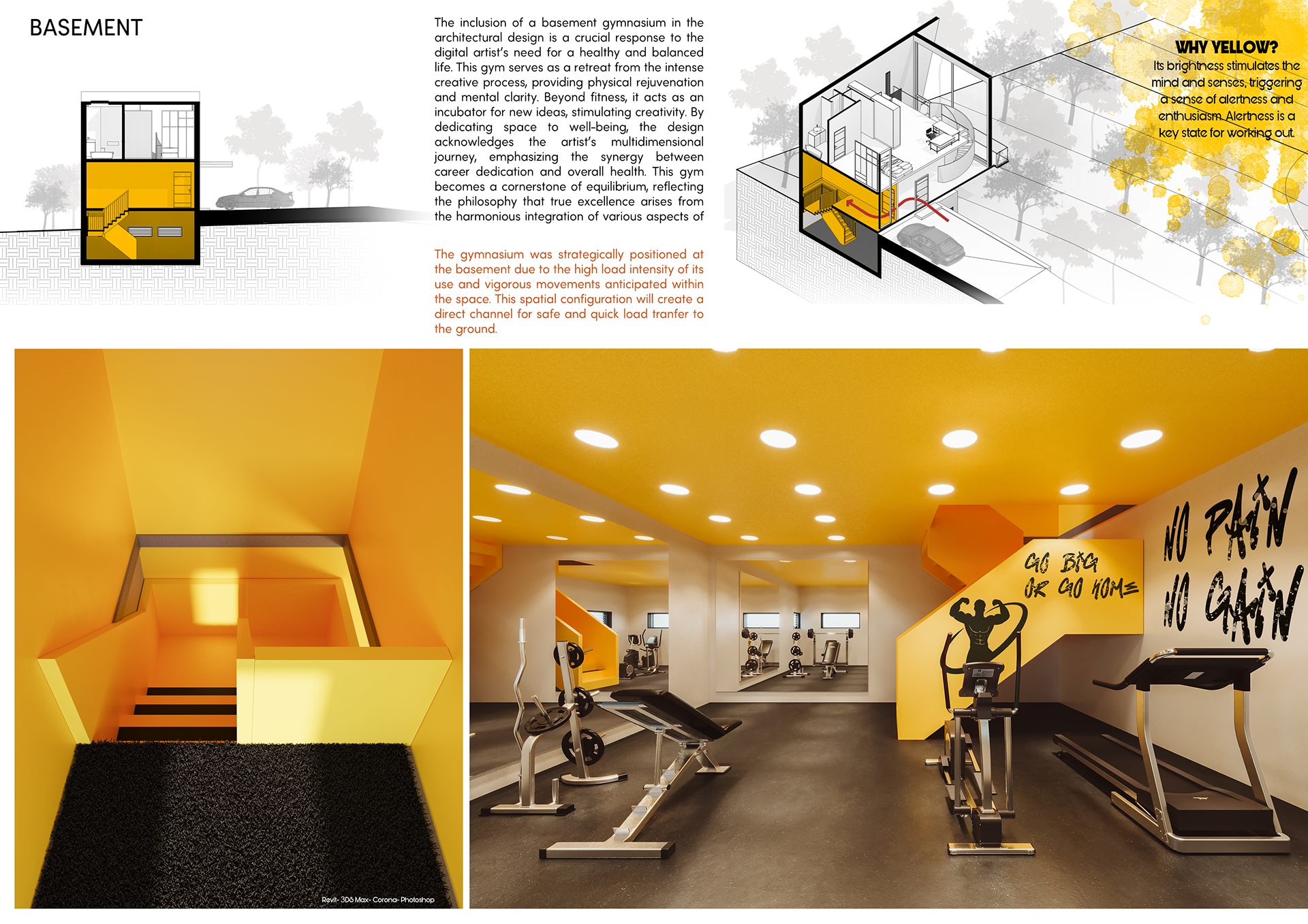
The project begins by anchoring the structure firmly into the hill’s bedrock, stabilizing it against the region’s dynamic weather systems. The steepness allows the creation of a basement level that houses the gym, enabling physical activity and introspection within the earth’s embrace.
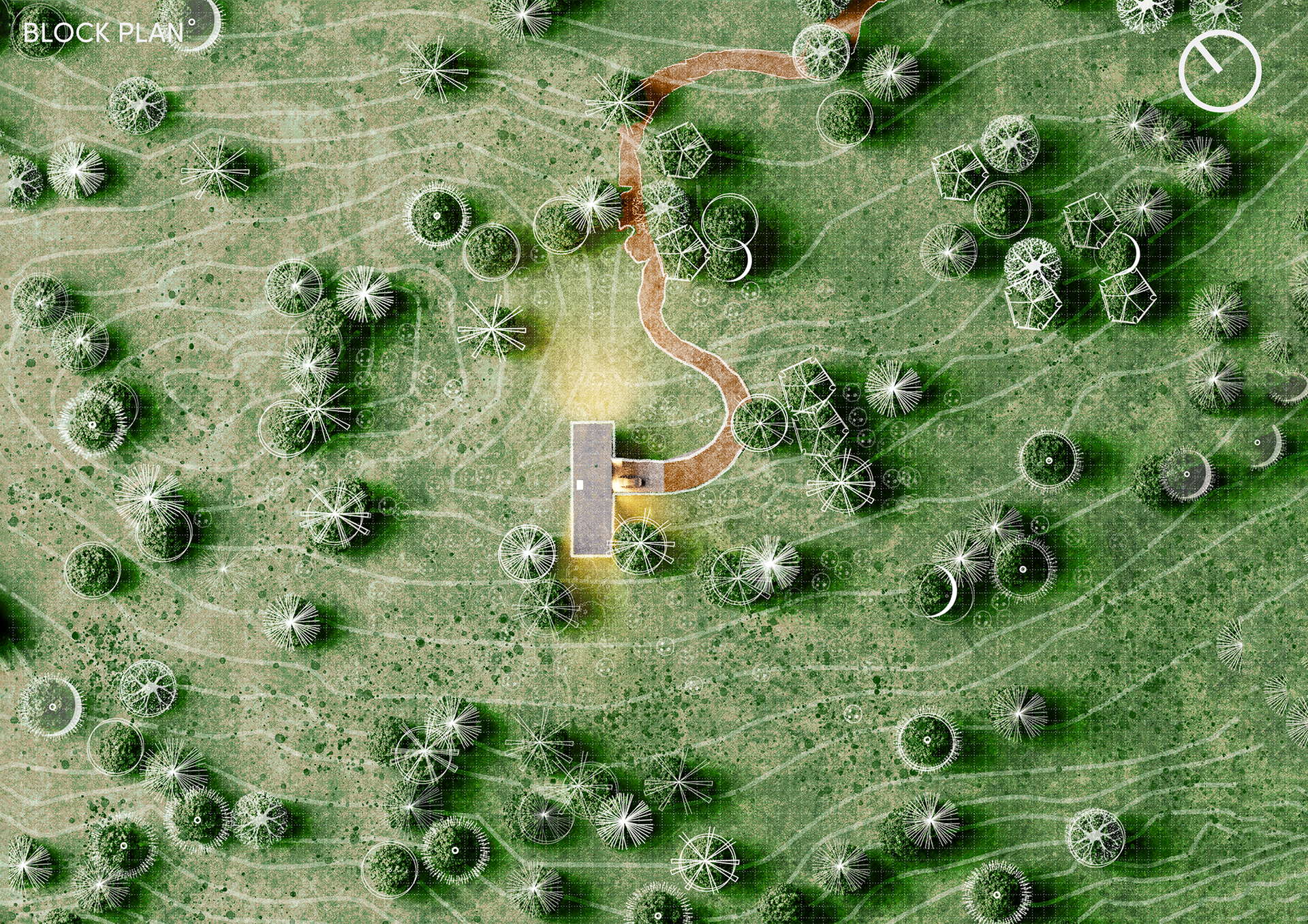
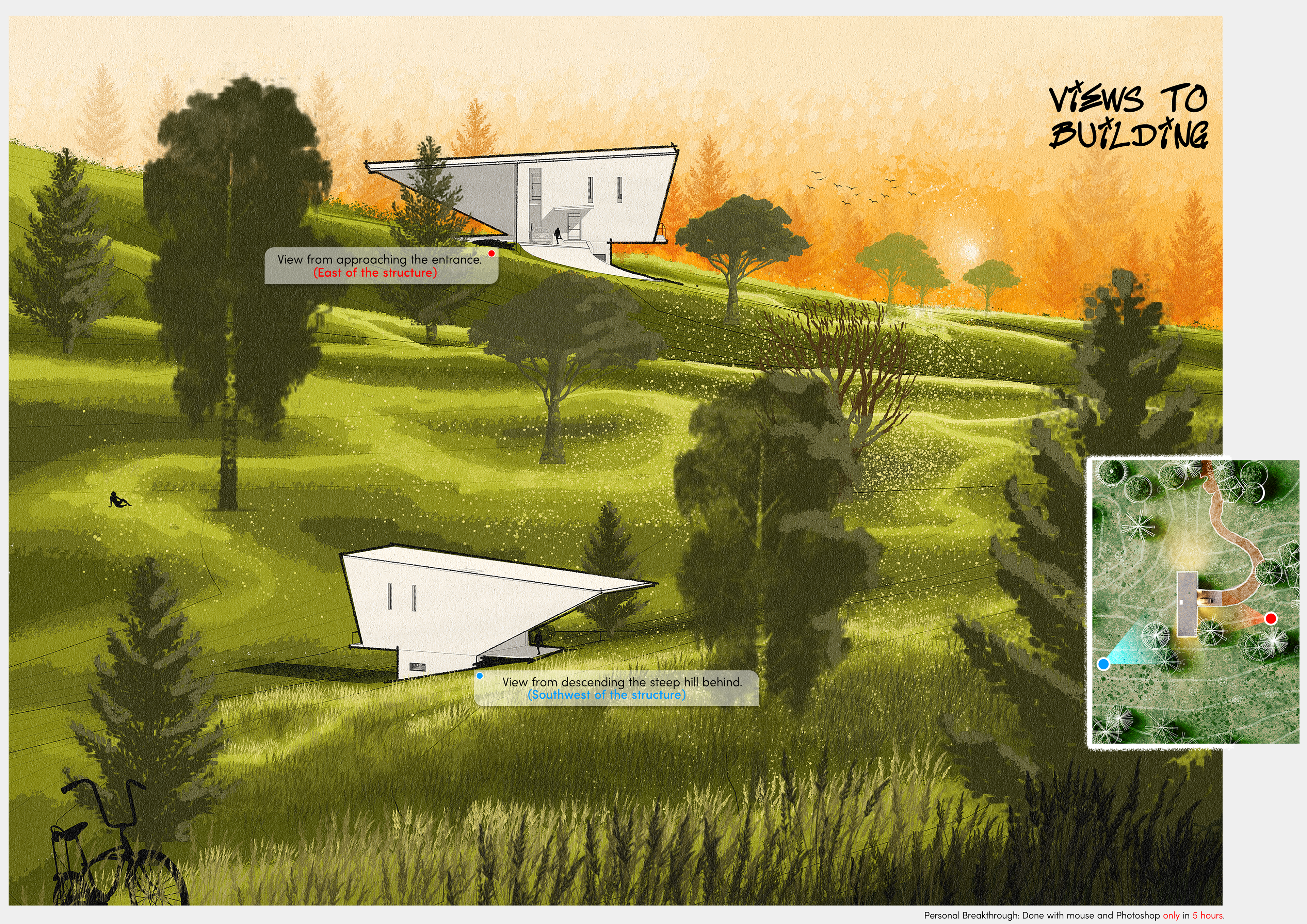
The orientation of the main living spaces captures both the lake breeze and the morning sun, ensuring natural ventilation and daylight while framing spectacular views of the lake and surrounding forests. The access path meanders gently up the slope, revealing the building gradually—a cinematic unfolding that mirrors the creative process itself: slow revelation through persistence.
Architectural Language: Clarity Through Restraint
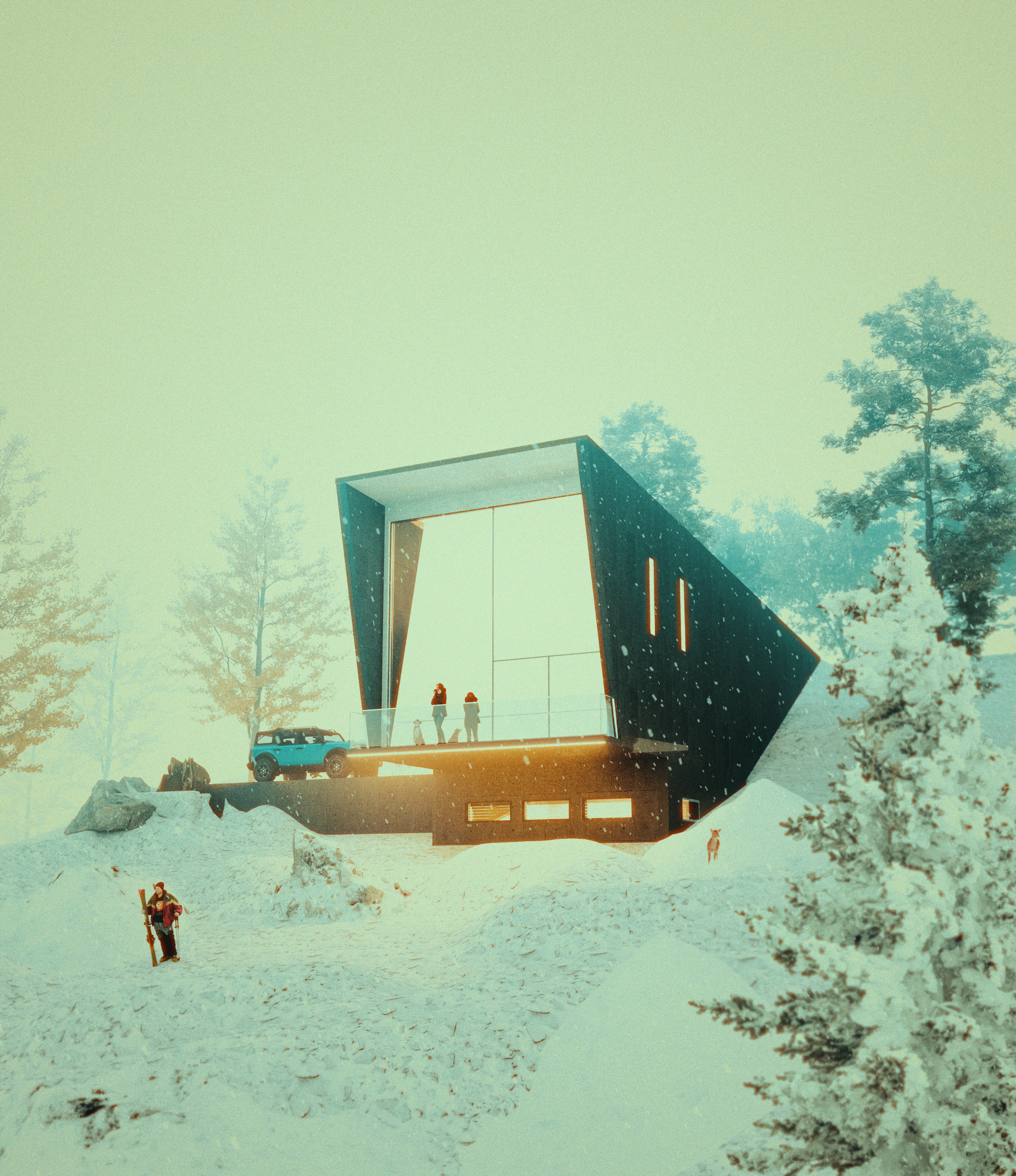
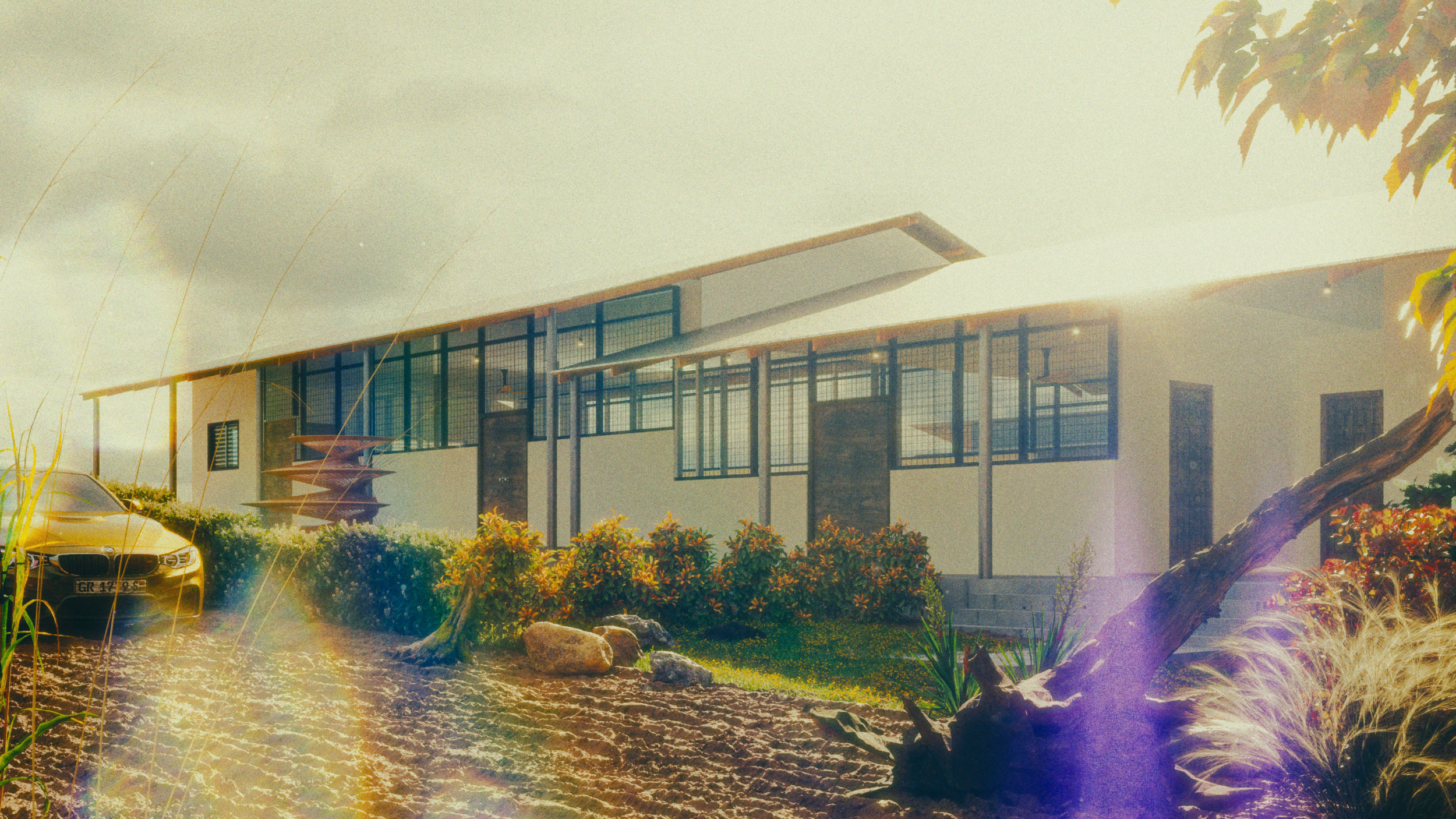
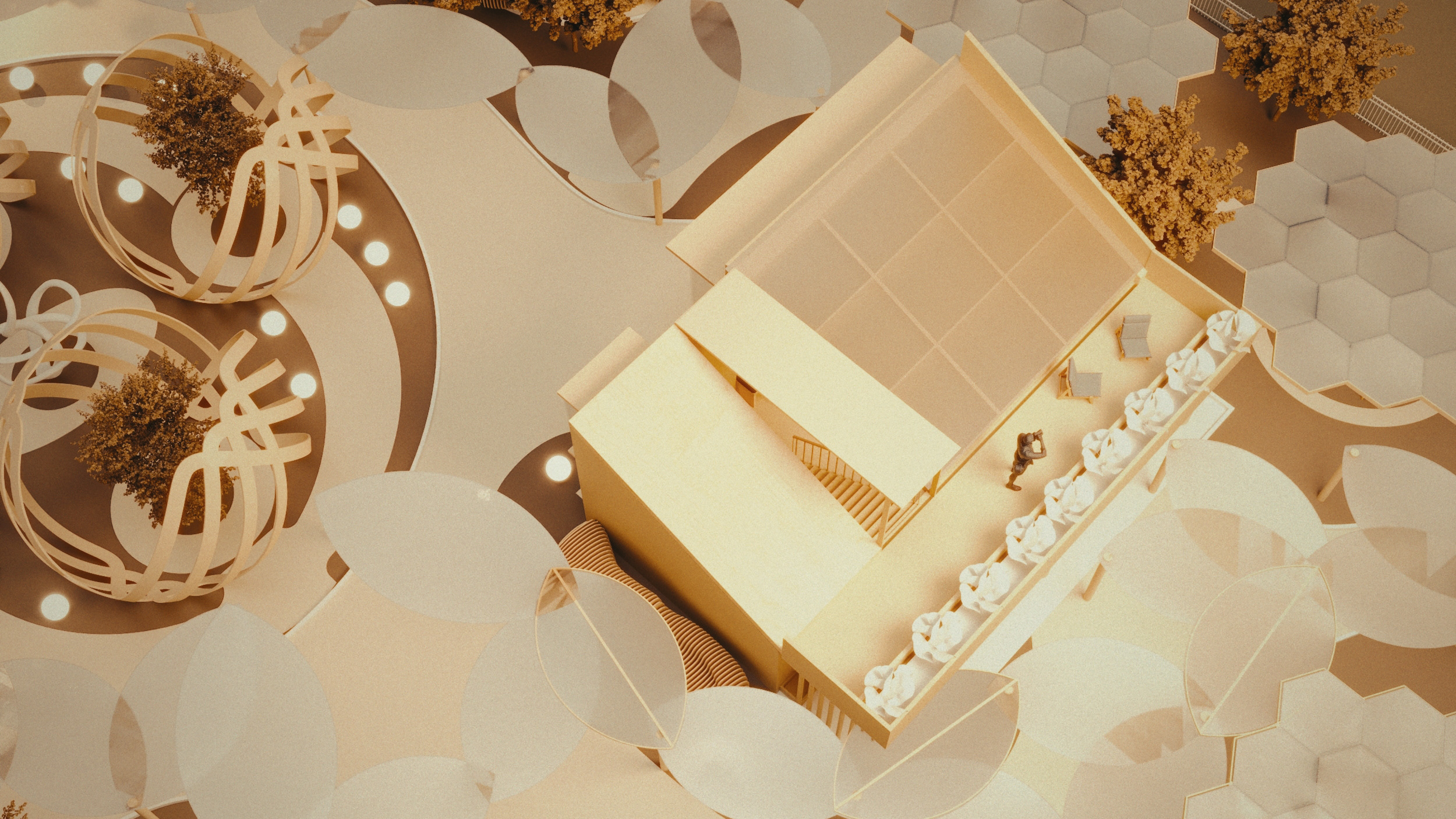
The architecture follows a deliberate aesthetic of bareness and precision. A simple rectangular mass is carved and chamfered to respond to climatic forces: the roof inclines to shed snow and rainwater efficiently, while the front façade opens generously toward the lake.
A 2 m overhang shades the main aperture, balancing light and shadow throughout the day. The façade composition is assertive yet controlled—open where the view demands it, closed where introspection requires privacy. This choreography of openness and enclosure produces an environment both disciplined and deeply humane.
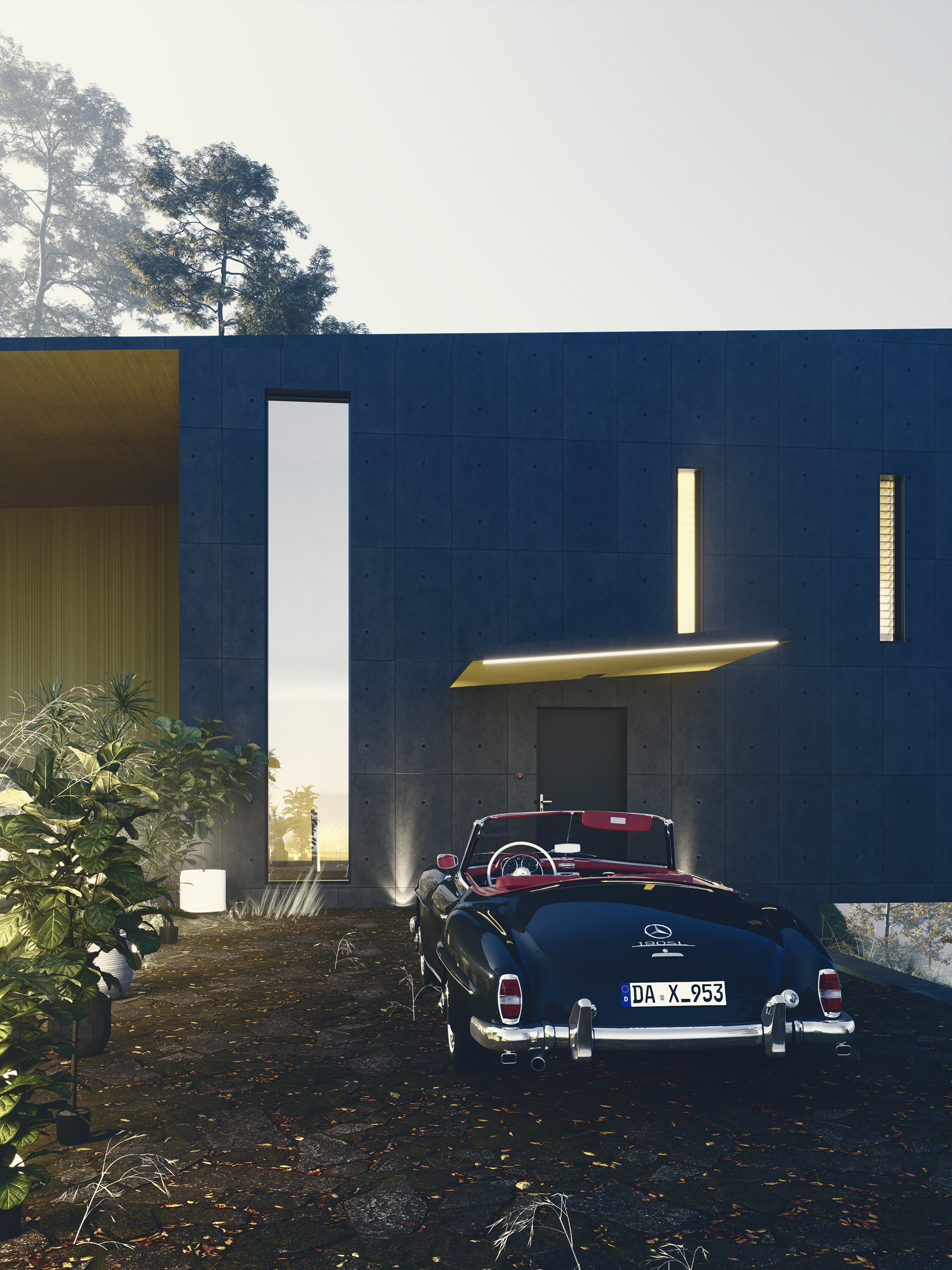
The materiality, dominated by dark concrete and glass, lends a sculptural presence. The 300 mm-thick concrete walls act as both thermal mass and acoustic buffer, providing stability and serenity—essential qualities for deep creative focus.
Spatial Strategy: A Vertical Narrative
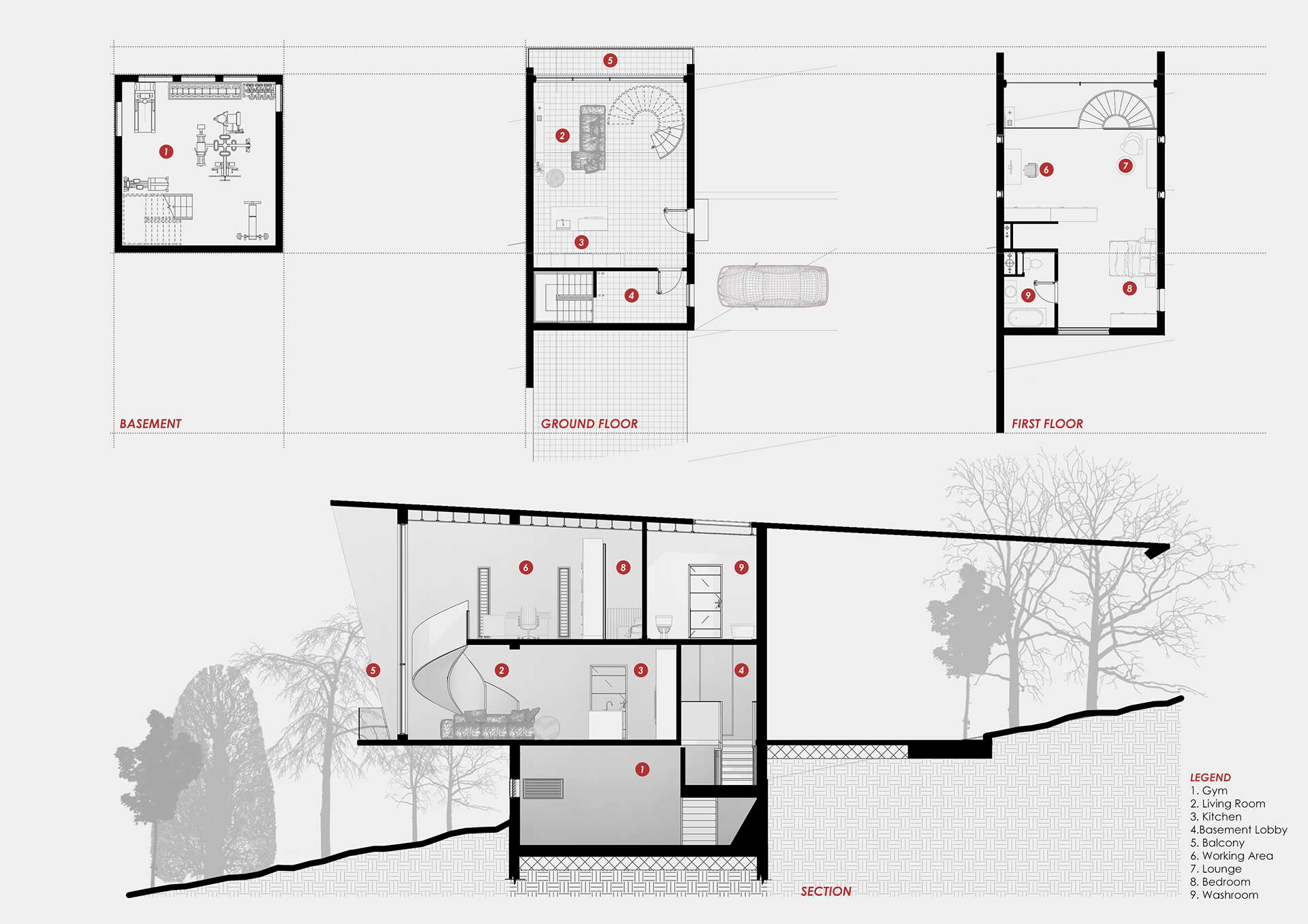
Each level represents a distinct psychological state—an architectural autobiography of creative life:
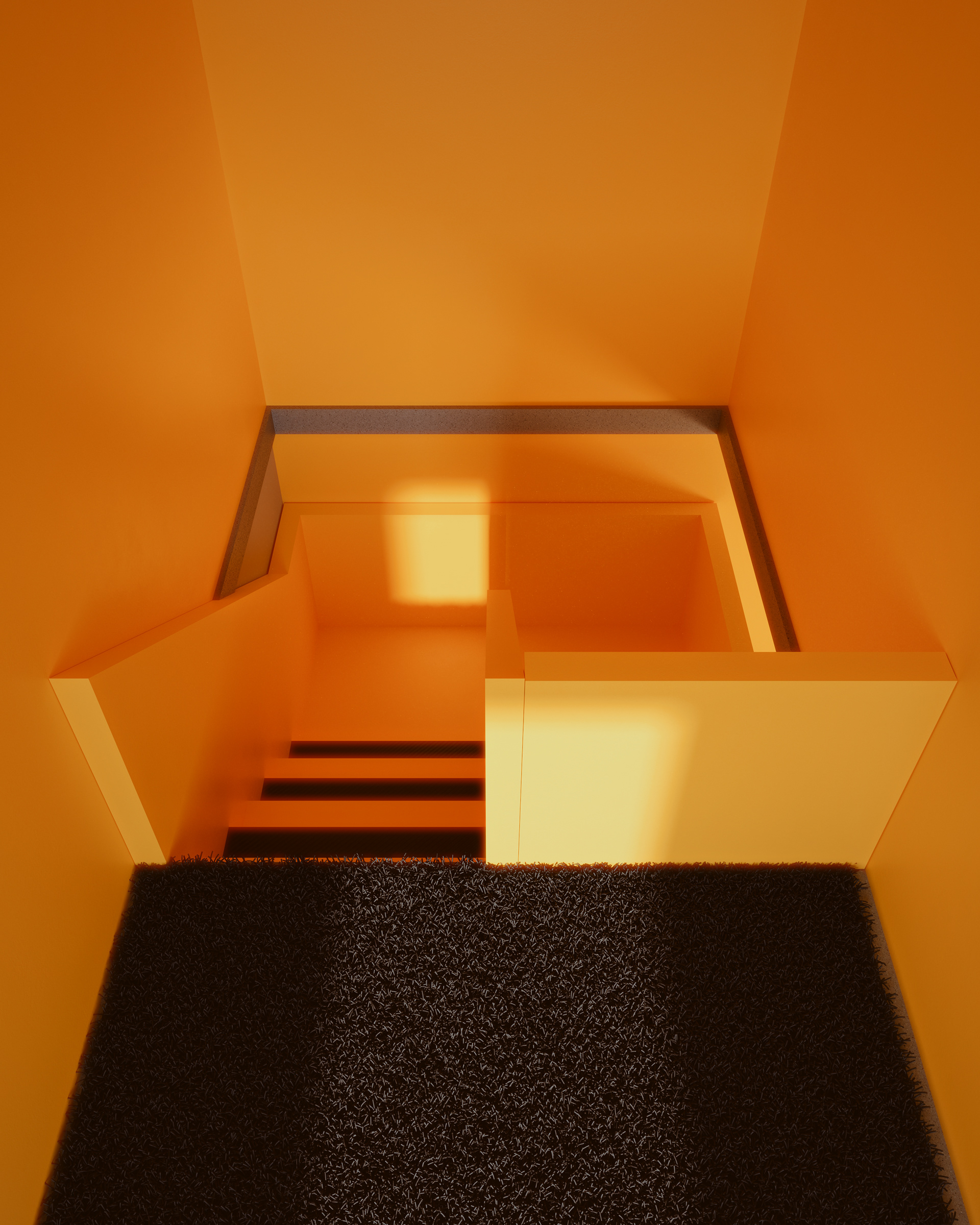
Basement (The Body) – A gym designed in vivid yellow, symbolizing vitality and alertness. Here, the artist cultivates discipline and balance—both physical and mental. The space is compact but immersive, encouraging energy and renewal before the act of creation.
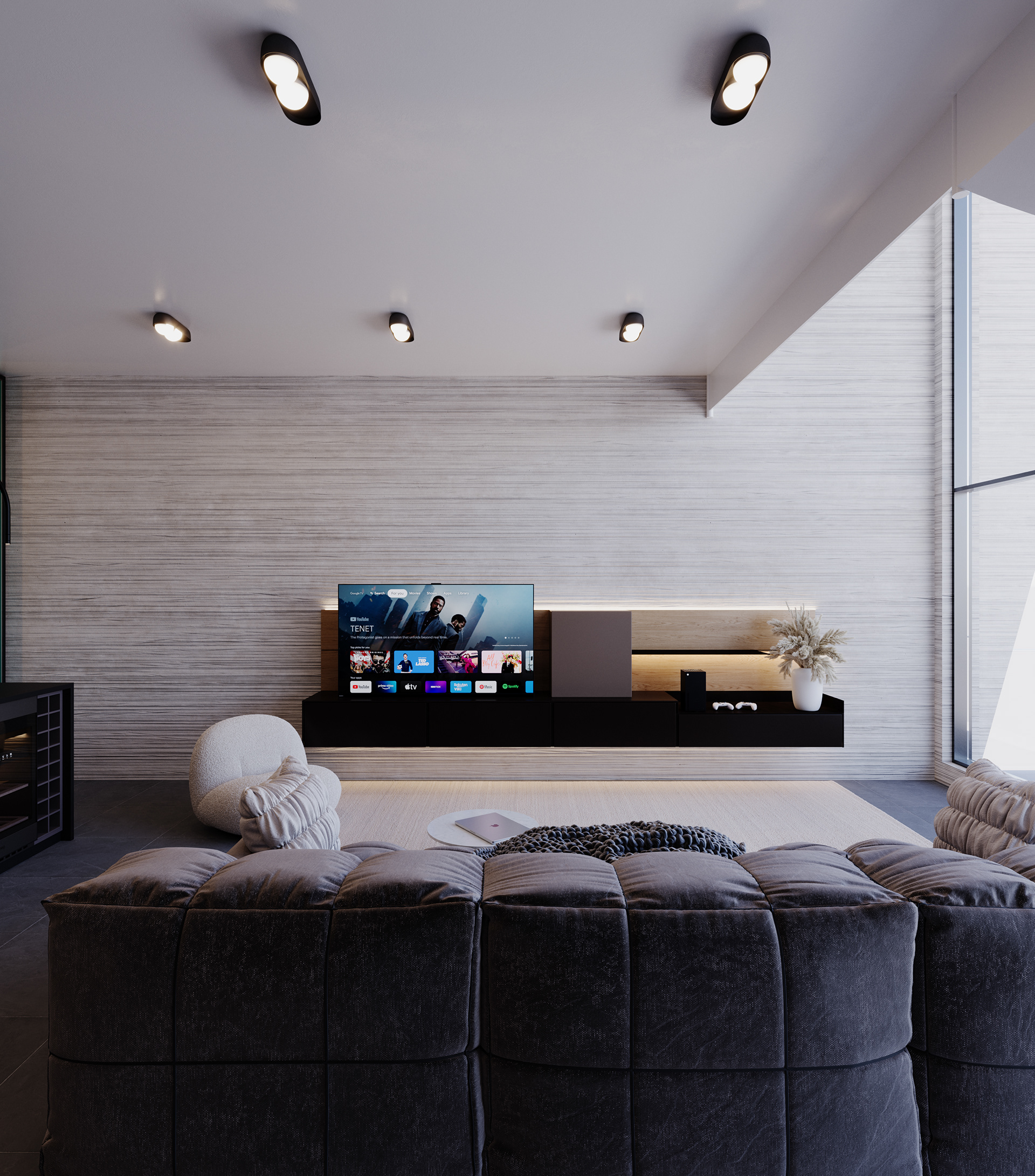
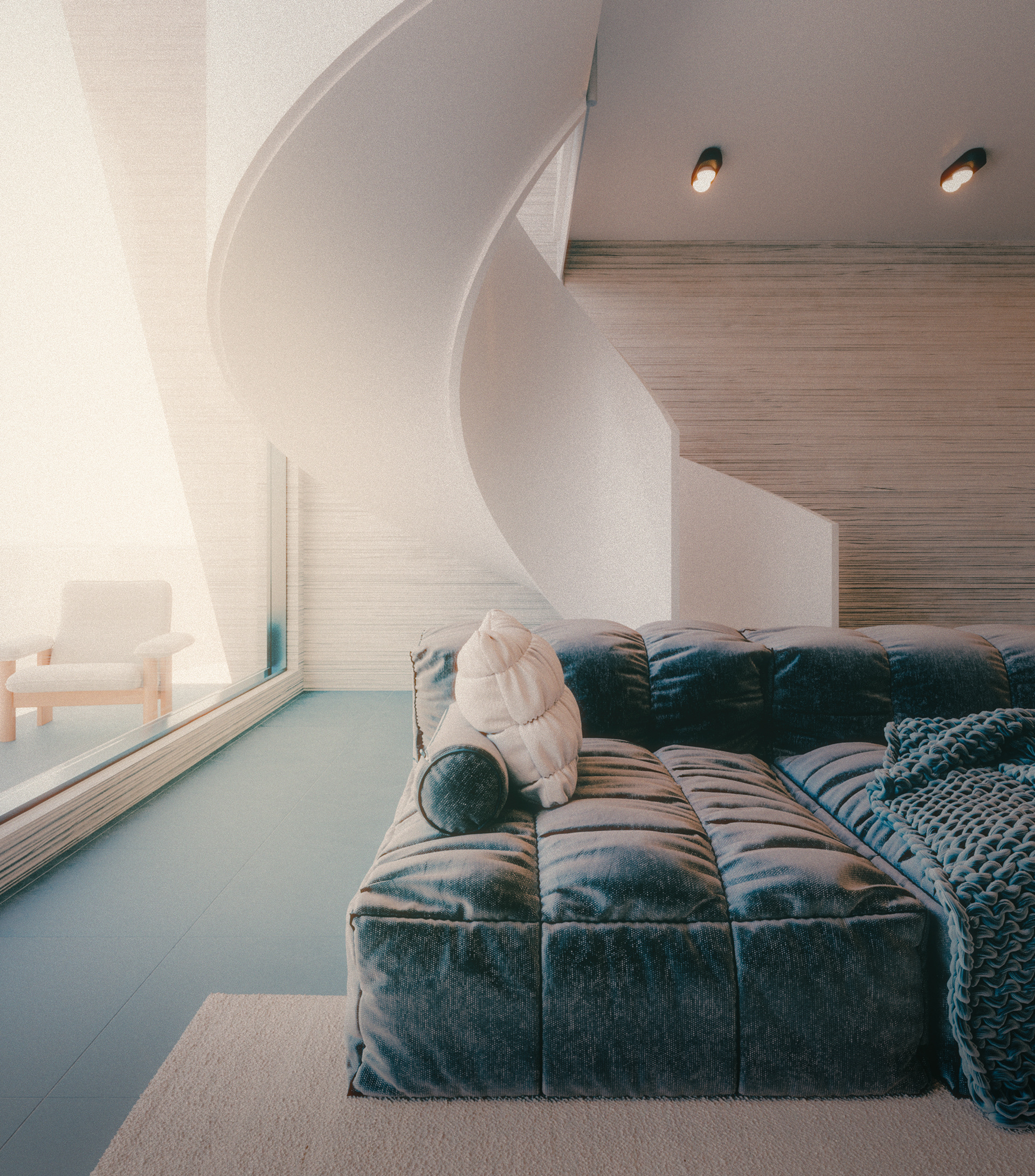
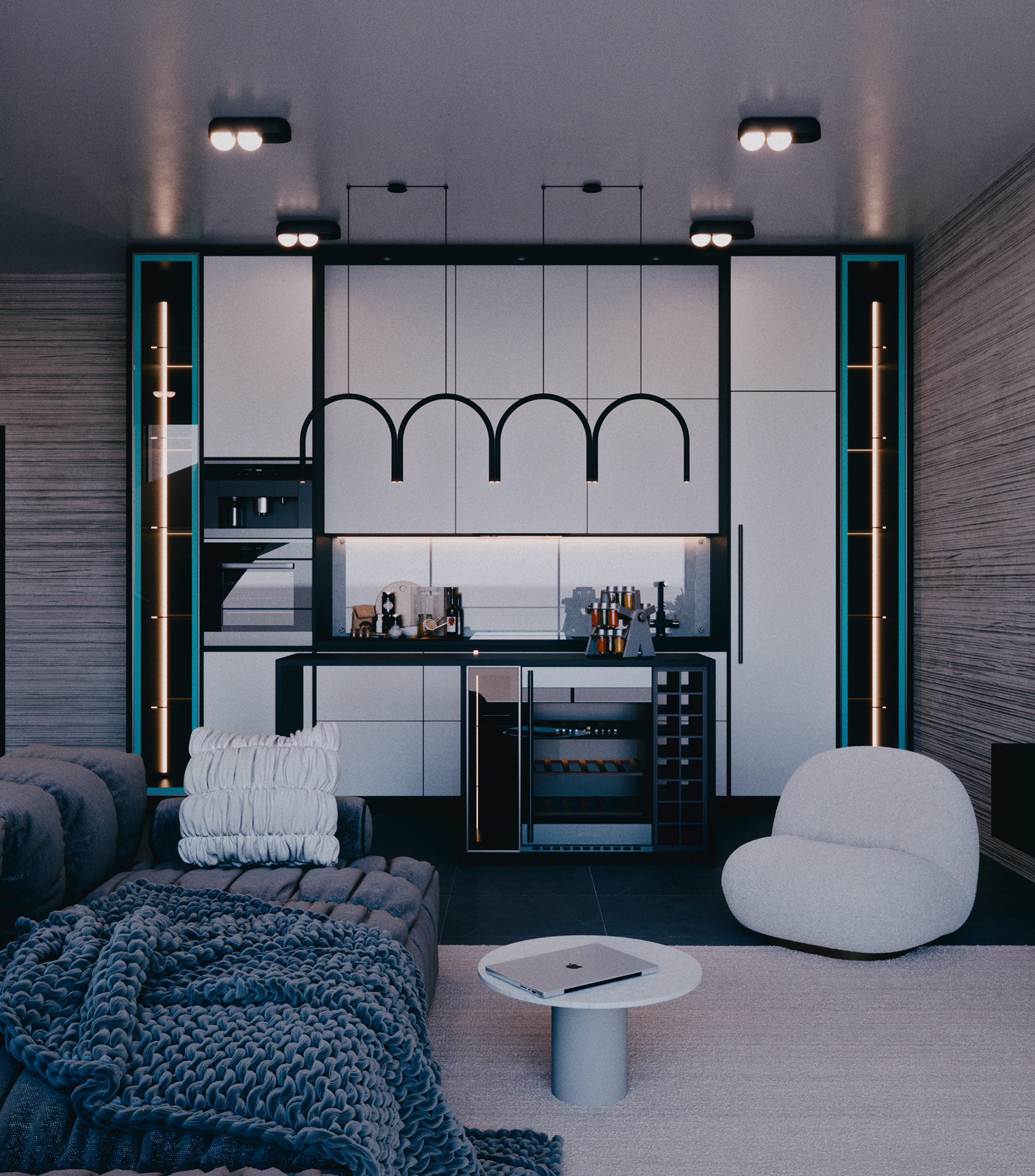
Ground Floor (The Mind) – A living space defined by seamless continuity between kitchen, dining, and lounge. This is where ideas incubate through the rhythm of daily rituals. A curved stair becomes a sculptural moment of pause and transition, guiding the user upward.
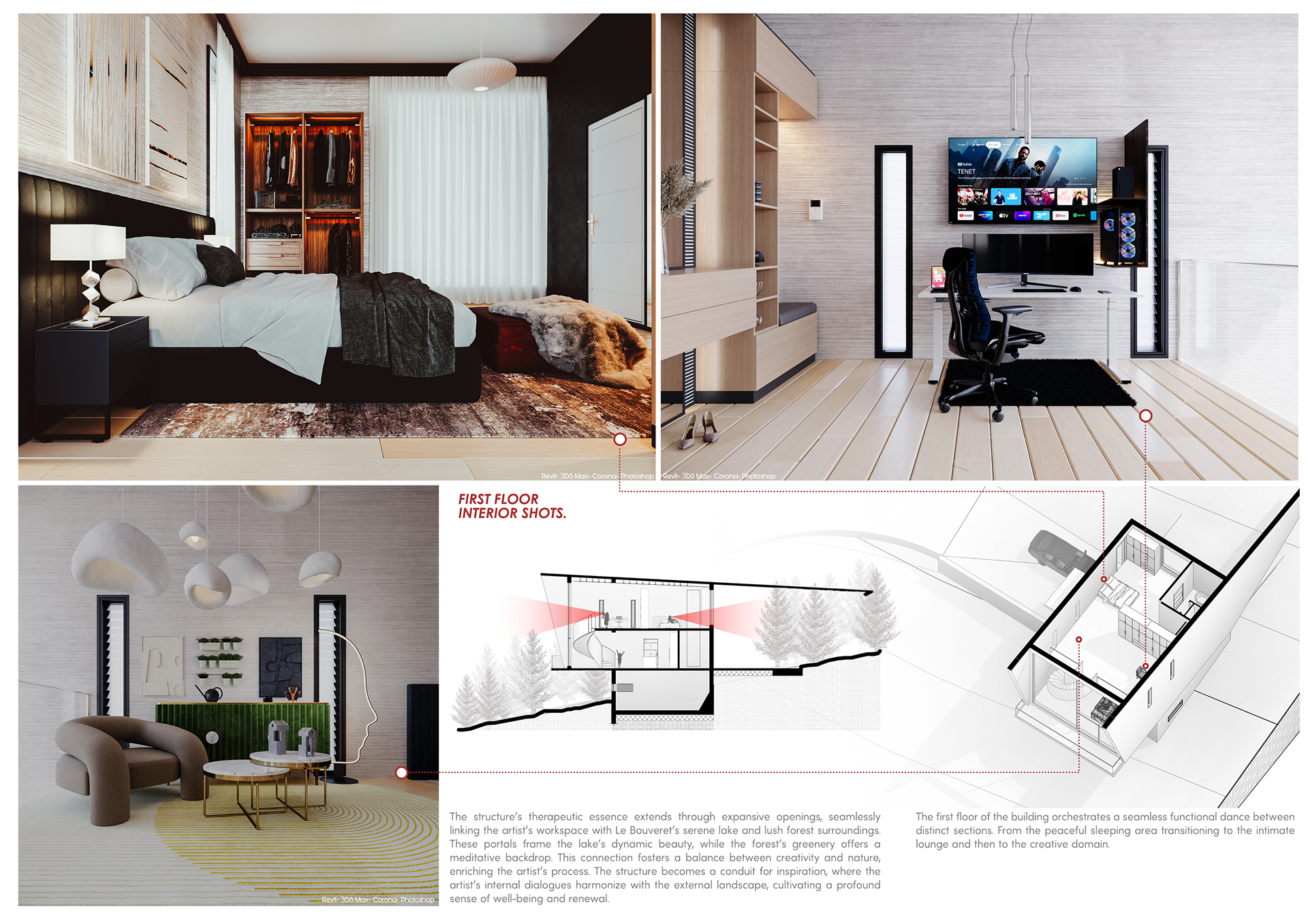
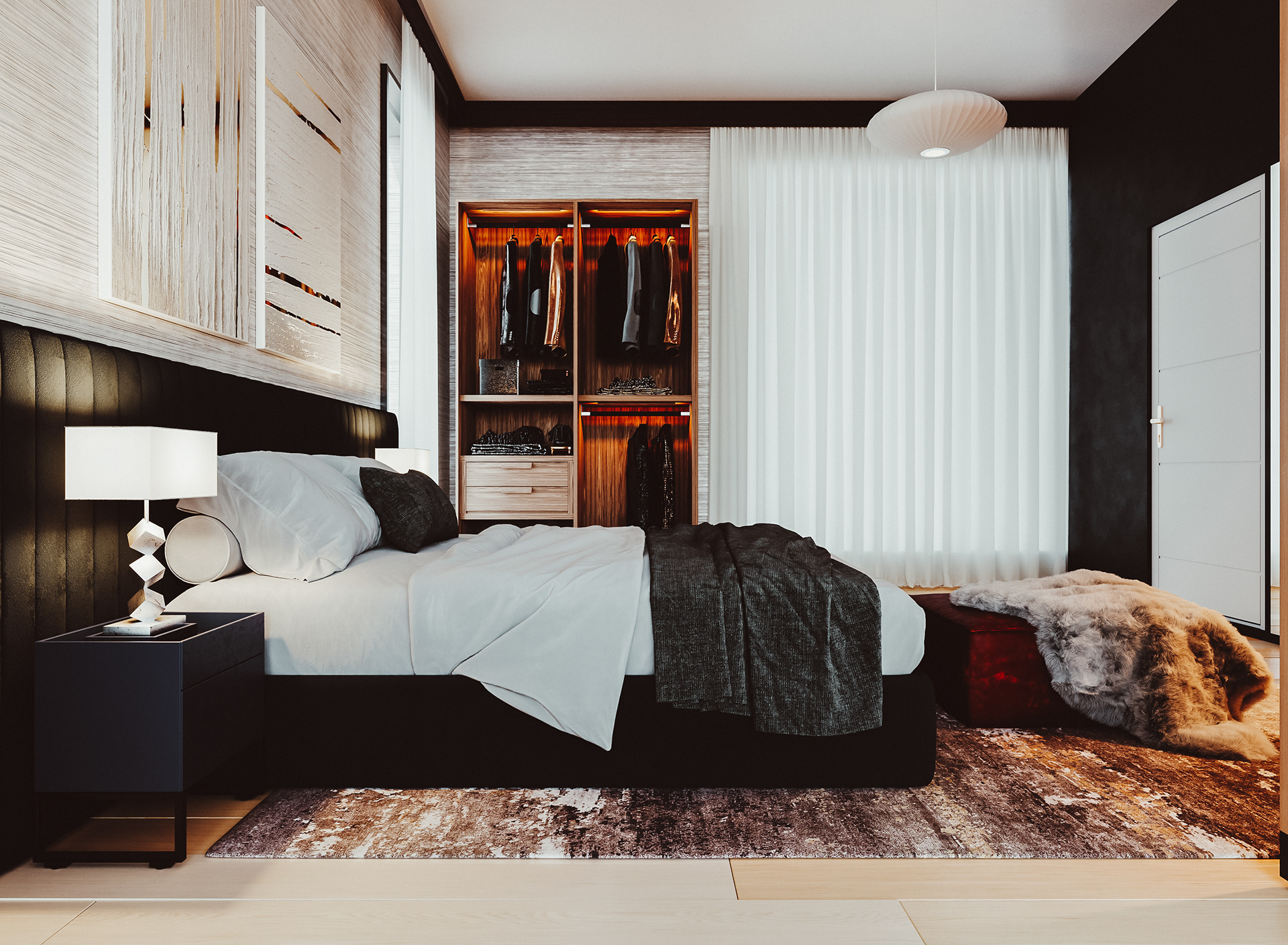
First Floor (The Spirit) – The studio and sleeping quarters float in light. The workspace faces the lake, offering uninterrupted visual serenity; the bedroom remains introverted and calm. Together, they embody the artist’s dual existence—solitary yet connected to the vast world beyond the glass.
Interior Atmosphere: Light as a Material of Focus
The interiors are an extension of emotional geometry. Natural light filters softly across textured surfaces, creating a meditative stillness. The design orchestrates contrast: dark panels heighten focus, warm hues anchor comfort, and reflective planes amplify the feeling of space.
At night, the interior glows subtly, transforming the structure into a lantern that punctuates the hillside—an image of quiet resilience against the mountain’s vastness.
Environmental Responsiveness
The design integrates a passive thermal strategy through material massing, cross-ventilation, and roof geometry. By embedding part of the structure into the hill, the building benefits from the earth’s insulation, reducing thermal fluctuation.
Large openings are shaded to prevent overheating in summer while welcoming low winter sunlight. The building’s orientation and compact footprint minimize energy consumption, aligning with a Swiss ethos of precision and ecological sensitivity.
The Artist and the Landscape
FOCUS frames the artist not as an isolated figure but as part of a greater ecological and creative continuum. The framed views of Lake Geneva and the forested backdrop do not simply offer beauty—they regulate emotion, grounding the artist’s routine in rhythm, scale, and humility.
The architecture becomes a lens through which both art and life are re-centered. In the mist of Le Bouveret, or under snowfall, the house performs as a contemplative observatory—a vessel for seeing and for being.
Design Philosophy: Minimalism as Intimacy
The project’s title—FOCUS—is both directive and philosophy. It stands for an architecture that filters noise, values clarity, and celebrates restraint. It is about creating less, but with precision and depth. Every wall, light, and void carries intent.
In a world increasingly crowded with distraction, FOCUS argues for architecture as a practice of mindfulness—a retreat that reminds us of the beauty of stillness and the discipline of purpose.