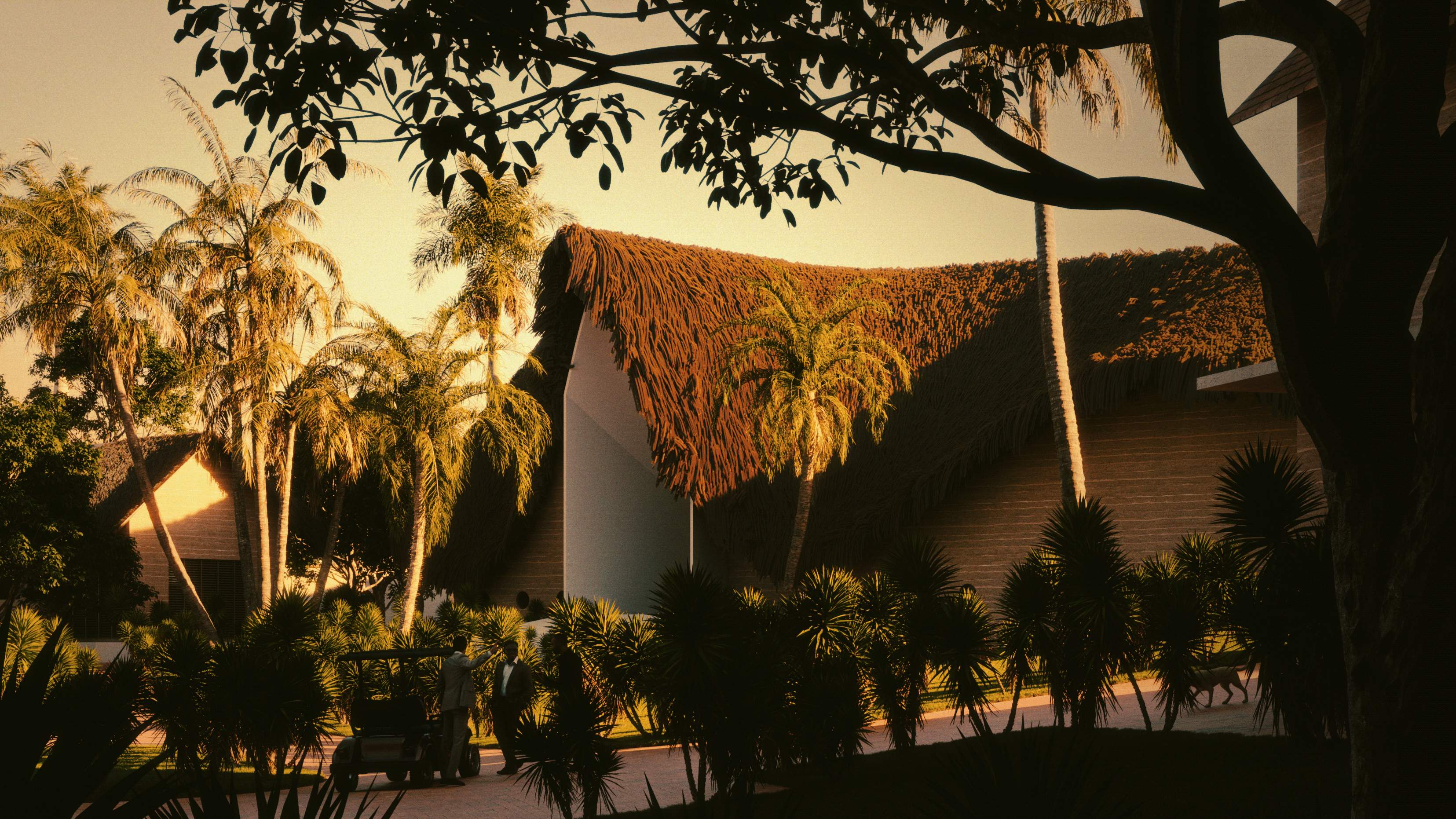
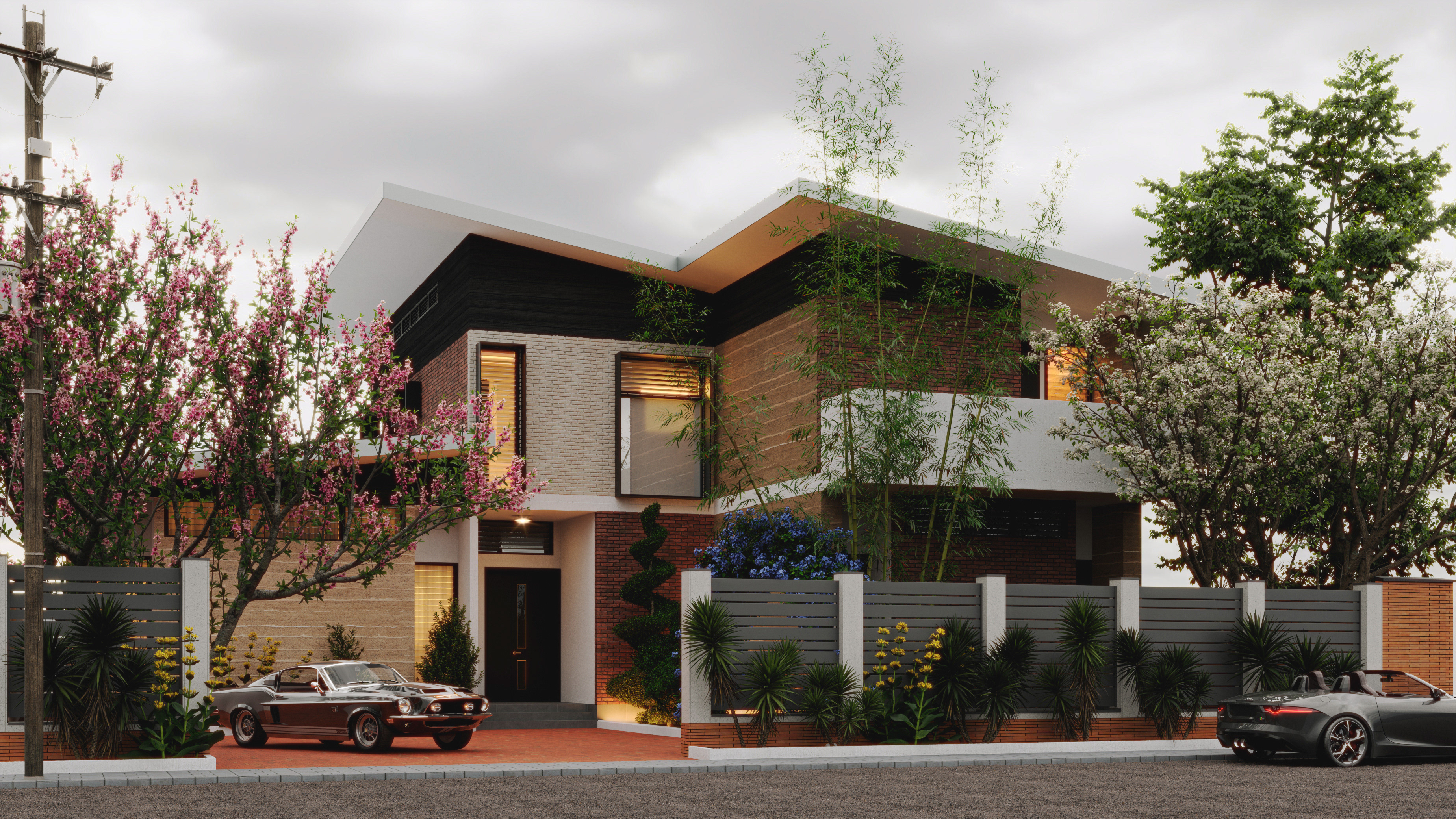
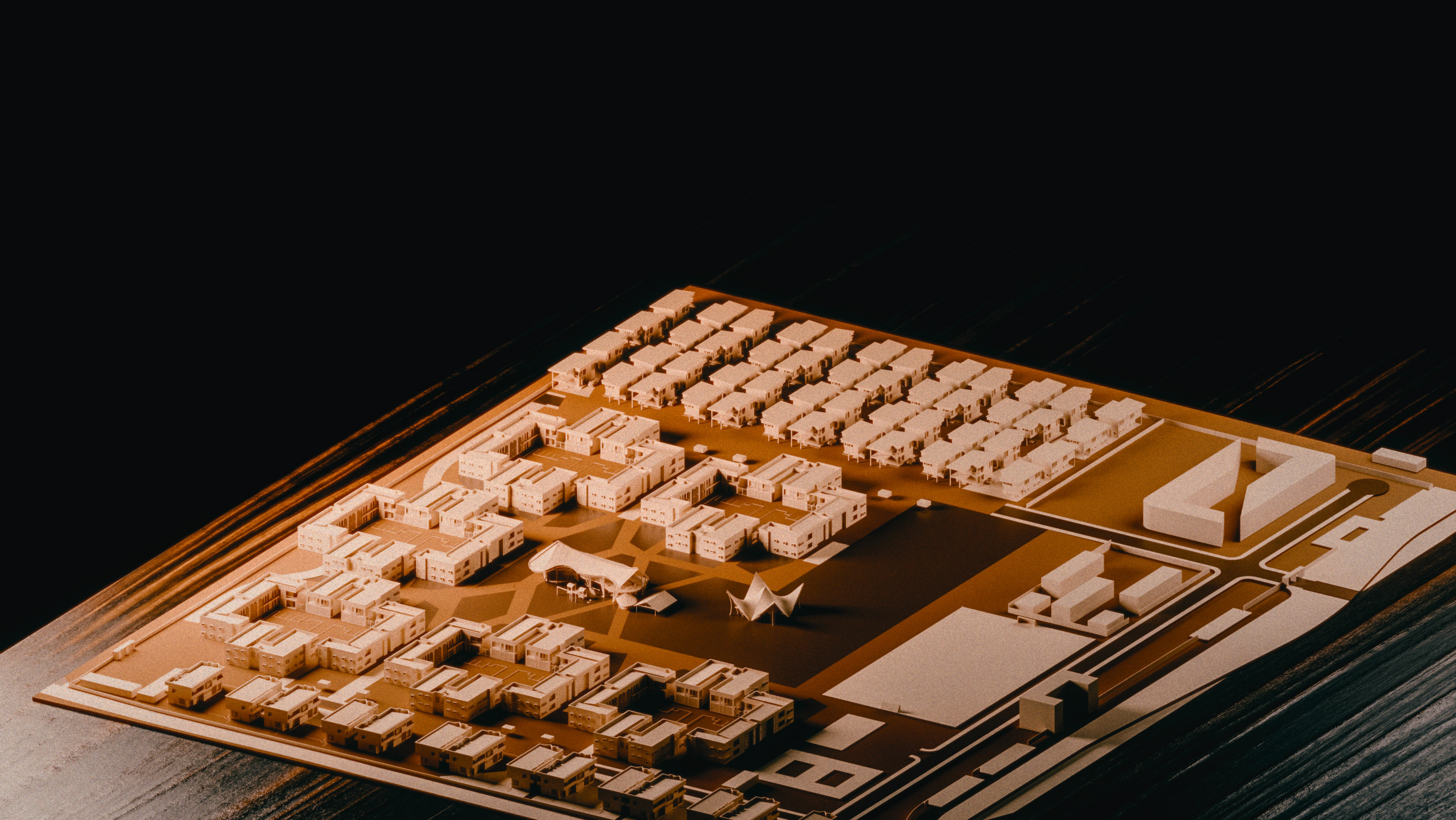
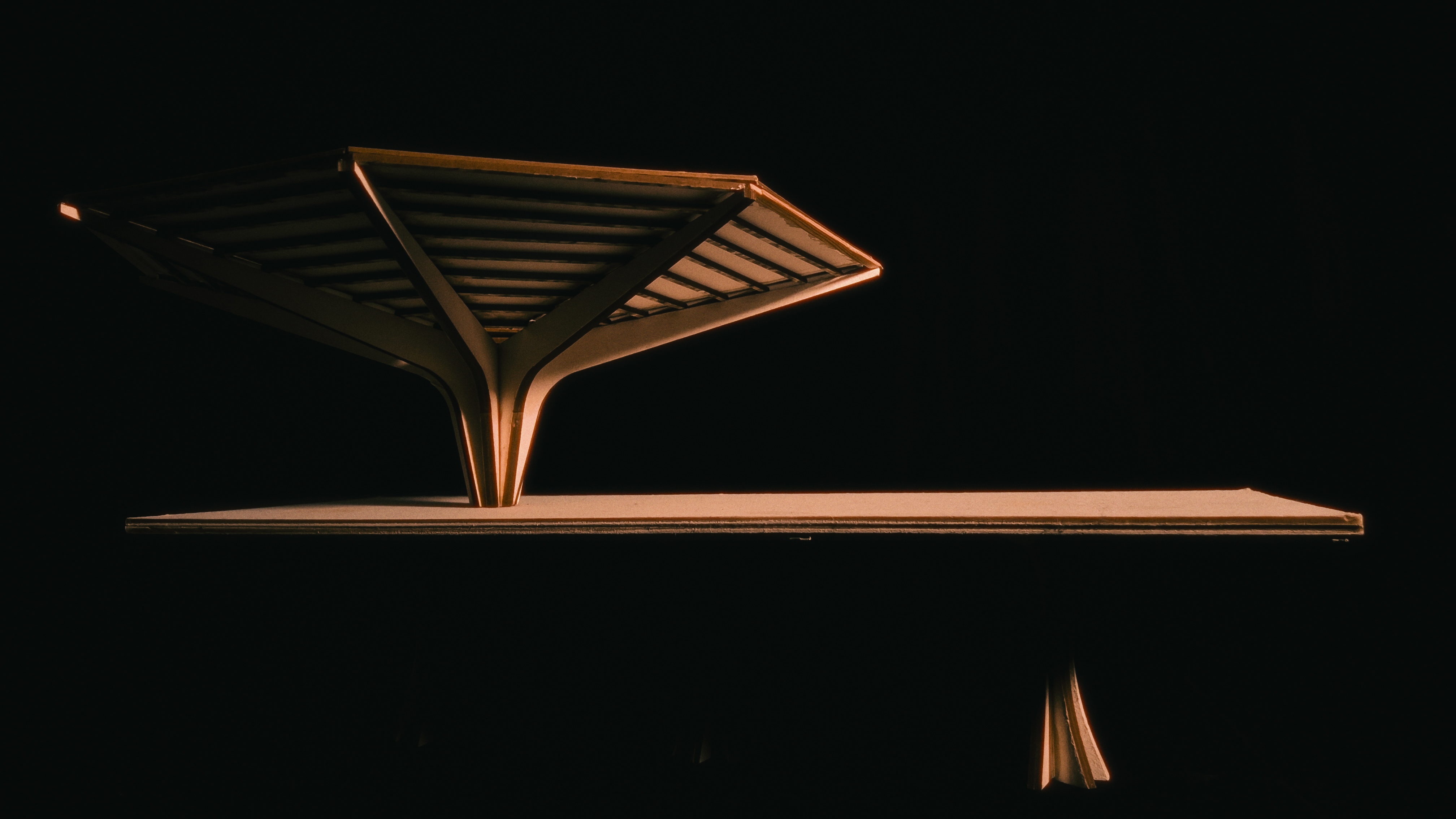
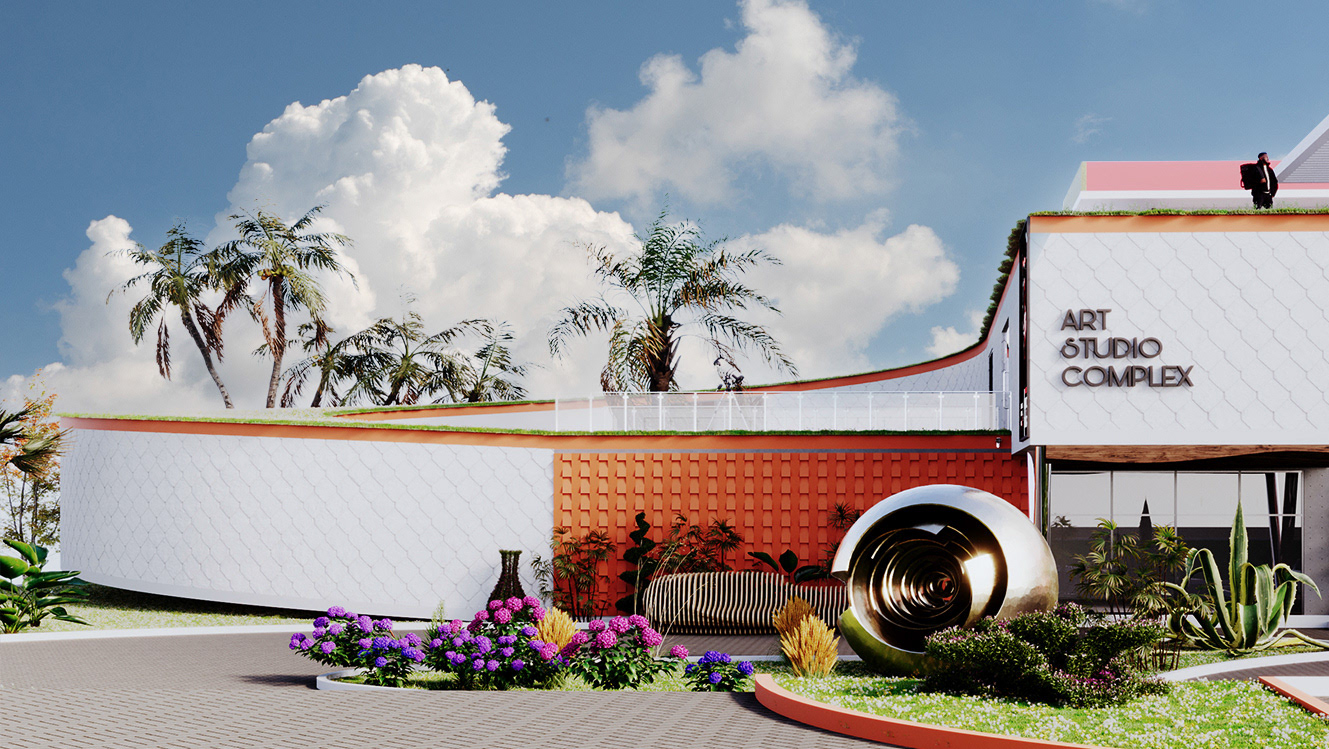
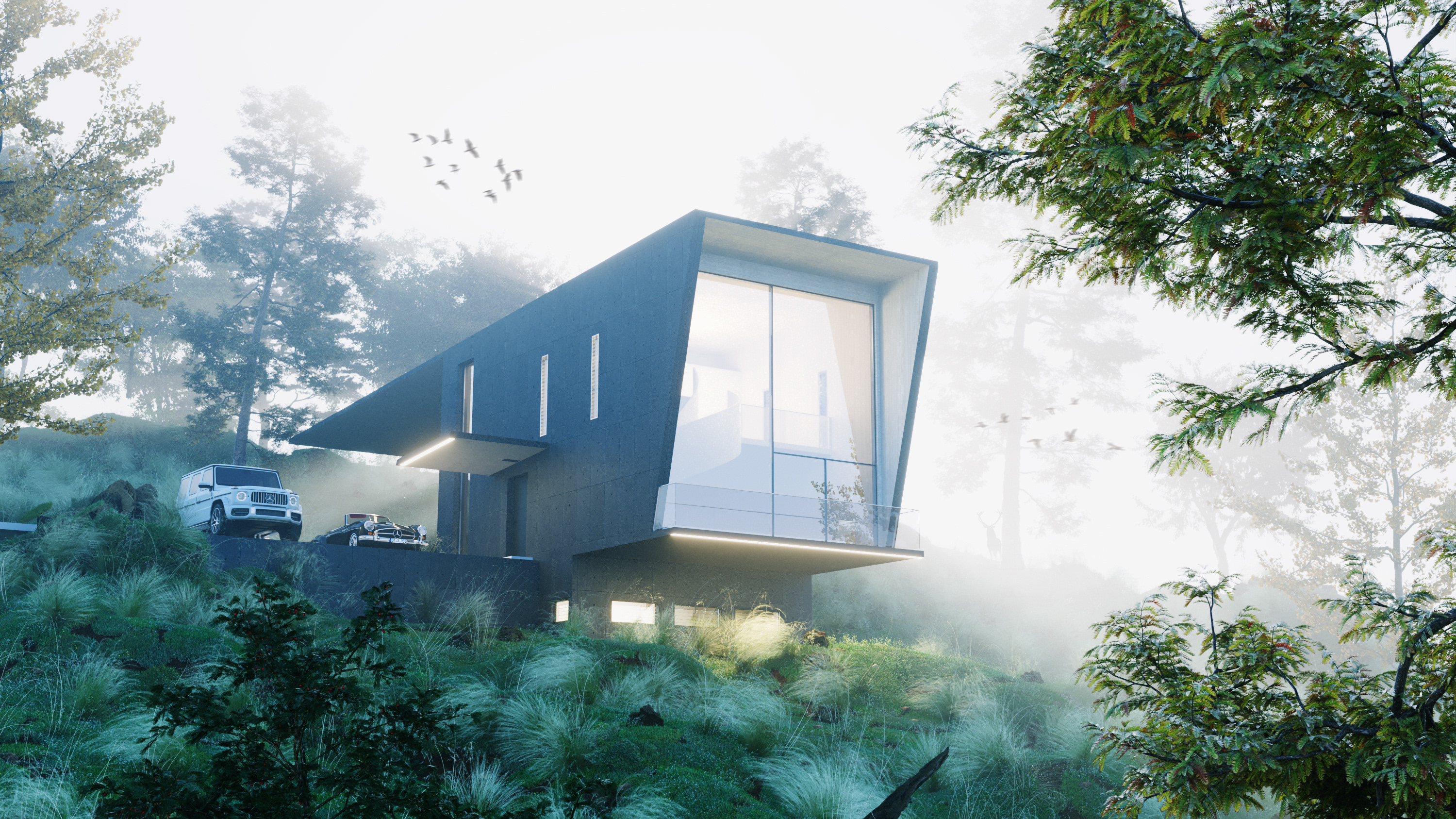
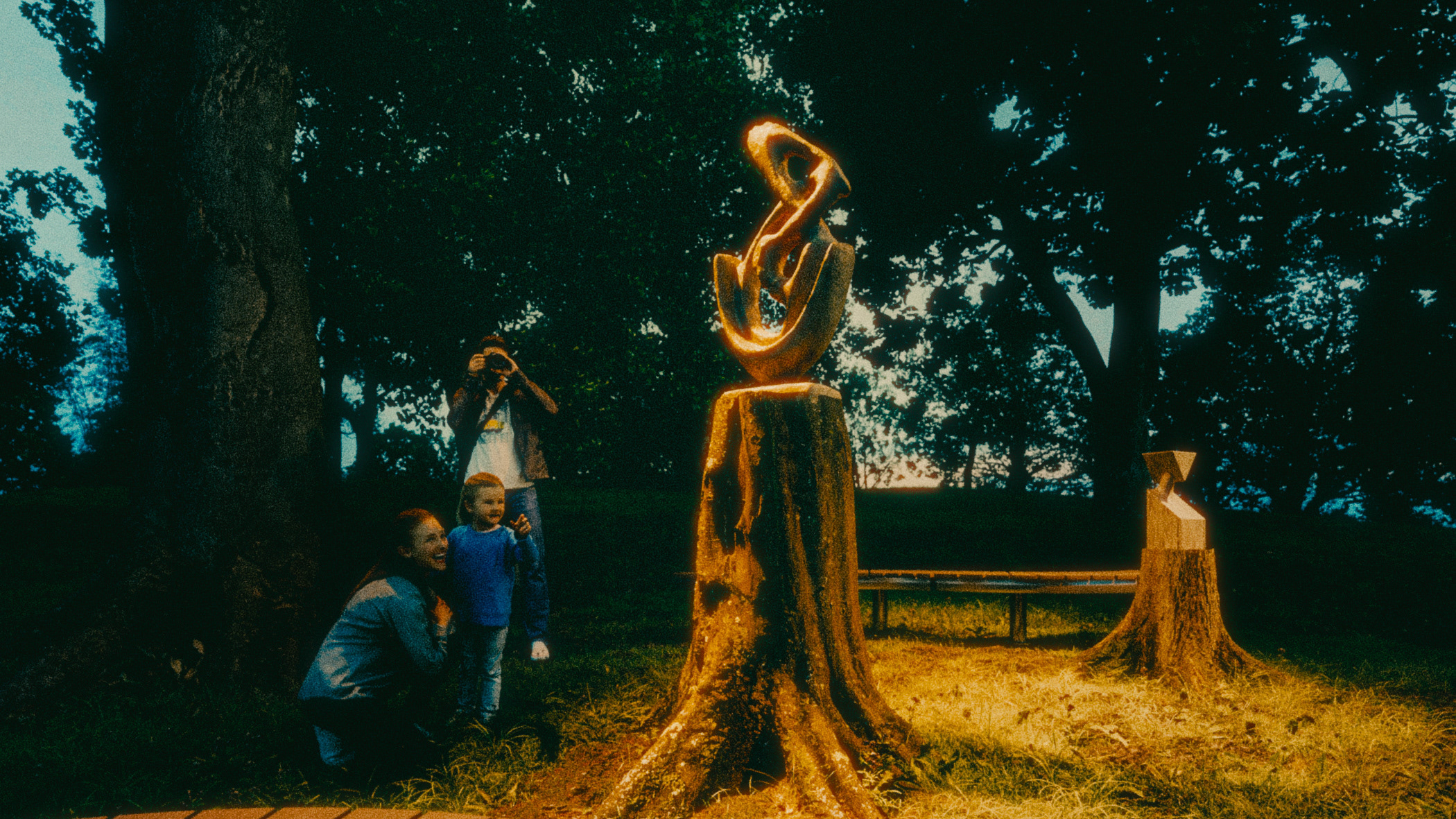
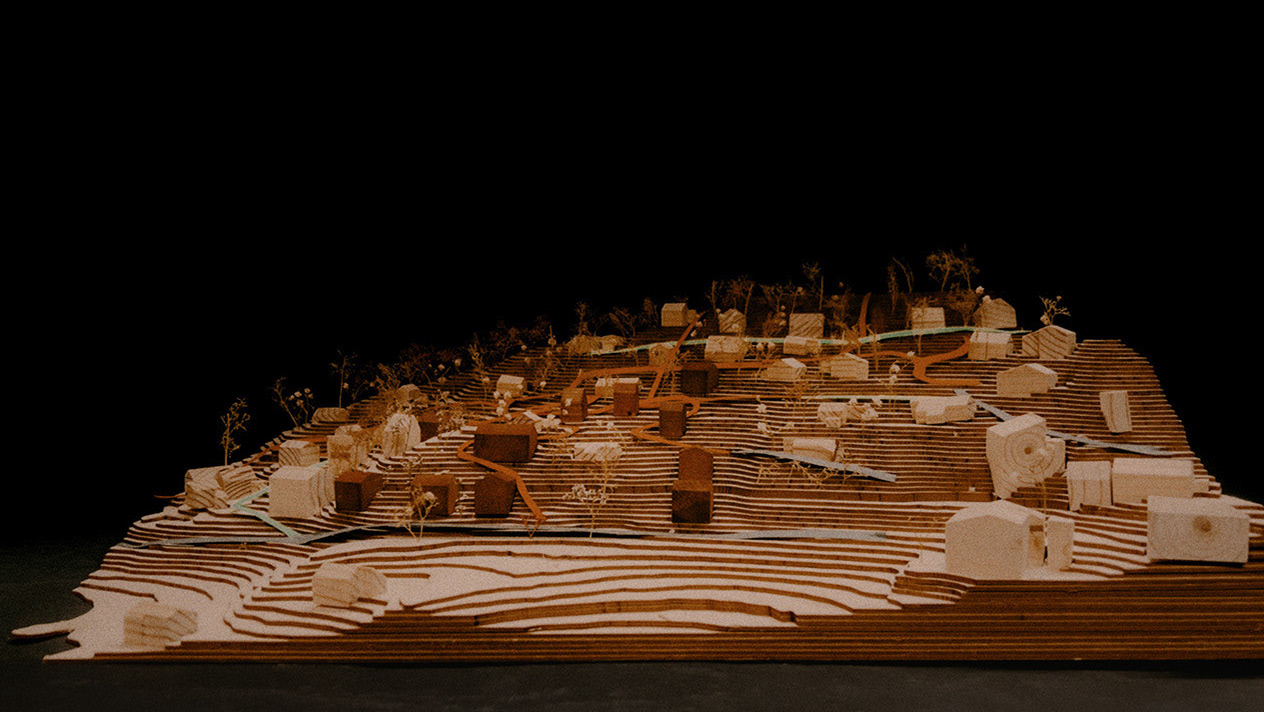
KNUST GOES GREEN begins with a simple refusal: that comfort on campus should be treated as a privilege. In Kumasi’s heat, the difference between an exposed path and a shaded one is not aesthetic—it is physical, psychological, and academic. This proposal reframes “greening” as infrastructure: shade that reduces fatigue, landscape that absorbs and filters water, and public space that restores attention rather than draining it.
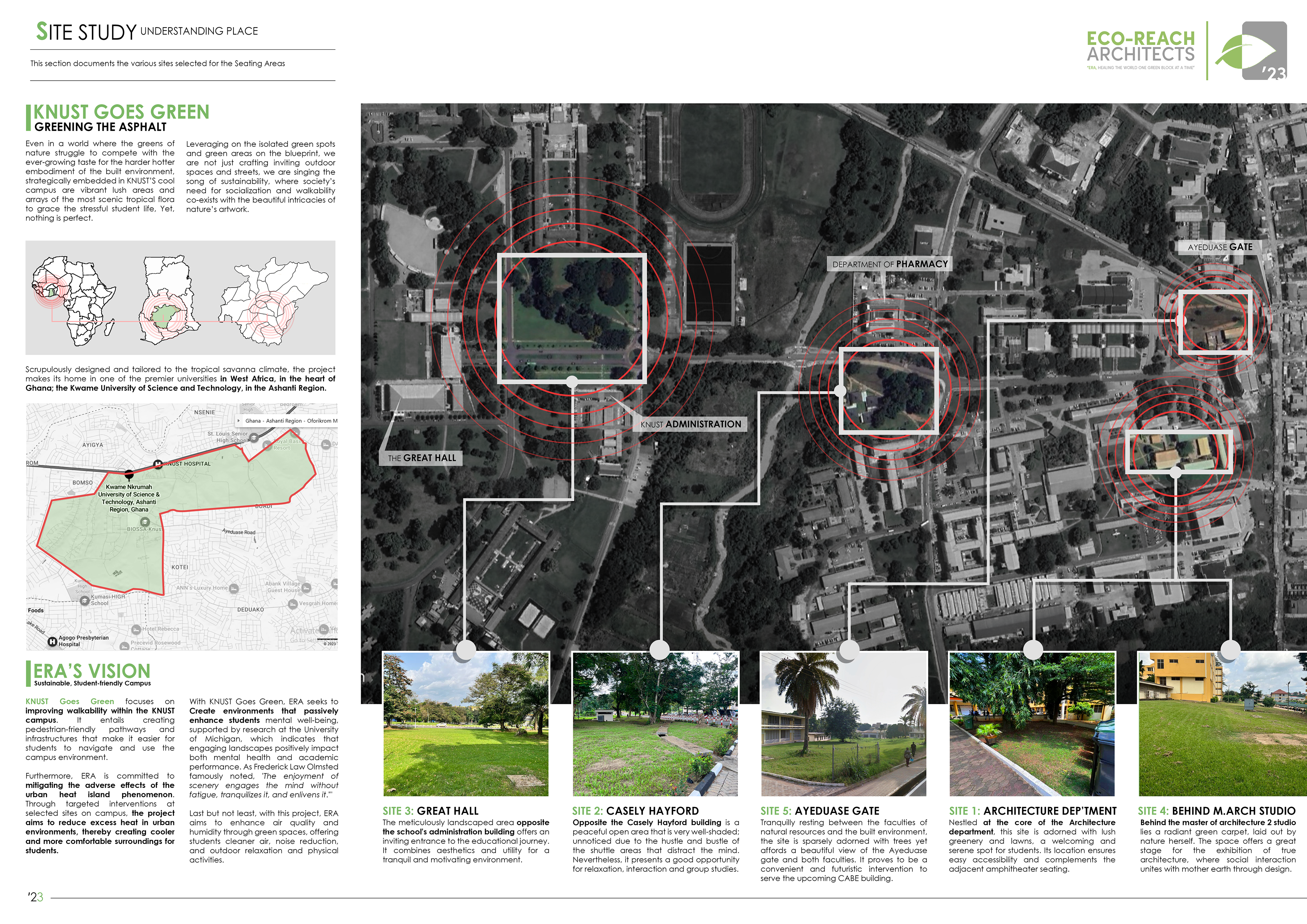
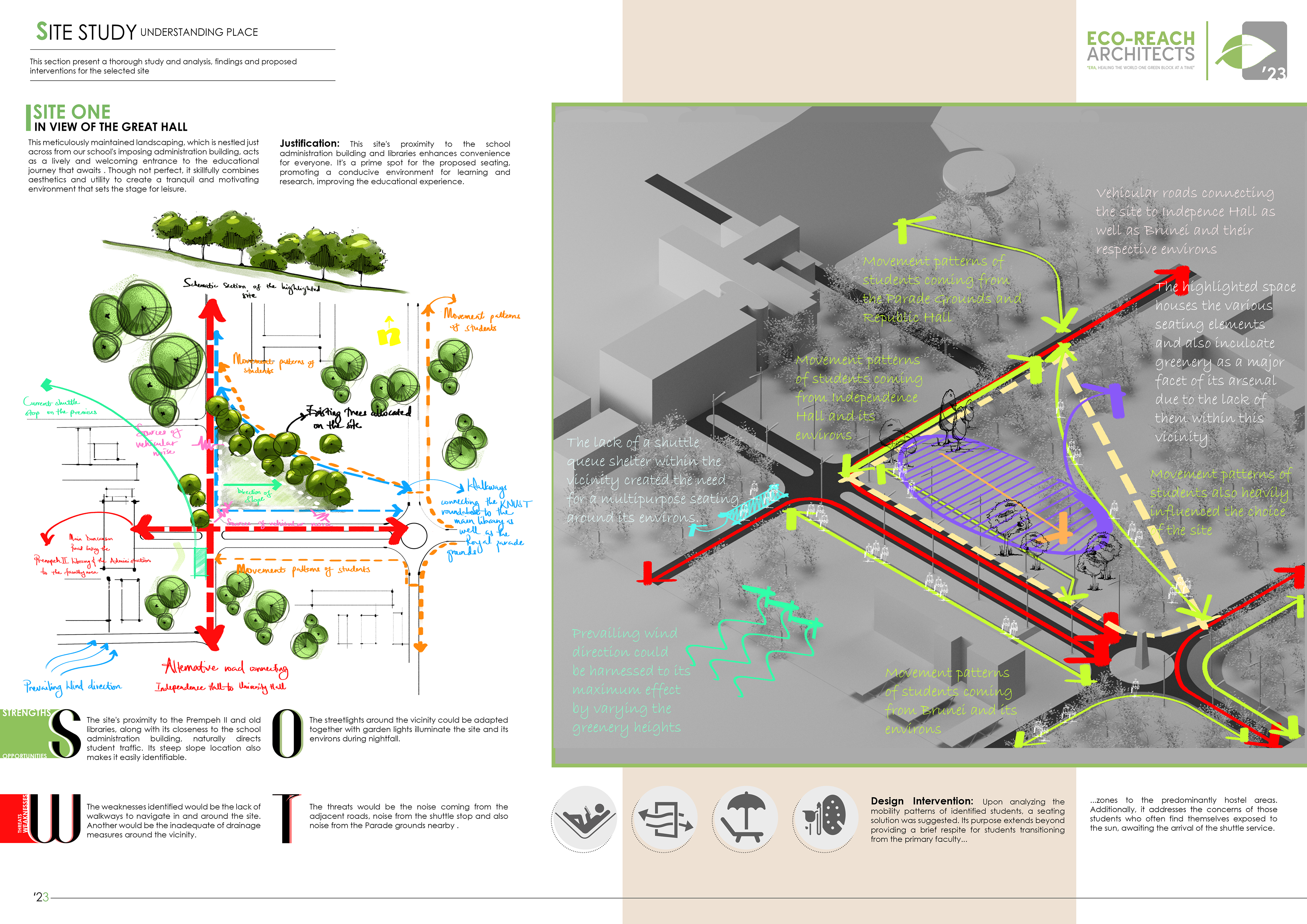
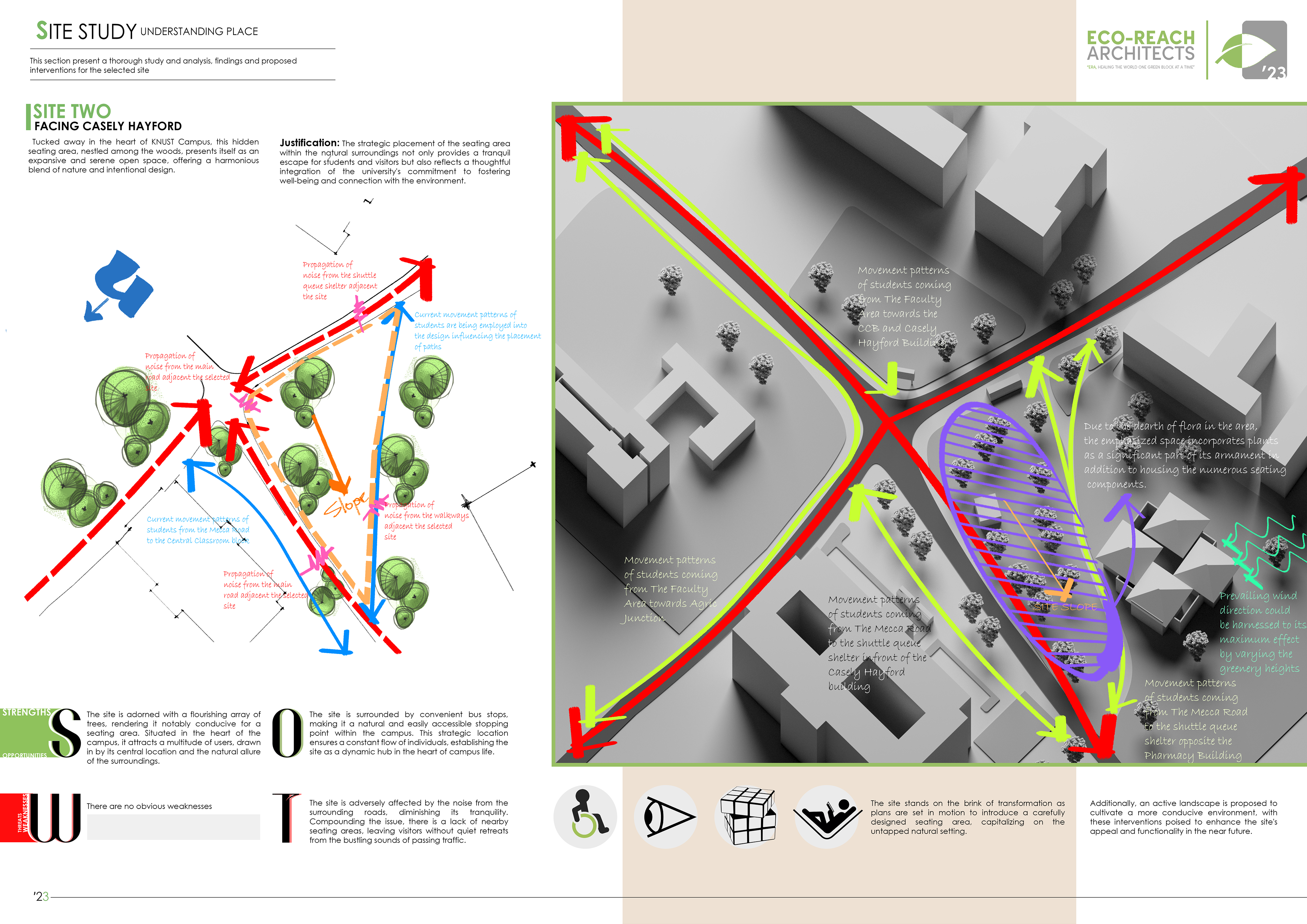
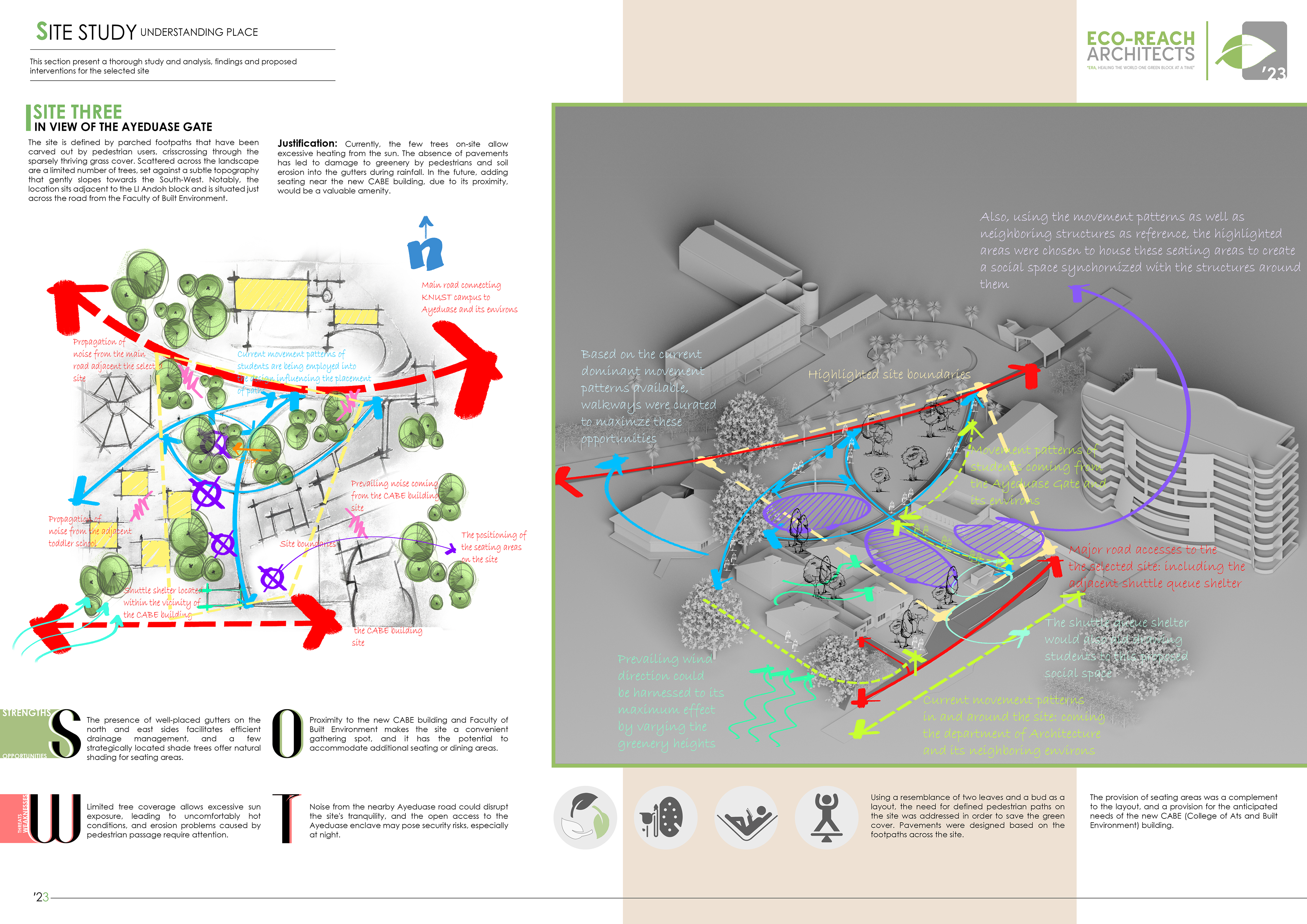
We started by reading the campus as a living system—mapping how people actually move, where they hesitate, where they gather, and where heat and exposure quietly discipline behavior. From that diagnosis, the work sets out a three-fold approach: enhance seating areas, redesign street conditions, and introduce a comprehensive tree-planting initiative to improve walkability, social interaction, and outdoor thermal comfort, while also contributing to carbon regulation.
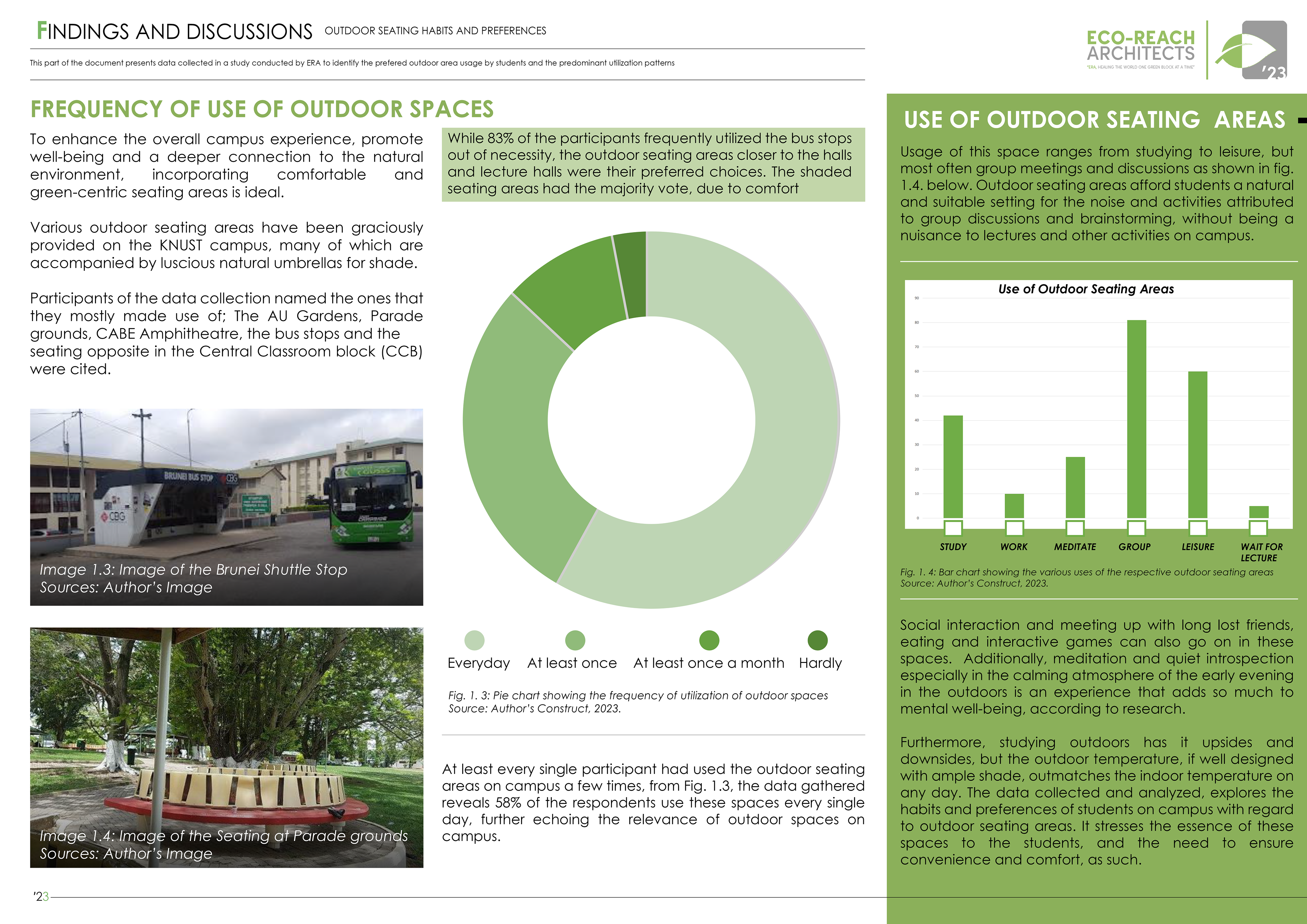
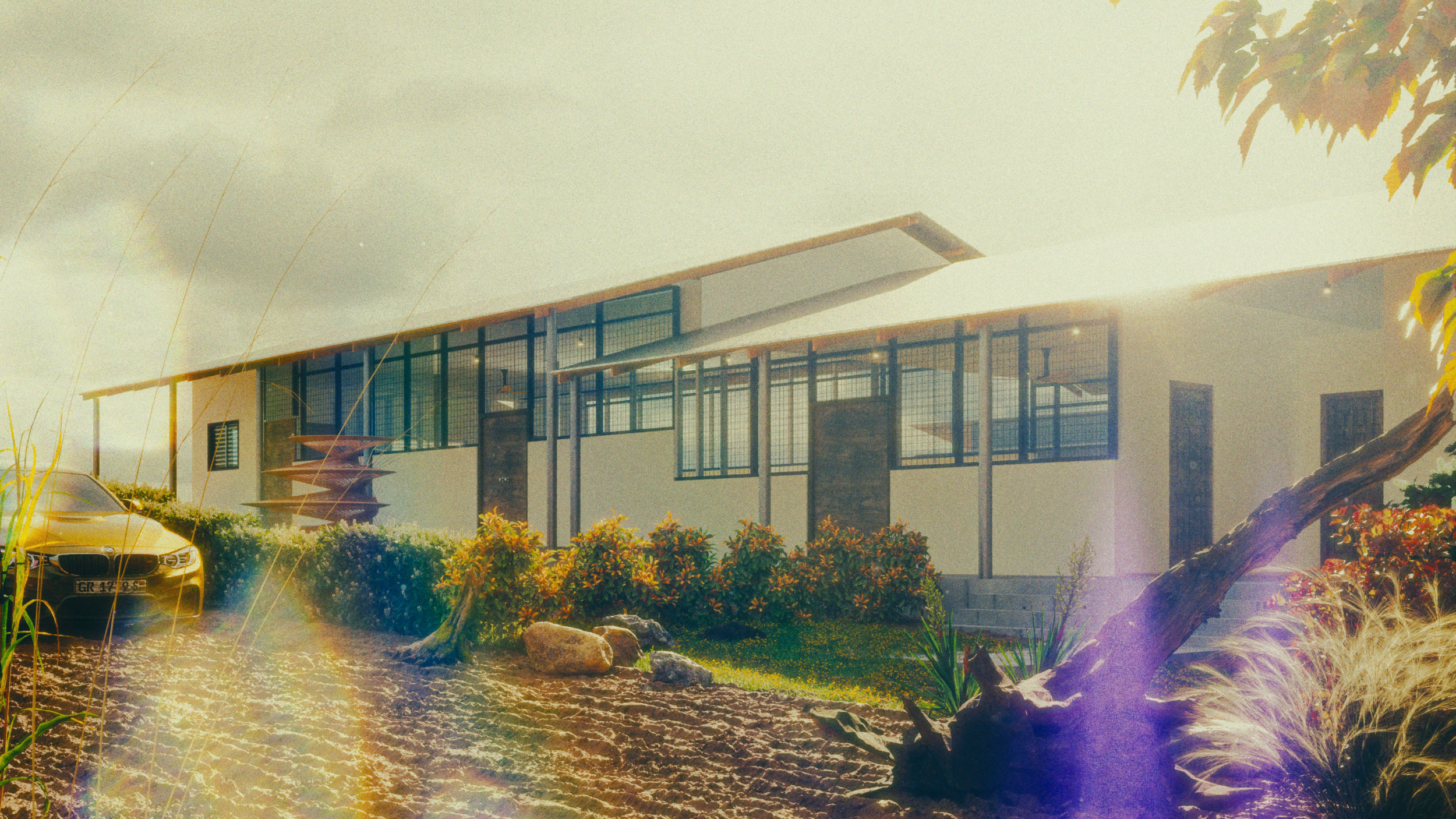
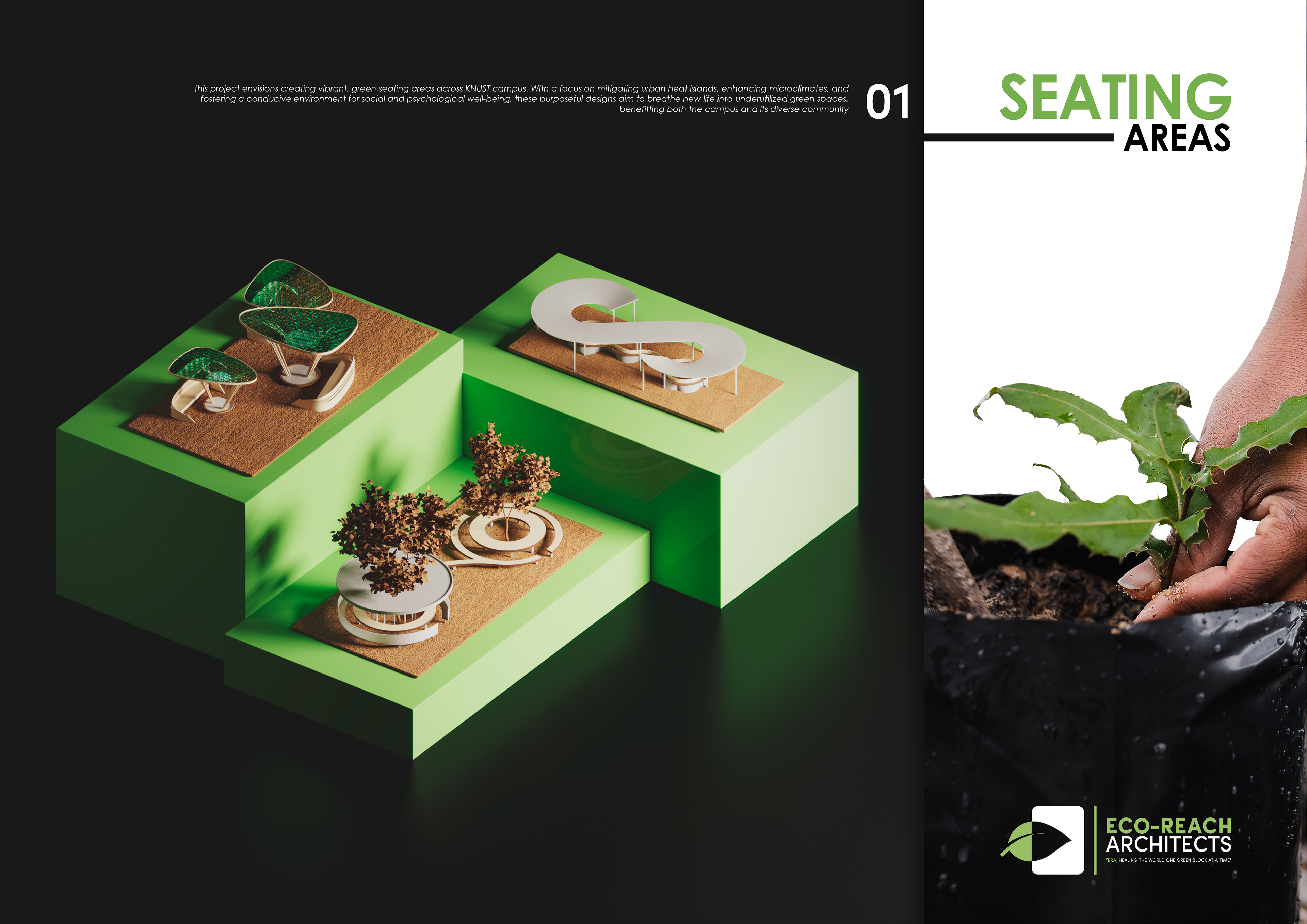
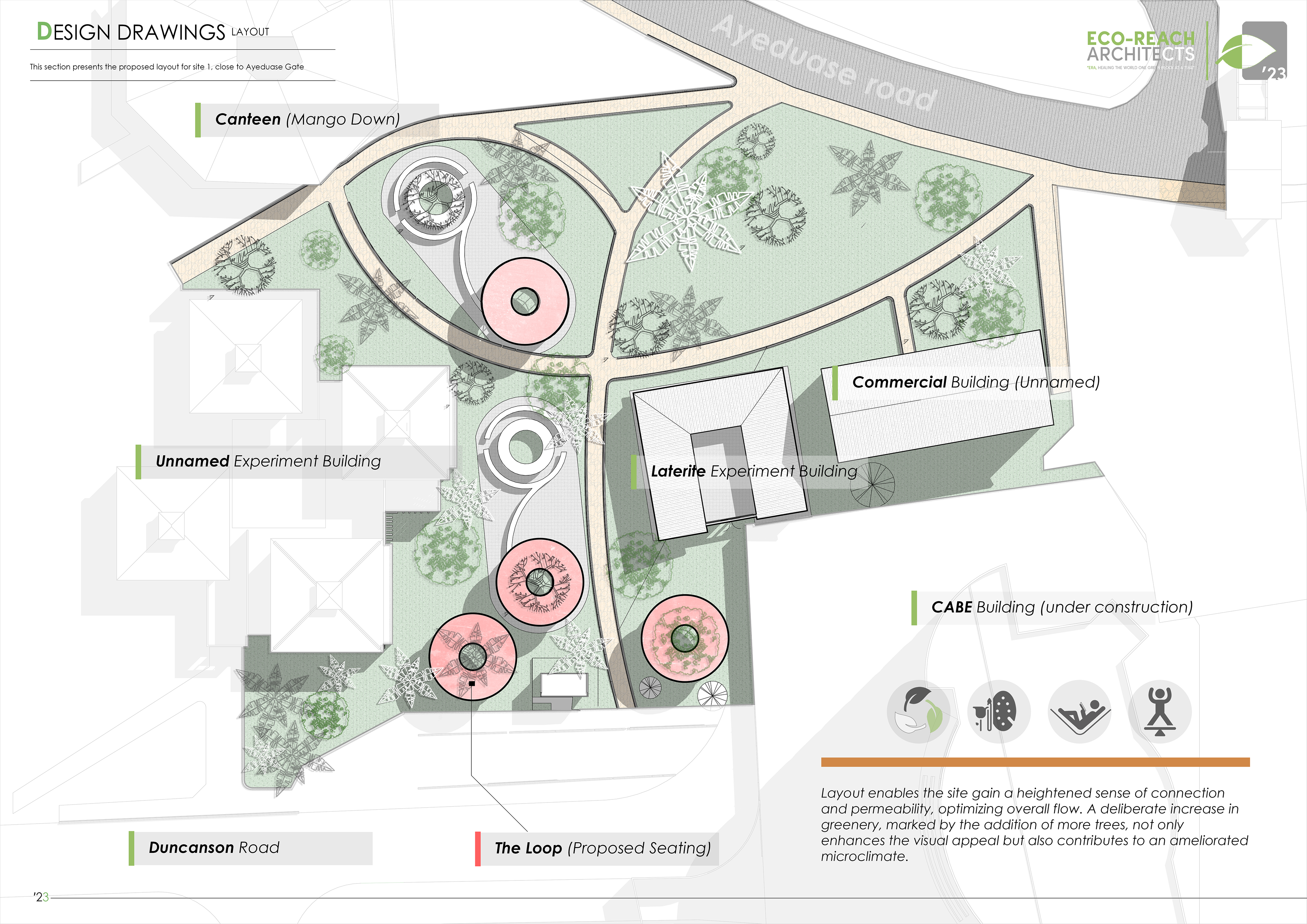
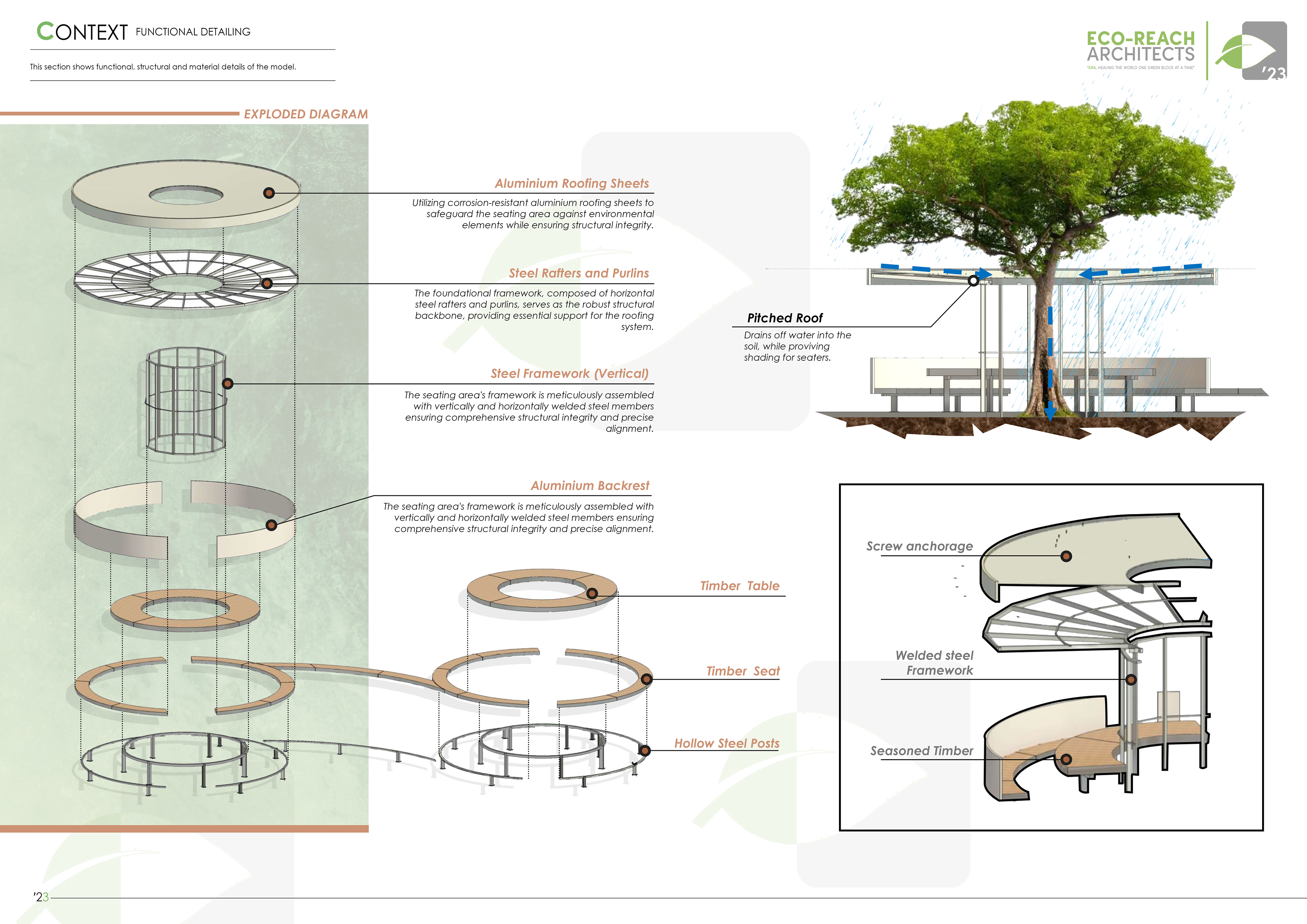
This document focuses on the first arm: a kit of seating-landscape prototypes designed to be replicated across campus. Each prototype is conceived as a small civic room—built from modest elements, but composed with care: ground plane, canopy, edge, and pause. The ambition is not to “decorate” the campus with greenery, but to make comfort dependable and legible—so students can sit, study, meet, wait, and breathe without negotiating harsh exposure.
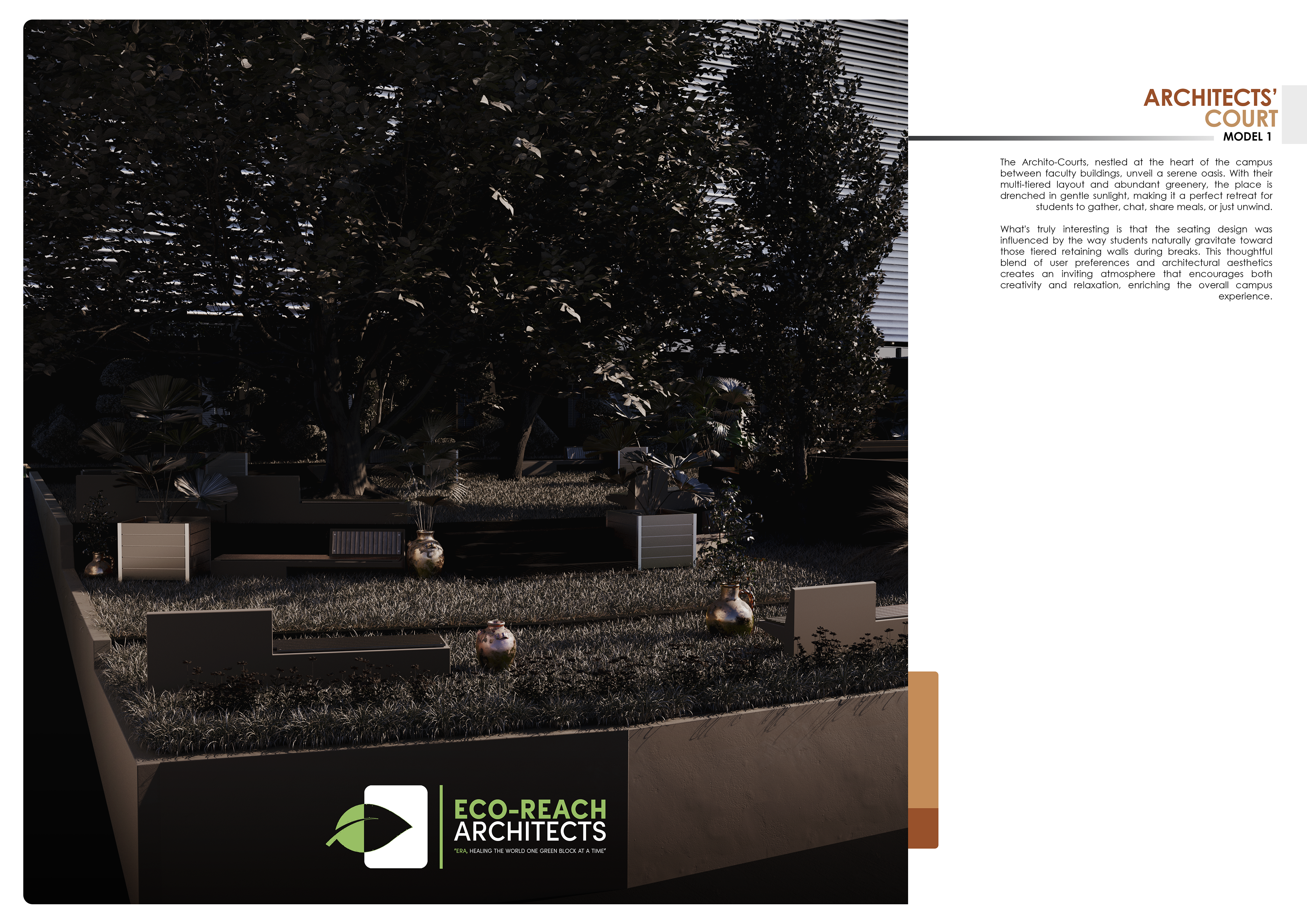
Model 1 — Architects’ Court
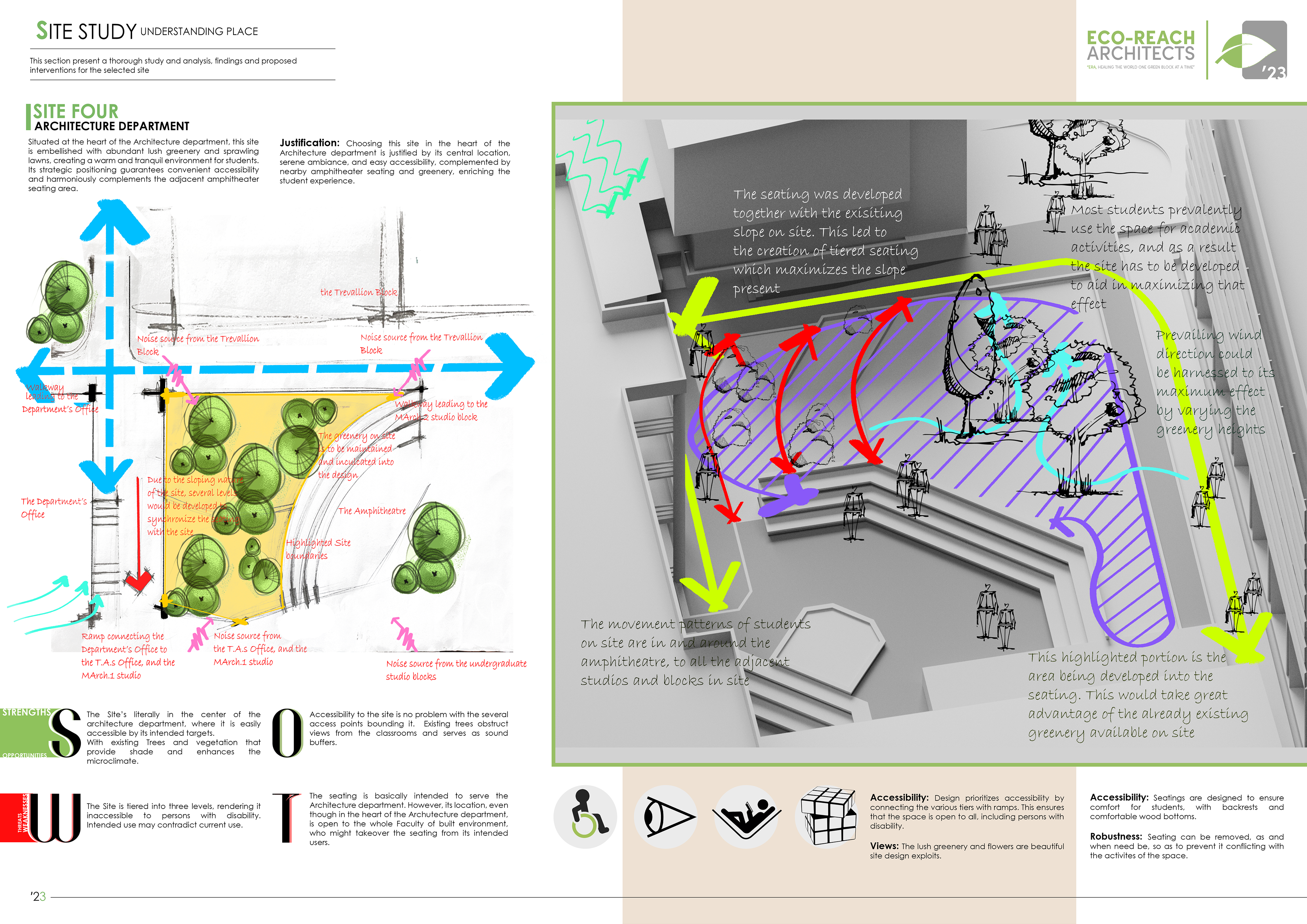
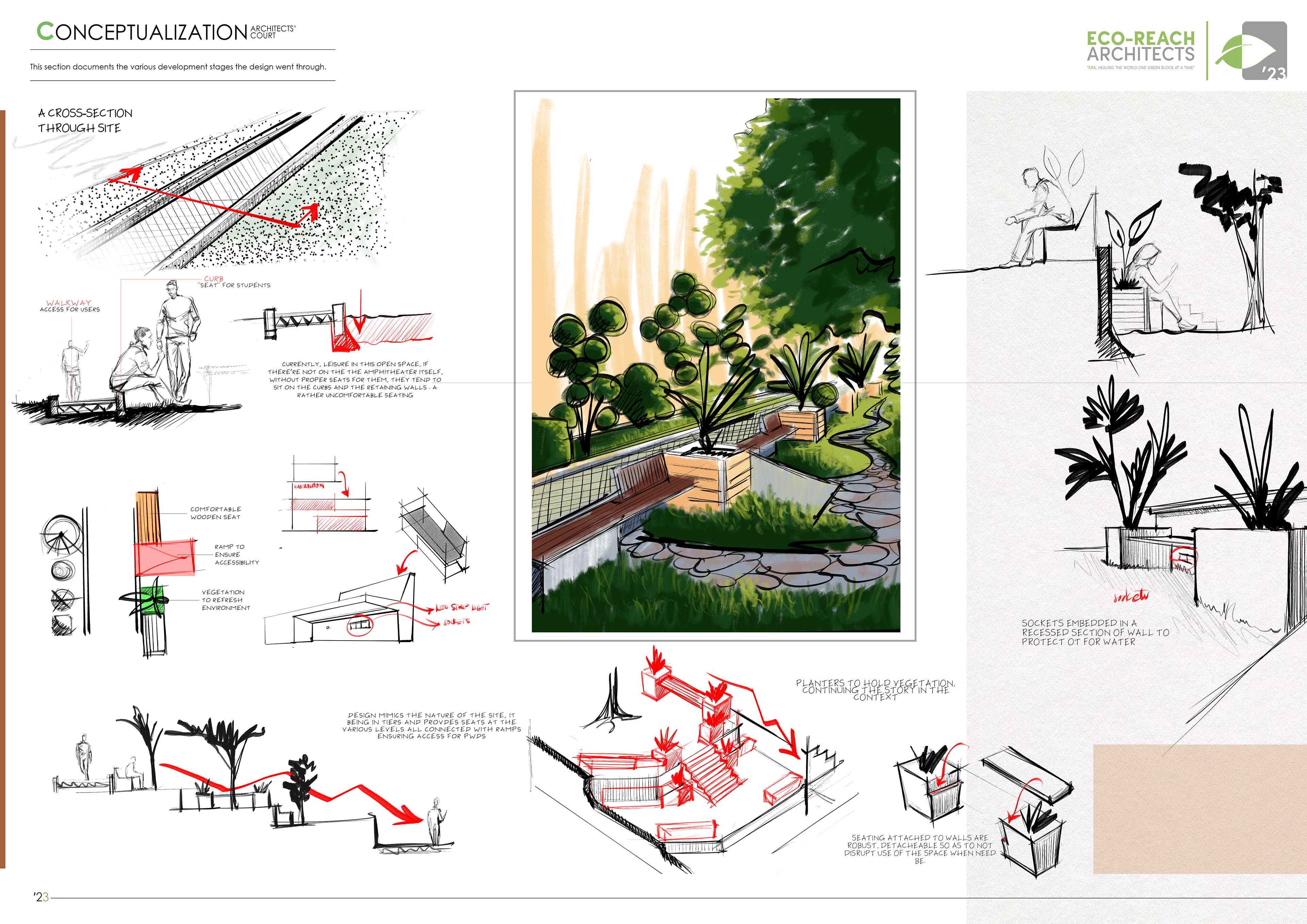
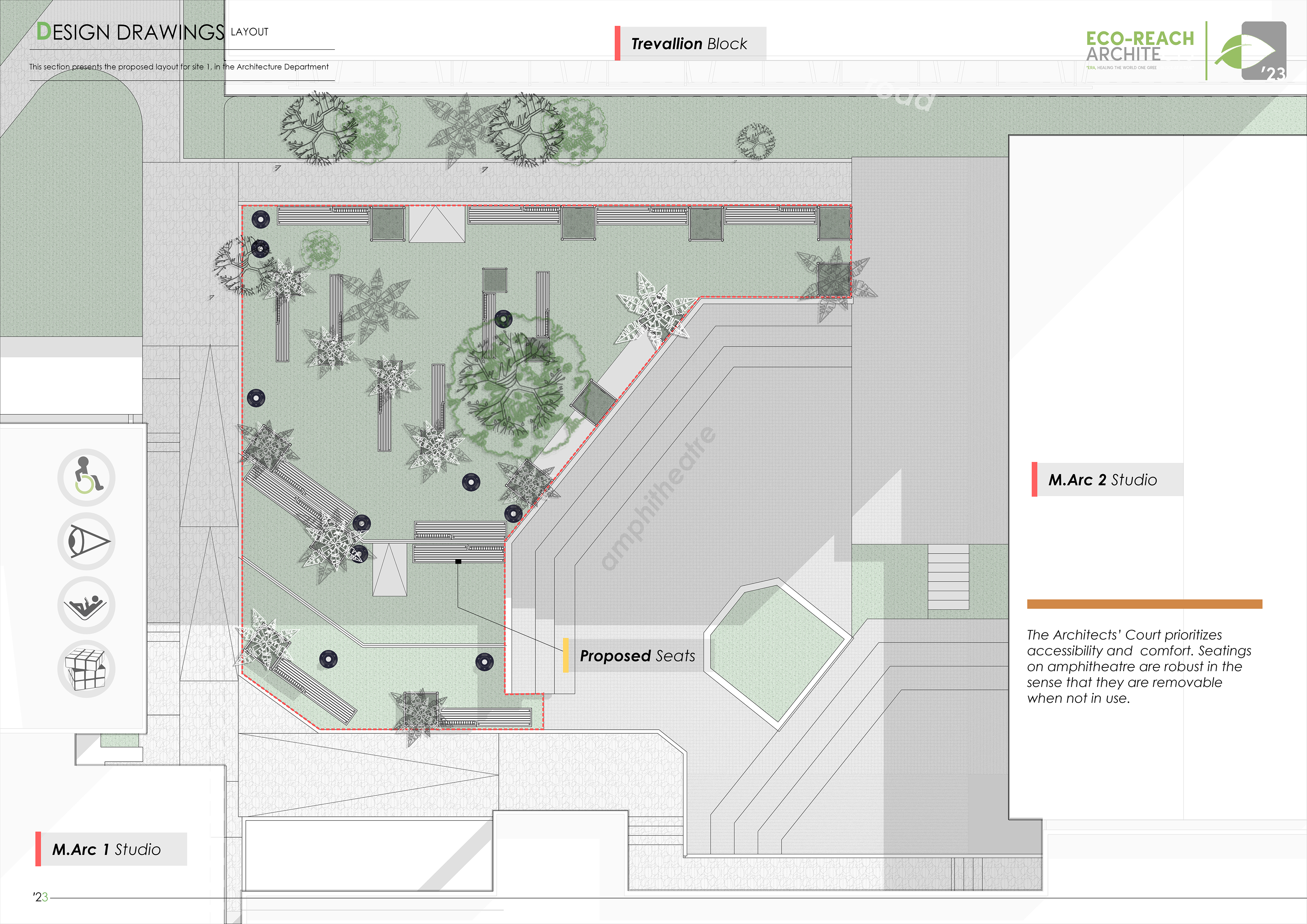
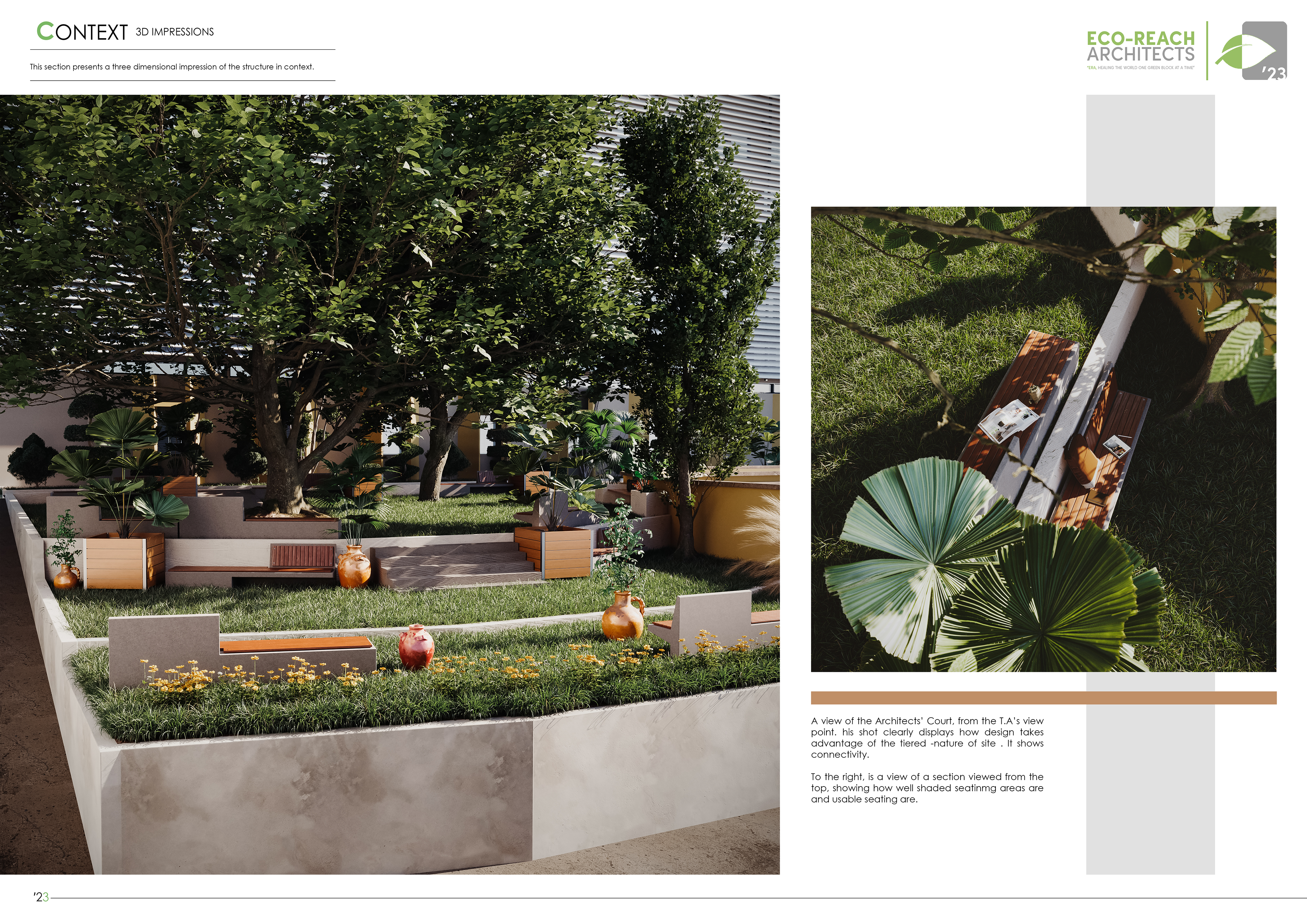
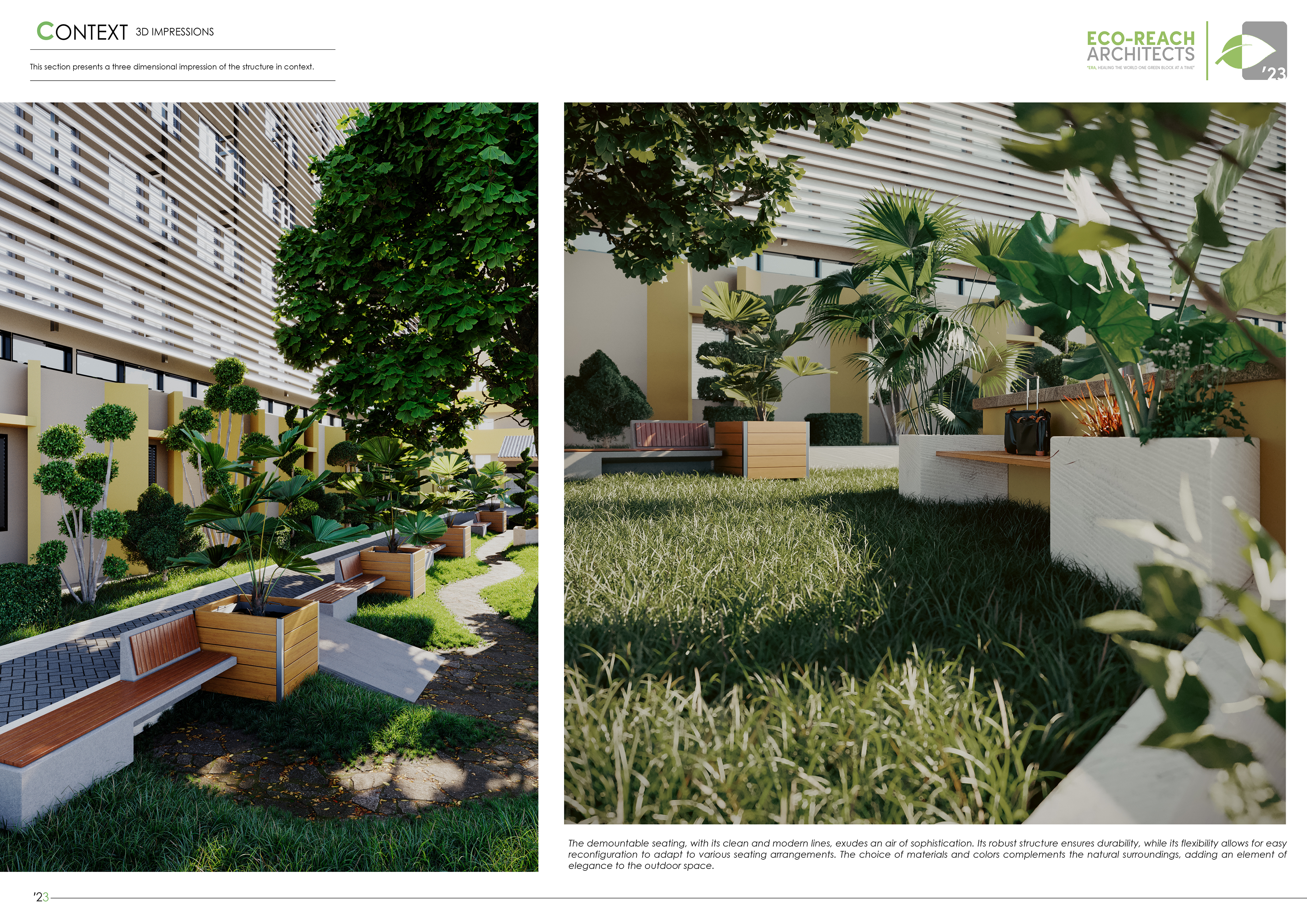
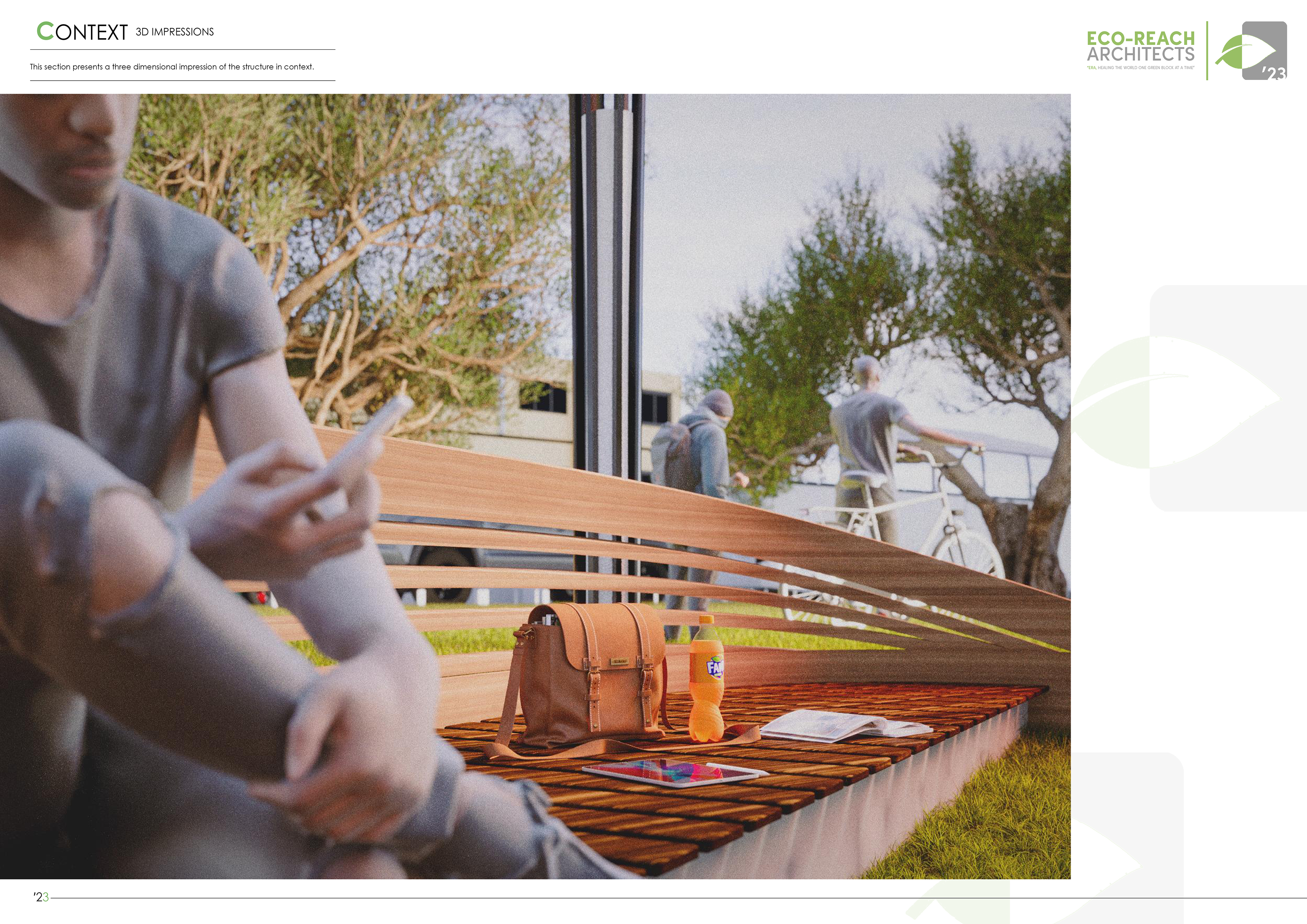
Positioned as a social heart, the Architects’ Court is designed to host everyday encounters: quiet reading, informal critique, and small gatherings that don’t need a timetable to exist. The intervention thickens the courtyard edge with planted zones and seating that feels anchored—places to lean, to place a bag, to sit without feeling watched. The design prioritizes shade and enclosure without becoming closed: foliage acts as a soft ceiling; seating edges define the room; and the center remains open enough for movement and informal events.
The beauty here isn’t in the object—it’s in the microclimate: light broken into softer fragments, air cooled as it passes through planting, and the ground made quieter underfoot. It is a courtyard that behaves like a small ecosystem: social and climatic performance inseparable.
Model 2 — Dreamweaver’s Sanctuary
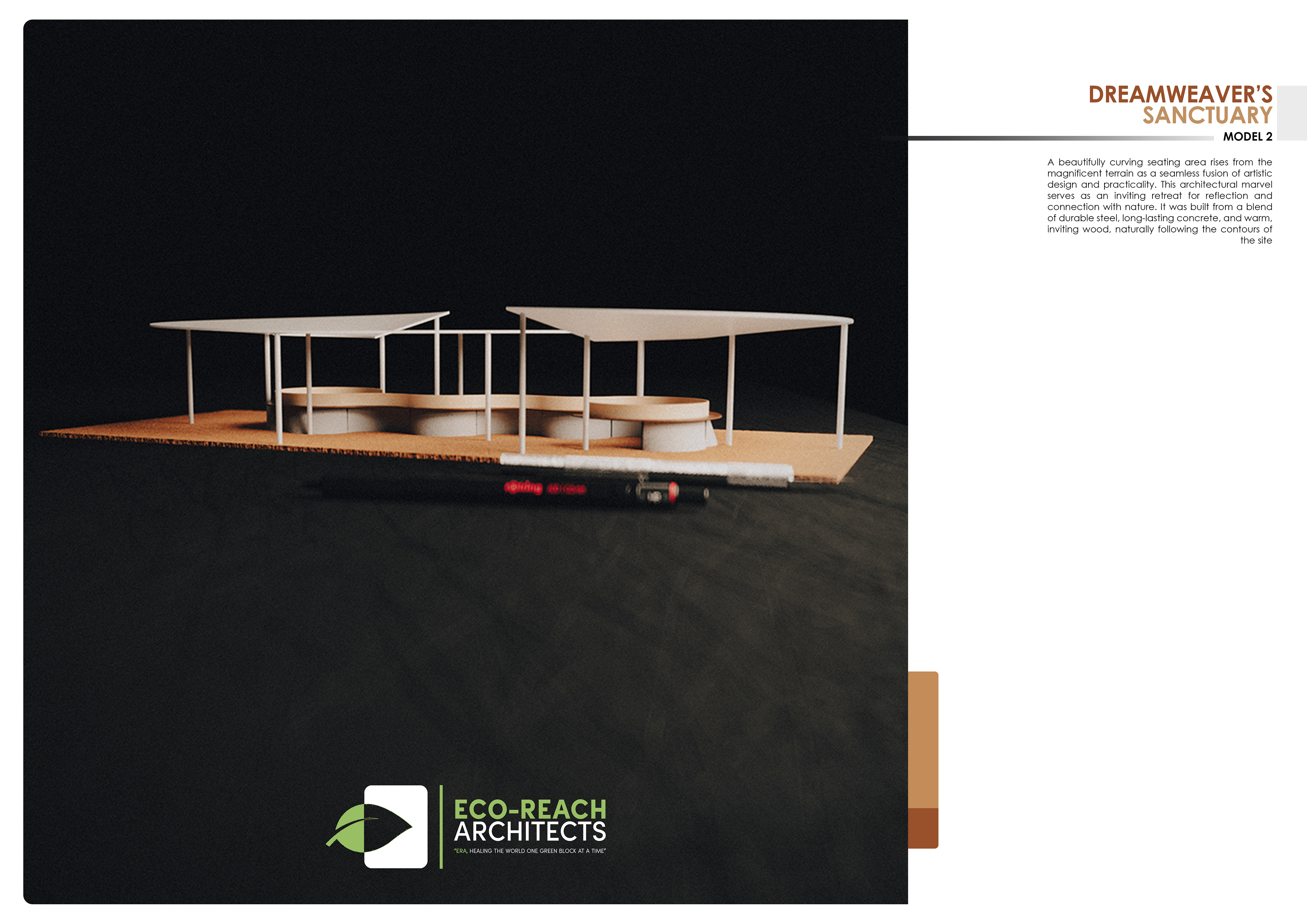
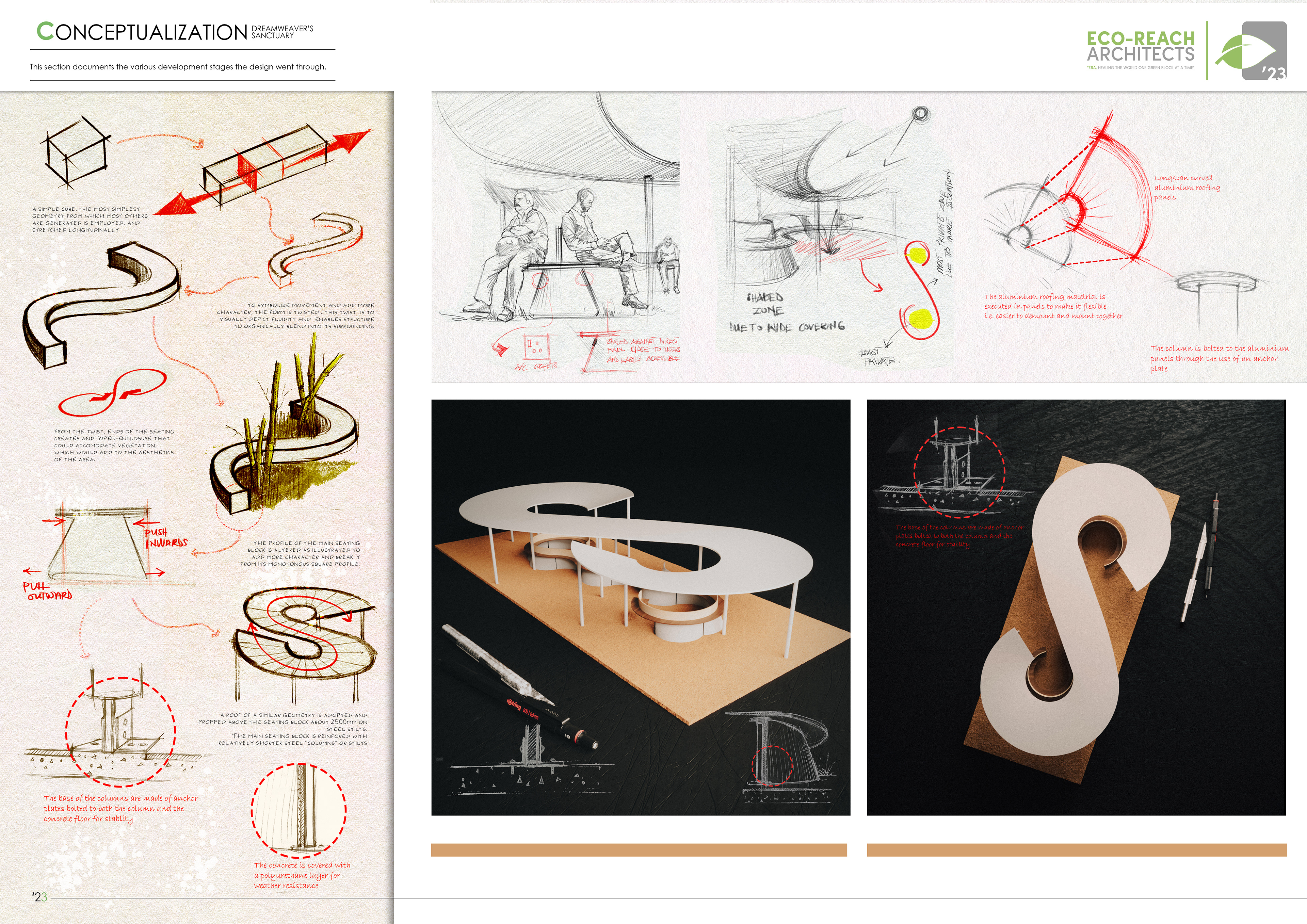
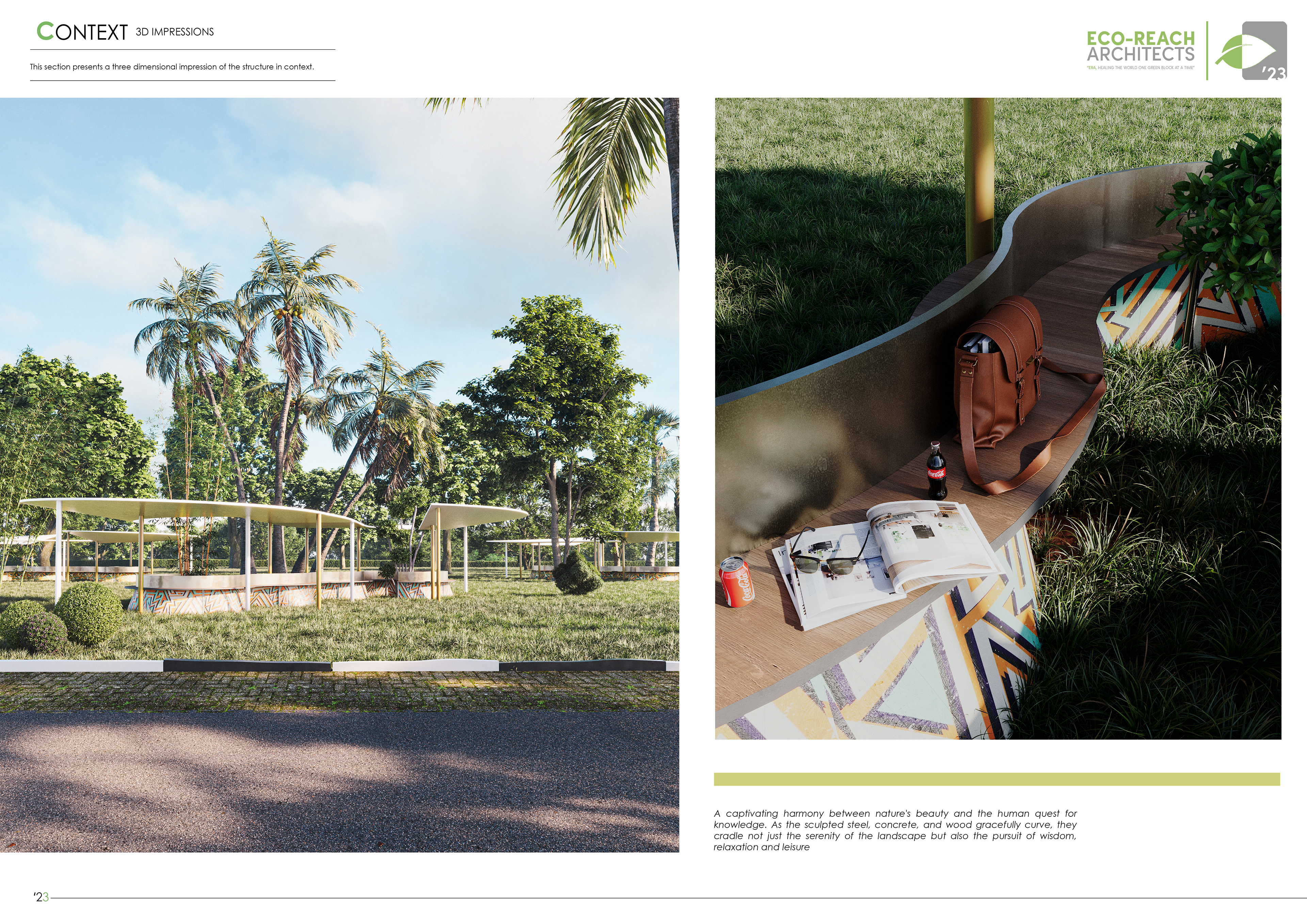
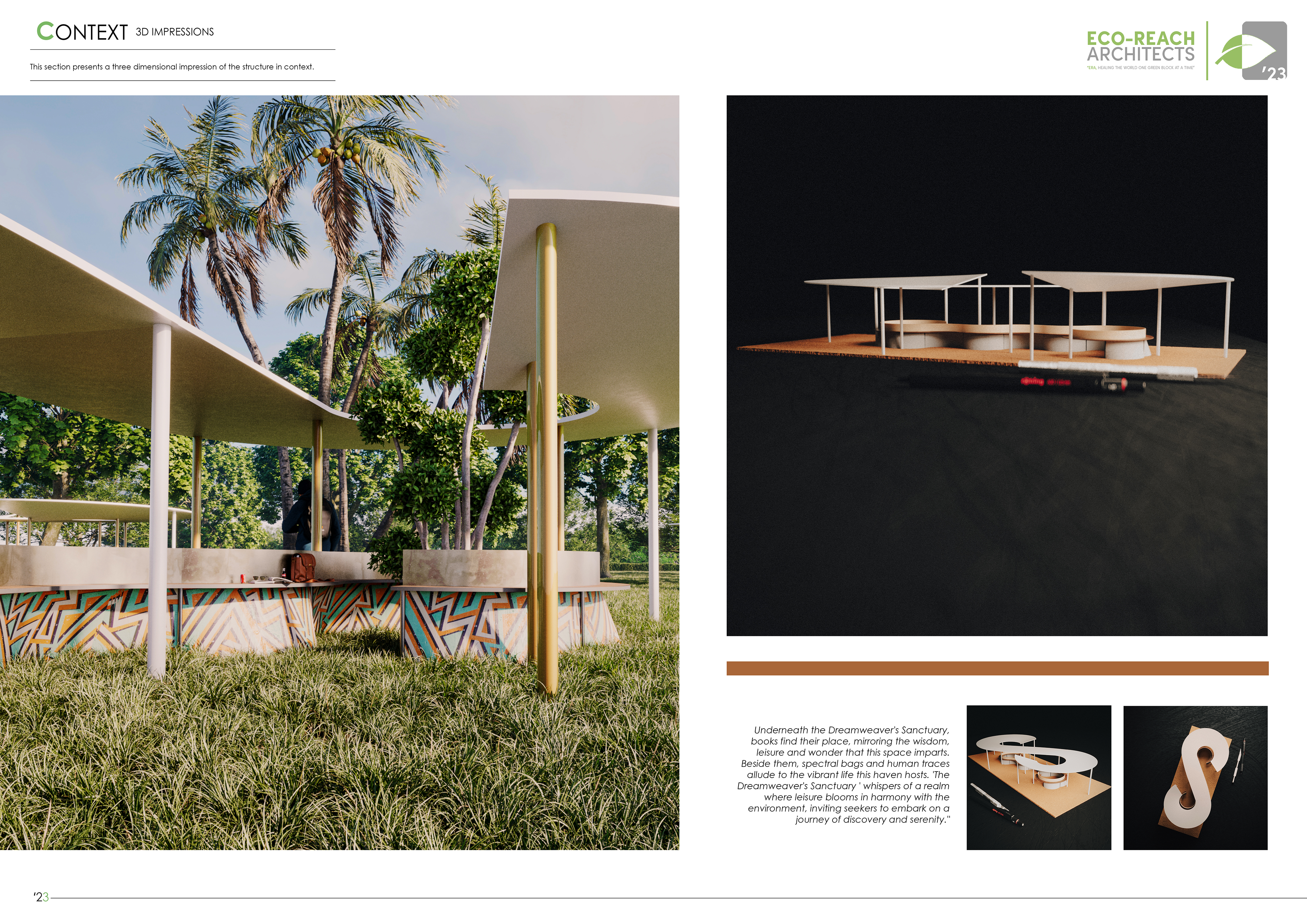
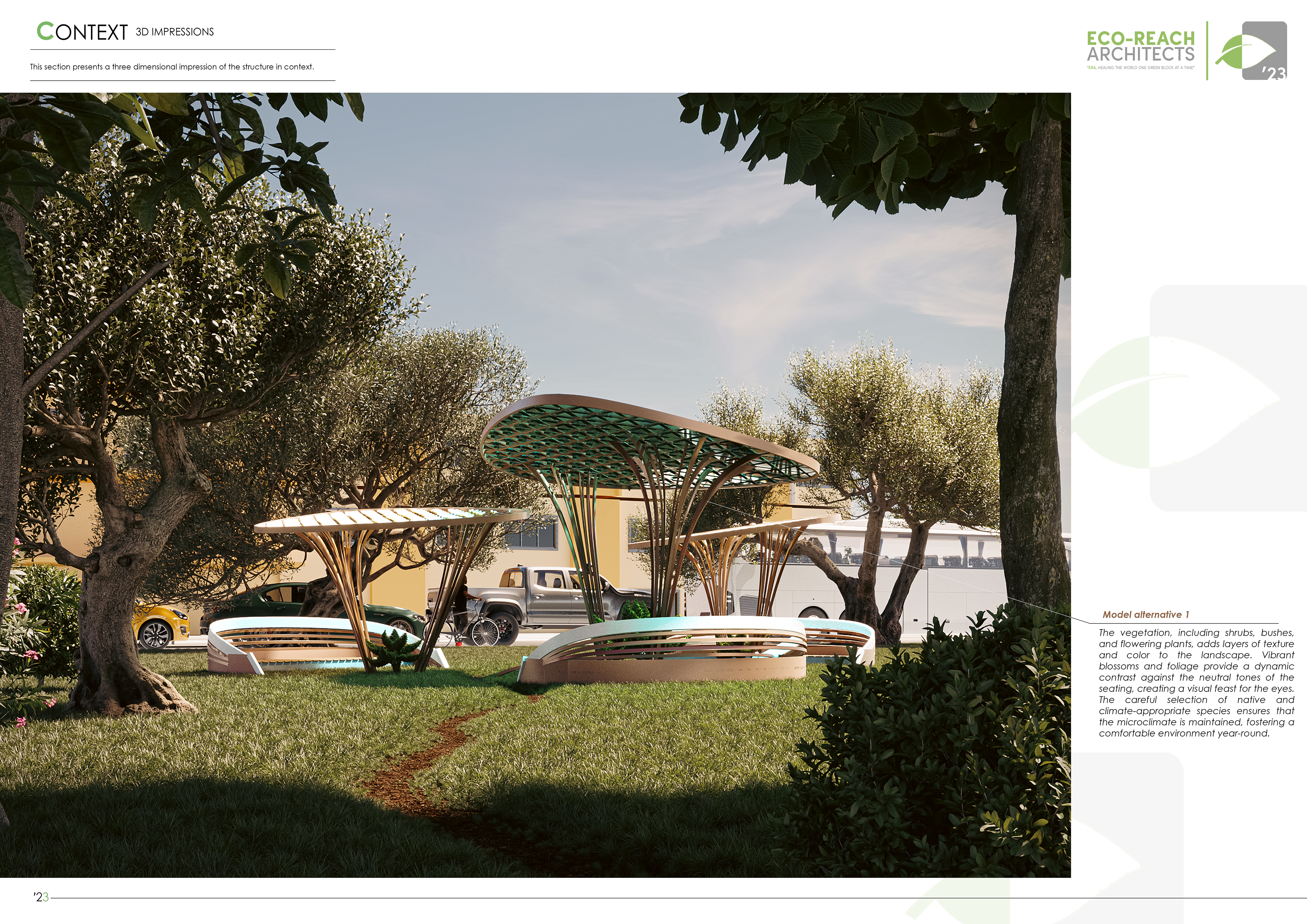
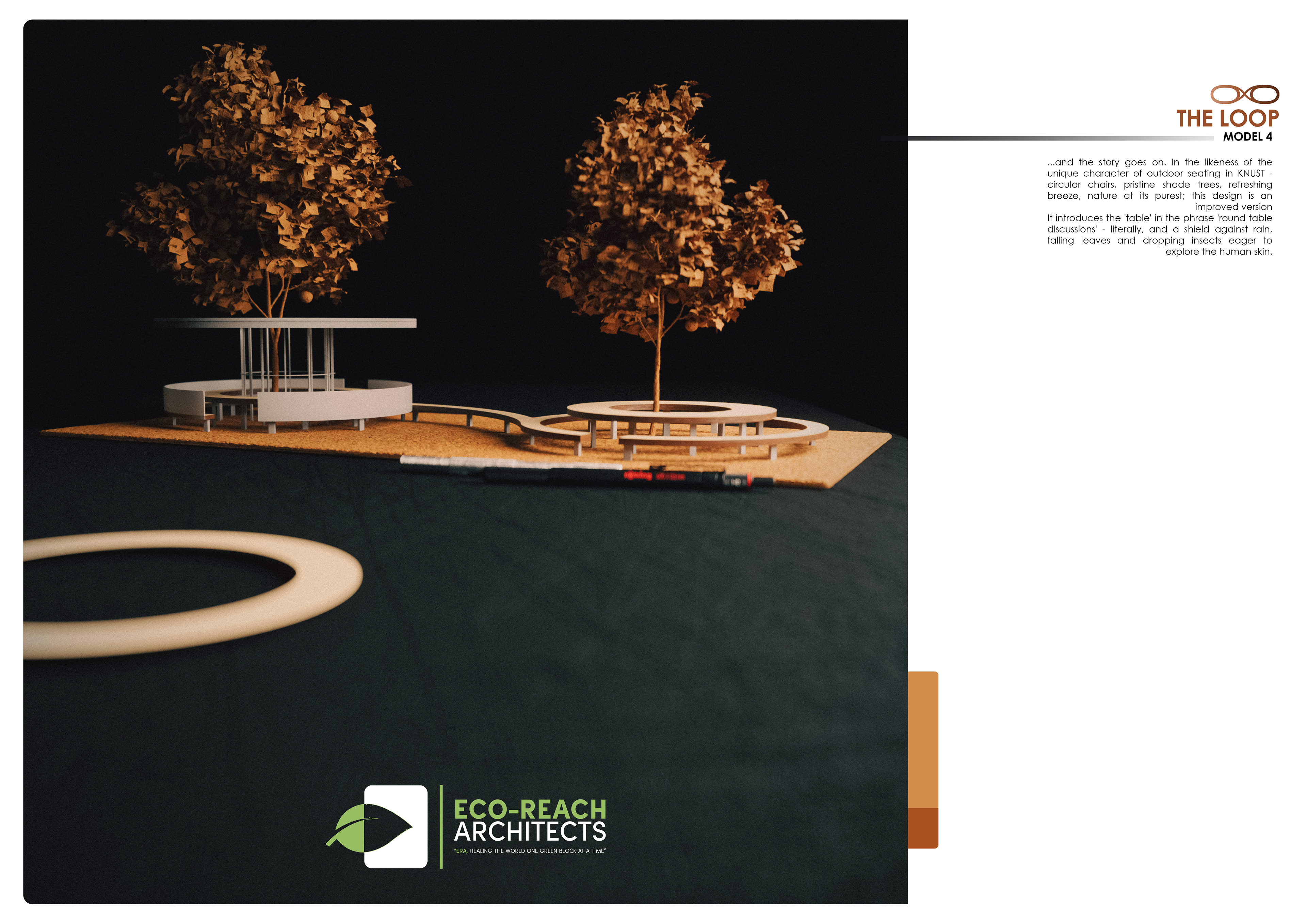
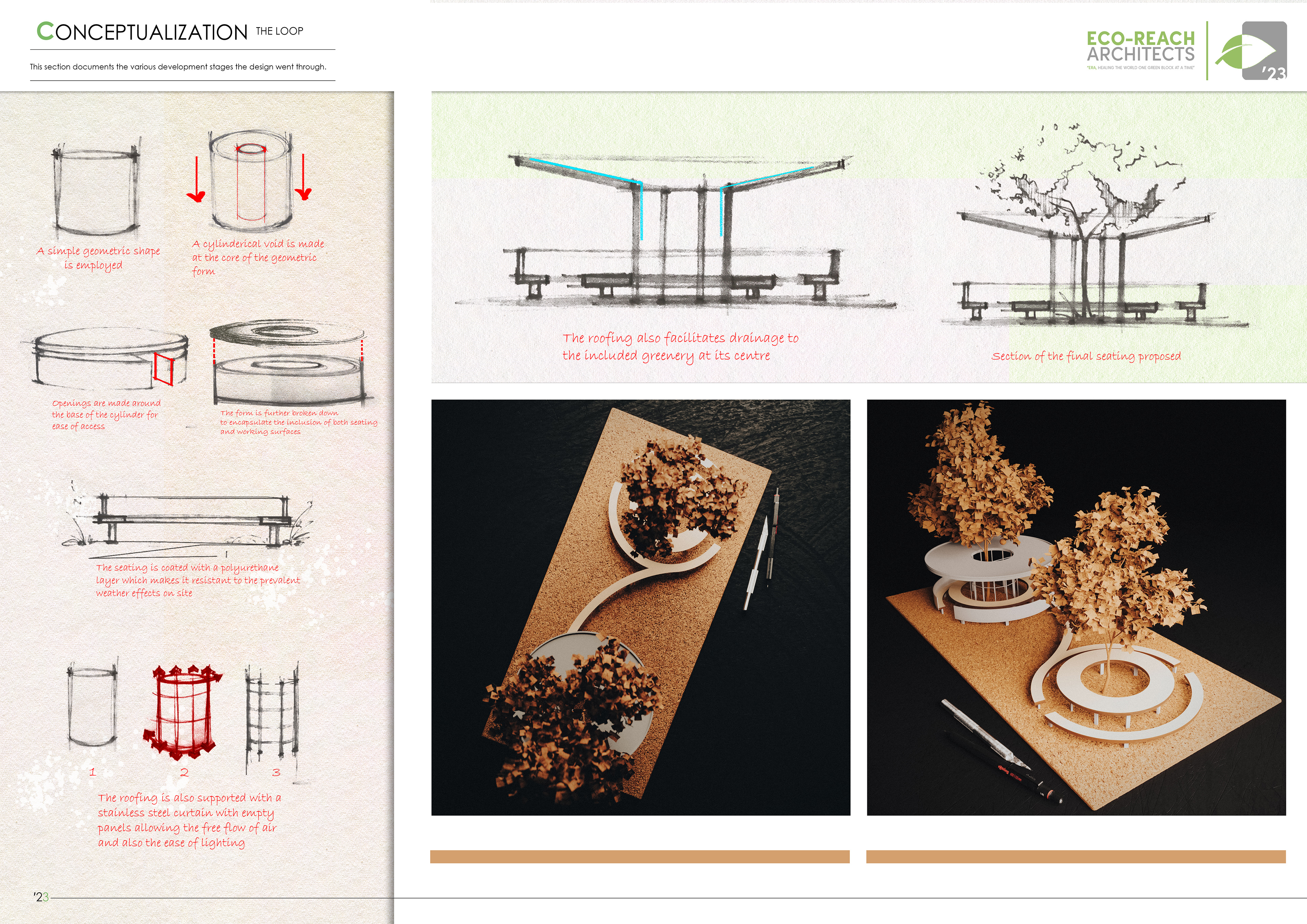
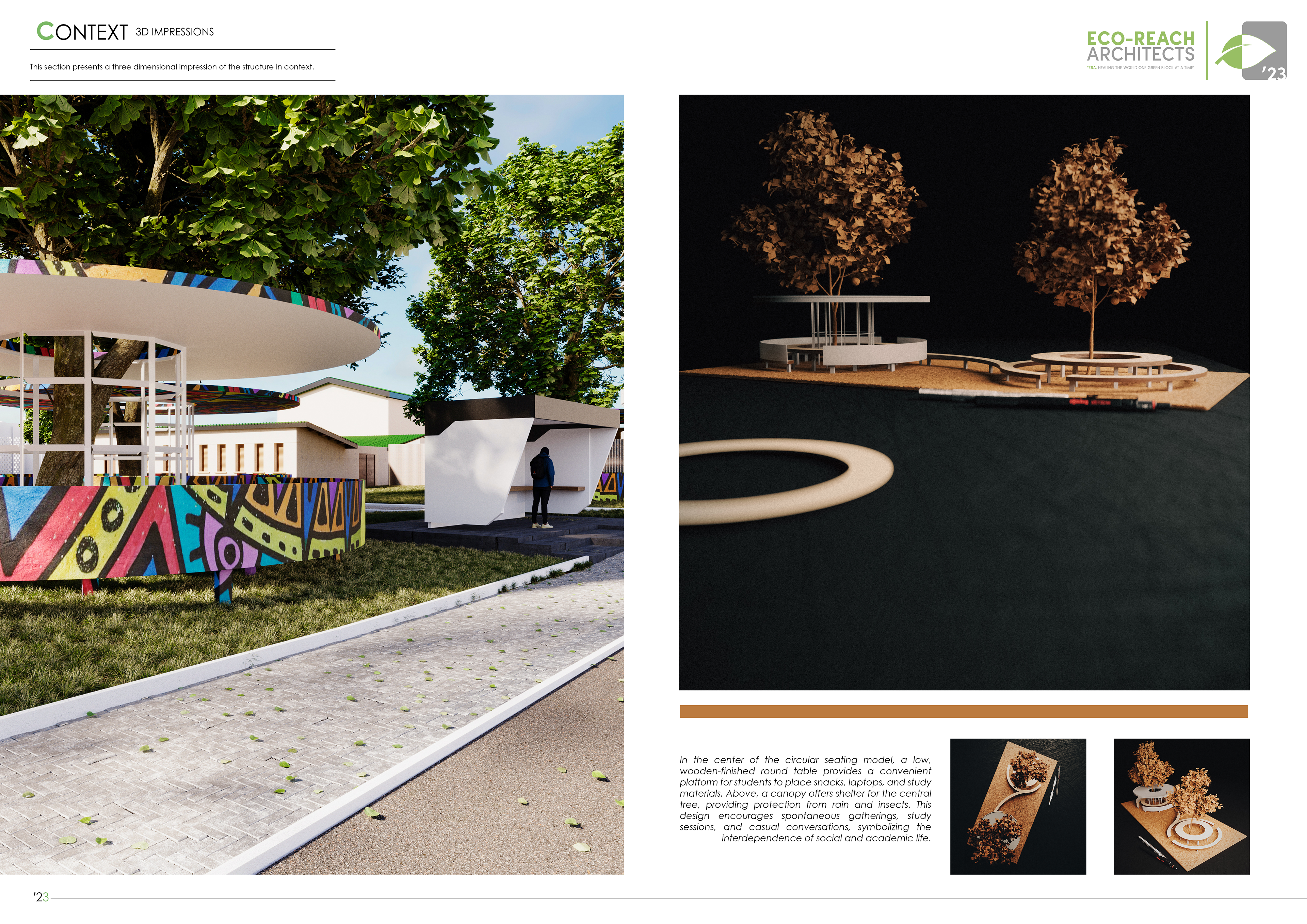
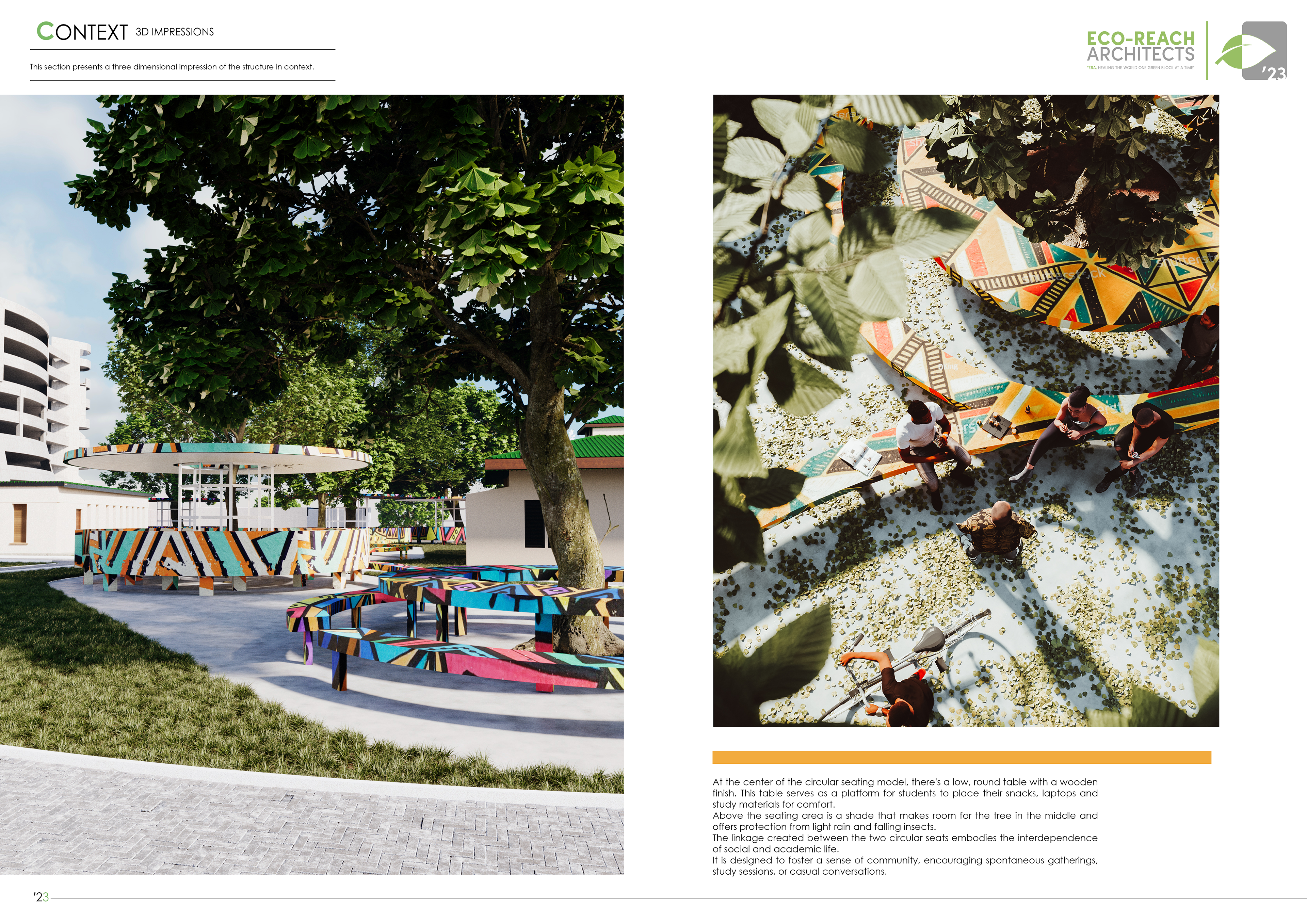
The Dreamweaver’s Sanctuary is a gentler space—less “court,” more “retreat.” It proposes a sequence of canopies and curved seating that encourages lingering without demanding attention. Where the Architects’ Court supports interaction, this prototype supports restoration: the kind of pause that makes long study days survivable.
Its form language leans into softness—curves, filtered shade, and planted edges that make the space feel held. It reads as an invitation: come closer, sit longer, breathe. In a campus context where outdoor space is often leftover, this is outdoor space treated as intentional architecture.
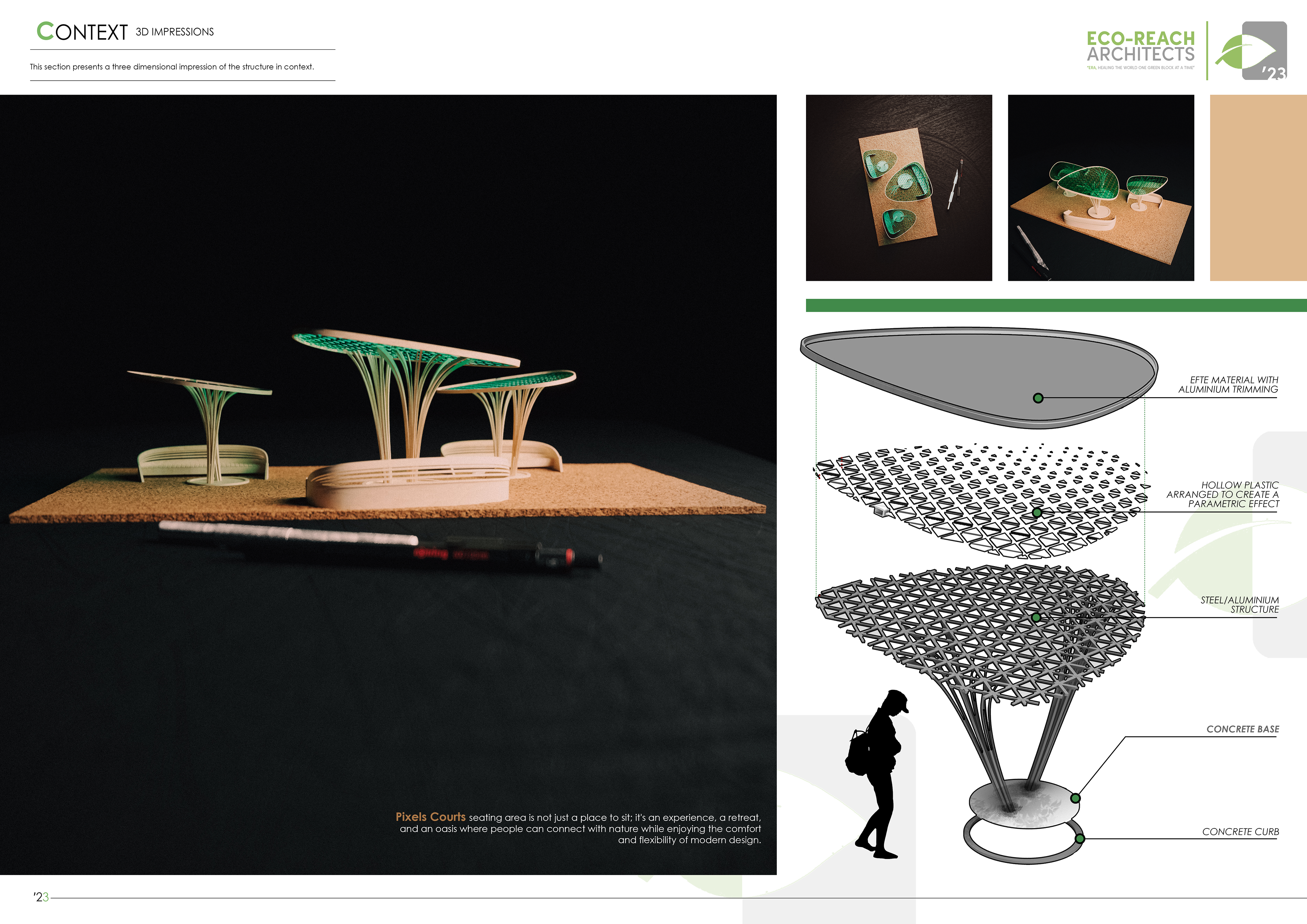
Model 3 — Pixels Square
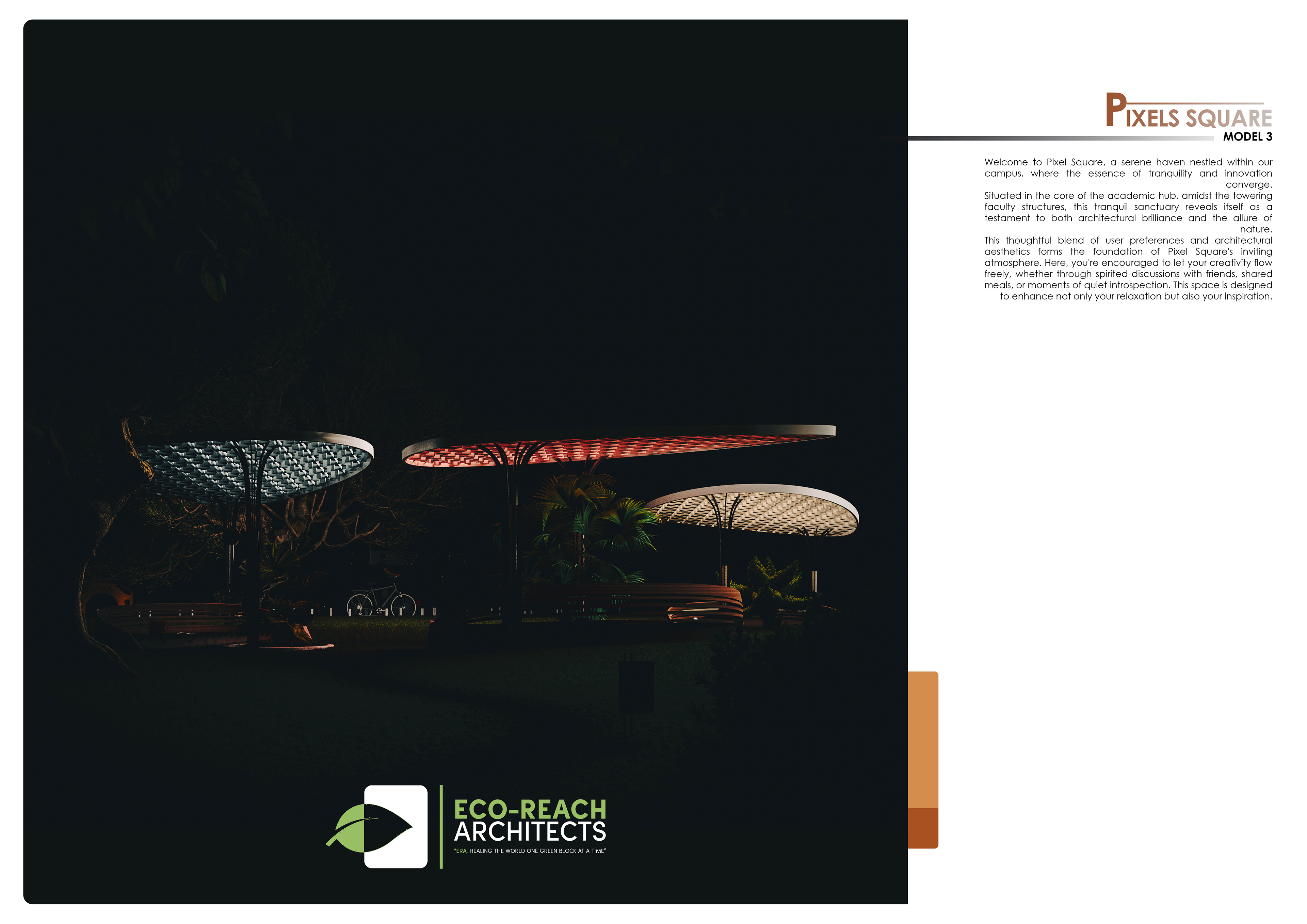
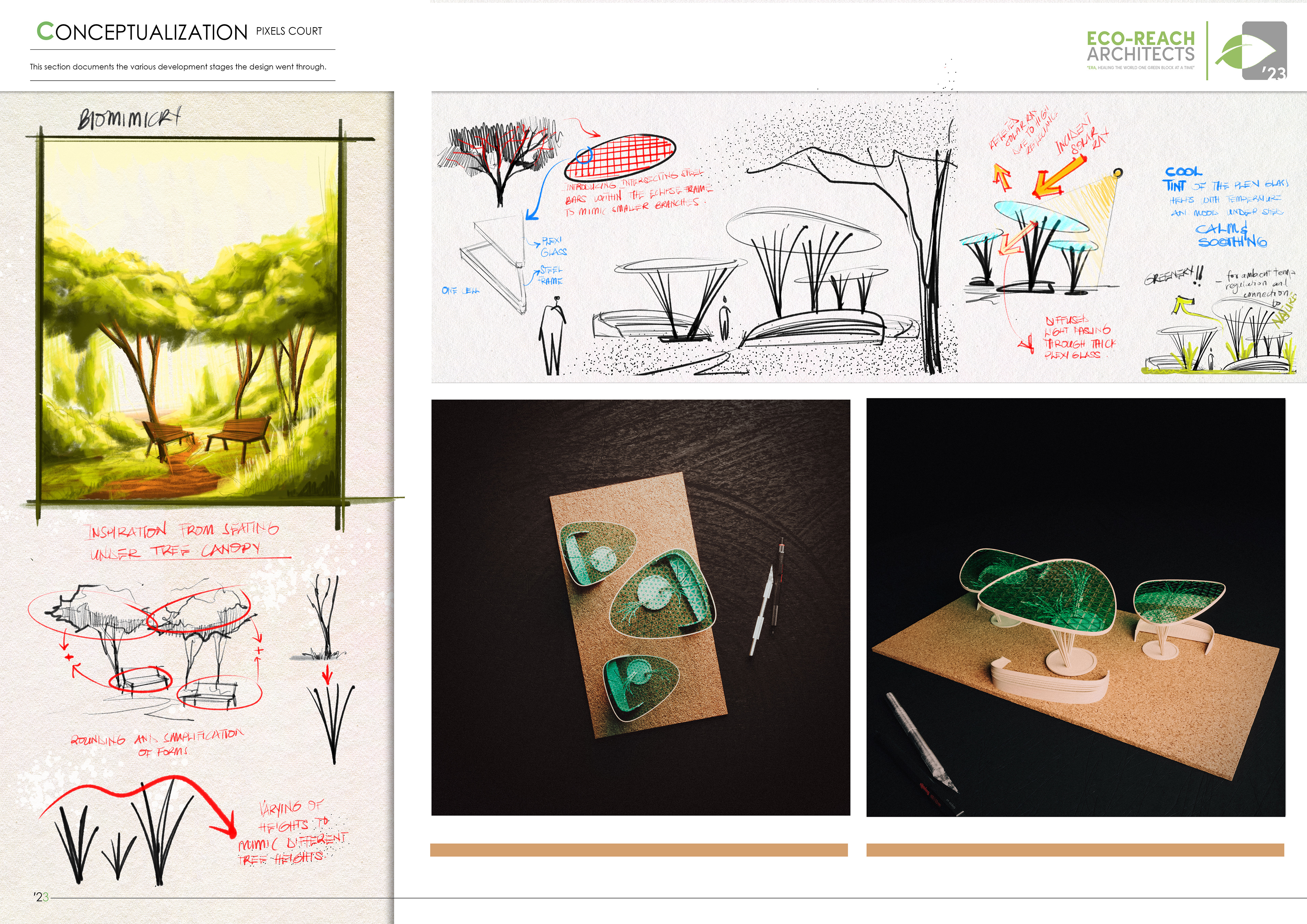
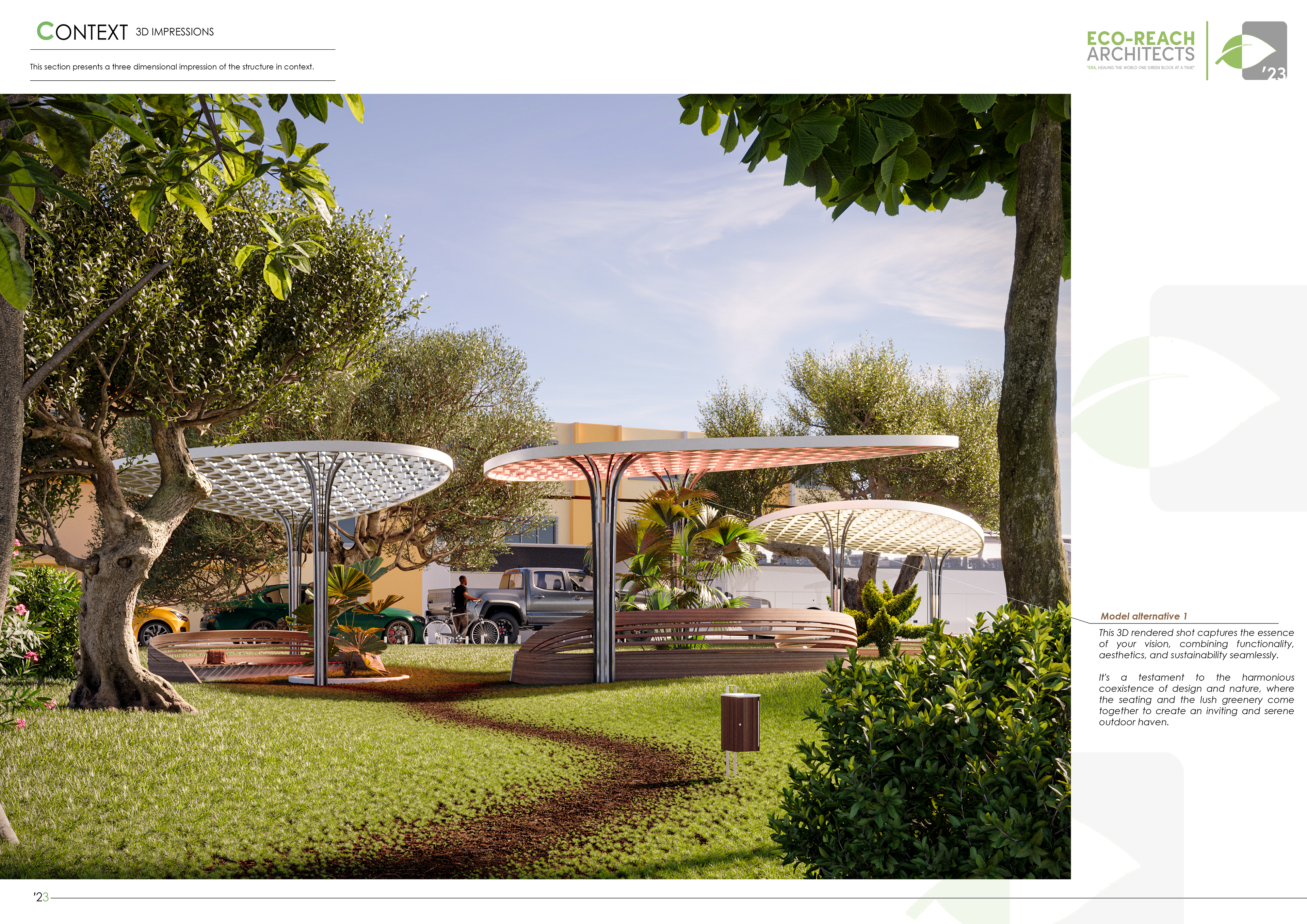
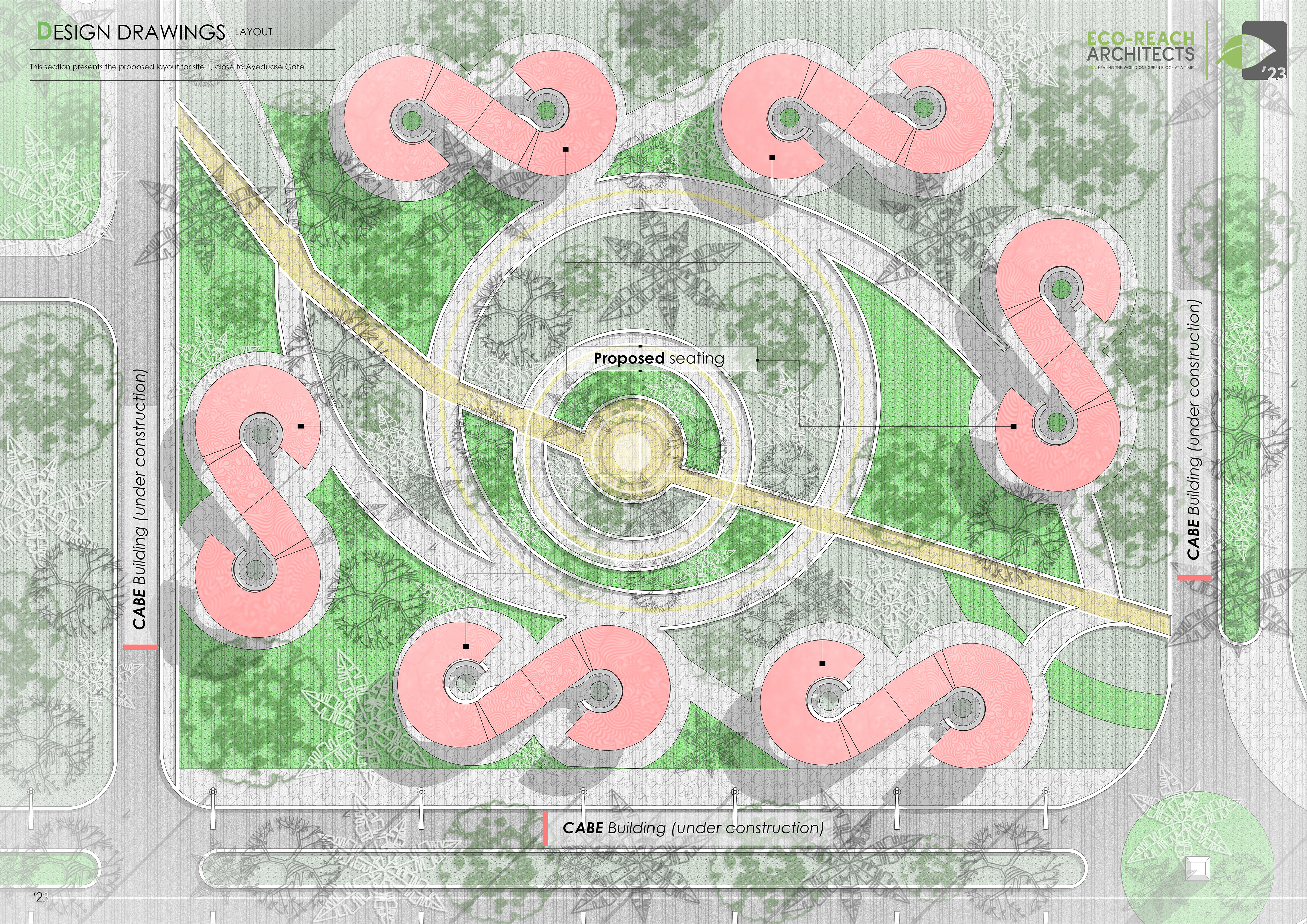
Pixels Square is the most urban of the three—an intervention designed for visibility, movement, and the energy of passing flows. It behaves like a small public square: a place where routes cross, where quick meetings happen, where the campus feels contemporary and alive. The canopy elements act like a new local identity—recognizable without being loud—turning a circulation node into a destination.
Across all three prototypes, the project insists on one ethic: a greener campus must be felt at the scale of the body. If the interventions don’t reduce heat stress, improve everyday comfort, and make social life easier, then the “green” is only branding. This work is an argument for campus dignity—designed not as a spectacle, but as care made visible.
Role
Concept originator and design lead. I led the team and was directly responsible for research, modelling, detailing, illustration, visualization, and copywriting.
Concept originator and design lead. I led the team and was directly responsible for research, modelling, detailing, illustration, visualization, and copywriting.
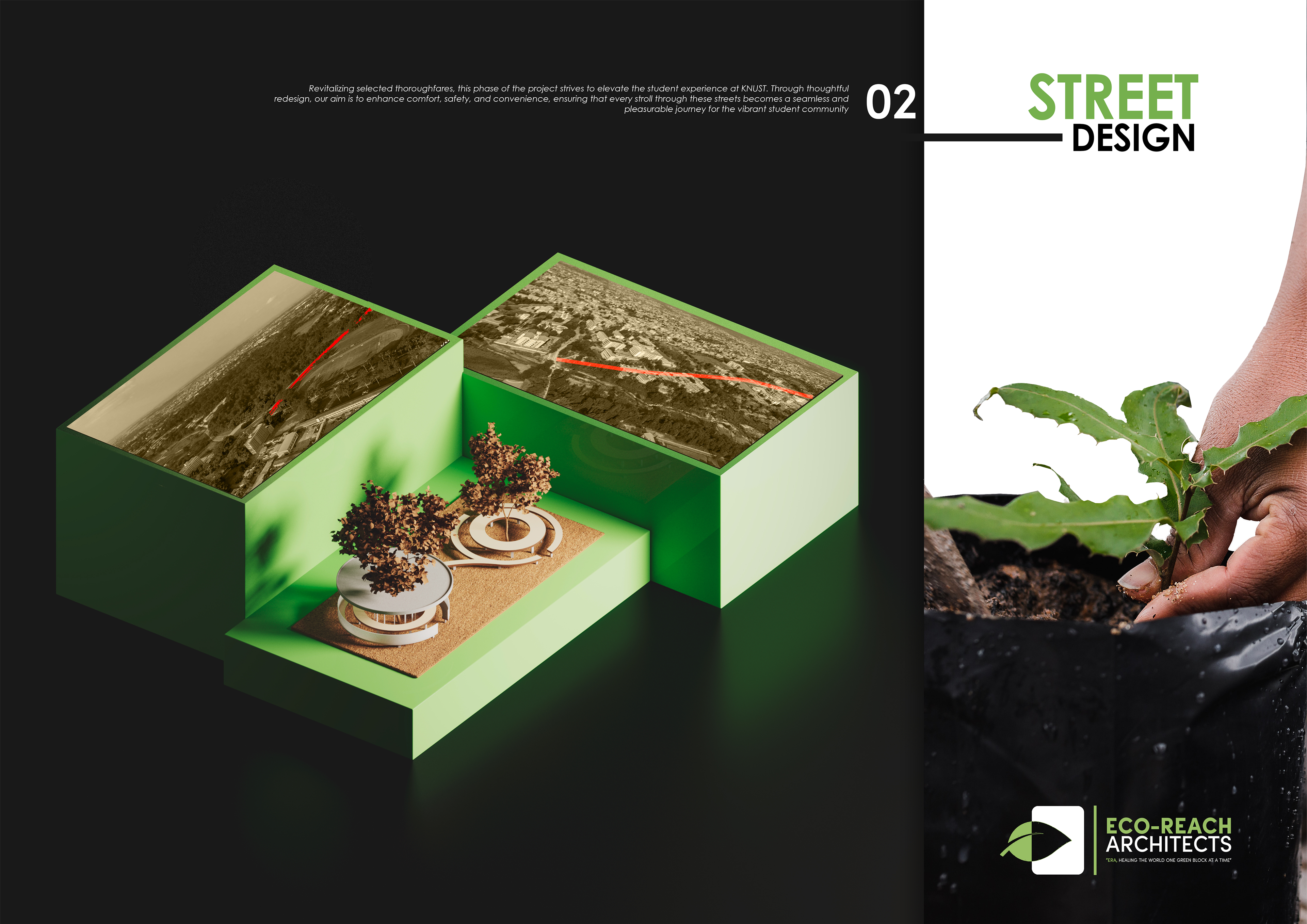
Street strategy: shade-first, safety-first, day-to-night usable
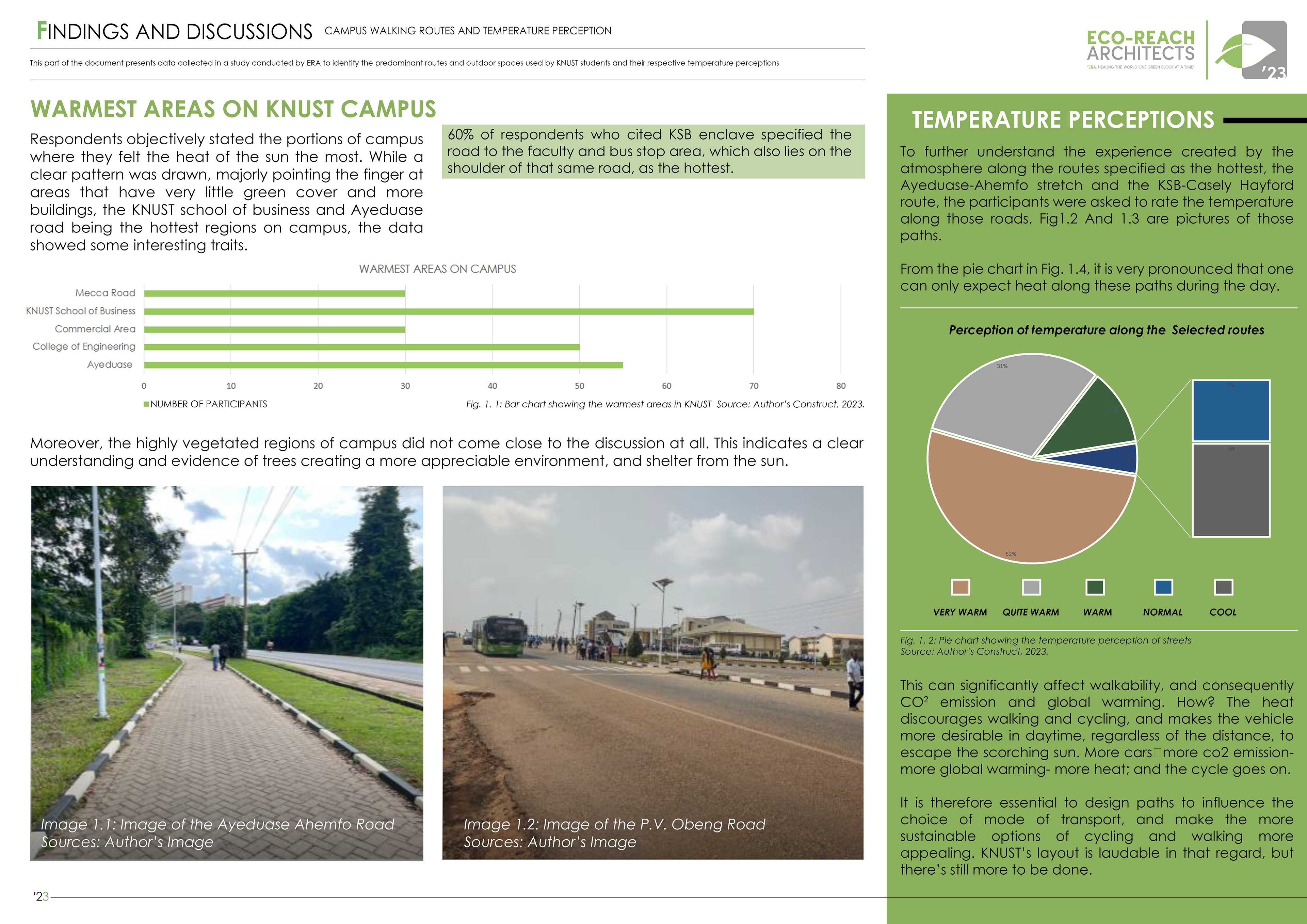
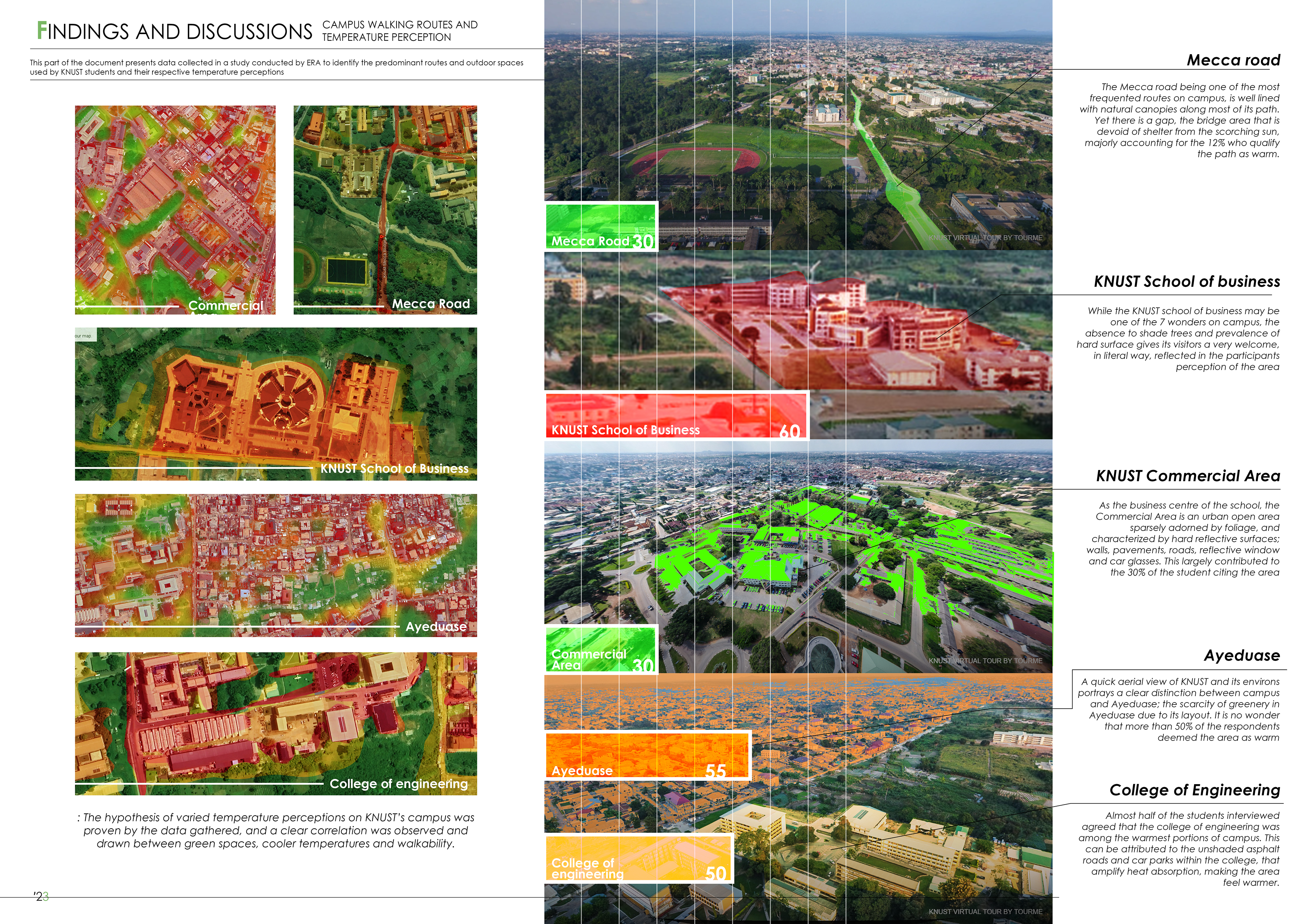
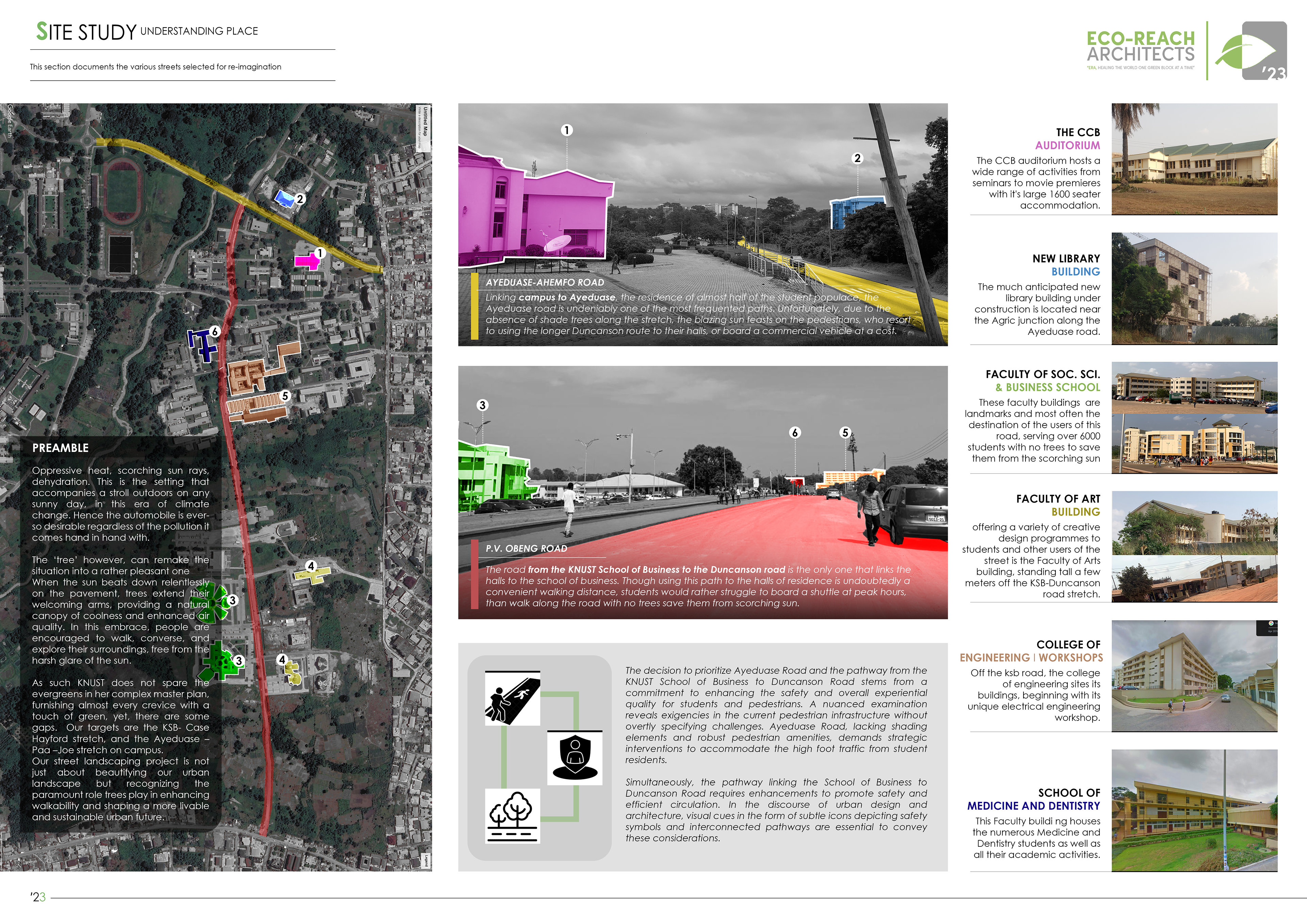
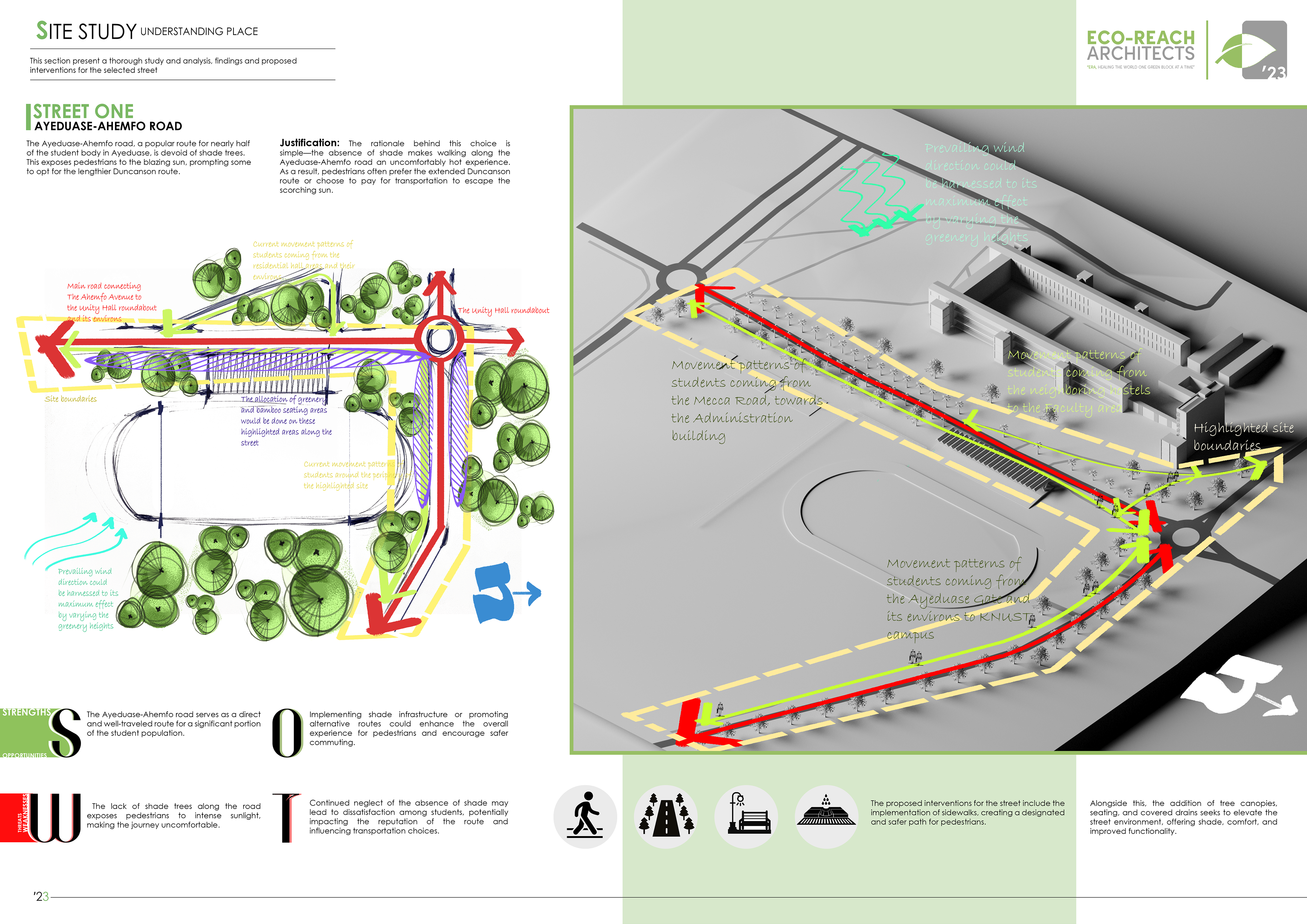
The street proposals focus on the routes students rely on the most—especially the ones where the sun is harsh and trees are absent—because those are the corridors that quietly push people toward shuttles even for short distances. The approach is simple: continuous pedestrian priority + continuous canopy + climate-smart ground and drainage decisions.
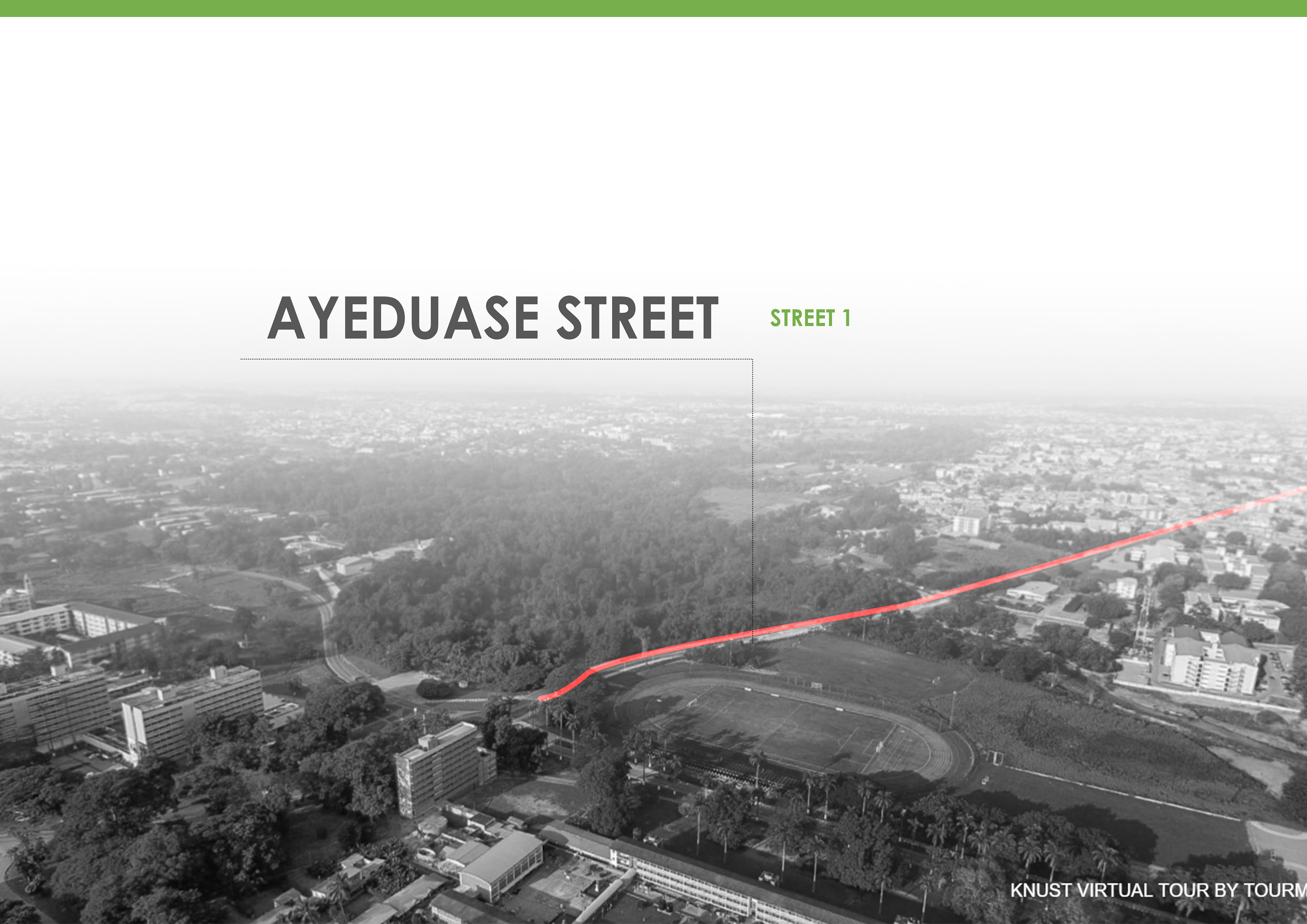
Street 1 — Ayeduase Street (Ayeduase–Ahemfo Road)
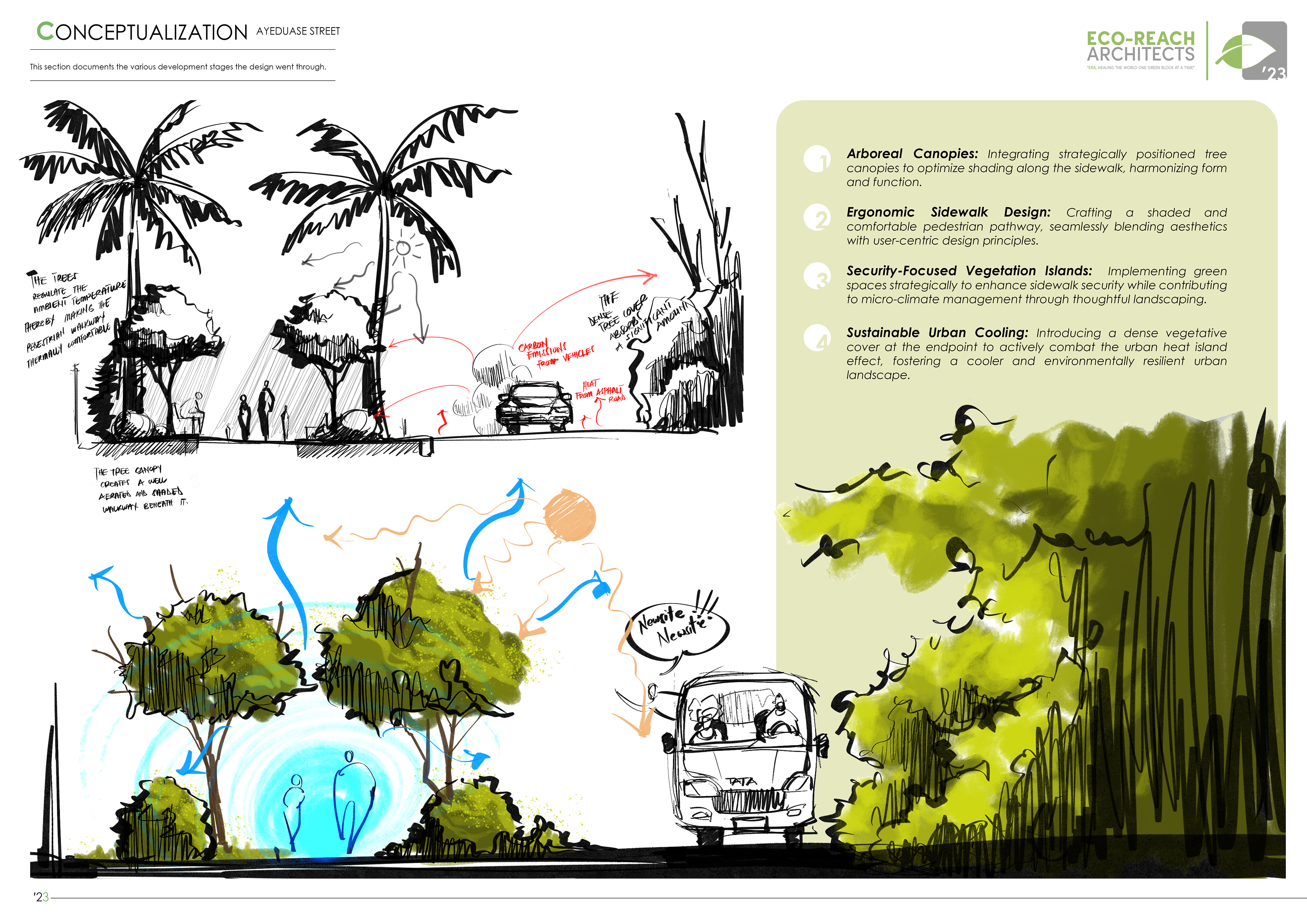
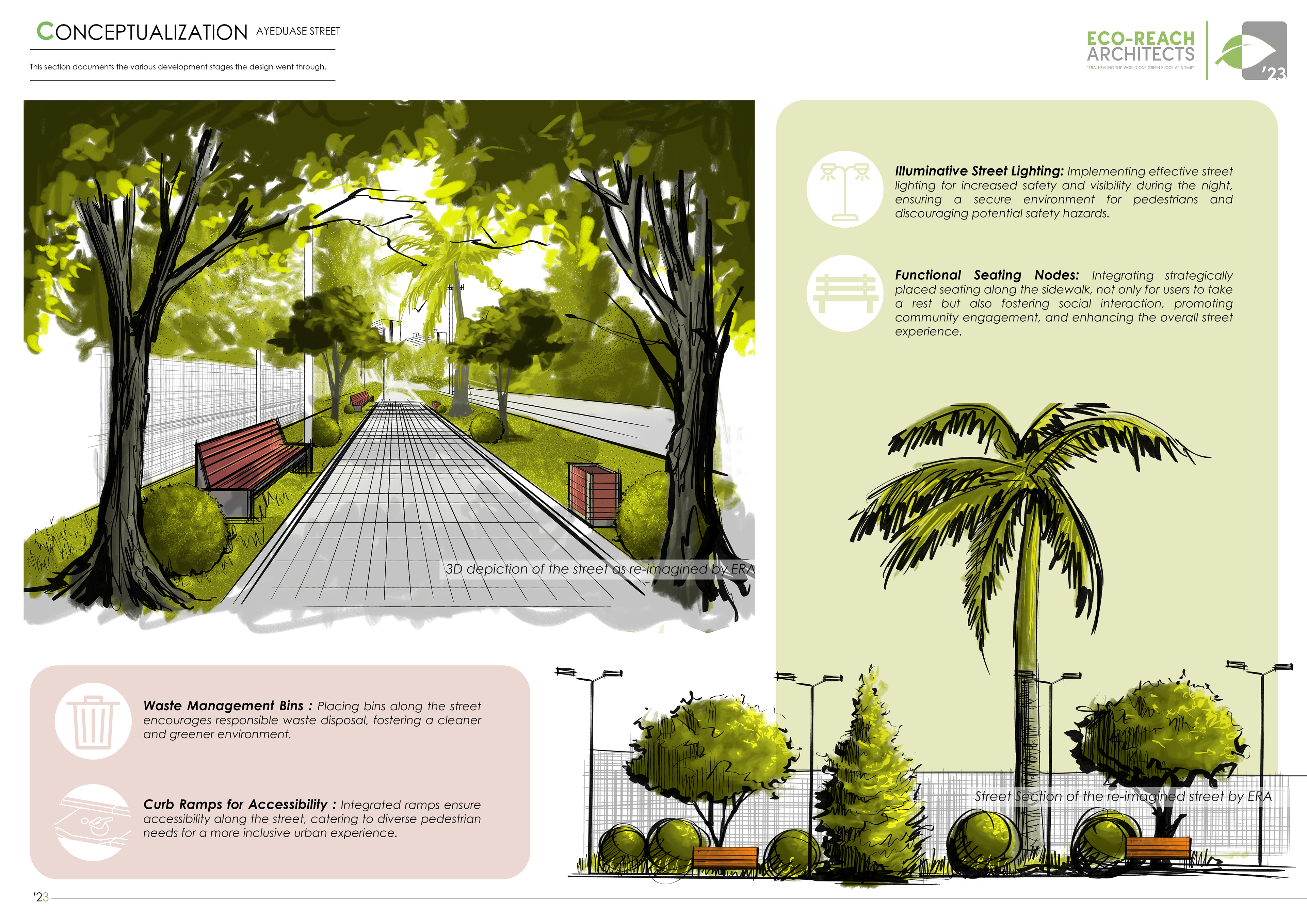
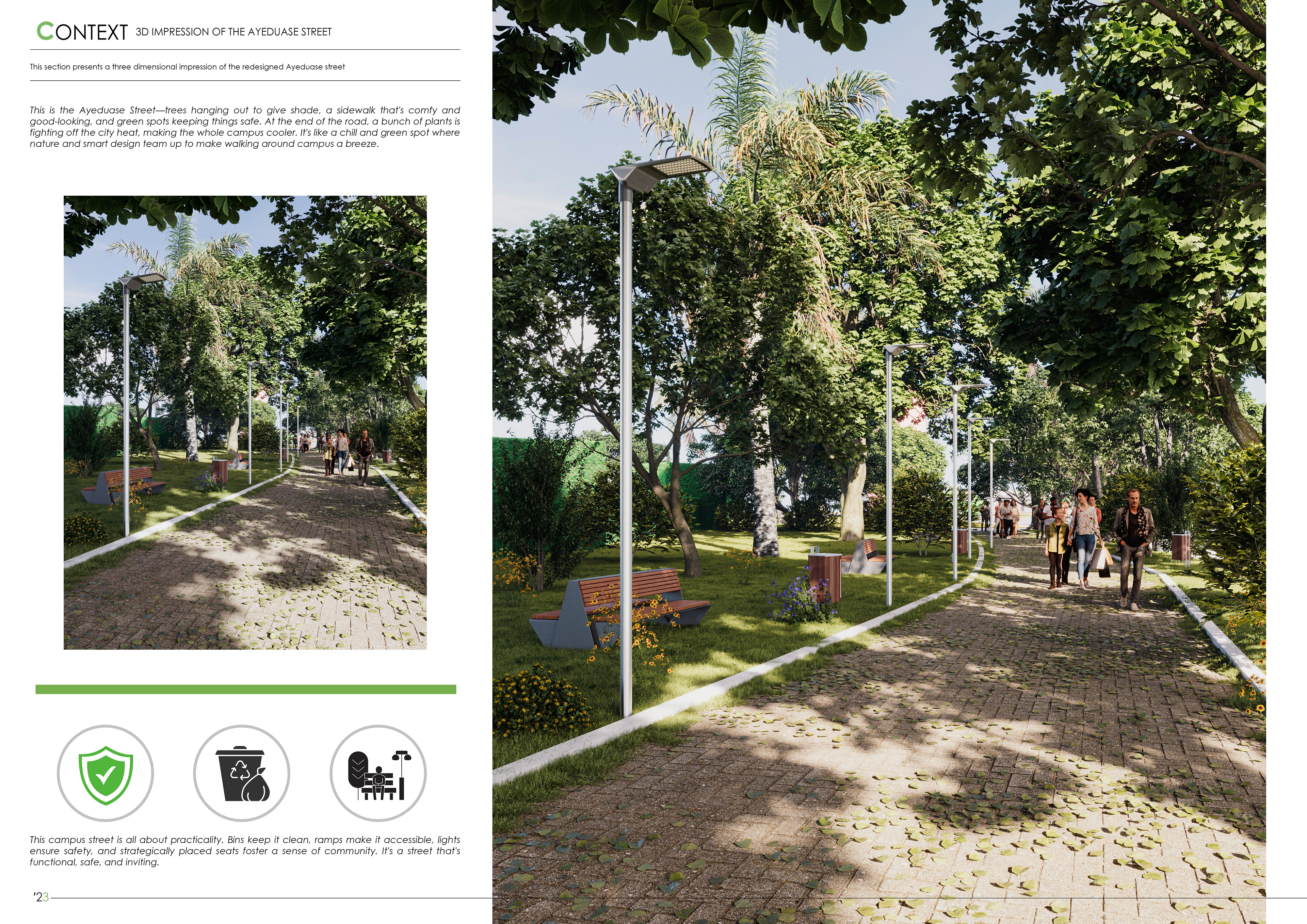
This stretch functions as a major student pedestrian corridor, yet offers little protection from direct sun. The proposal introduces a defined sidewalk, layered tree canopy, and comfort nodes that make the walk feel calmer, cooler, and safer—without needing complex construction.
Key moves
Continuous sidewalk to formalize pedestrian right-of-way
Dense arboreal canopy to reduce radiant heat along the path
Vegetation islands positioned for comfort + passive surveillance
Covered drains to improve safety and cleanliness
Seating nodes, street lighting, waste bins, and curb ramps to support real day-to-day use
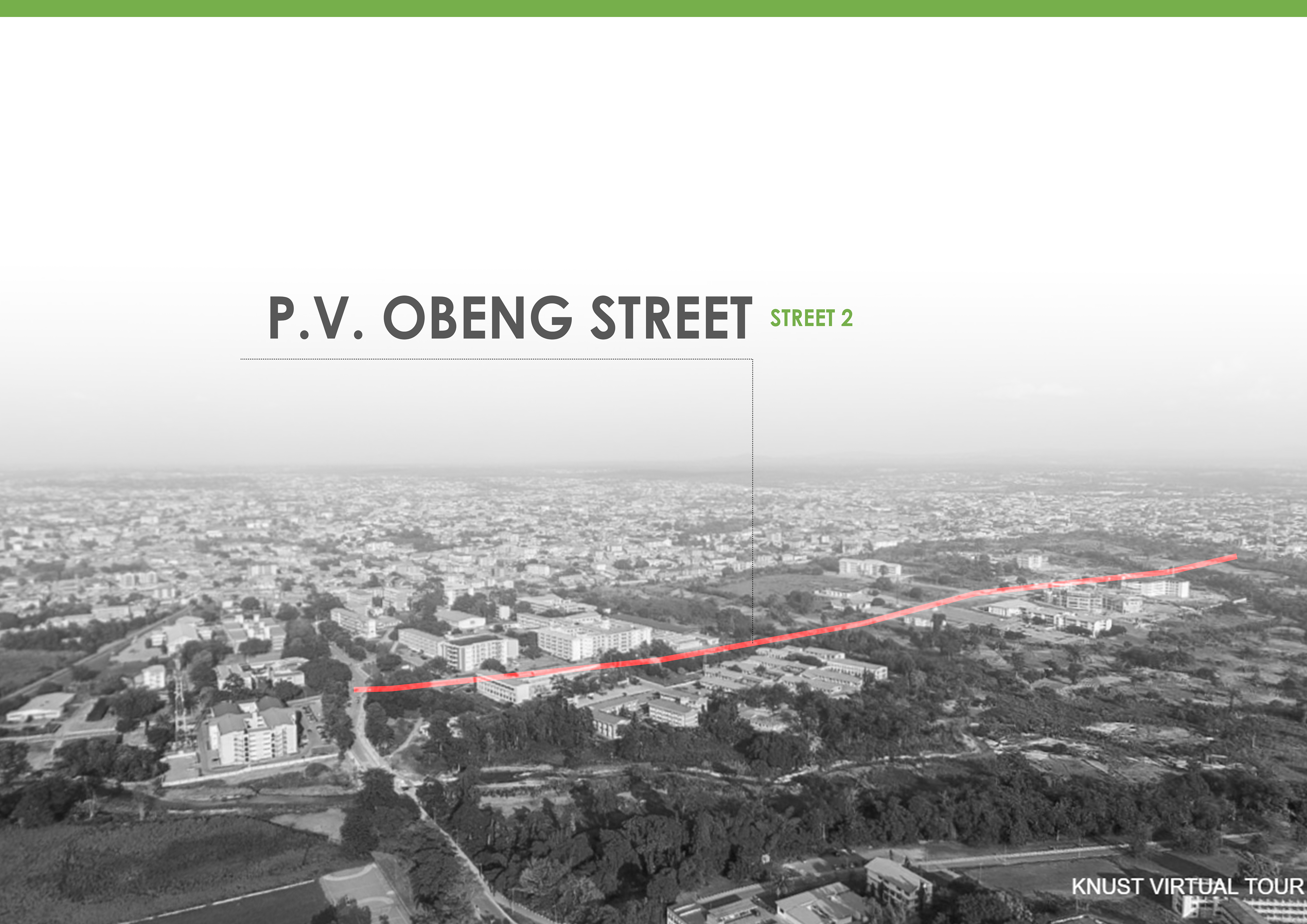
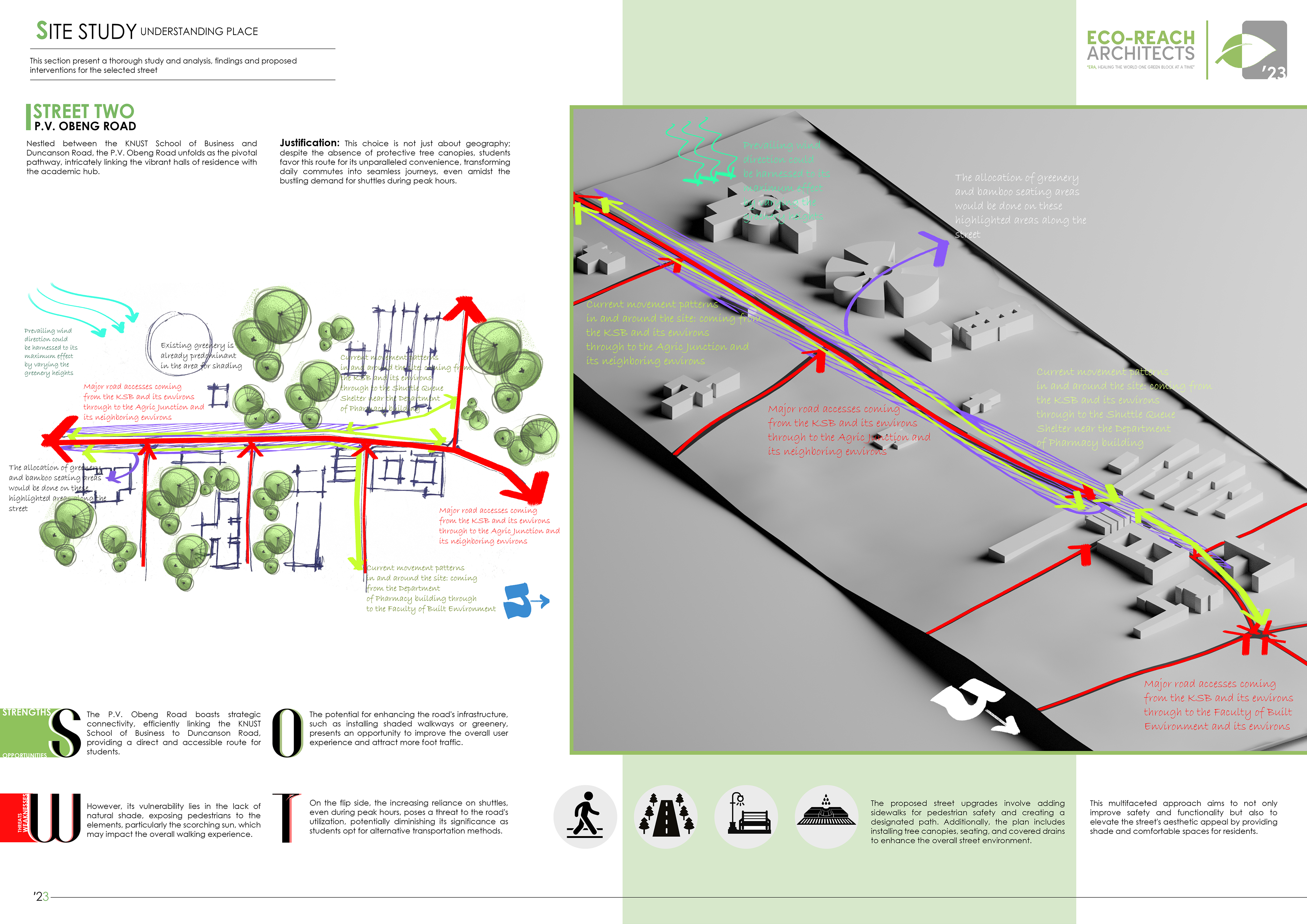
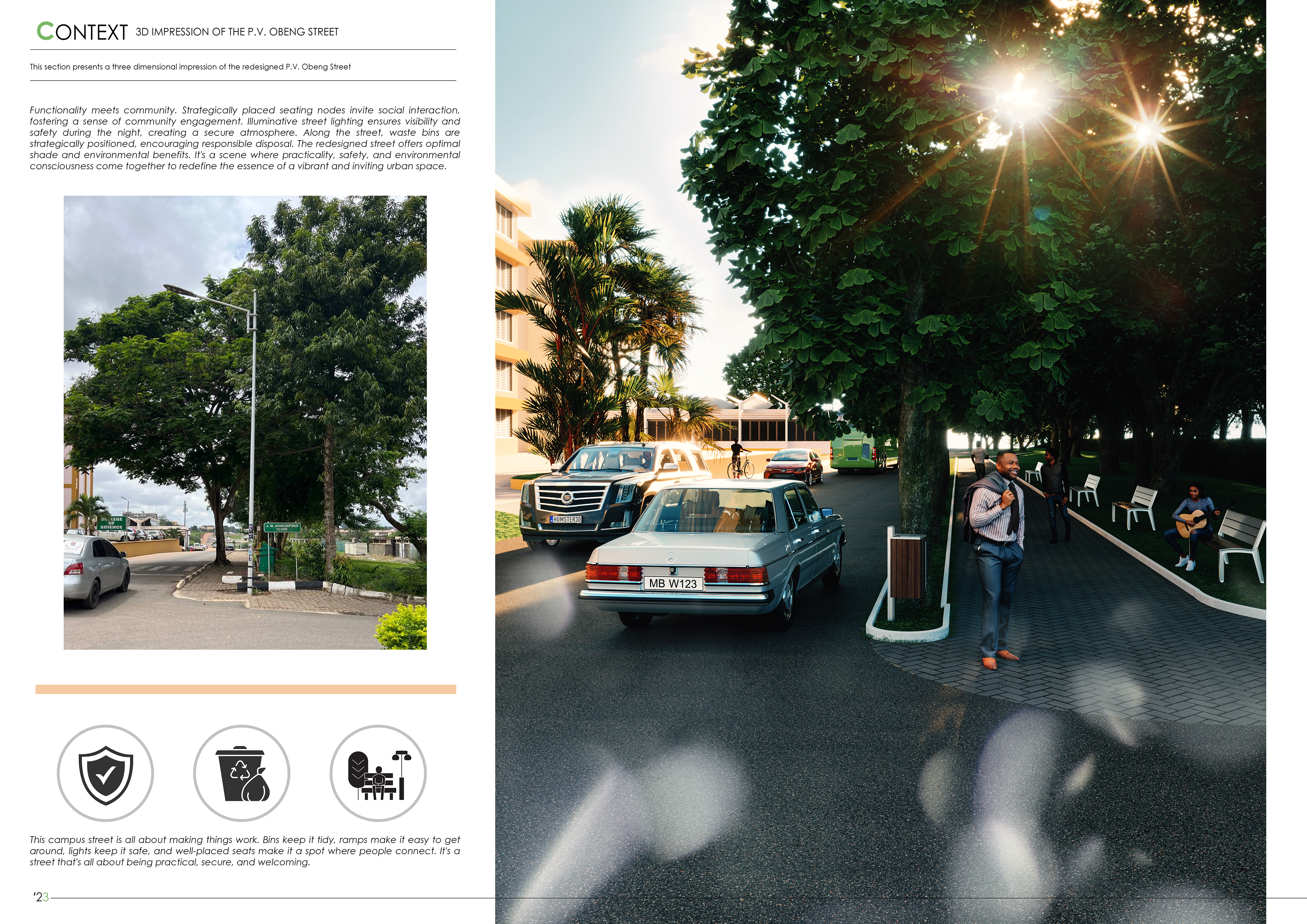
Street 2 — P.V. Obeng Street (between KNUST School of Business and Duncan’s)
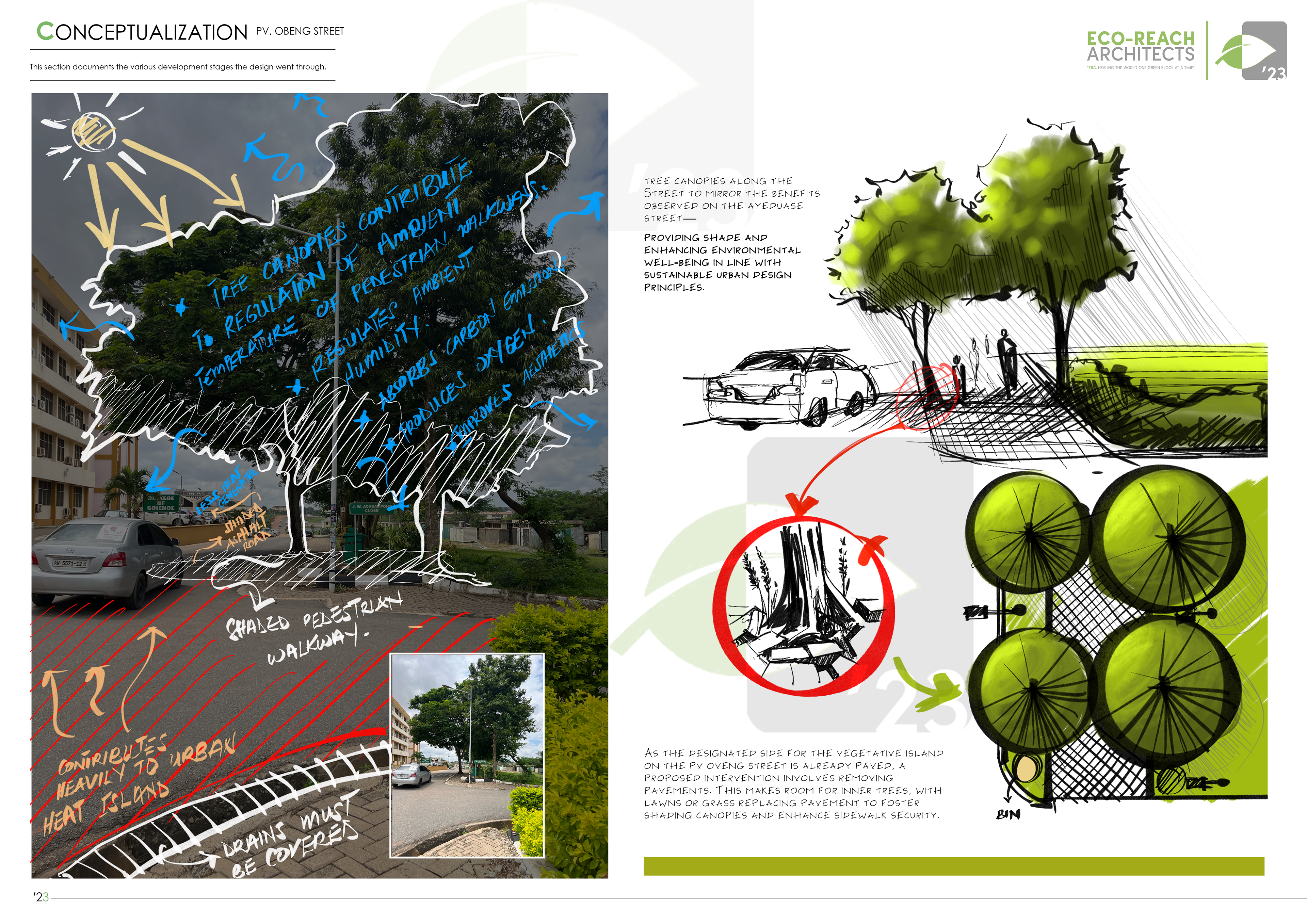
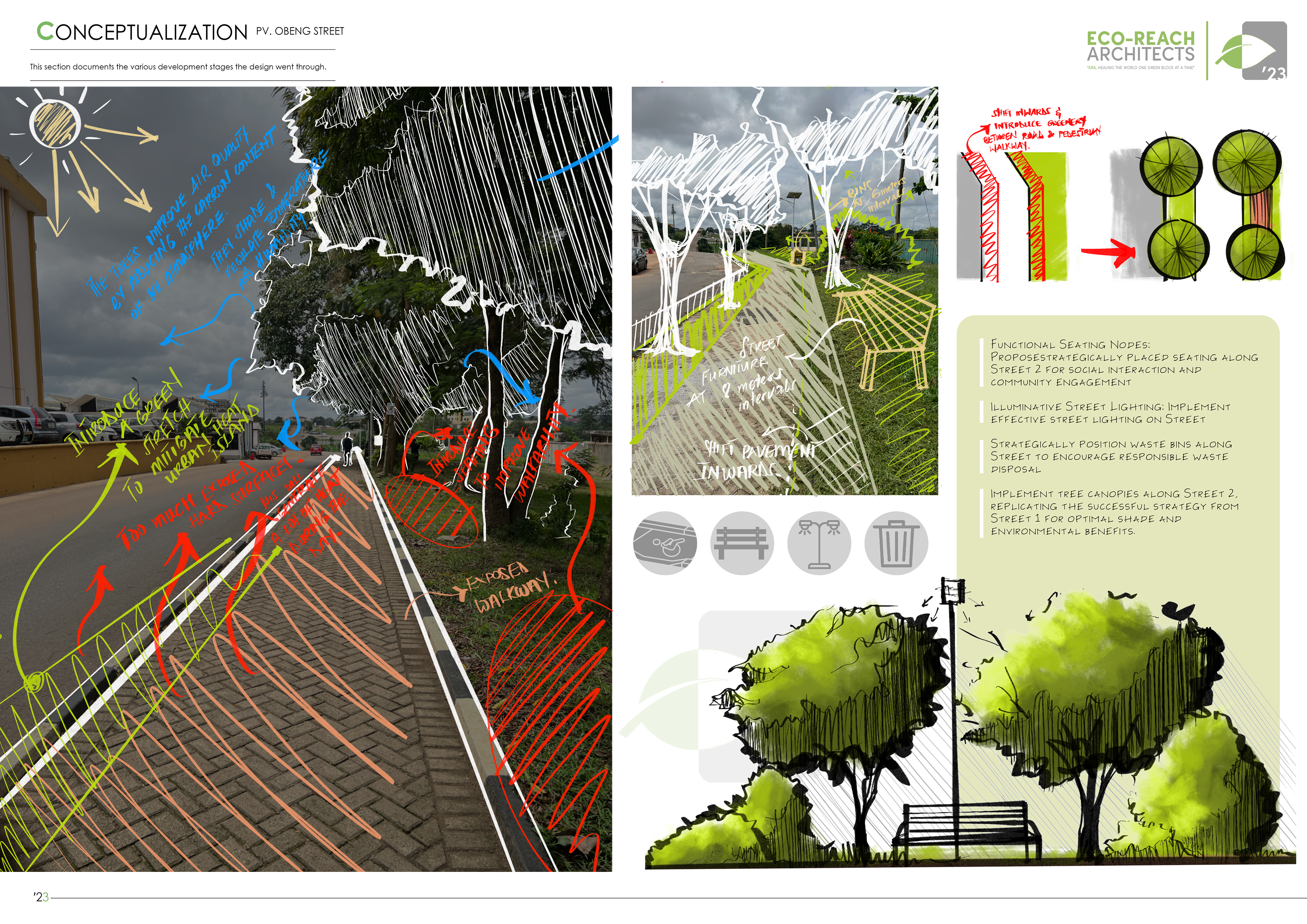
This road is a pivotal connector between residences and the academic hub, but its shade deficit discourages walking and increases reliance on shuttles. The design rebalances the section by reclaiming portions of hardscape for green belt planting, extending canopy coverage, and adding the same practical pedestrian kit—walkway, lighting, seating, bins, and covered drains—so the street works in heat, rain, and at night.
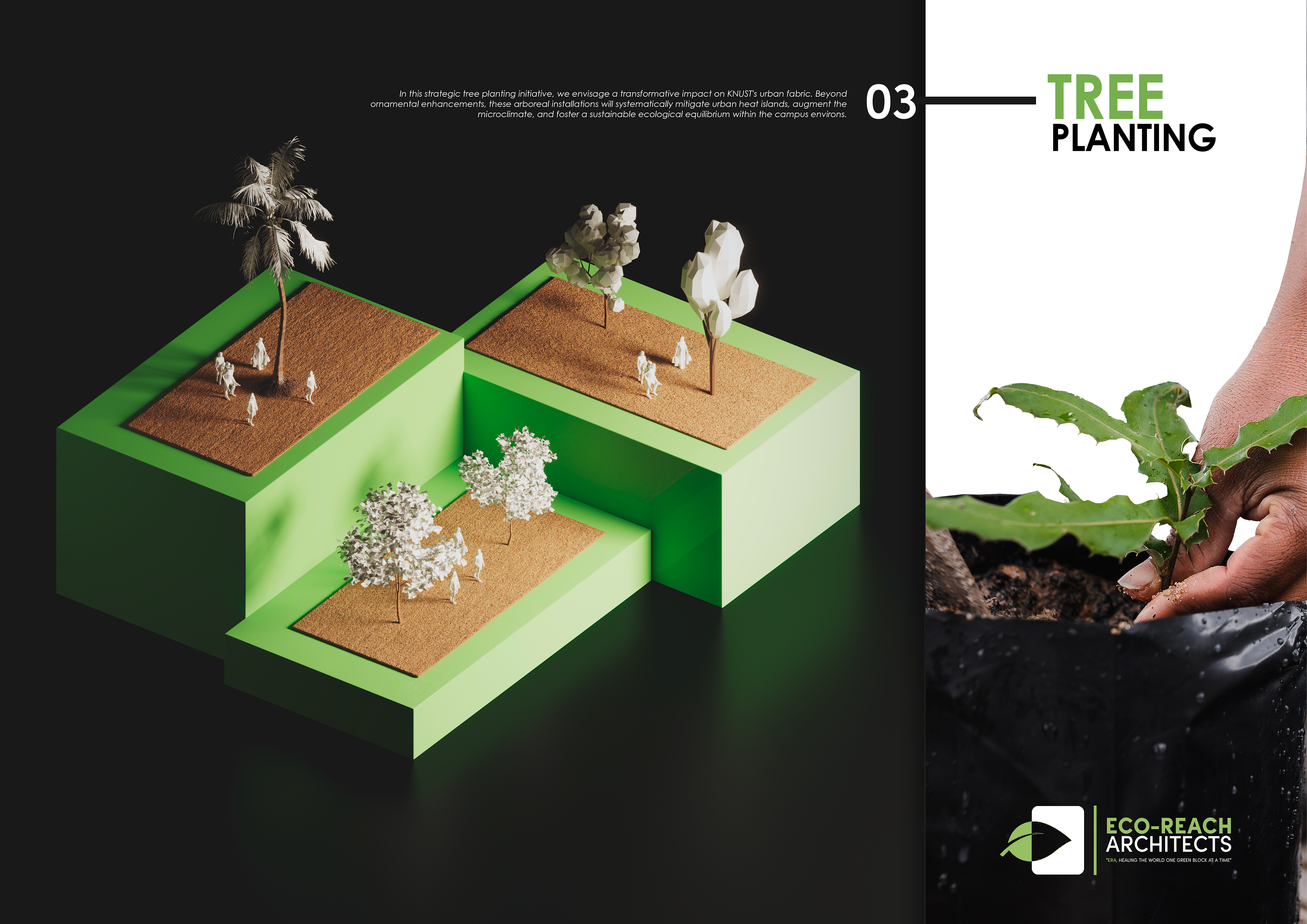
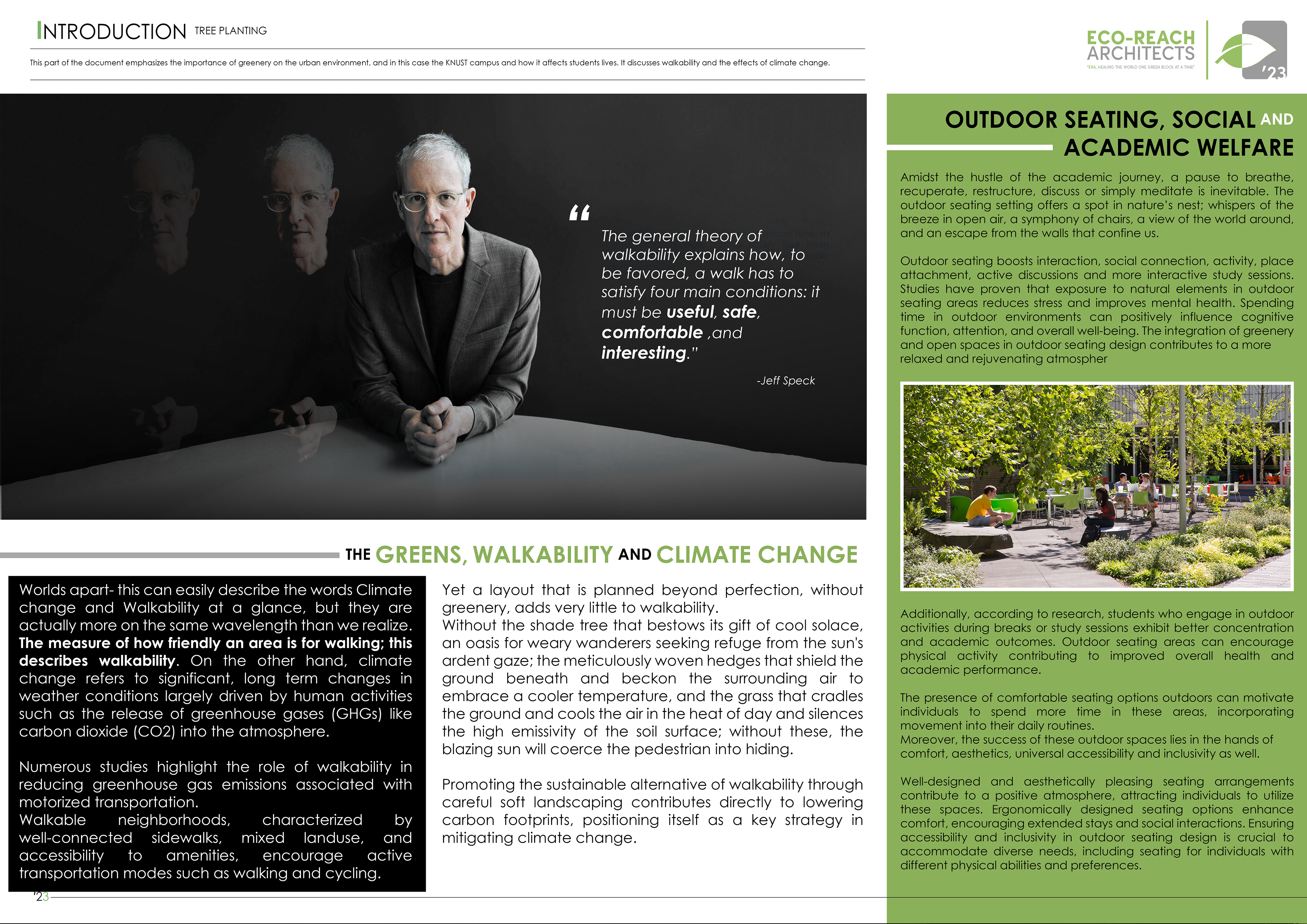
Tree planting as an enabling system (not decoration)
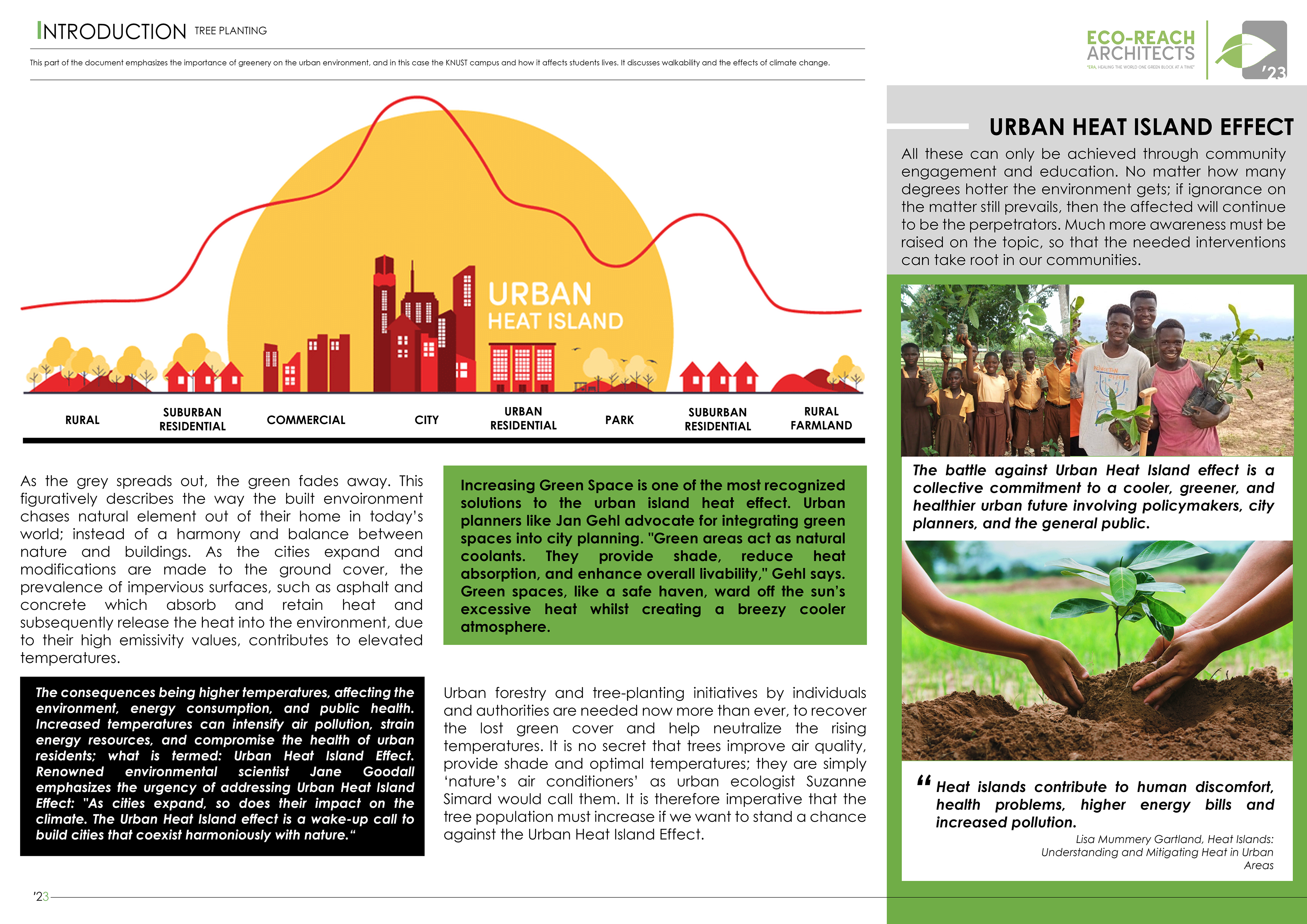
Beyond the two streets, the project argues for tree planting as a campus operational upgrade: expanding canopy is framed as a direct response to urban heat buildup and walkability decline—an investment that improves comfort, health, and everyday mobility over time.