MIDDLE INCOME HOUSING — Bolgatanga (Yikene), Upper East Region, Ghana | 2023
Individual Academic Work (Year 04)
This project begins from a conviction: housing is not complete when a building is finished. In Ghana—where finances shift, families grow, and climate pressure is relentless—housing must be designed to adapt without losing dignity. The proposal addresses the national housing deficit through a neighborhood model that is expandable, climate-responsive, and socially coherent—not a field of isolated units, but a settlement with an internal logic strong enough to hold real life over time.
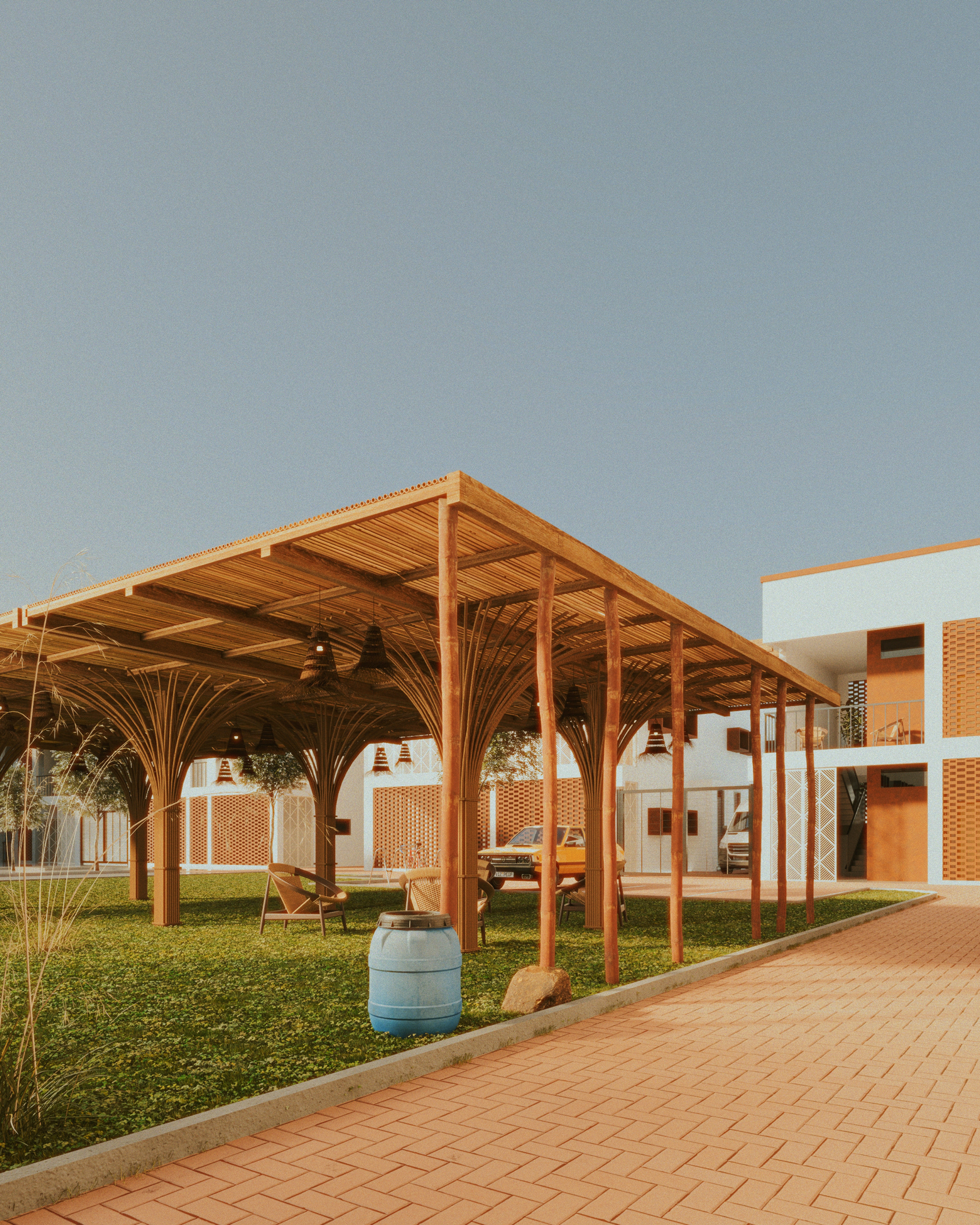
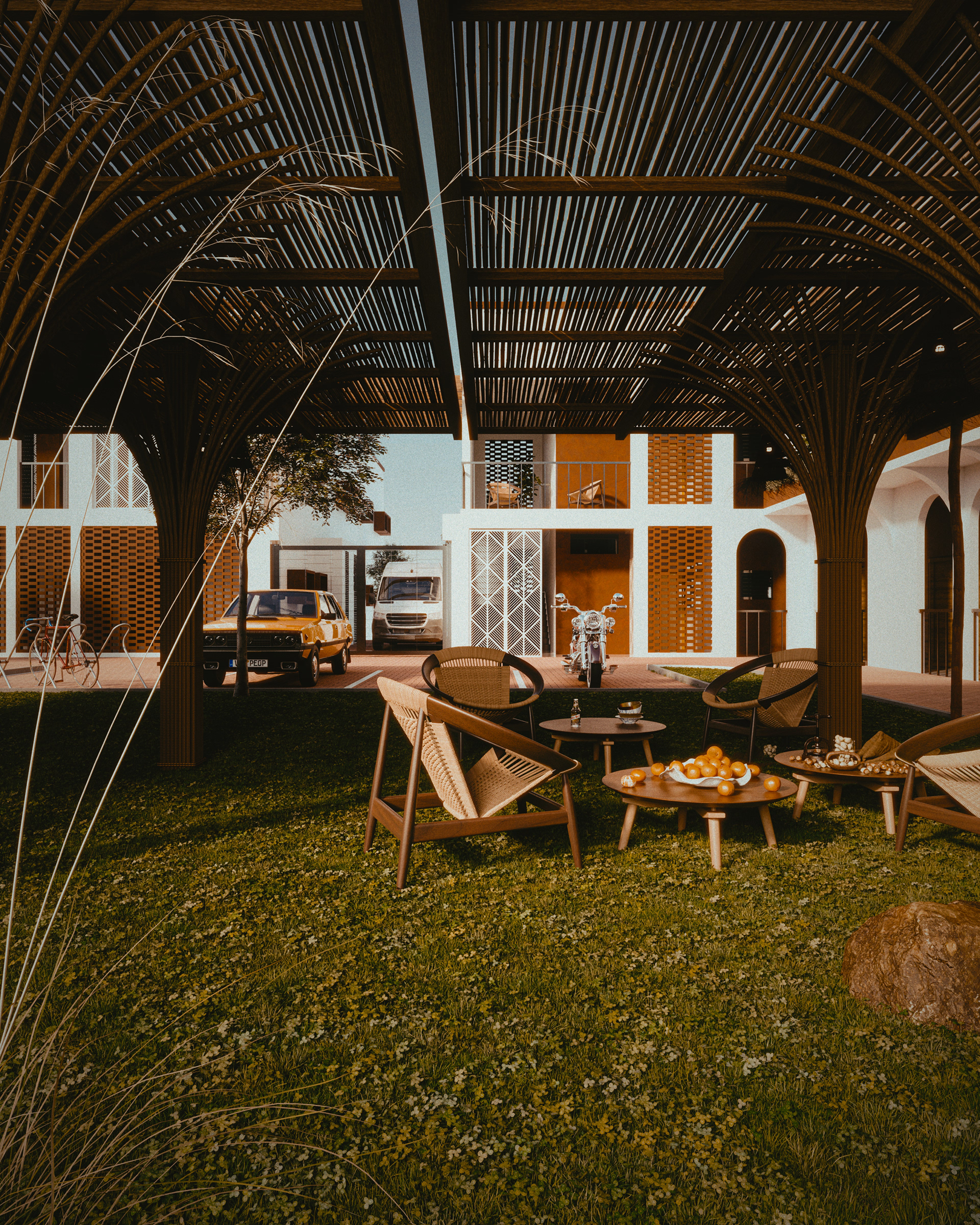
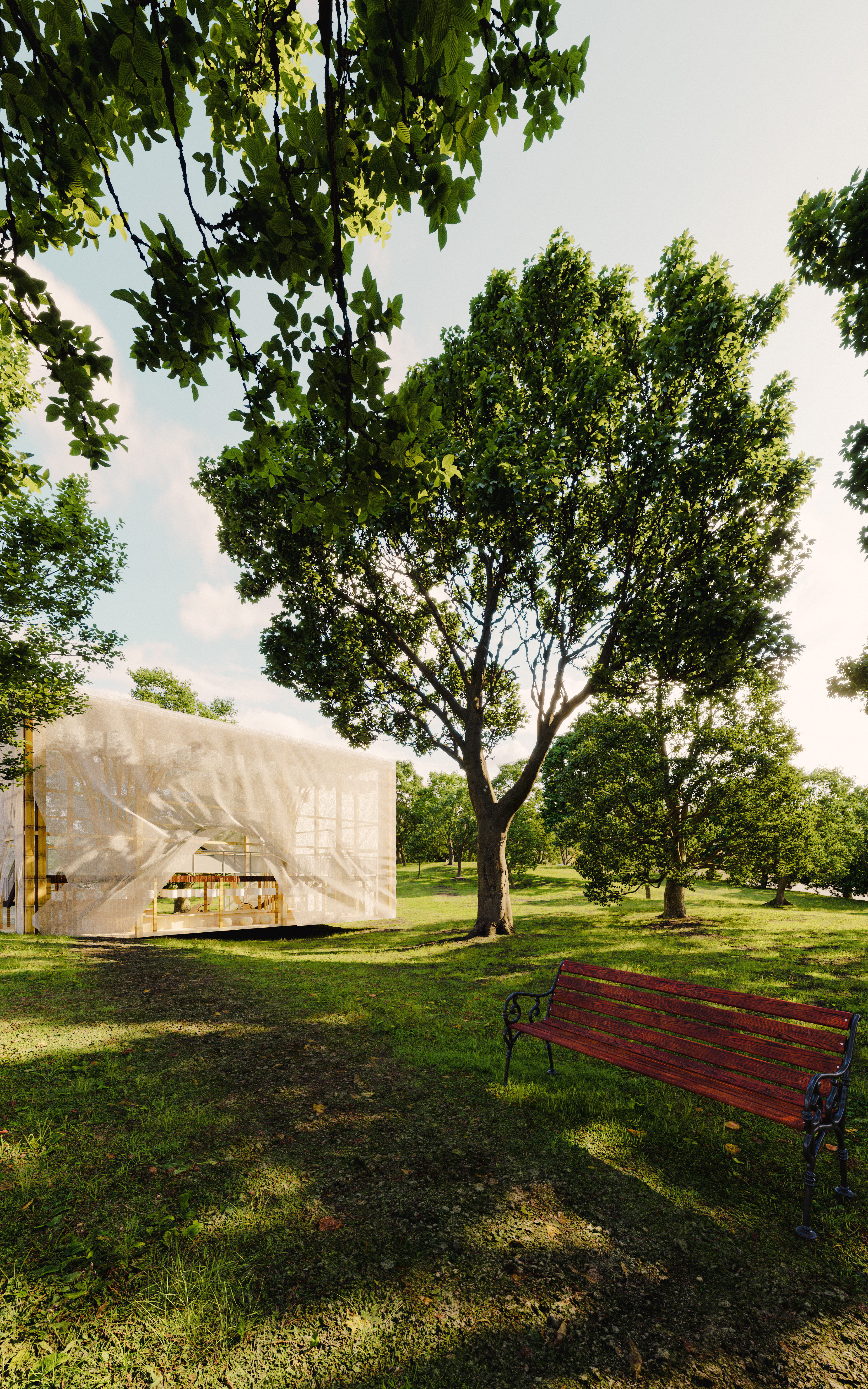
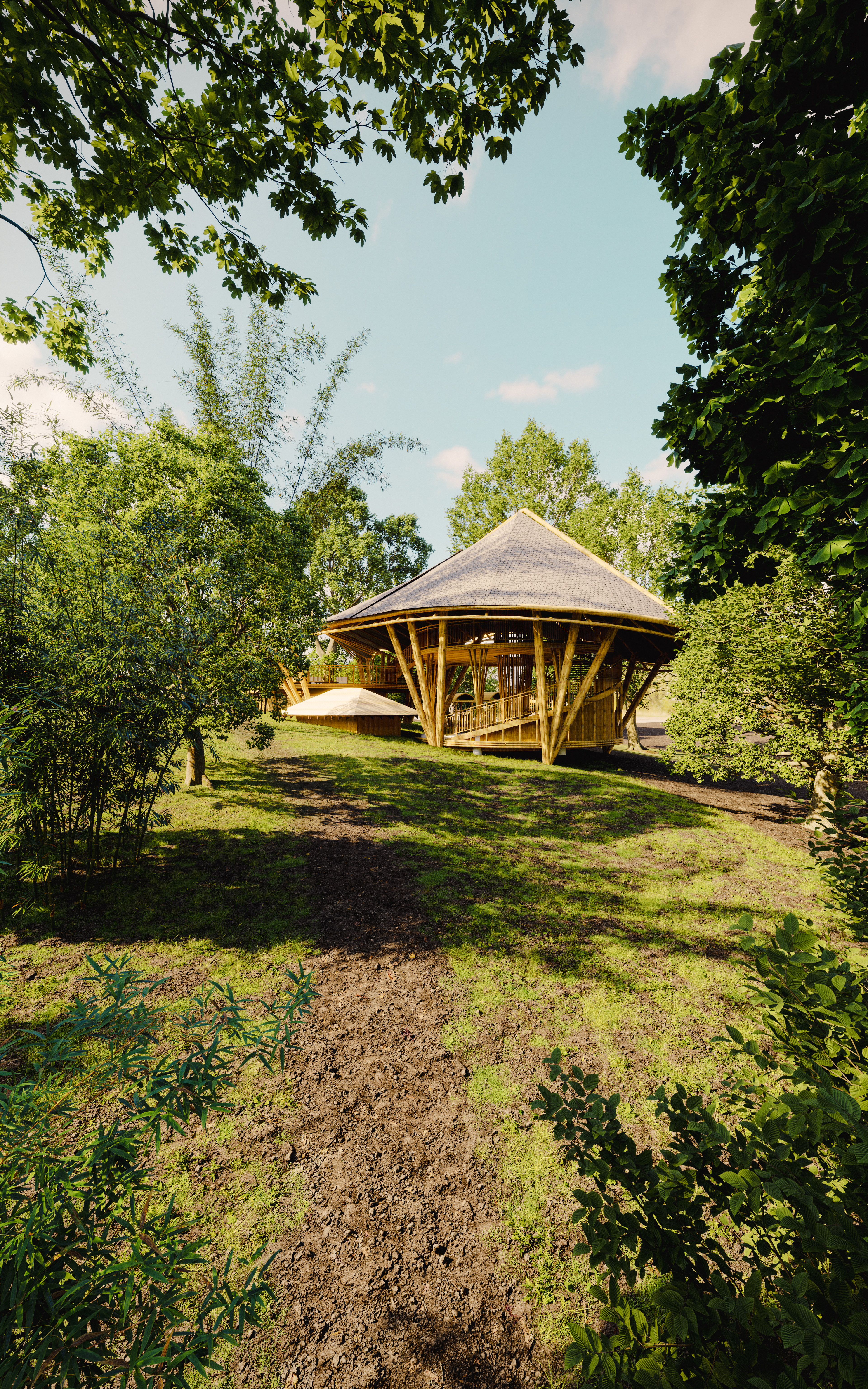
Planned for 254 households (based on a typical household size of ~4.8 persons), the scheme is structured as a self-sufficient neighborhood: residential clusters are supported by an educational zone, healthcare access, commercial convenience, and a fitness facility—so daily needs are met within proximity rather than outsourced to long commutes. The masterplan’s social engine is the central park: positioned deliberately to serve as a civic and climatic heart, it becomes a place of gathering, play, and decompression—designed to be reachable by foot from every zone within minutes.
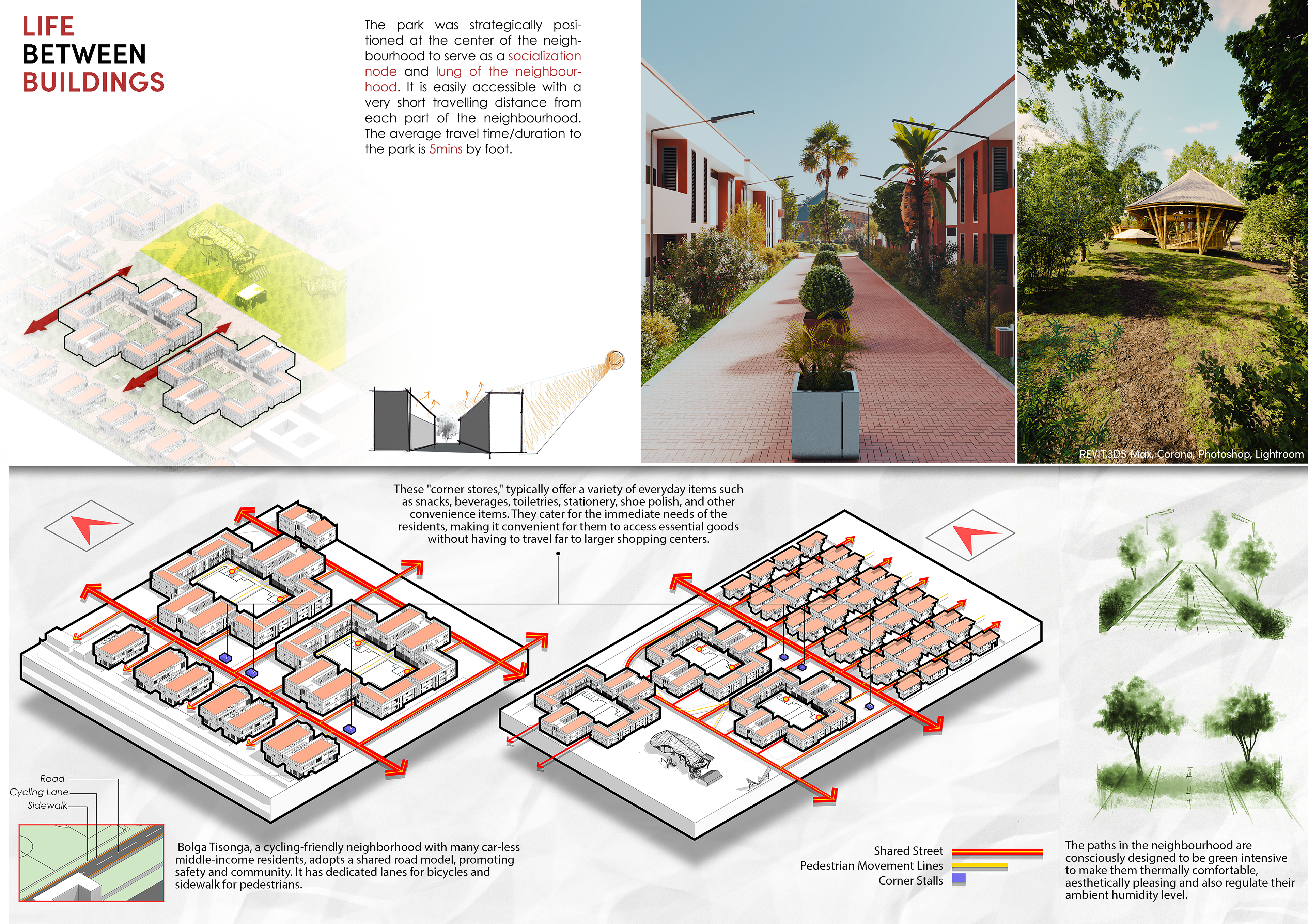
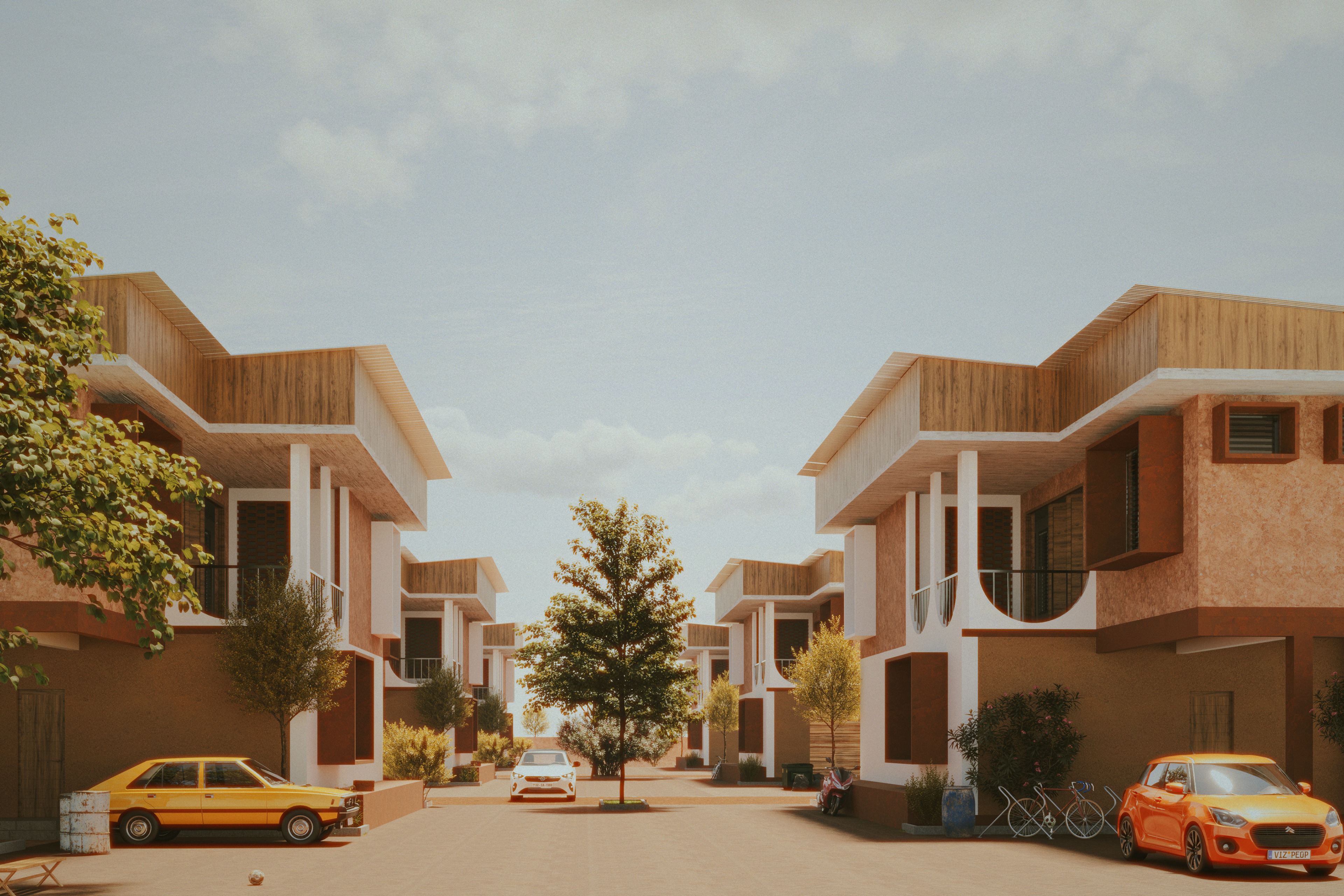
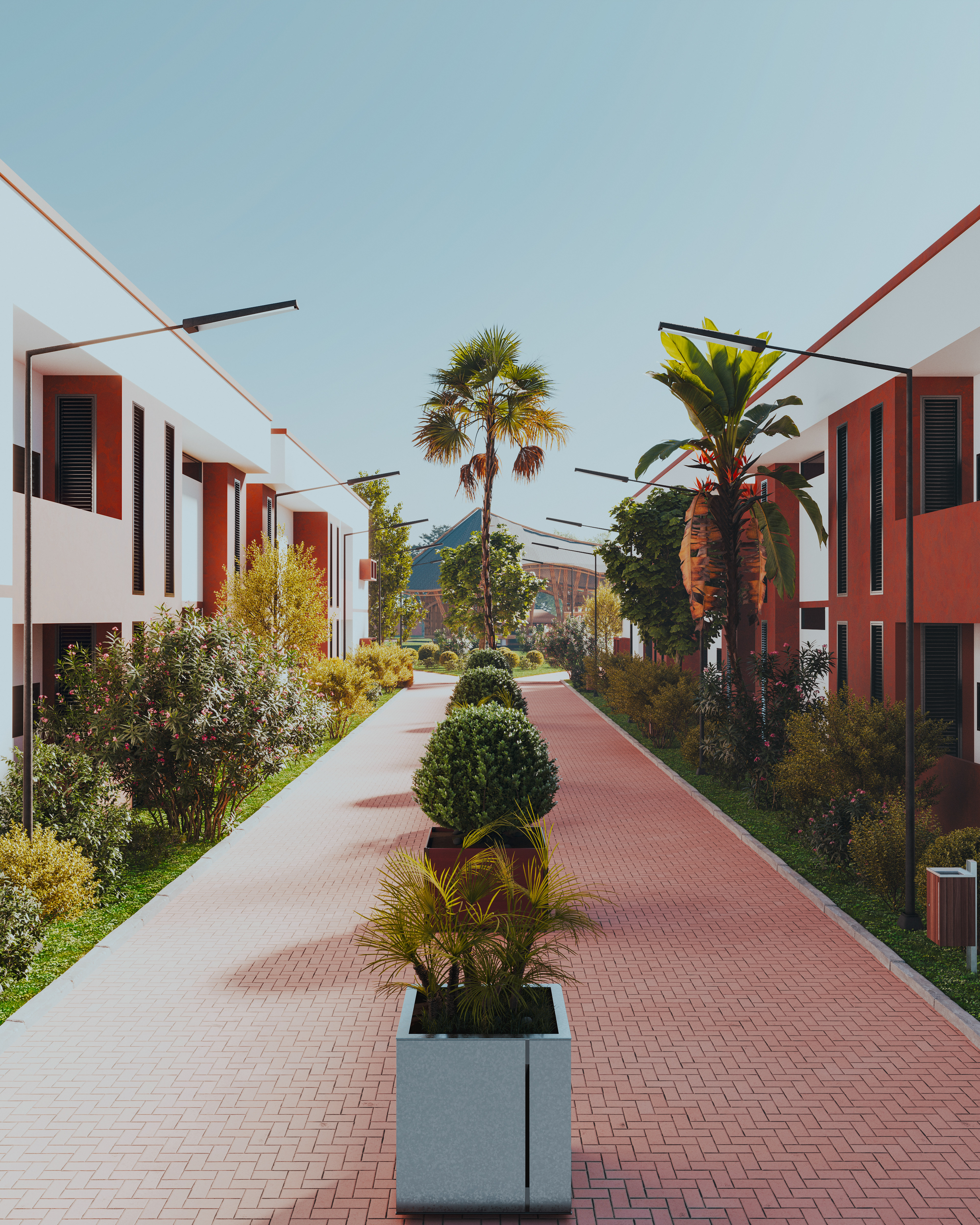
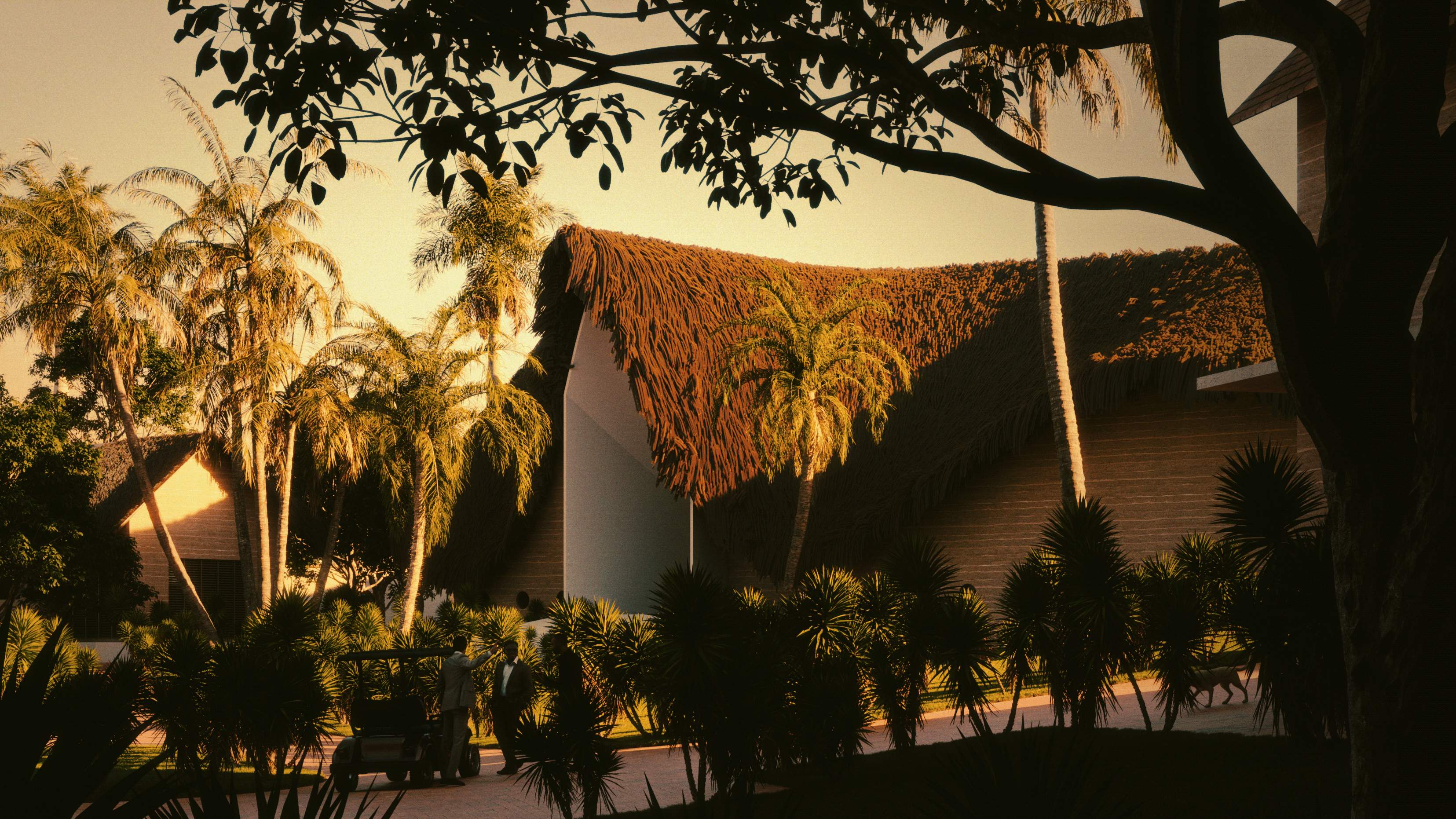
The project is anchored by the idea of life between buildings. Streets are not treated as leftover infrastructure; they are designed as public rooms. A shared-street logic, sidewalks, cycling lanes, and strategically placed “corner stores” encourage walking and informal encounter. Dense green planting is not ornamental—it’s operational: it cools, filters, shades, and contributes to humidity moderation and carbon regulation, while also making the neighborhood feel inhabited and cared for.
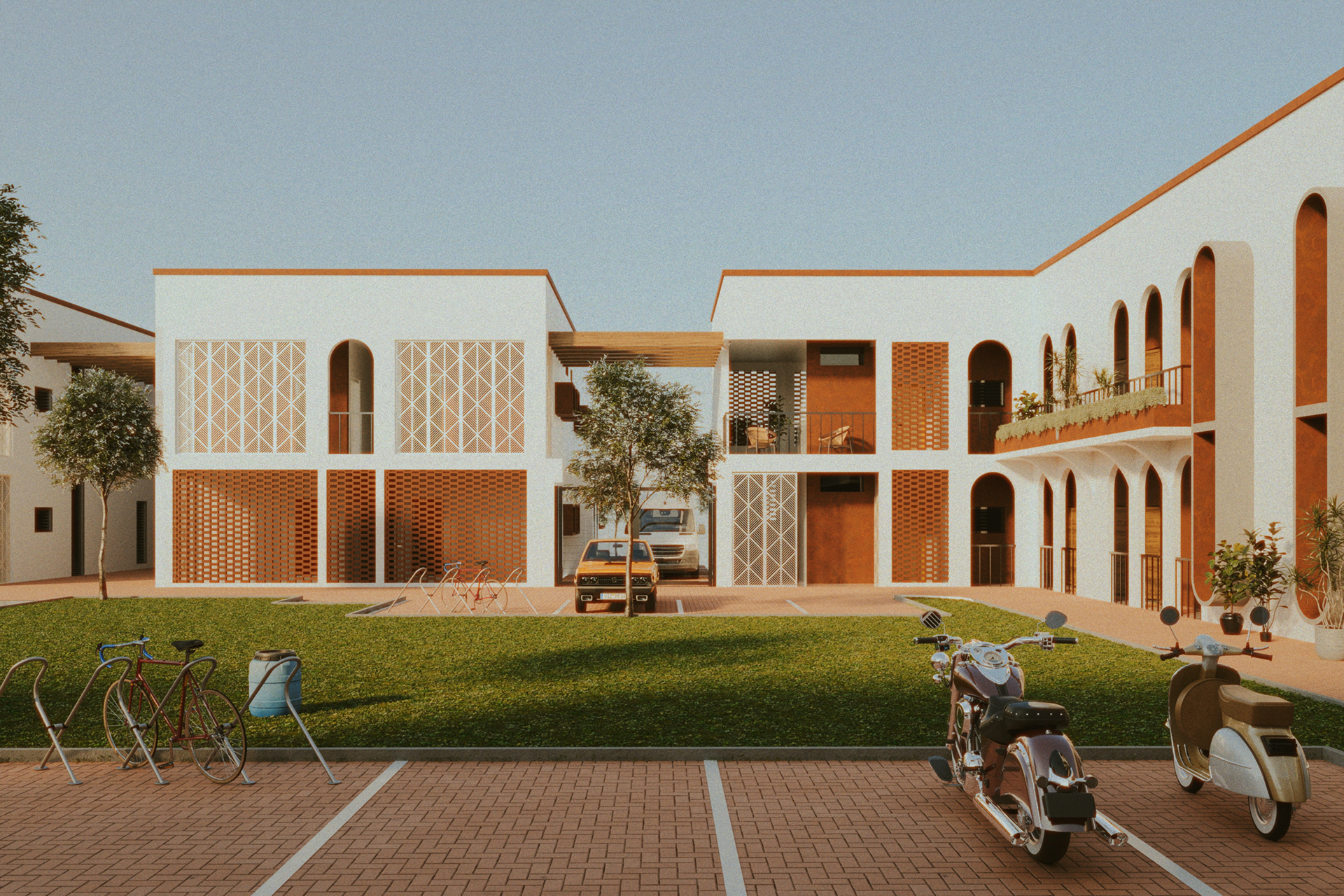
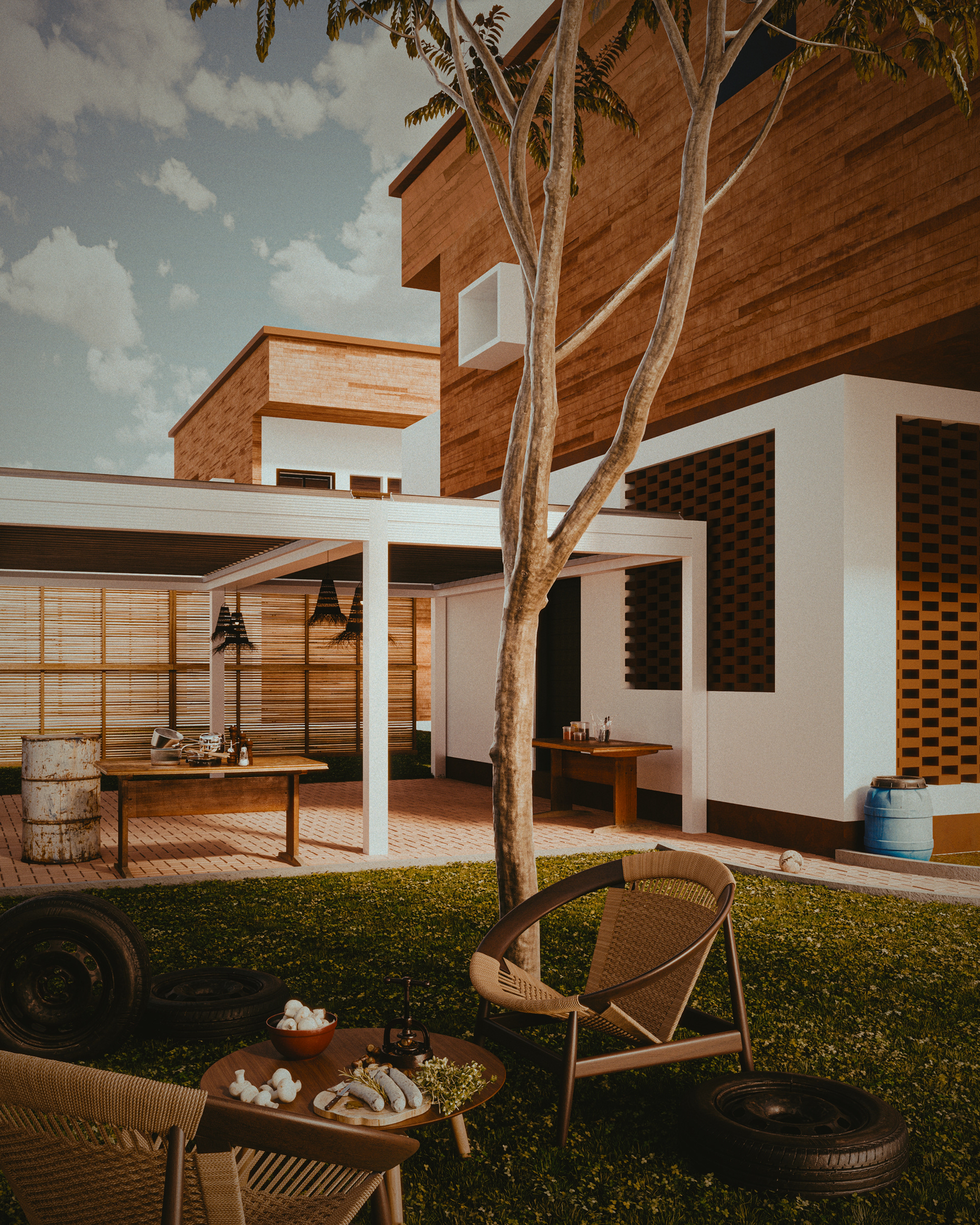
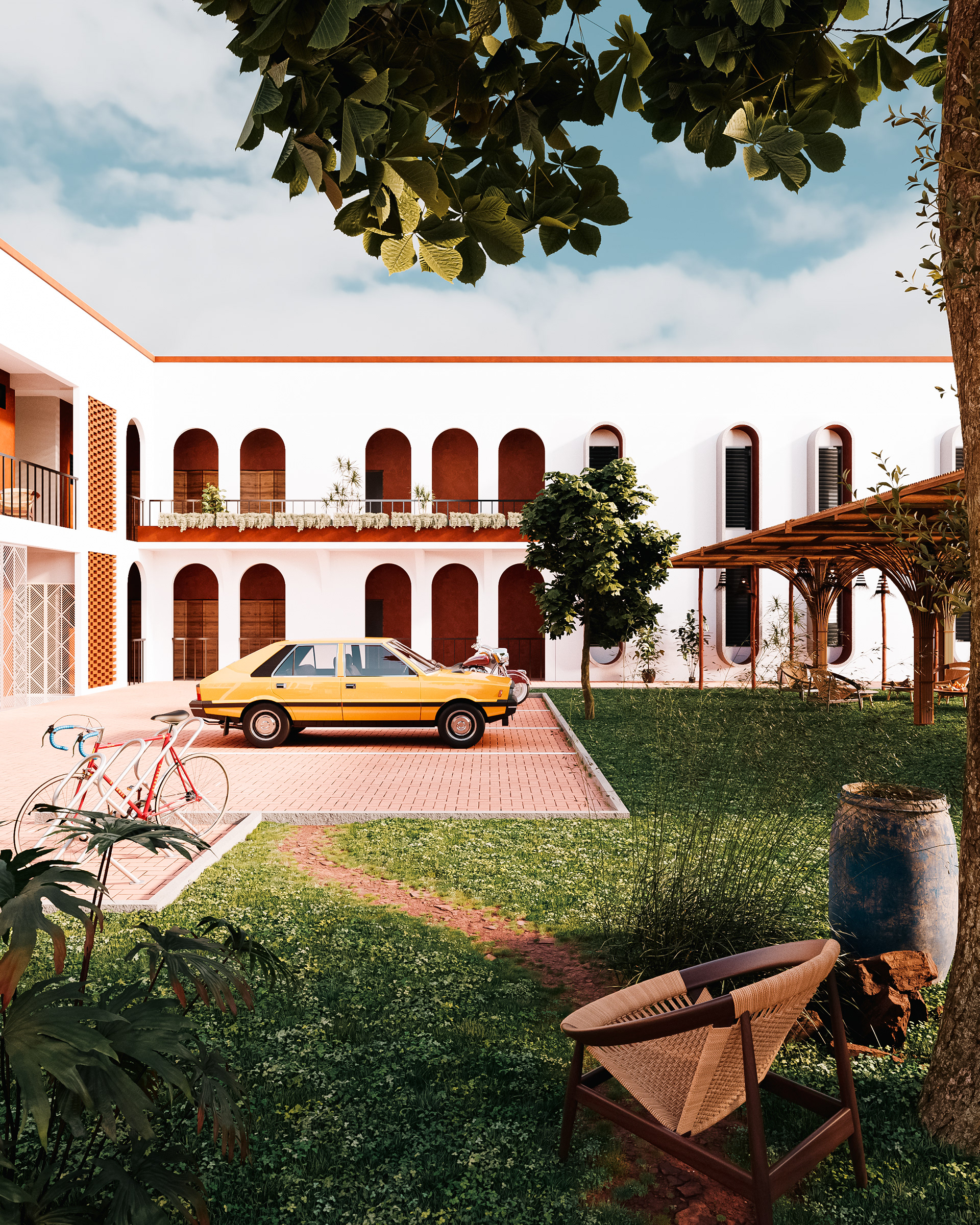
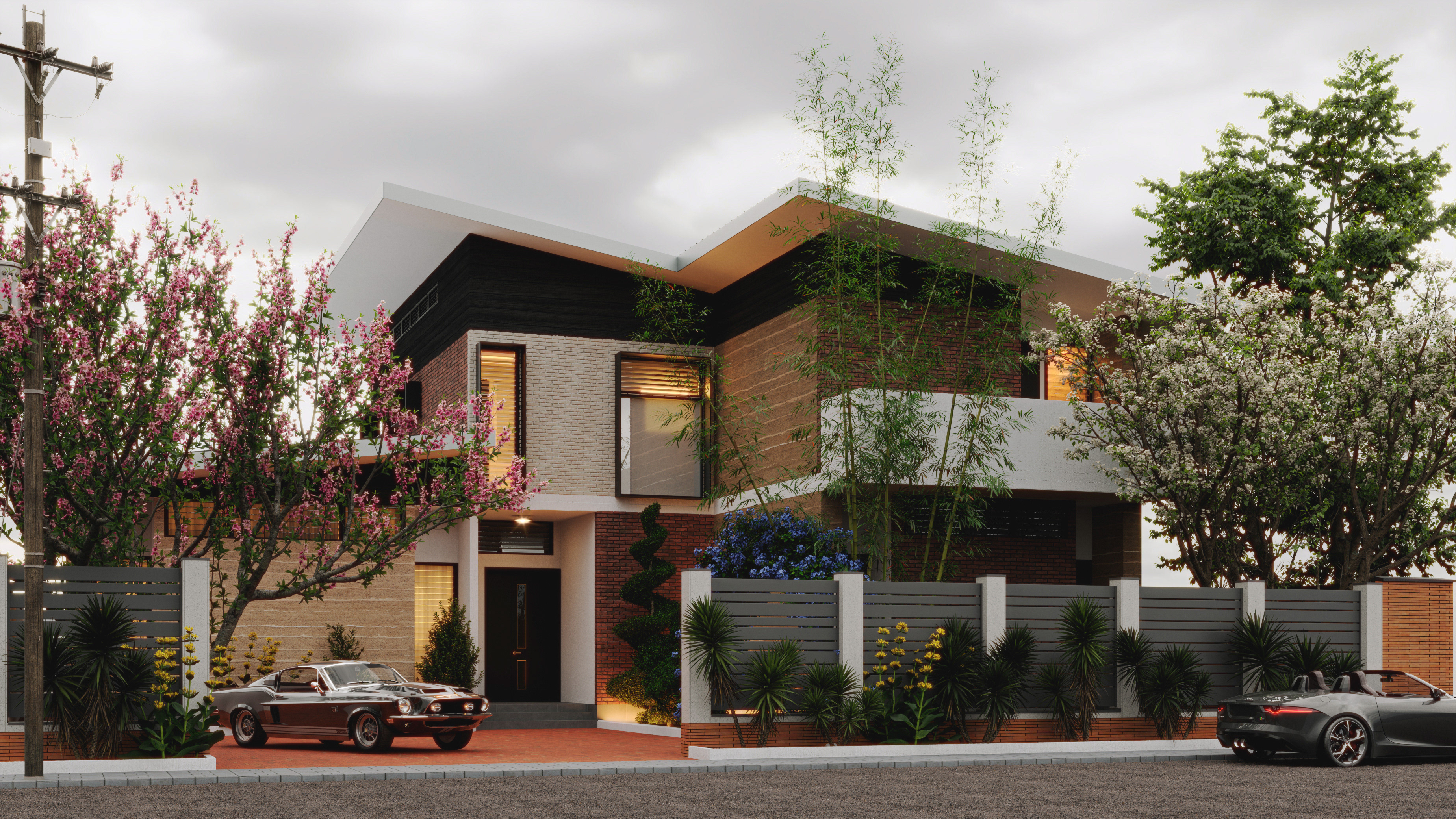
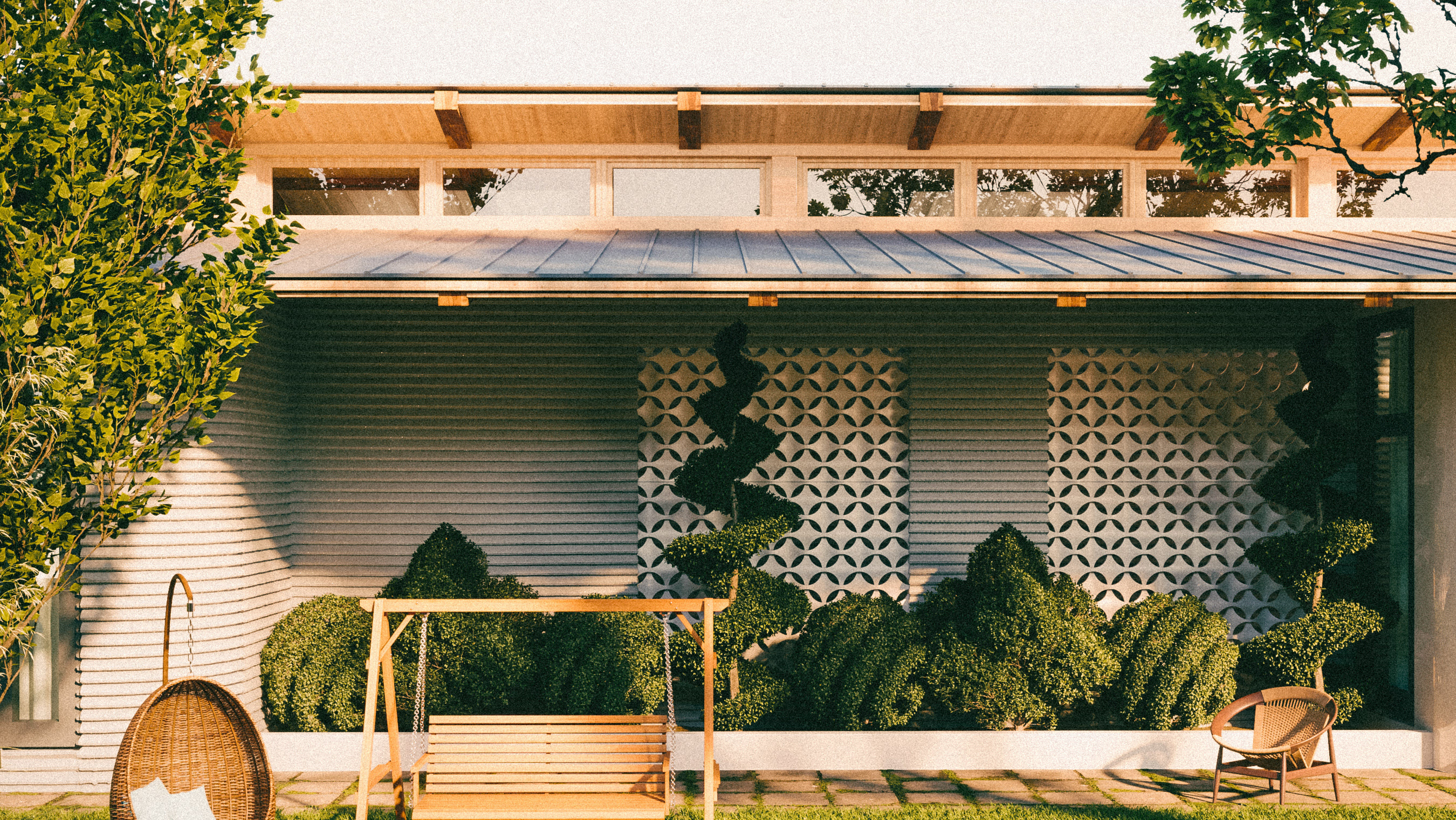
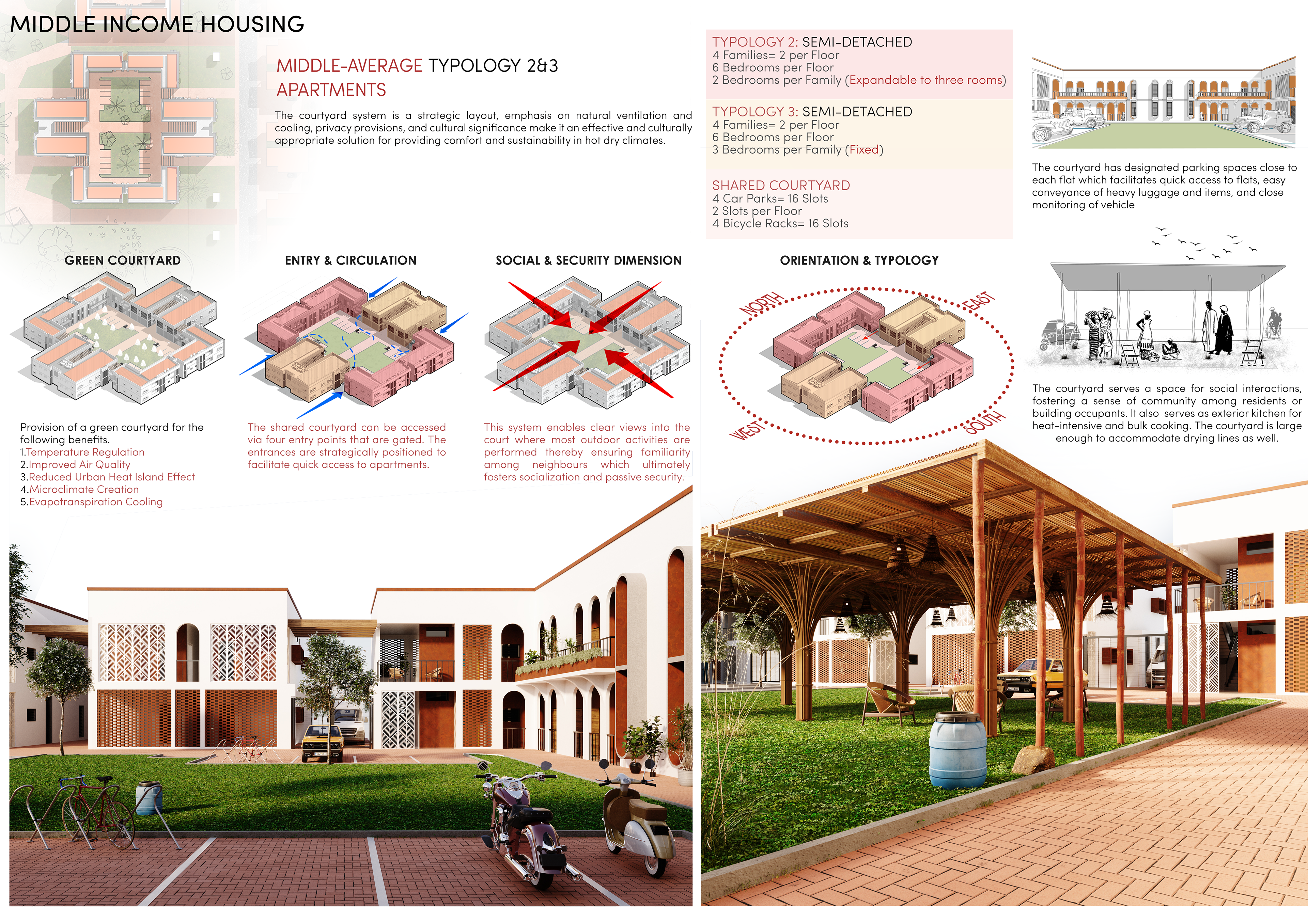
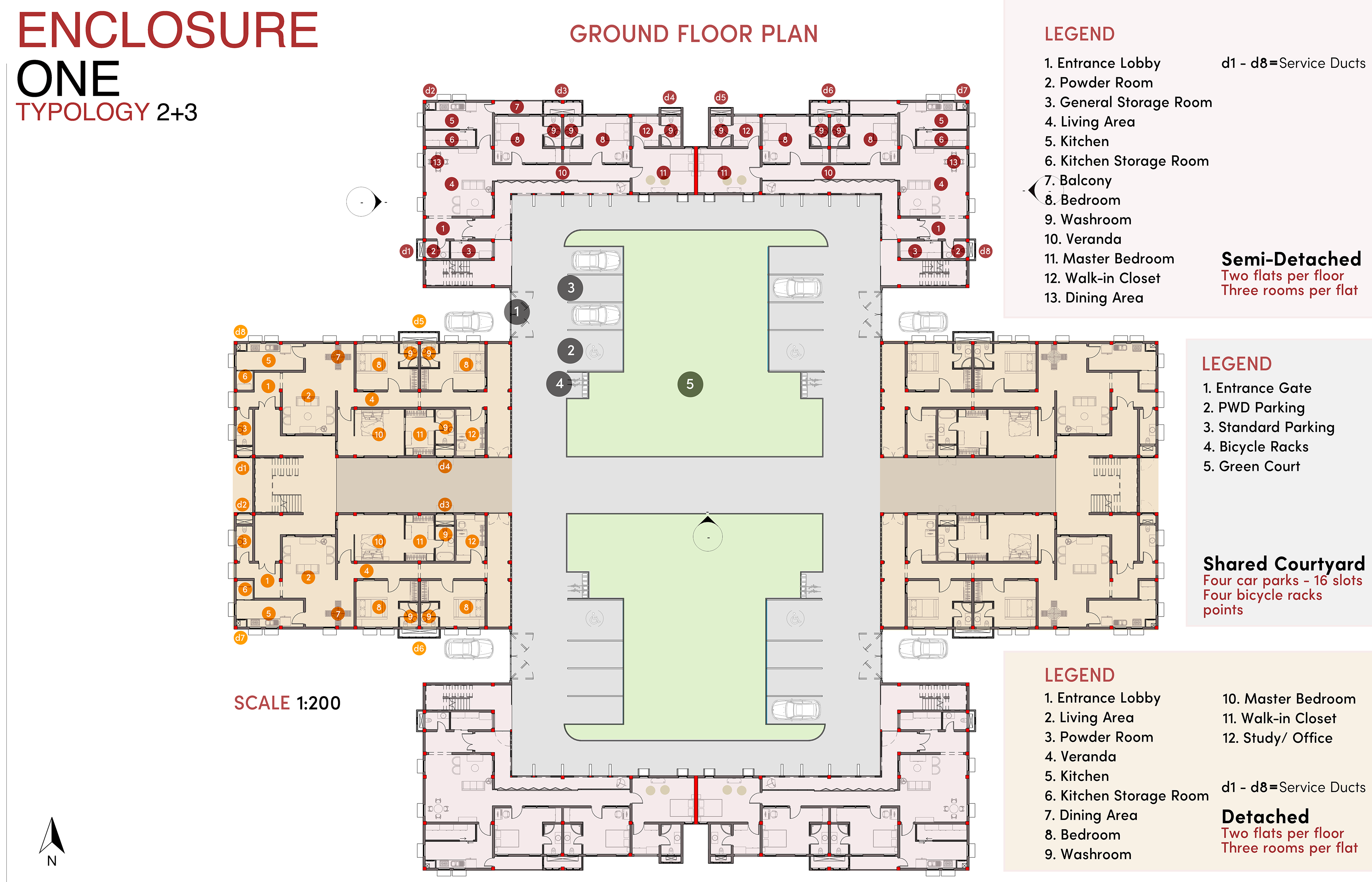
Architecturally, the scheme deploys four tailored typologies across income bands (middle-low, middle-average, and middle-high zones). Rather than freezing households into one static floor plan, the design supports incremental growth: structural provisions and extension directions are embedded so families can add spaces in controlled ways, avoiding the uncontrolled sprawl that often erodes safety, access, and order. Courtyard-based typologies strengthen passive security through mutual visibility, while also improving comfort through shade and microclimate effects. Where appropriate, the courtyard becomes a practical cultural armature—supporting outdoor cooking, drying, and everyday social life without compromising privacy.
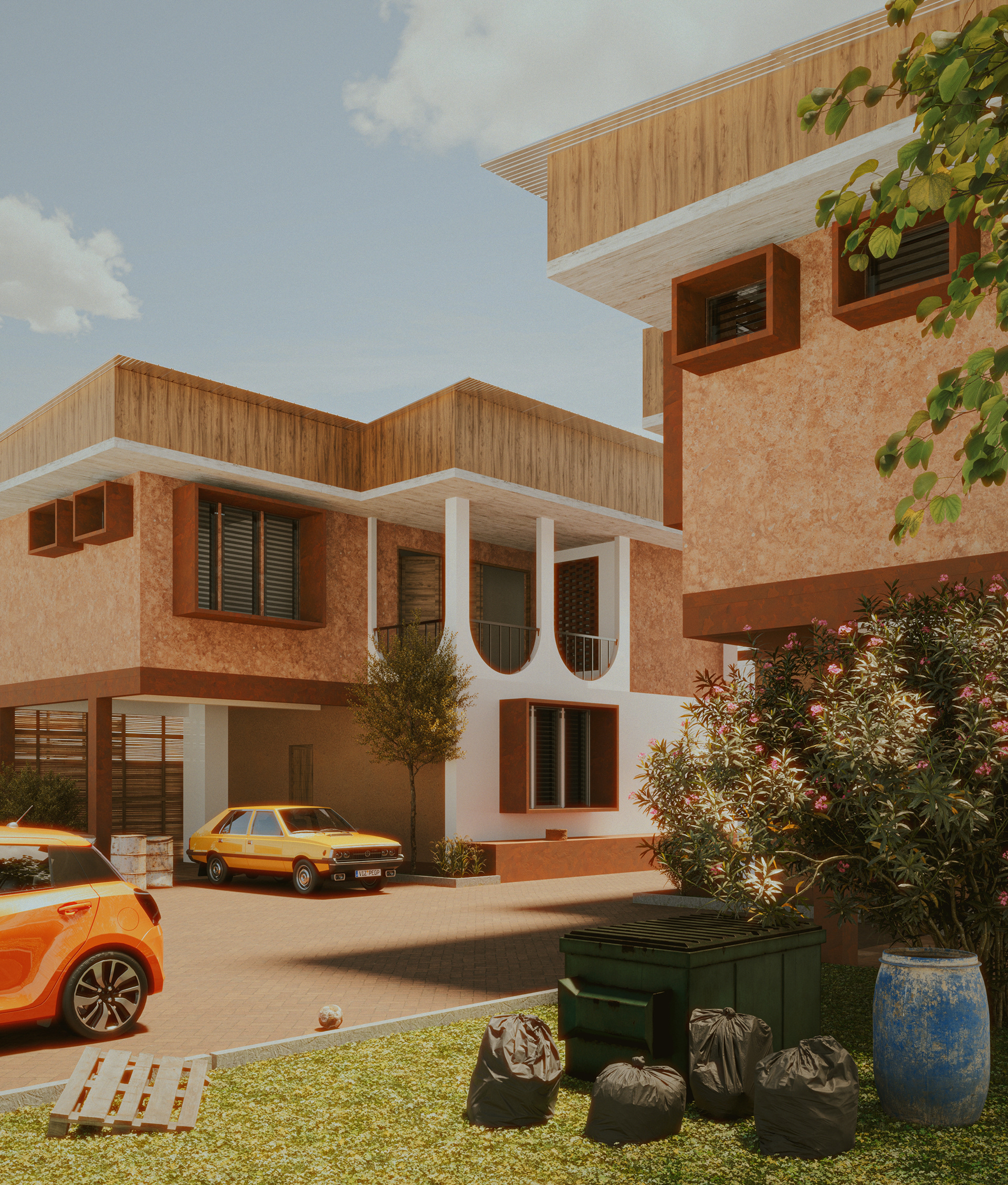
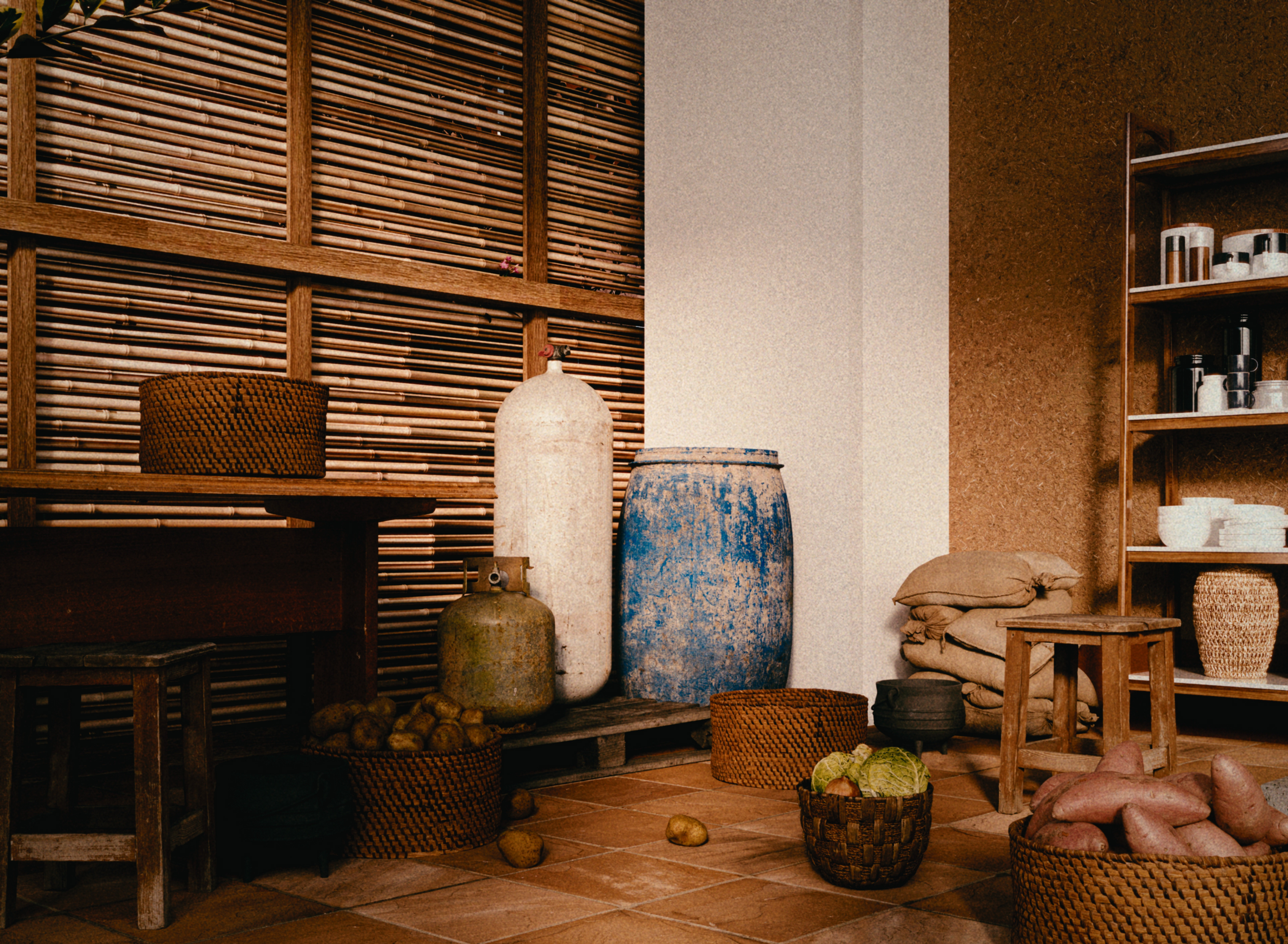
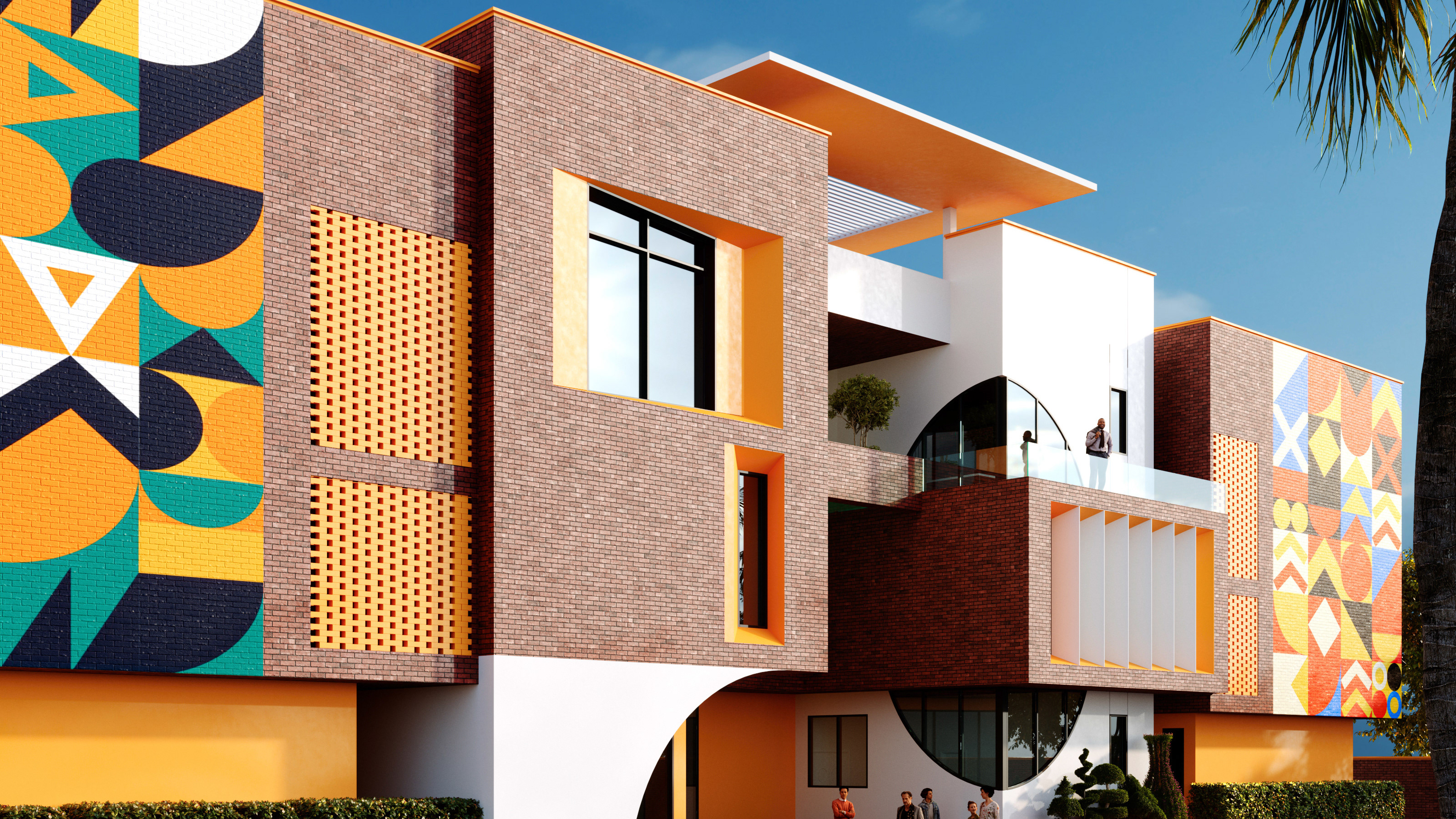
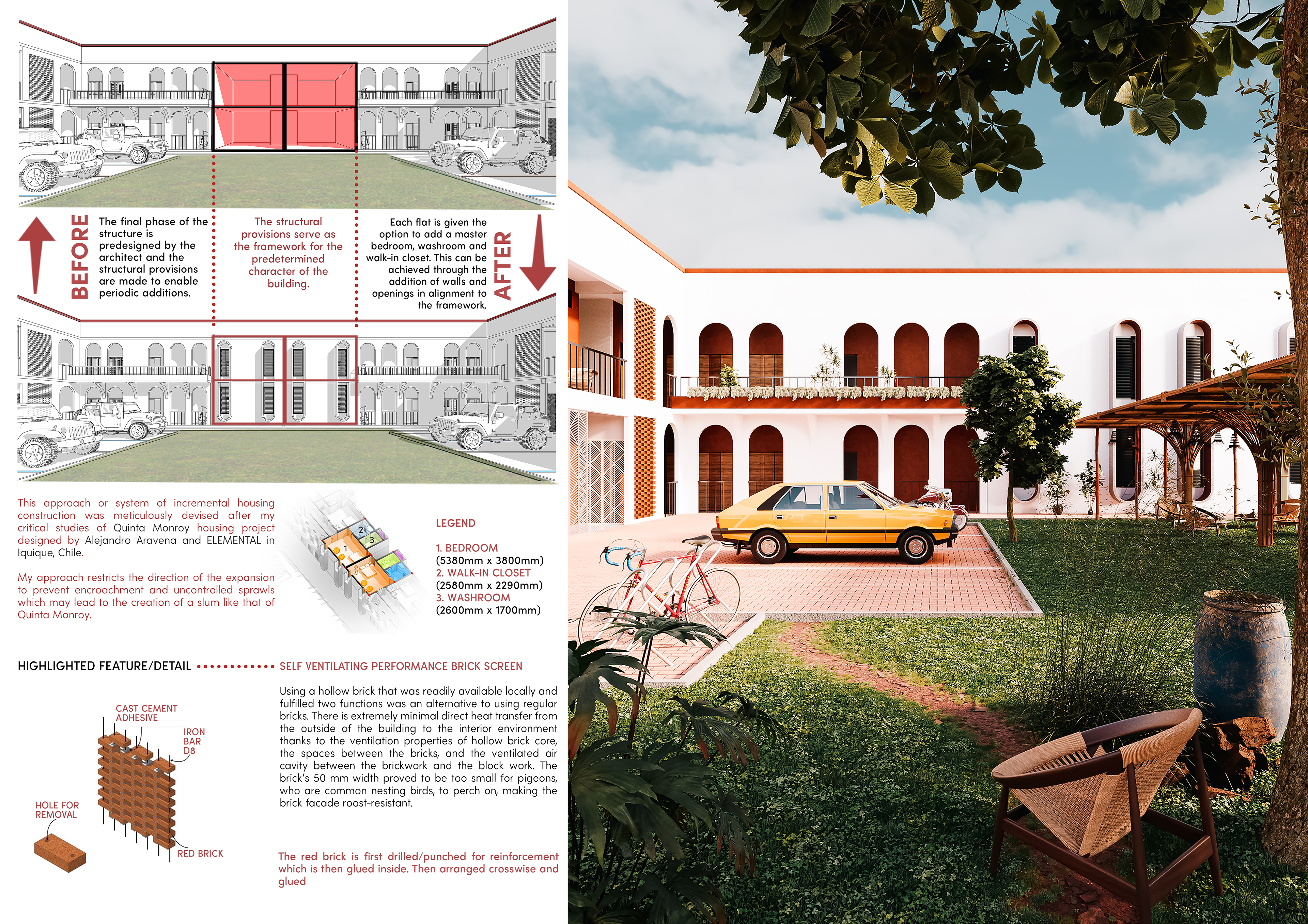
Materially, the proposal is intentionally grounded in local logic: clay and rock become both identity and performance—supported by shaded recesses and overhangs, and reinforced by self-ventilating brick screens that temper heat while maintaining airflow. The neighborhood is designed to age well: legible routes, adaptable homes, and public spaces that hold community life gently—without forcing it.
Role: Sole author (individual academic project) — research, concept, masterplan, typology design, modelling, detailing, illustration, visualization, and copywriting.
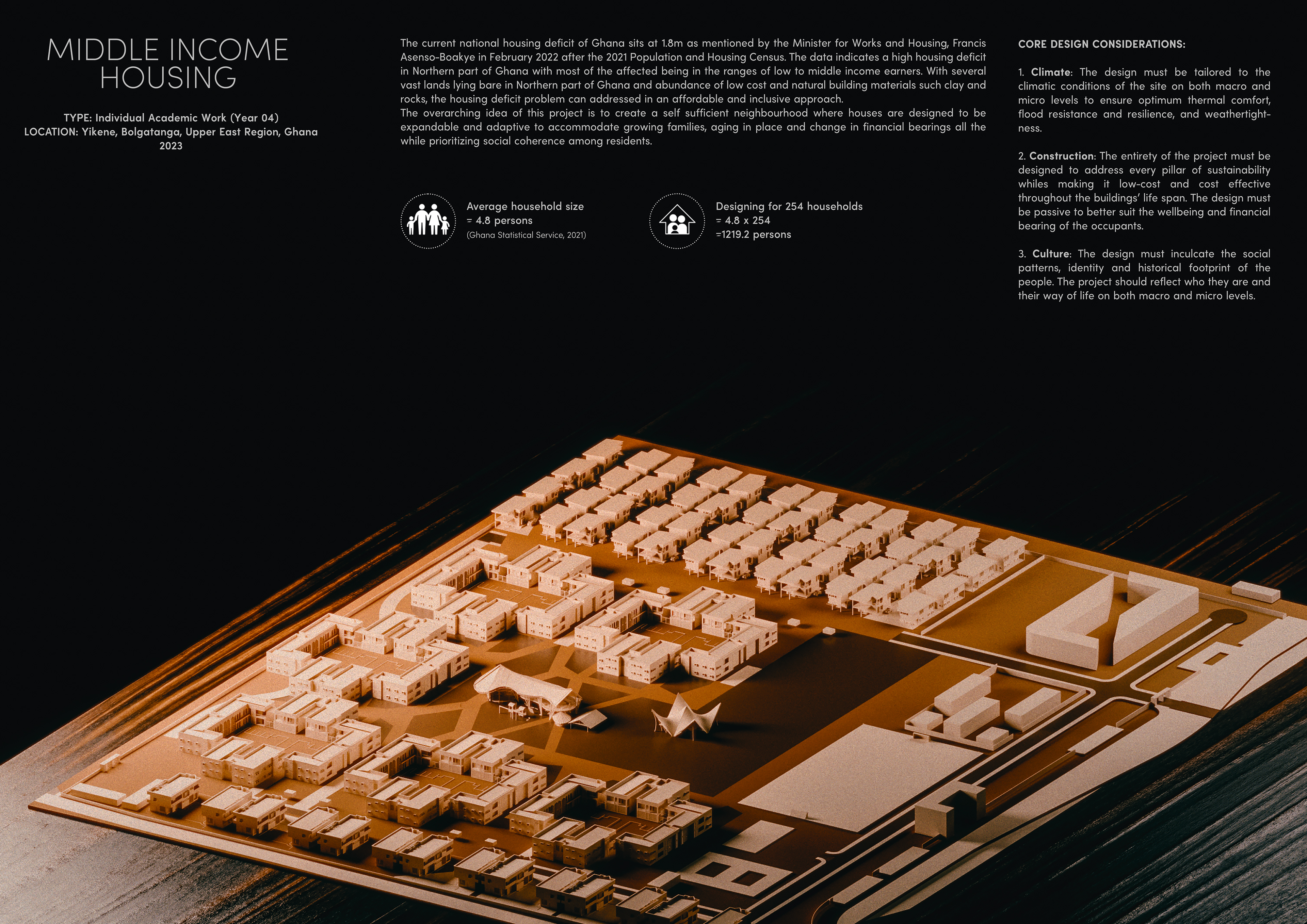
Key moves
Self-sufficient masterplan: education, health, commerce, fitness integrated into daily walking radius
Central park as civic + microclimate heart: socialization node within short walking distance
“Life between buildings”: shared streets, sidewalks, cycling lanes, corner shops, resting nodes
Four housing typologies across middle-income bands, unified by climate logic and spatial legibility
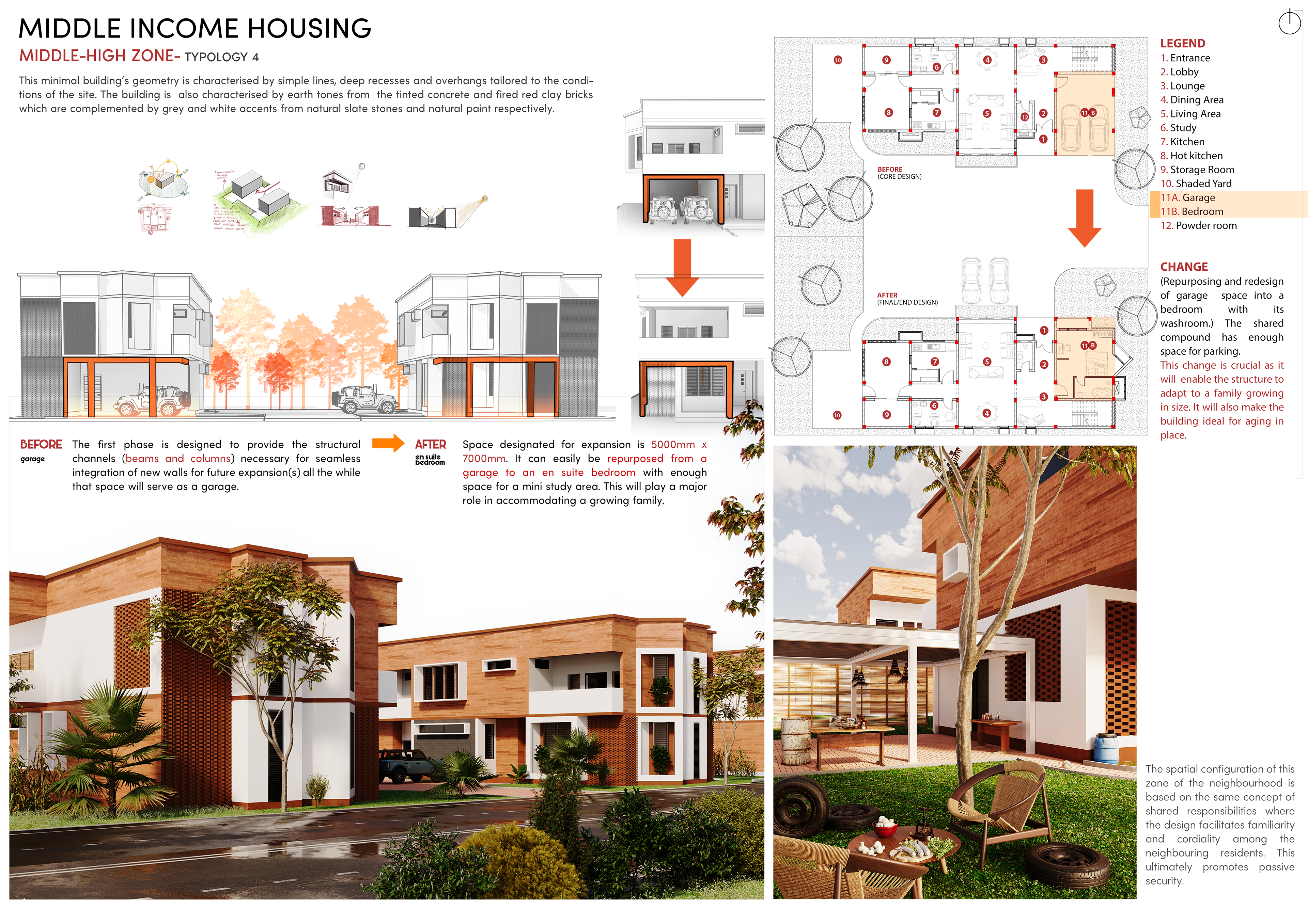
Incremental growth framework: controlled expansion directions to support changing household needs
Courtyard microclimates + passive security: visibility, shading, airflow, communal familiarity
Material performance: clay/rock logic, shaded apertures, ventilating brick screens
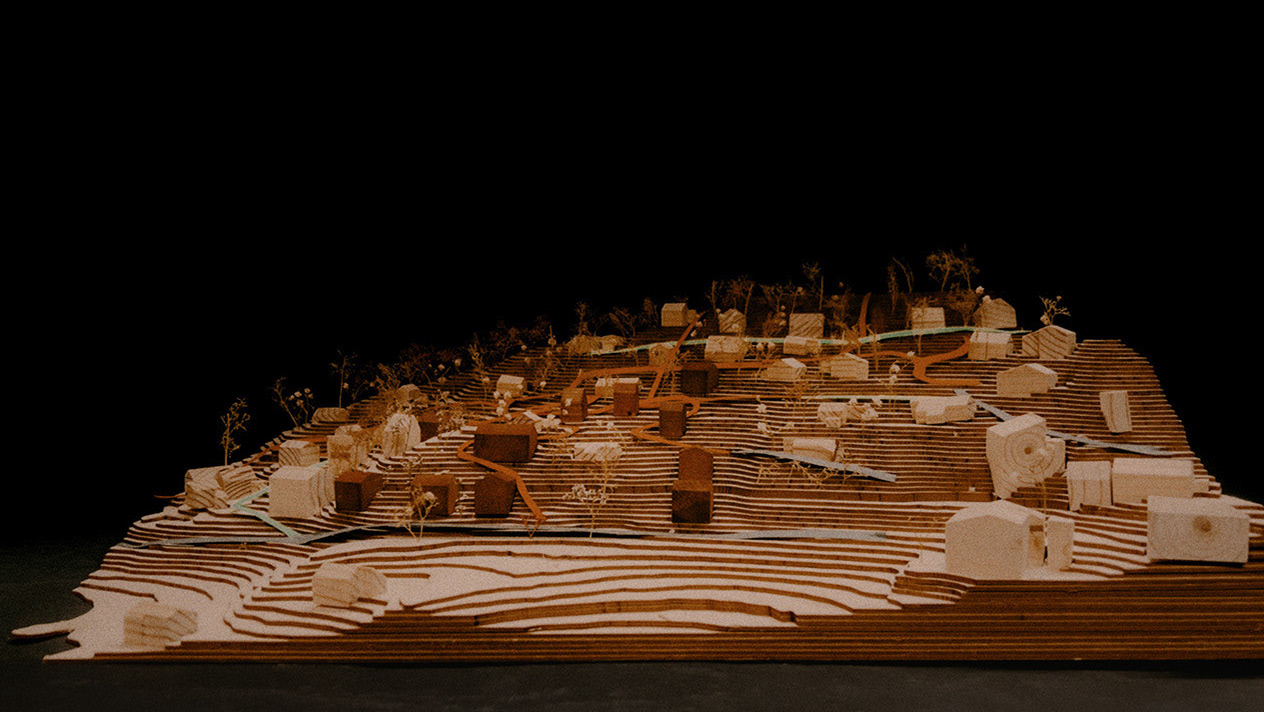
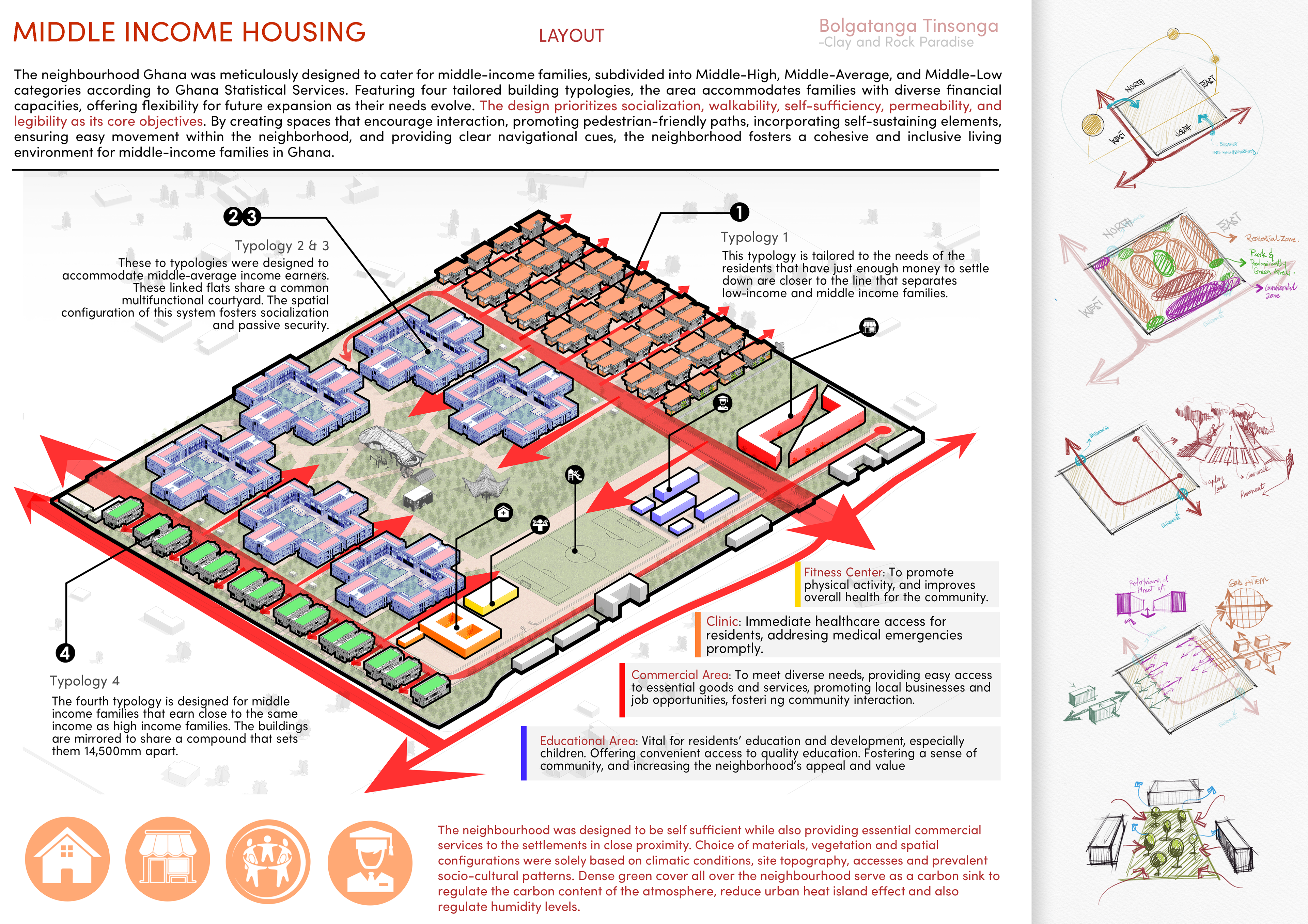
Master layout — “A neighborhood you can understand”
The masterplan is designed to be legible at first glance: a clear public heart, clear movement structure, and programs positioned so daily life doesn’t require long travel. The goal is not density for its own sake, but coherence—a settlement where people can orient themselves, meet needs locally, and grow without breaking the system.
Comfort + sustainability strategy
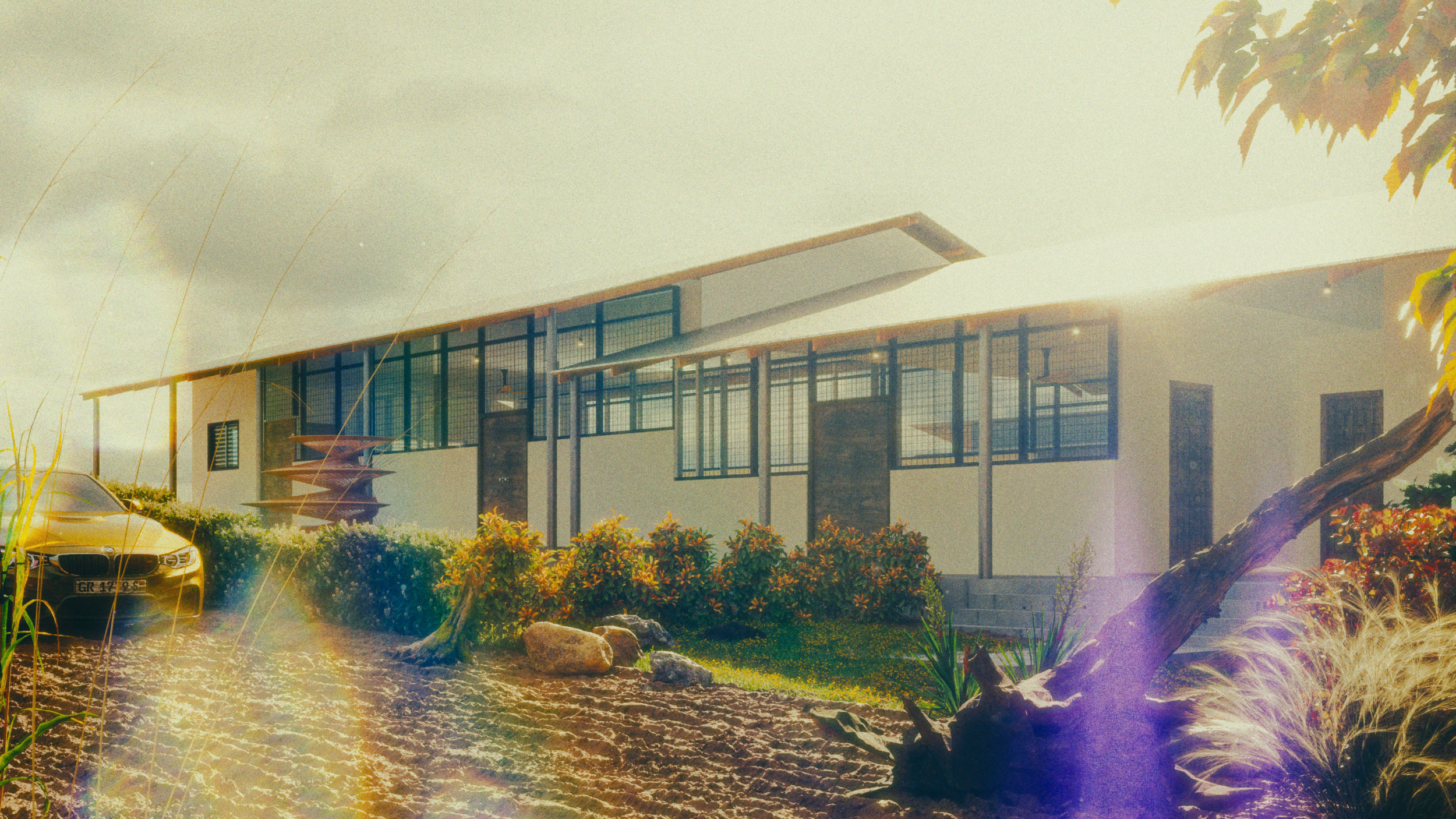
Shade-first massing: deep recesses and overhangs to reduce direct solar gain
Ventilation as default: porous courtyard organization + ventilating brick screen elements
Heat mitigation via landscape: dense planting, shaded streets, microclimate courtyards
Permeability + water logic: surfaces and planting designed to absorb/slow runoff and reduce overheating
Walkability as carbon strategy: proximity planning + cycling support reduces transport demand
Incremental resilience: growth accommodated without informal sprawl that compromises safety and infrastructure
Typologies + incremental growth — “A house that can change without collapsing its dignity”
Each typology anticipates change: extra rooms, altered family size, shifting finances, aging in place. Growth is designed as a controlled extension—guided structurally and spatially—so evolution remains safe, ordered, and compatible with the neighborhood’s overall character.
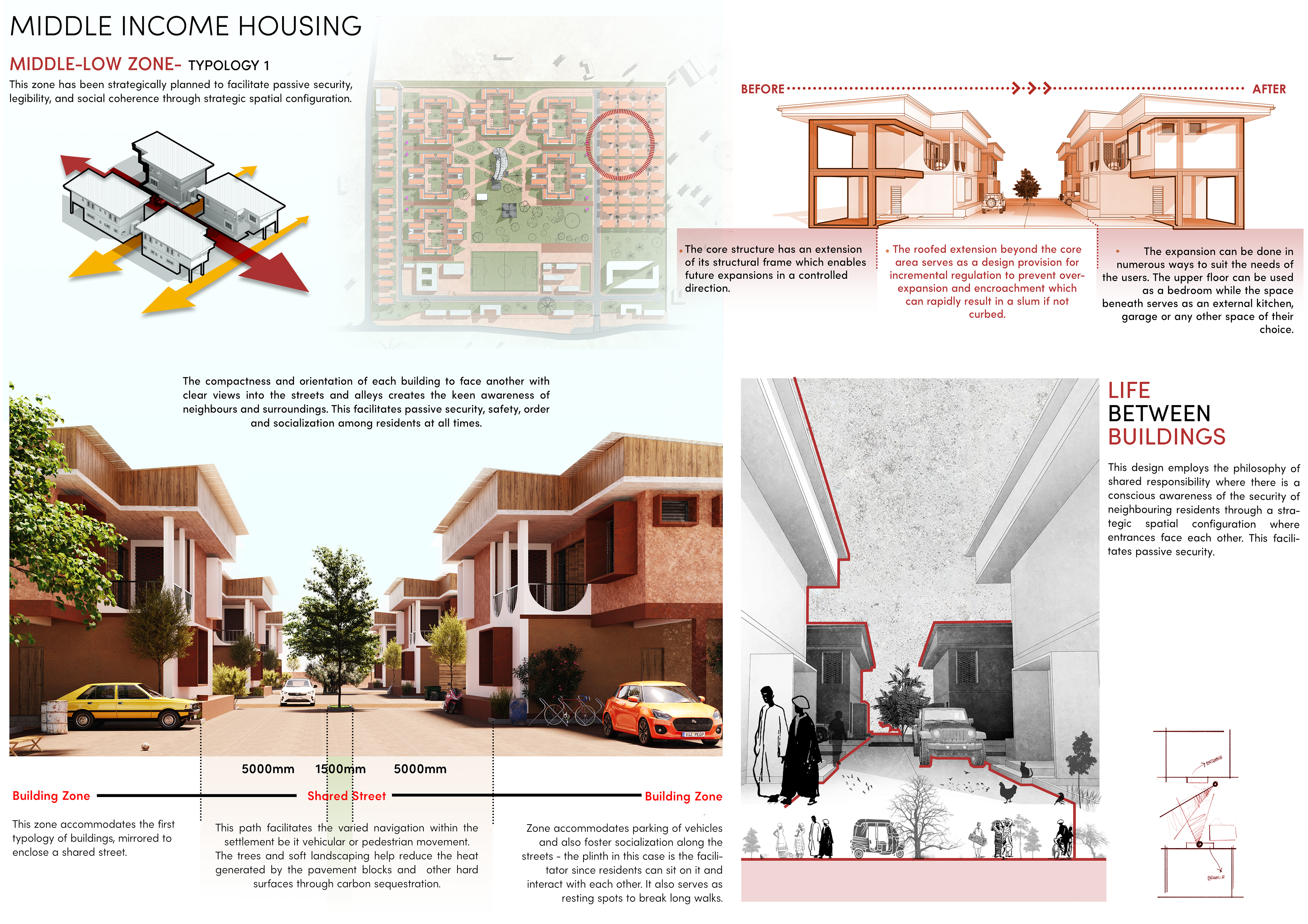
Life between buildings — “Where the real architecture happens”
The space between buildings is treated as the neighborhood’s true living room. Shared streets, tree-shaded paths, and small stops of convenience and rest are composed to encourage walking, support informal interaction, and strengthen passive security through everyday presence.