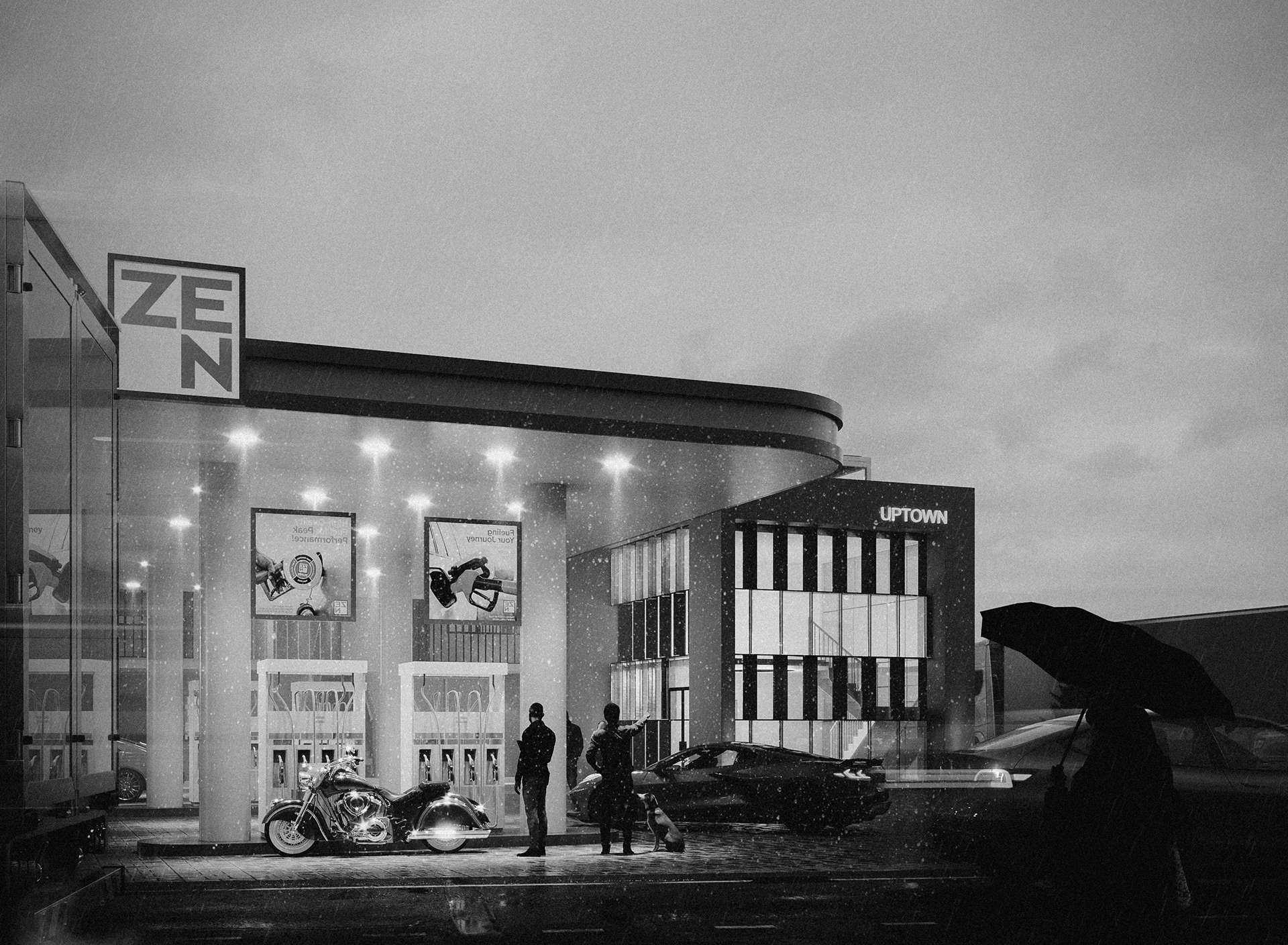
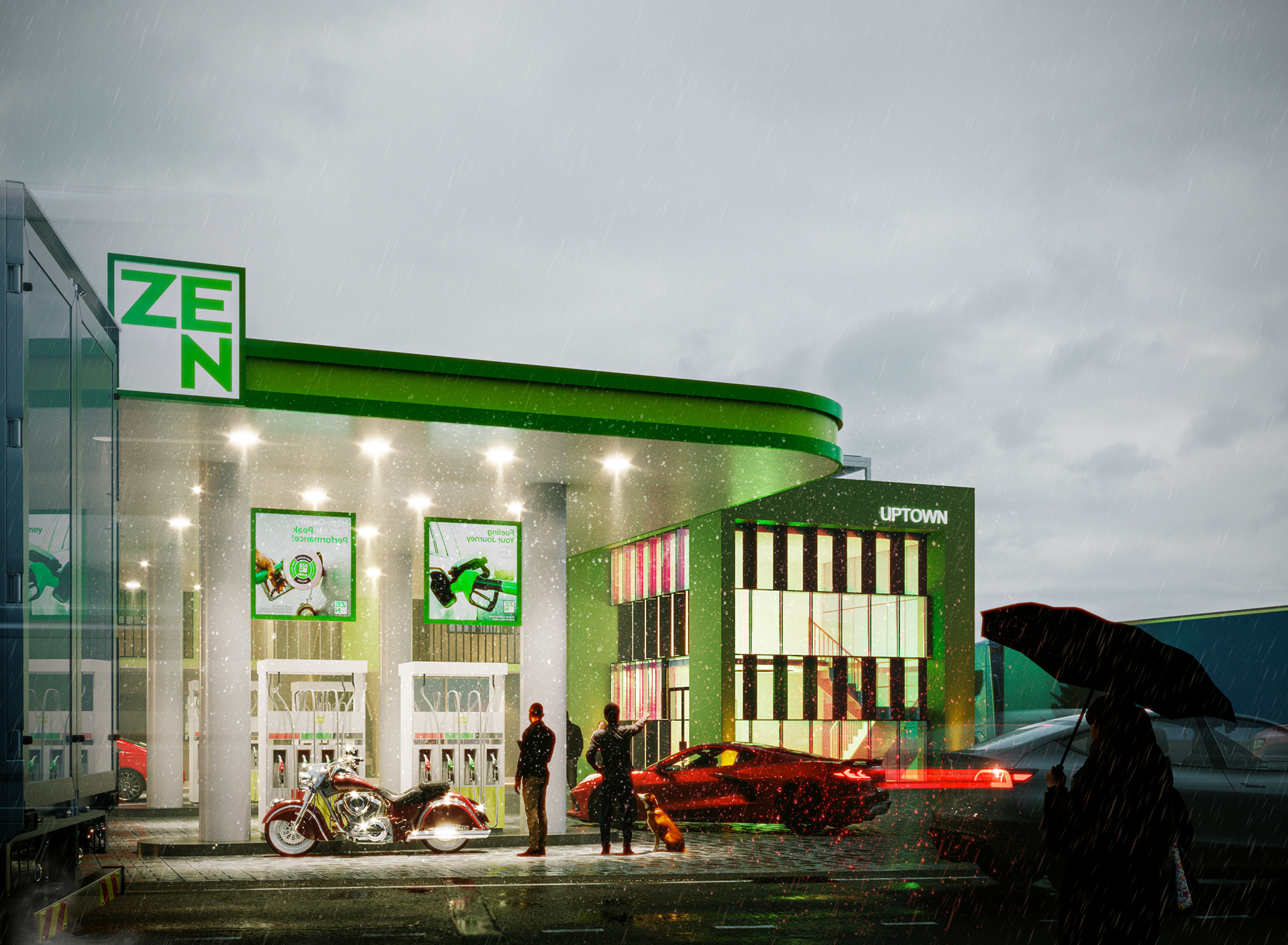
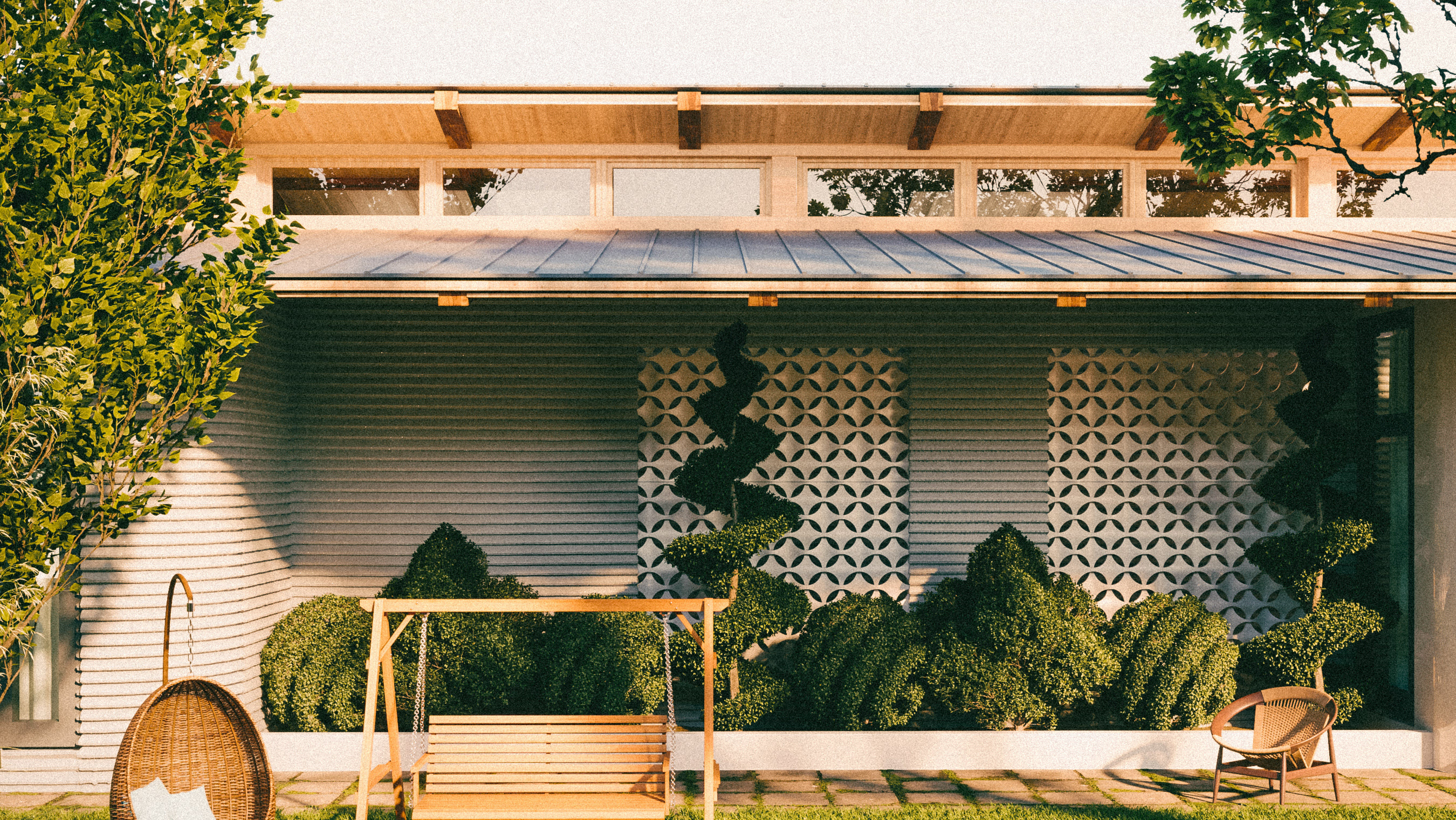
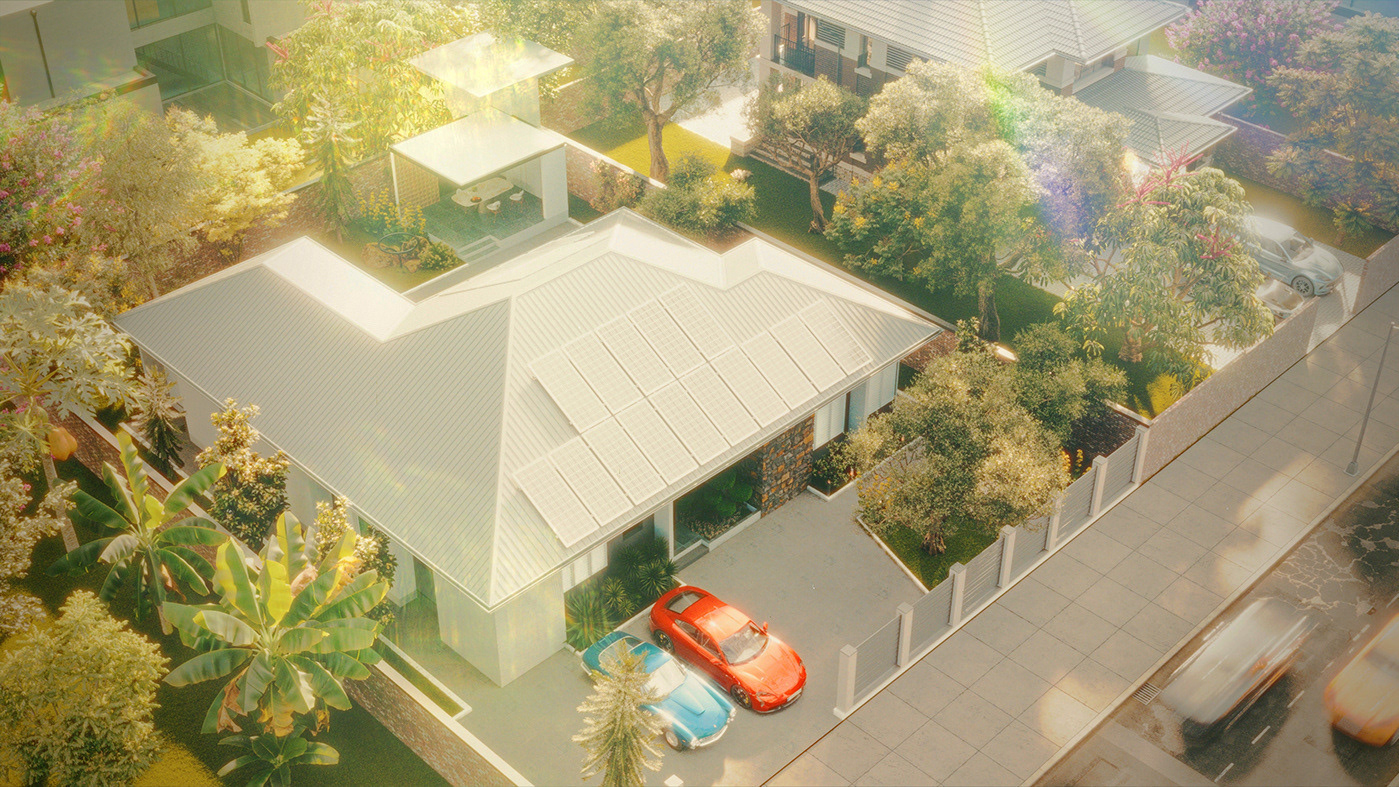
In Ayeduase, Ghana, where heat and glare can turn glass into an enemy, I developed façade options for a commercial station during my time at Nickseth Construction Ltd & BB Viderk as a Junior Architect. The principal architect had already established the building’s spatial structure; my role was to translate it into a precise digital model and then shape a façade that keeps the retail interiors visually open while performing responsibly in the climate.
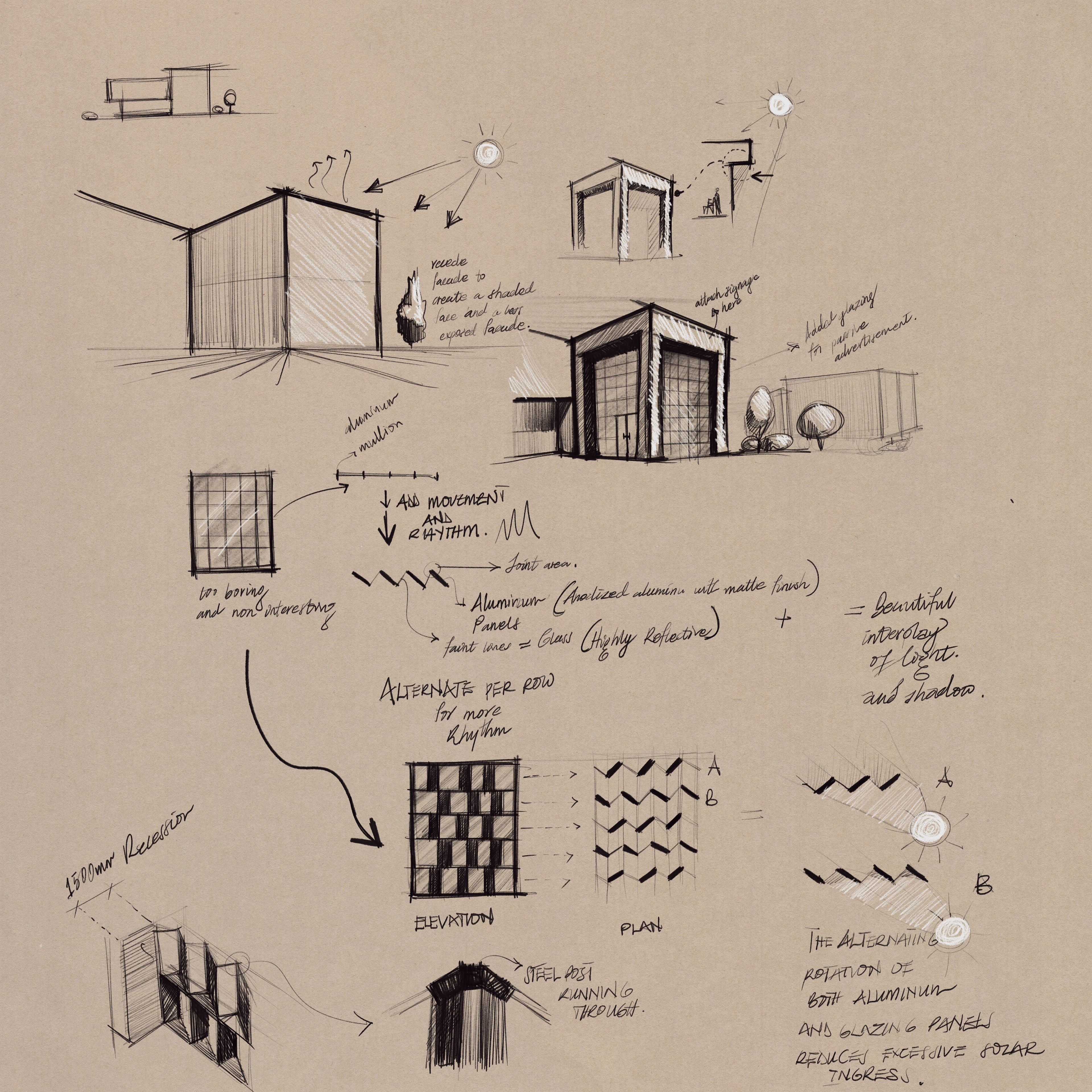
The envelope is composed as a thickened edge—overhangs, recesses, and shadow doing the heavy lifting before any technology does. Within that frame, anodized aluminium and glazing are tuned like an instrument. The glazed panels are rotated about an axis and alternated row-by-row, so the façade never sits still: it catches the sky, compresses reflections, and releases them again as you move. In daylight it becomes a calibrated mirror; at night it reads as a lit cross-section of activity—cars arriving, people pausing, commerce unfolding—without turning the building into a billboard.
This is a façade that behaves: it shades, it reveals, and it gives the street a quiet rhythm you can feel.
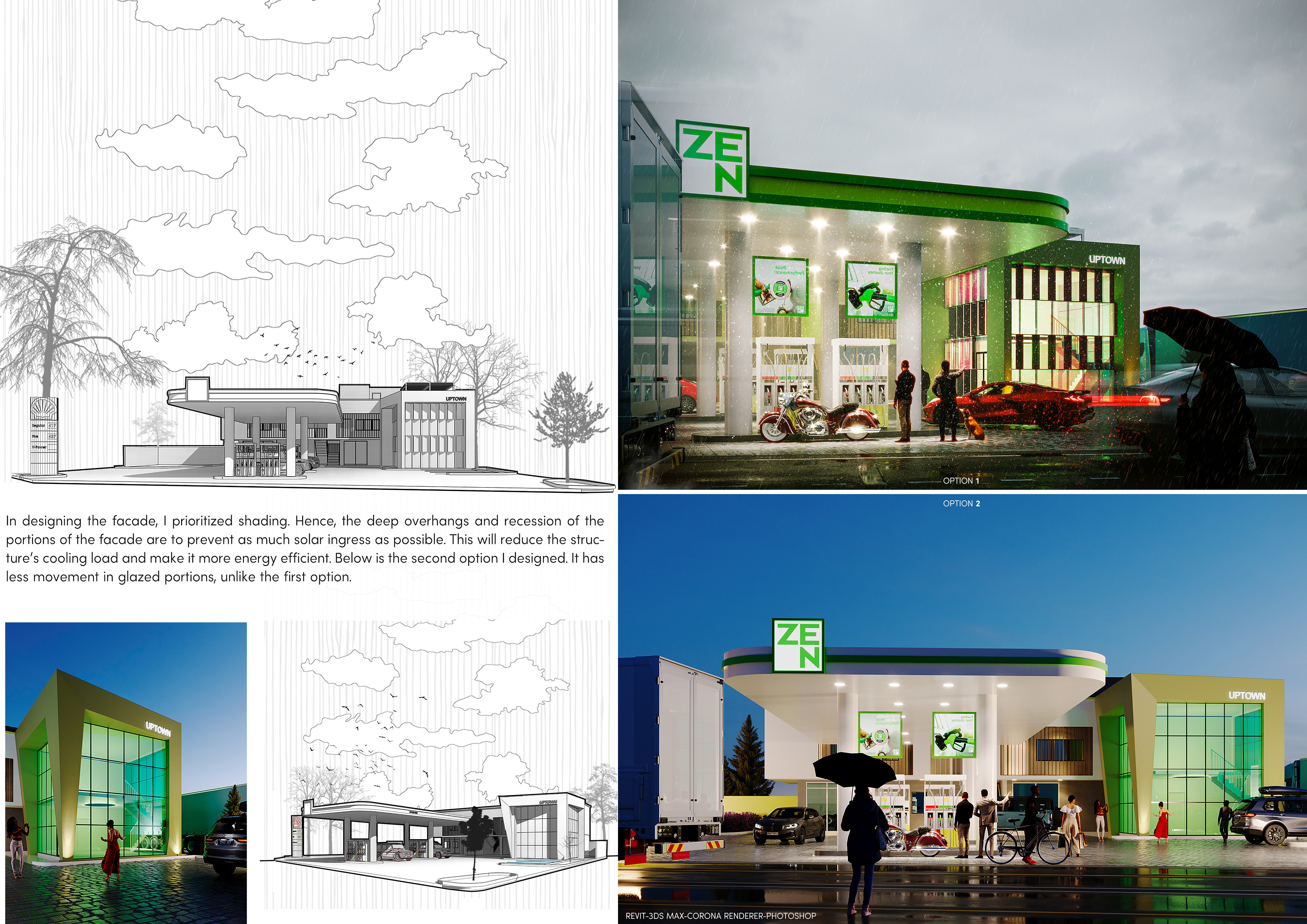
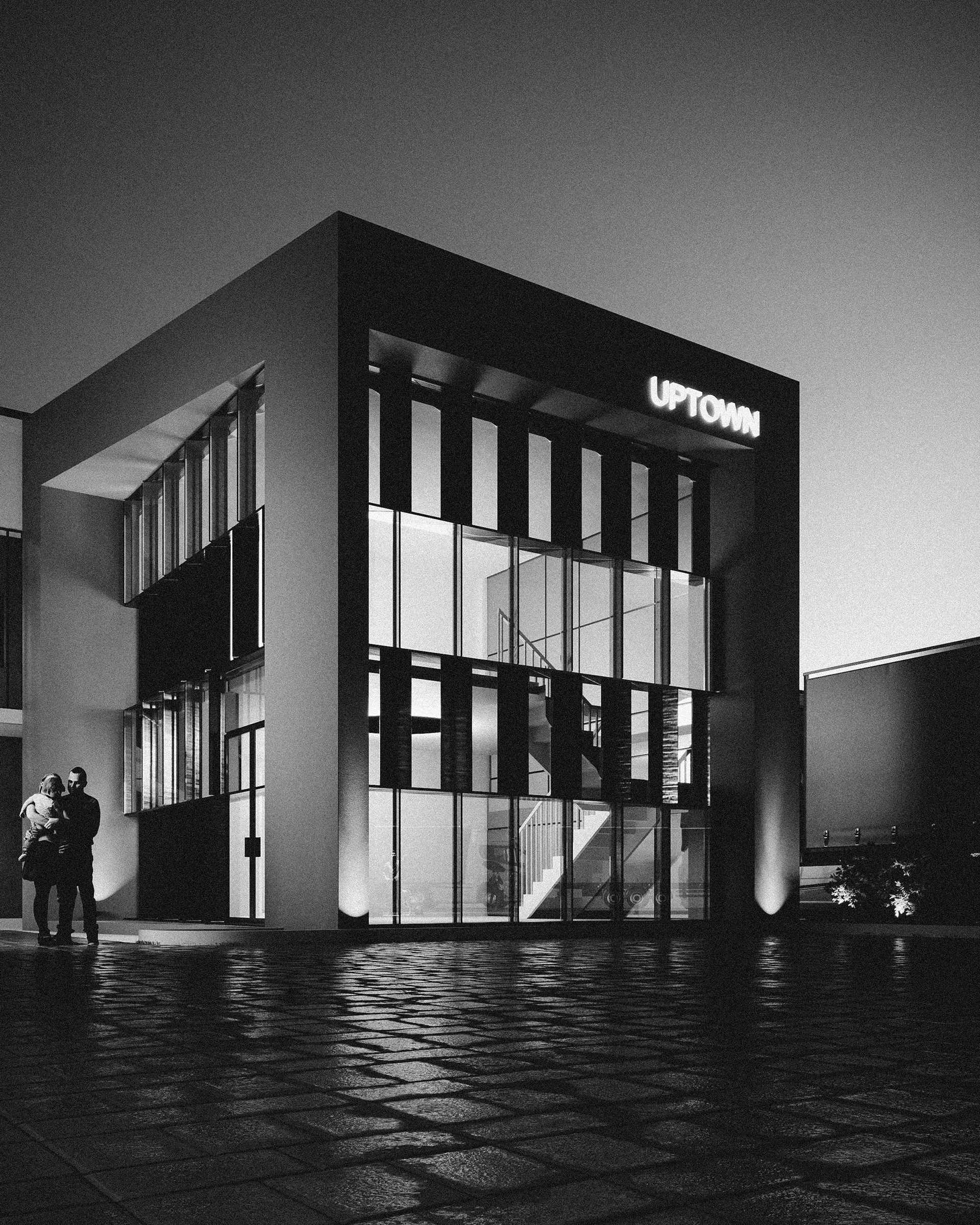
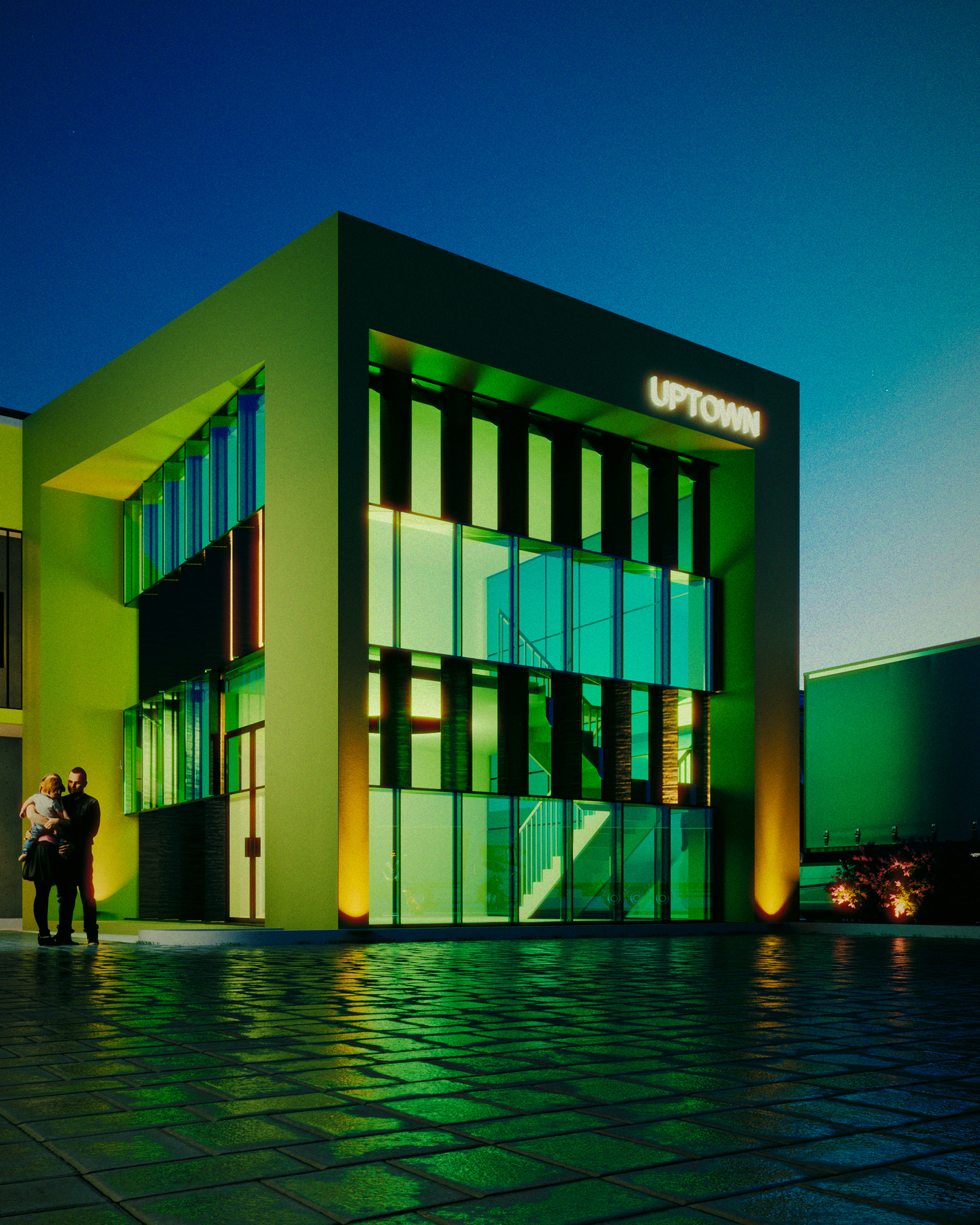
By day, the façade behaves like a calibrated instrument of light; by night, it becomes a measured lantern—quietly announcing function, movement, and life.