A fallen tree becomes a civic marker—memory kept tactile
A tree can be a piece of infrastructure without ever being called one. It cools, shelters, holds birds, breaks glare, and quietly shapes where people choose to linger. When such a tree falls, a campus doesn’t only lose shade—it loses a familiar civic presence. This project begins with that loss and asks a simple question: What if the tree’s afterlife could still serve the community?
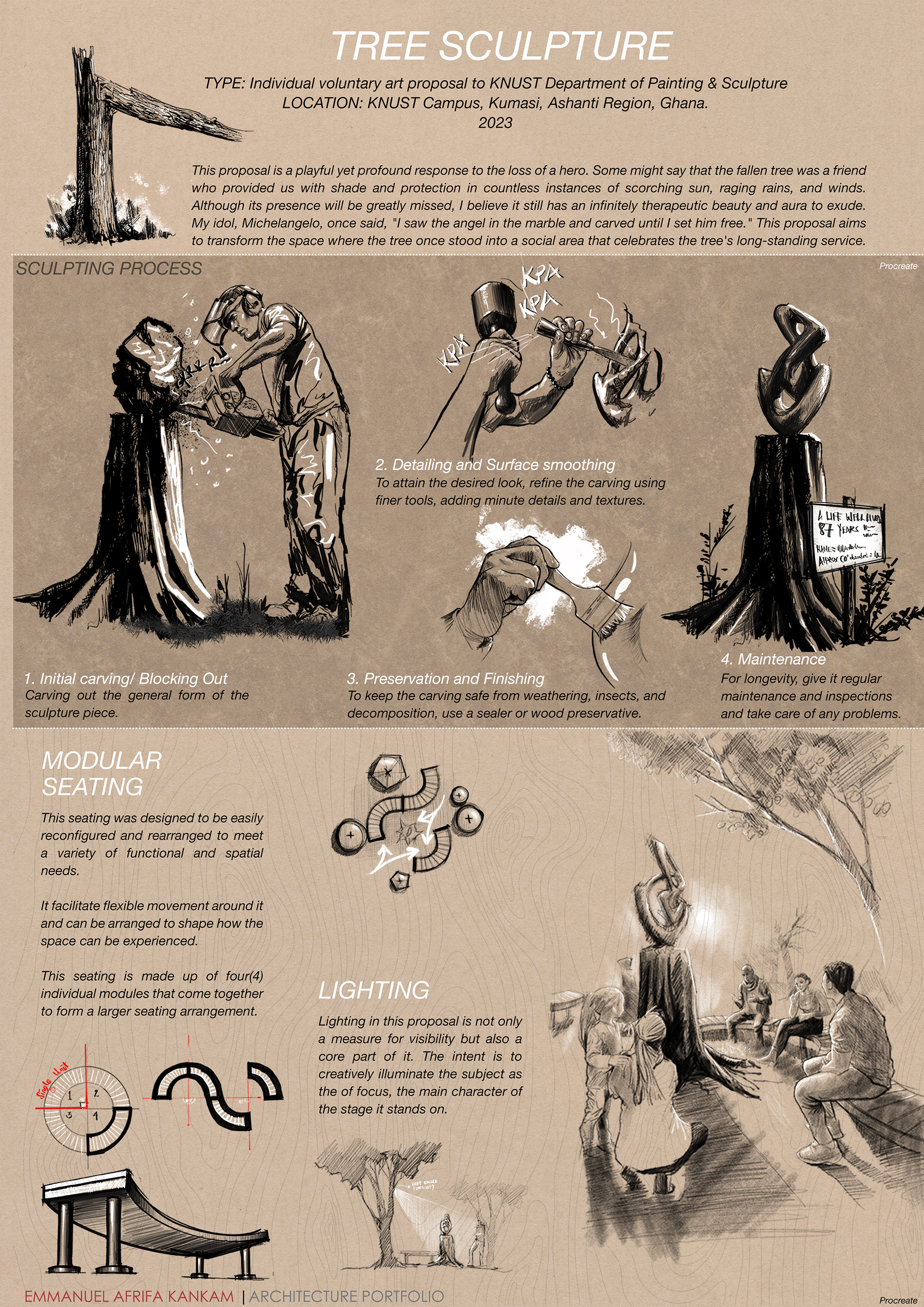
Tree Sculpture proposes a small, dignified intervention on the KNUST campus: the fallen tree’s stump is retained as the anchor of a new social clearing. Instead of erasing the remains, the proposal treats them as a material already rich with meaning—weathered, tactile, and therapeutic. The sculpture is imagined as something “released” from the wood rather than imposed onto it: the stump becomes both pedestal and memory, a marker that continues to hold attention and offer calm.
The surrounding space is deliberately modest, because the tree is the protagonist. I introduced four modular seating segments that can be recomposed depending on need—forming an open circle for group discussion, a broken ring for informal seating, or a looser arrangement that preserves quiet distance. This flexibility is important: public life is not one activity, and a campus needs places that can host multiple moods without being redesigned each time.
Lighting completes the gesture. At night, the sculpture is illuminated as the focal point—an everyday beacon that turns the clearing into a safe, legible place to meet, wait, and reflect. The result is not a monument in the heavy sense; it is a small act of continuity: a place where loss is acknowledged, material is respected, and community is gently invited back into the shade.
Artist’s statement (Tree Sculpture)
When the tree fell, it didn’t stop being part of the campus—it simply changed state. This proposal treats the remaining wood as a material already carrying time: seasons, shade, conversations held beneath its canopy, and the quiet protection it offered during harmattan sun and sudden rains. Rather than erase that presence, I chose to translate it—to carve a form that continues the tree’s service in a new language, and to shape the ground around it into a small public room. The modular seating acknowledges that community is never one fixed arrangement; it shifts, gathers, disperses, and gathers again. Light extends the work into the evening, not as spectacle, but as care—so remembrance becomes usable, safe, and gently shared. In this way, the project is less about replacing a lost tree than about honoring its afterlife: a modest act of continuity where craft, ecology, and public life meet.
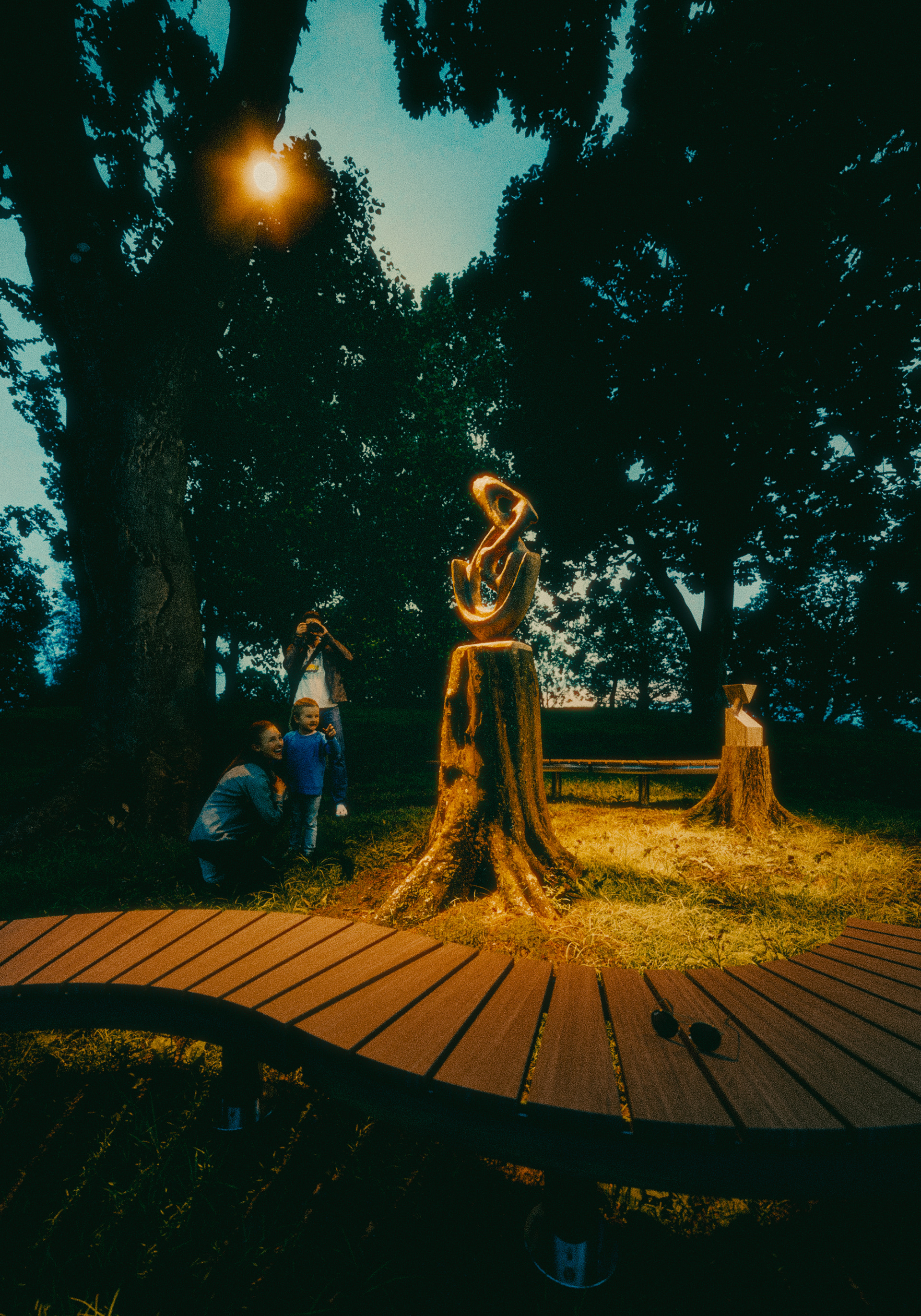
Night condition: light makes the sculpture readable and the clearing safe.
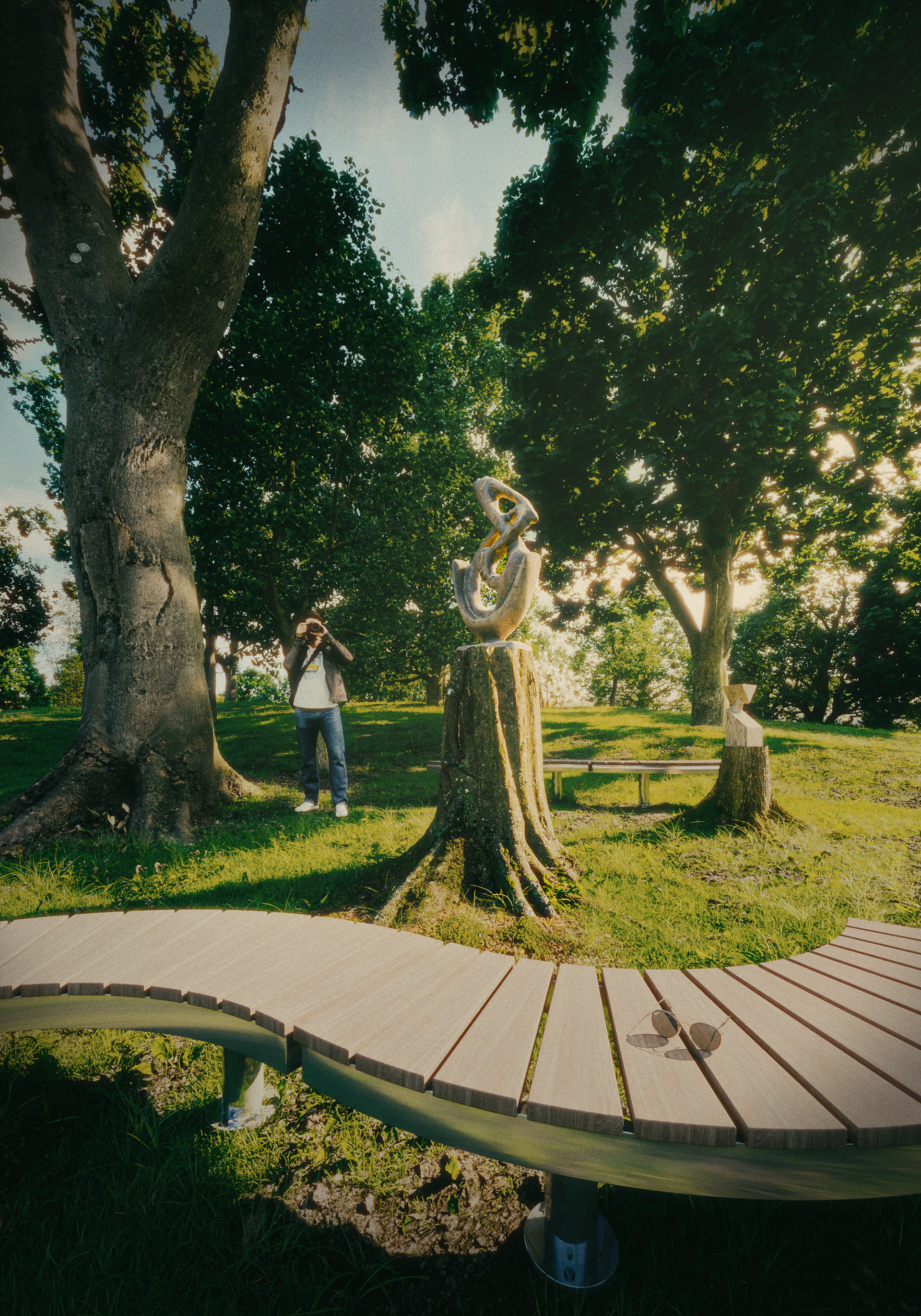
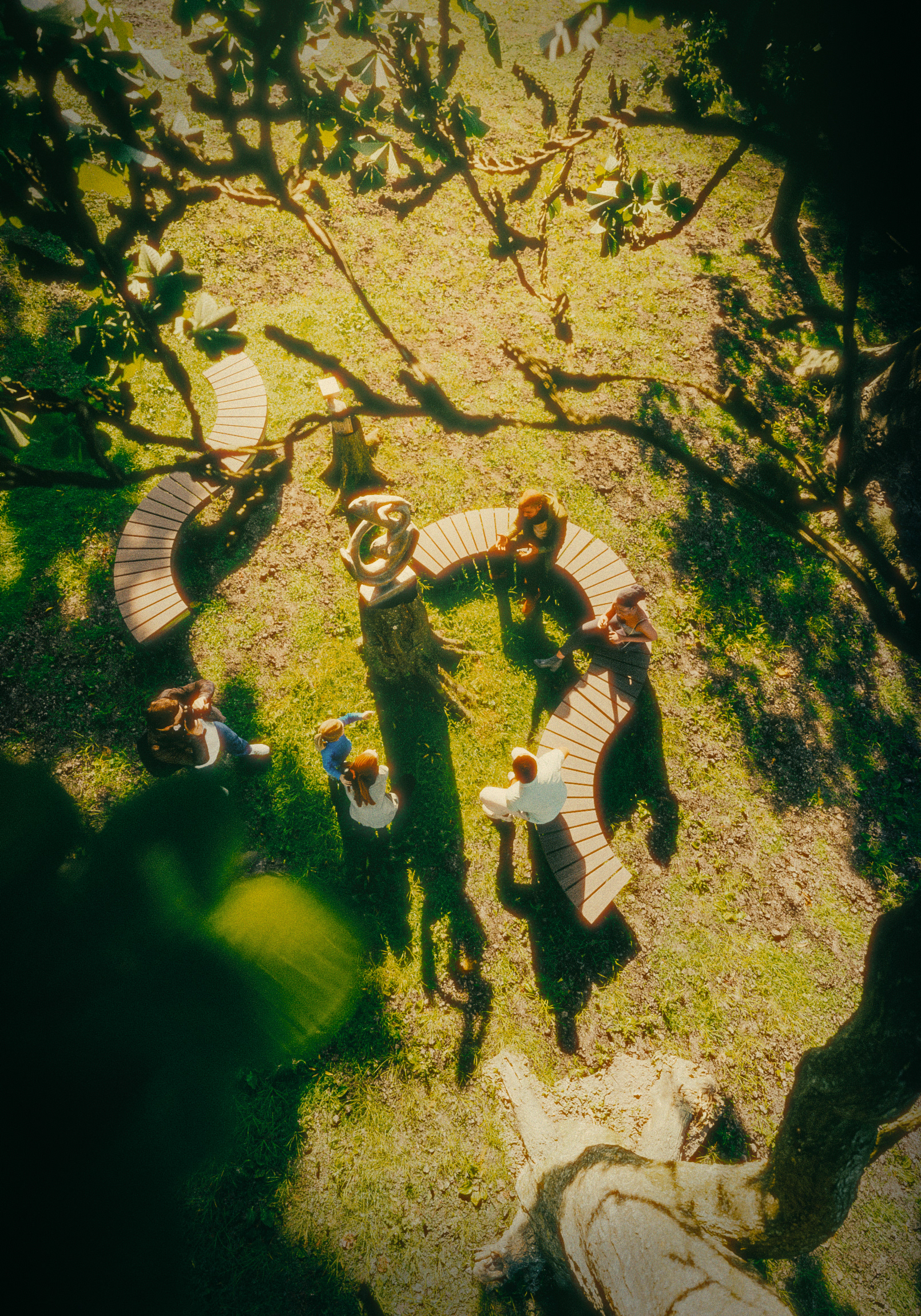
A small public room under the canopy—designed for pause, not performance.