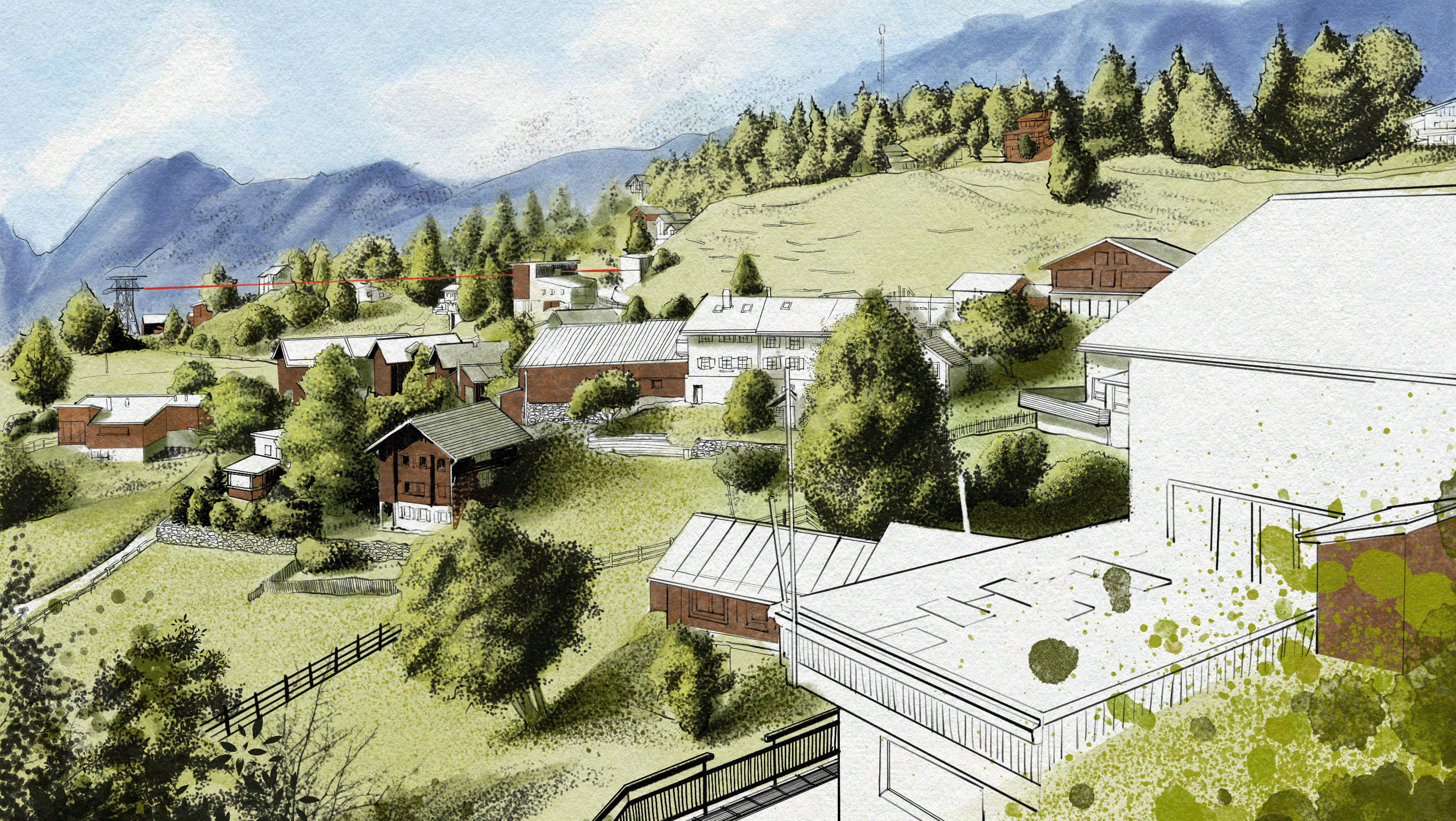
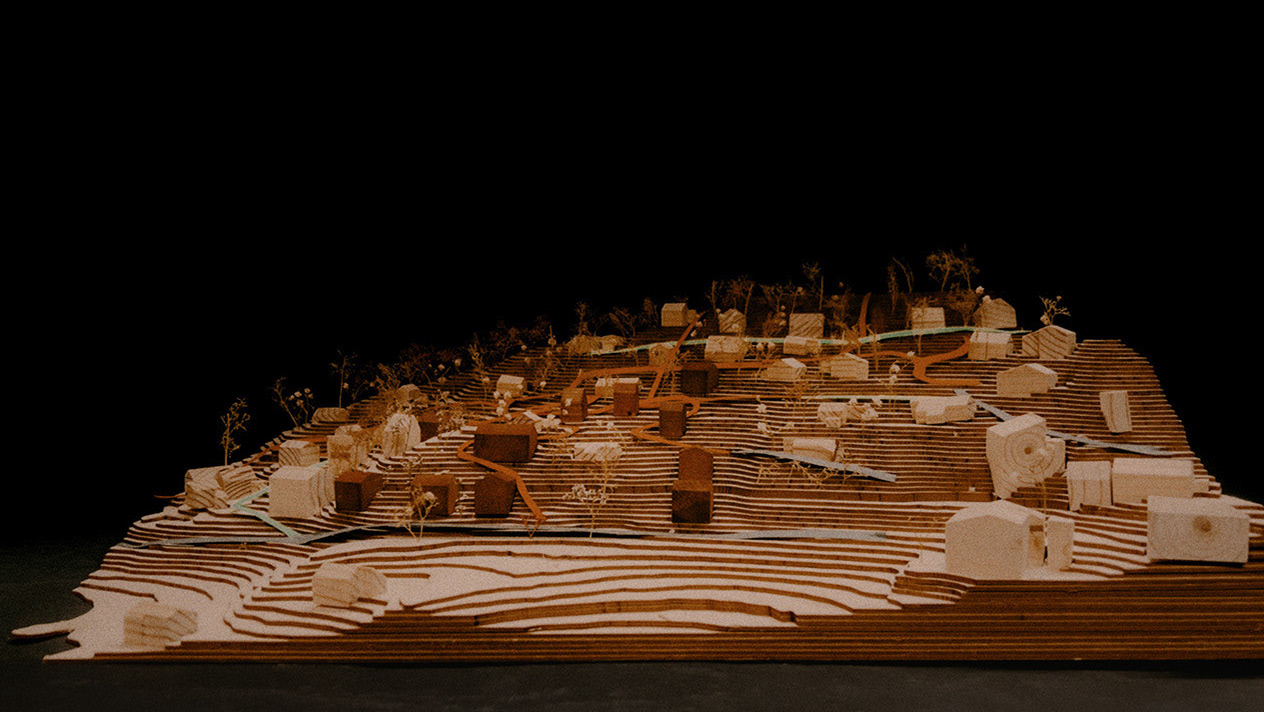
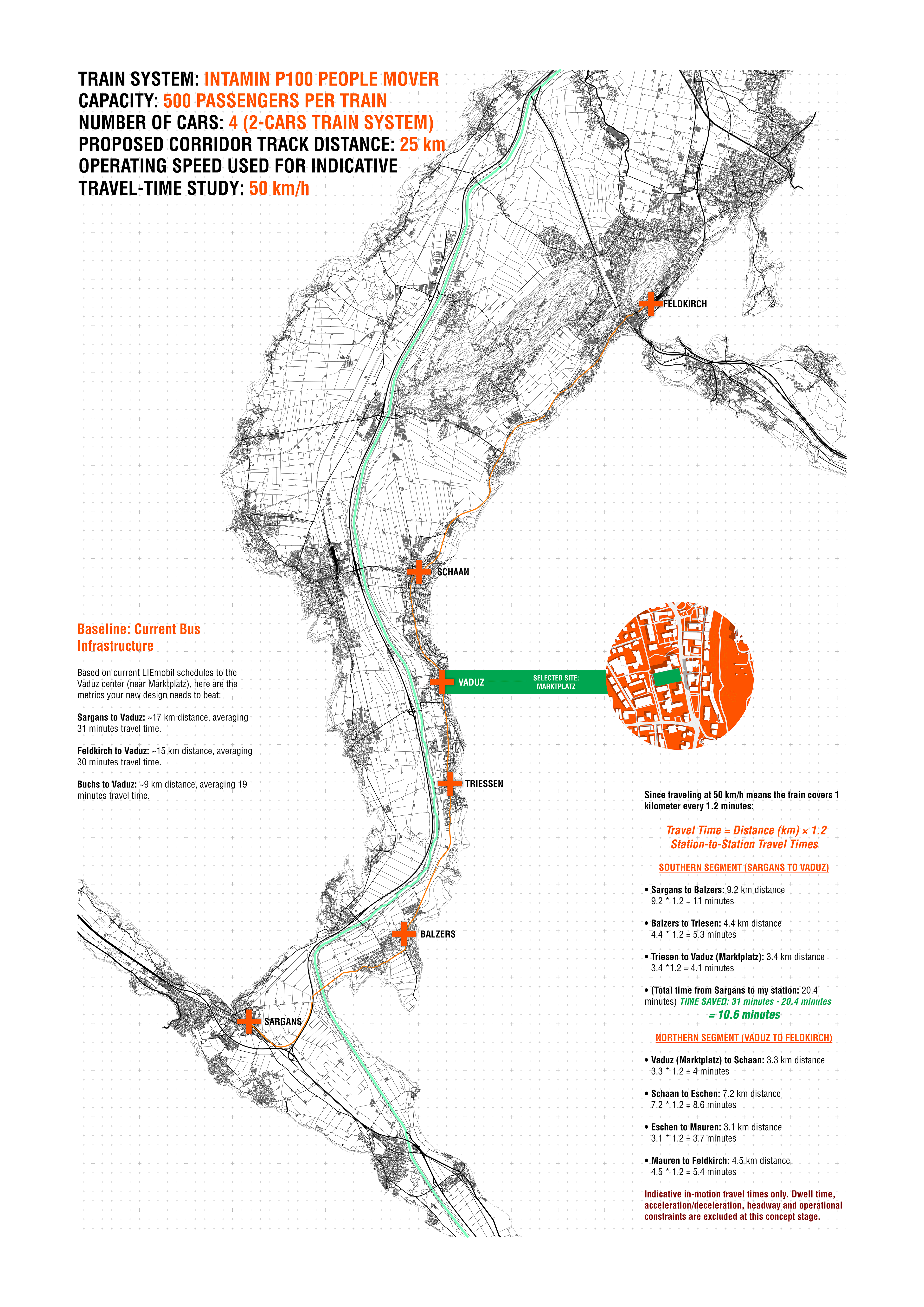
"A Better Way Home" is a cross-border infrastructural intervention designed to reconcile regional transit demands with environmental stewardship. Facing the ecological and visual vulnerabilities of the alpine valley landscape, the project establishes a 25-kilometer regional monorail corridor connecting Sargans, Switzerland, and Feldkirch, Austria. By shifting commuter travel from private vehicles to a low-impact elevated rail system, the design offers a scalable blueprint for carbon-conscious, cross-border mobility.
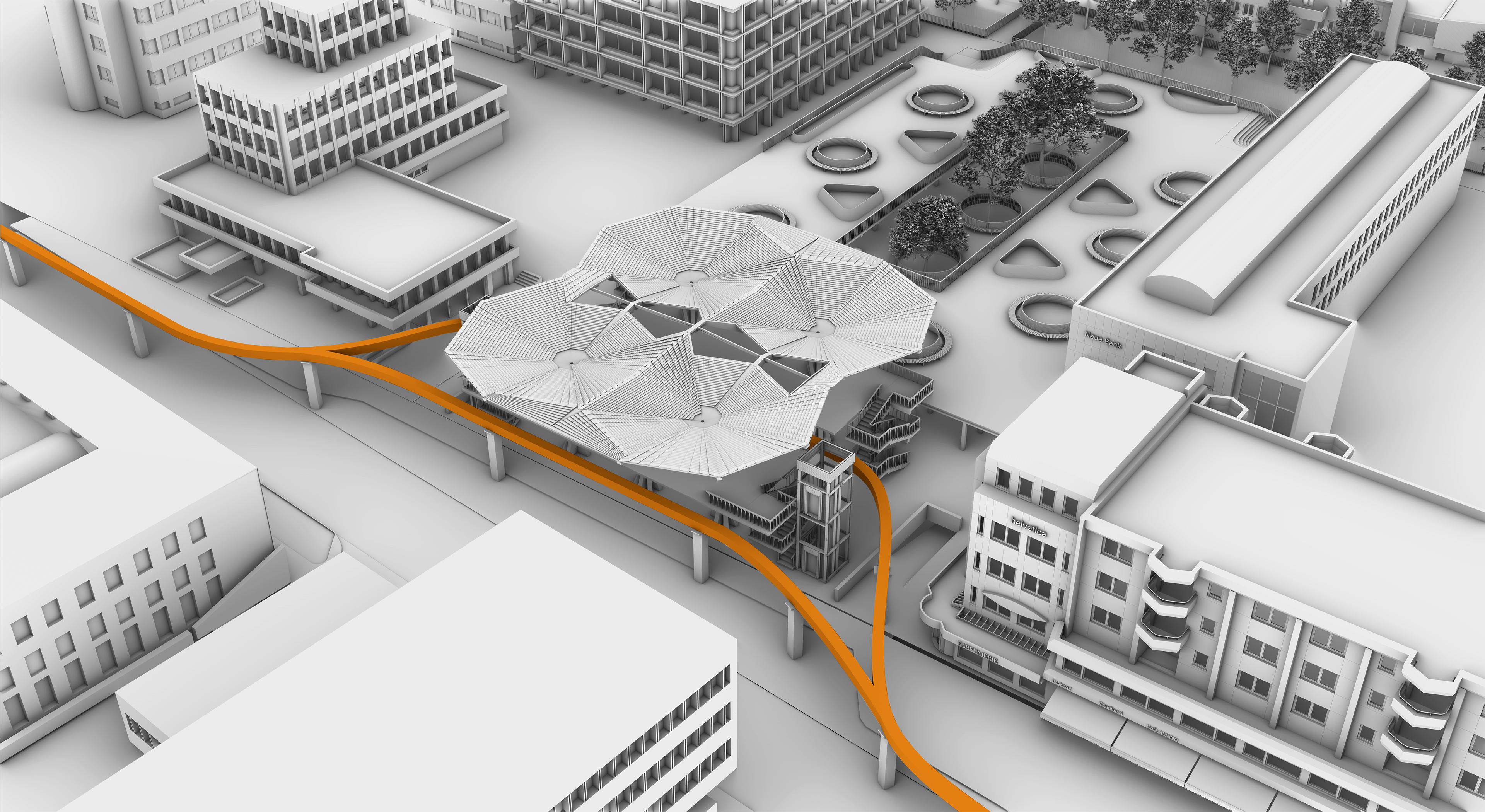
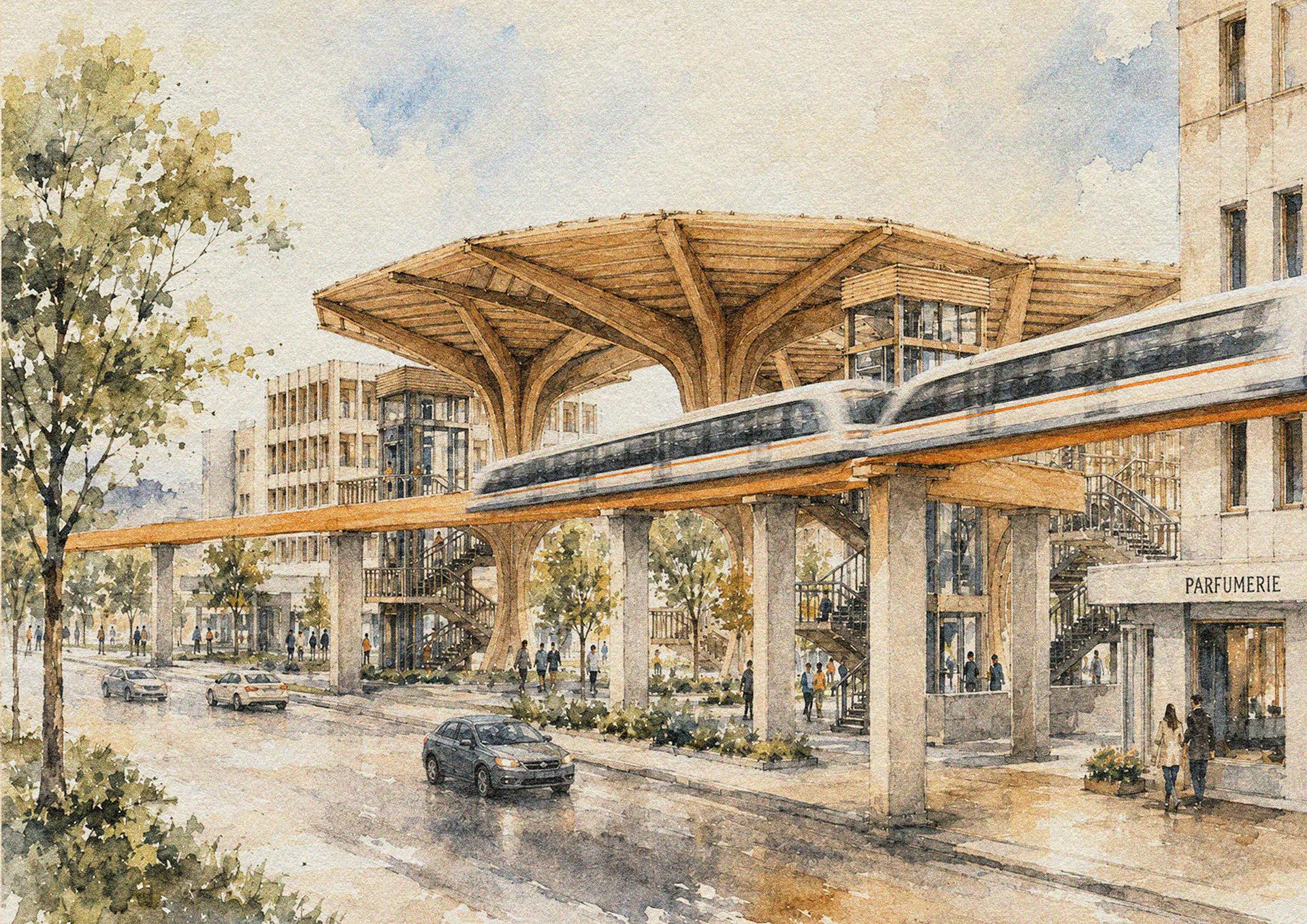
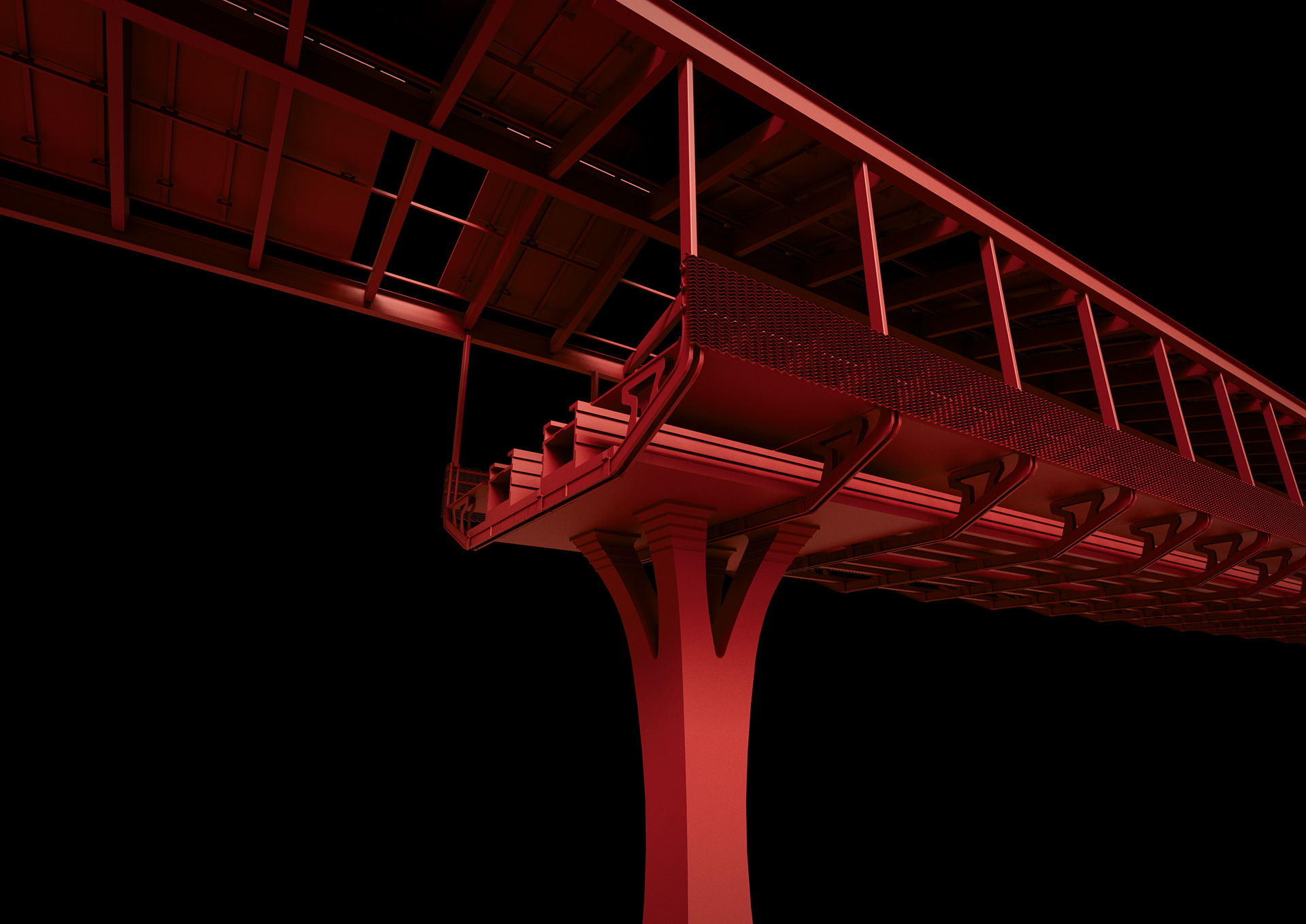
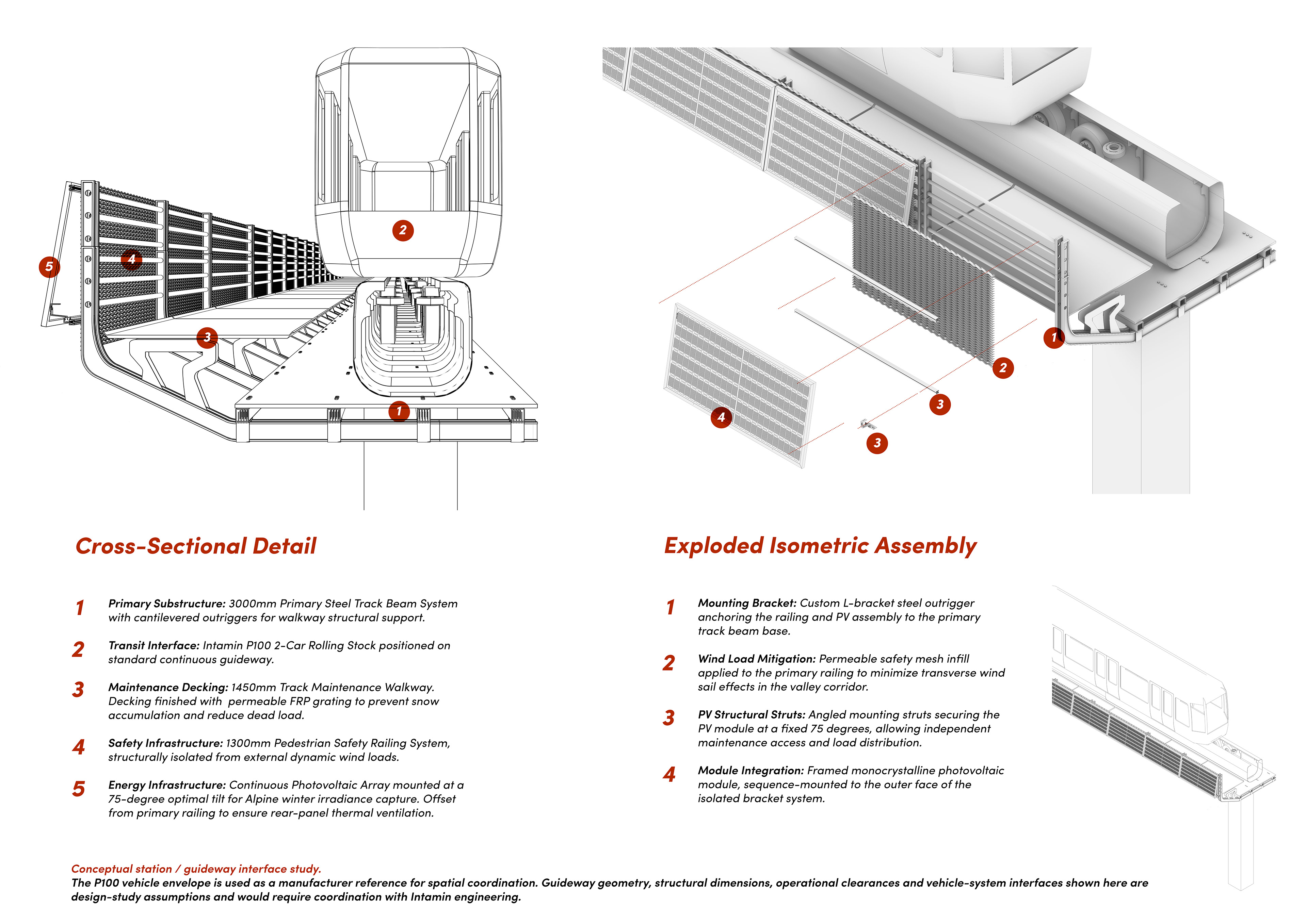
This is an independent academic mobility and station-integration study exploring how an Intamin P100 People Mover could be integrated into a cross-border corridor between Sargans and Feldkirch. The work focuses on route and station integration, passenger circulation, guideway and building interfaces, maintenance access, technical detailing, physical prototyping, and visual communication.
The project is unaffiliated with Intamin; the P100 is used as a manufacturer reference for an academic design study.
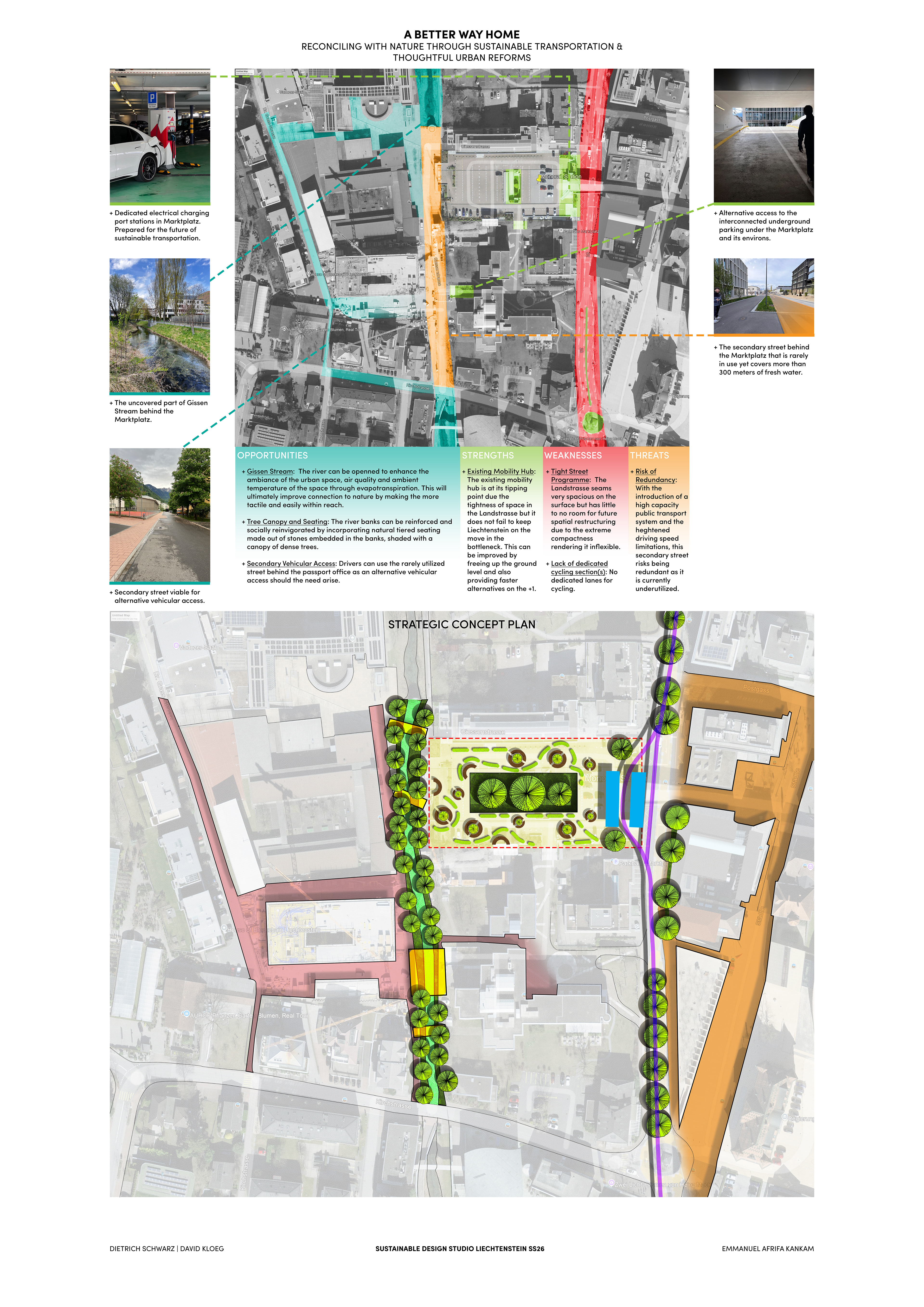
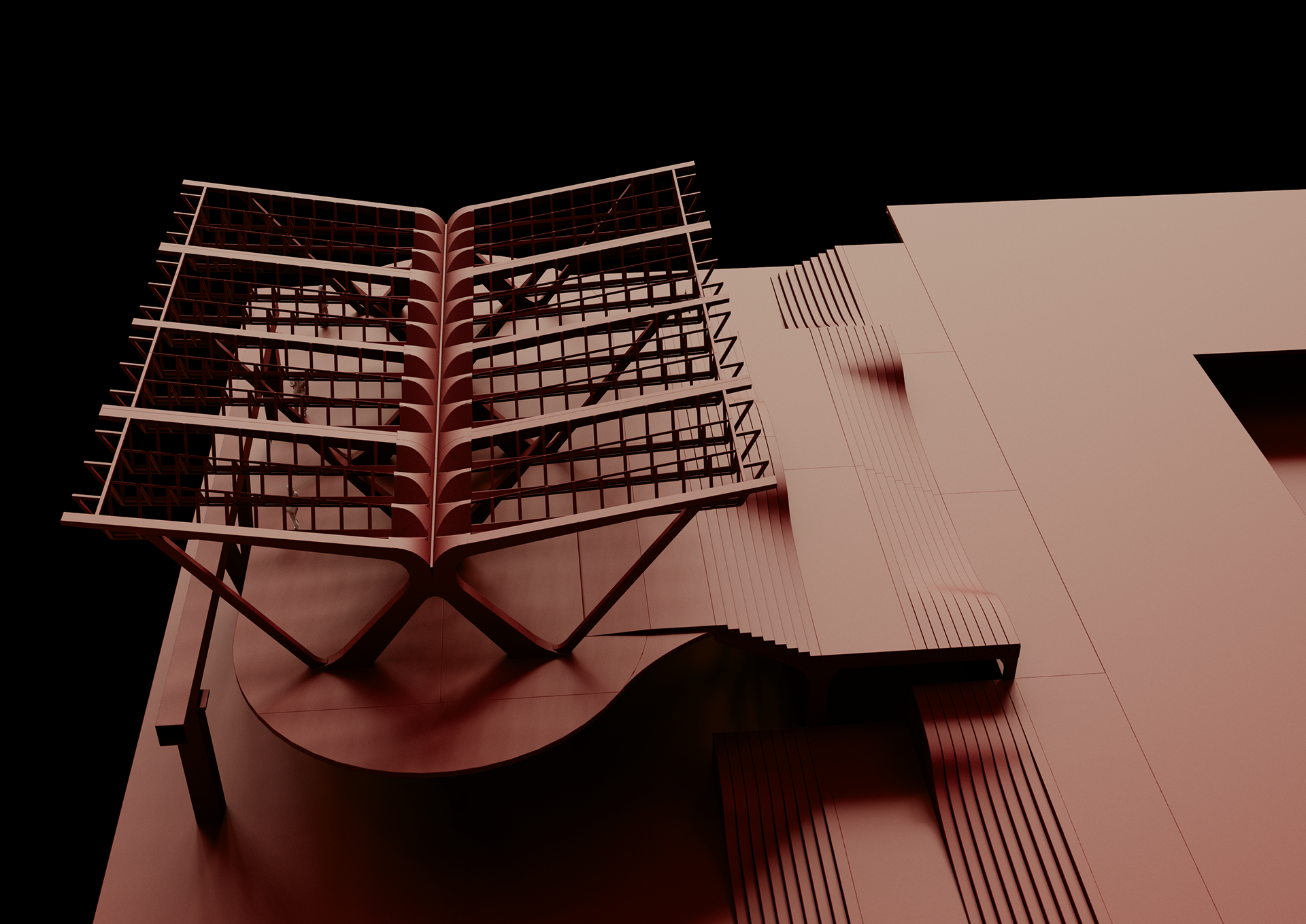
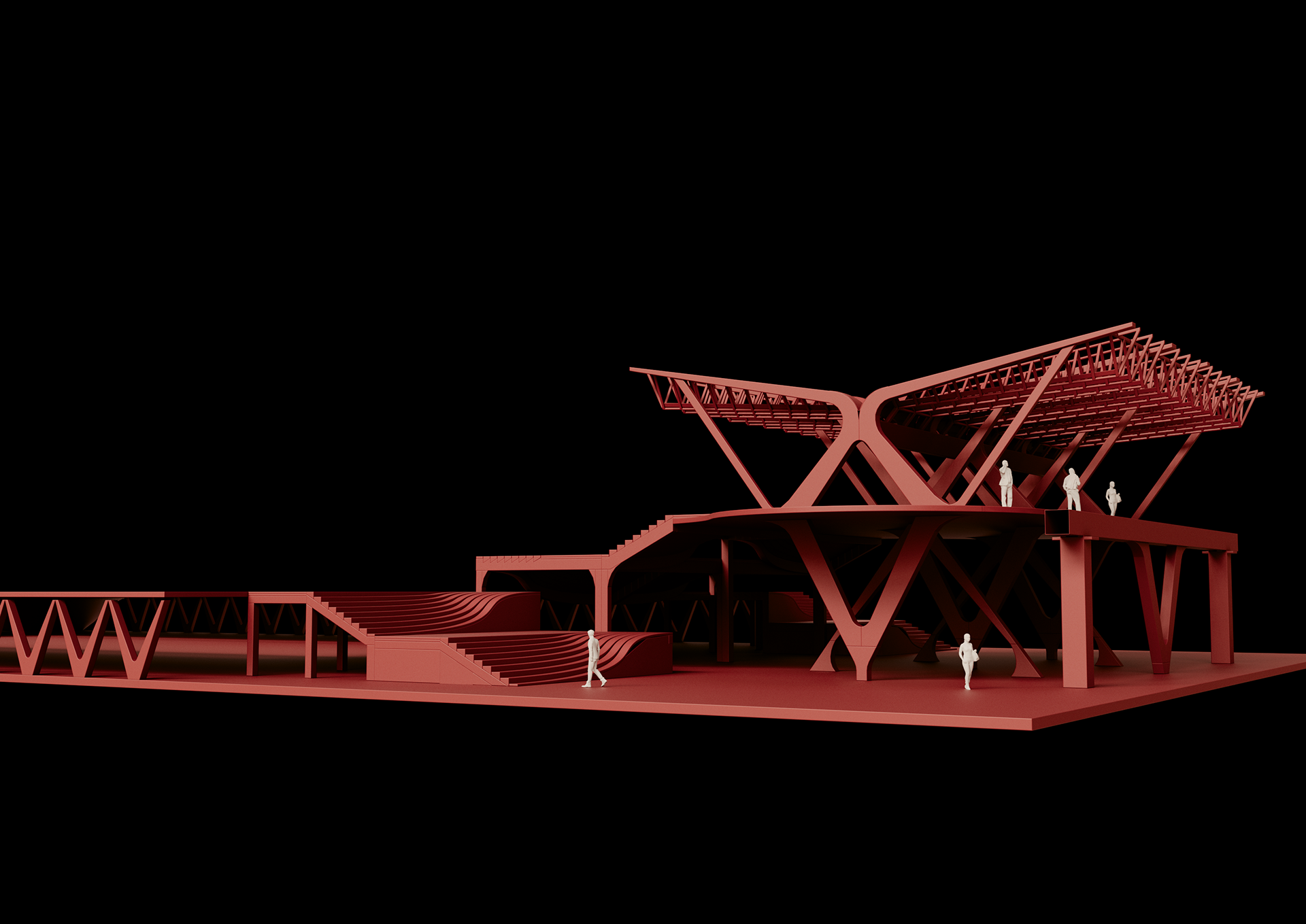
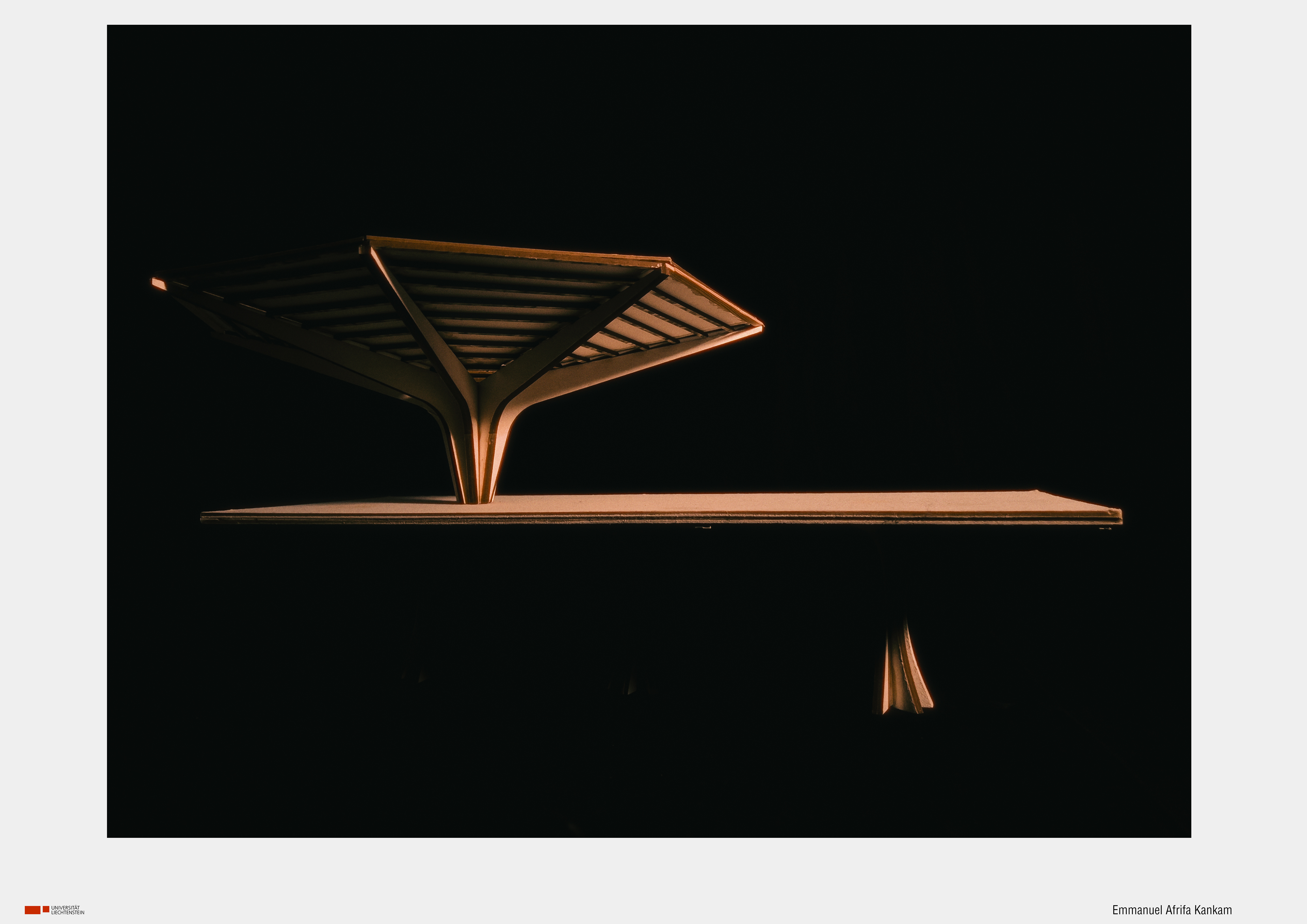
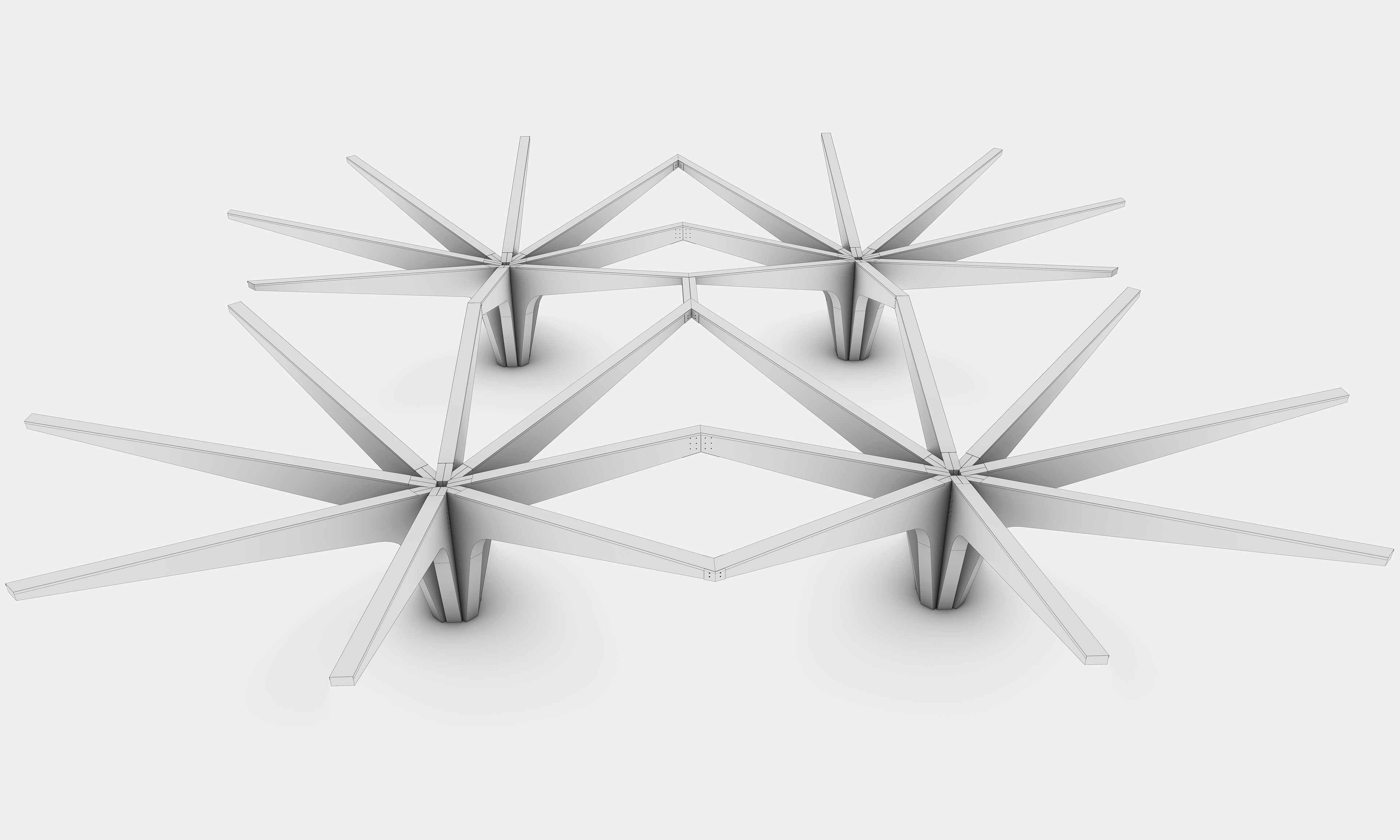
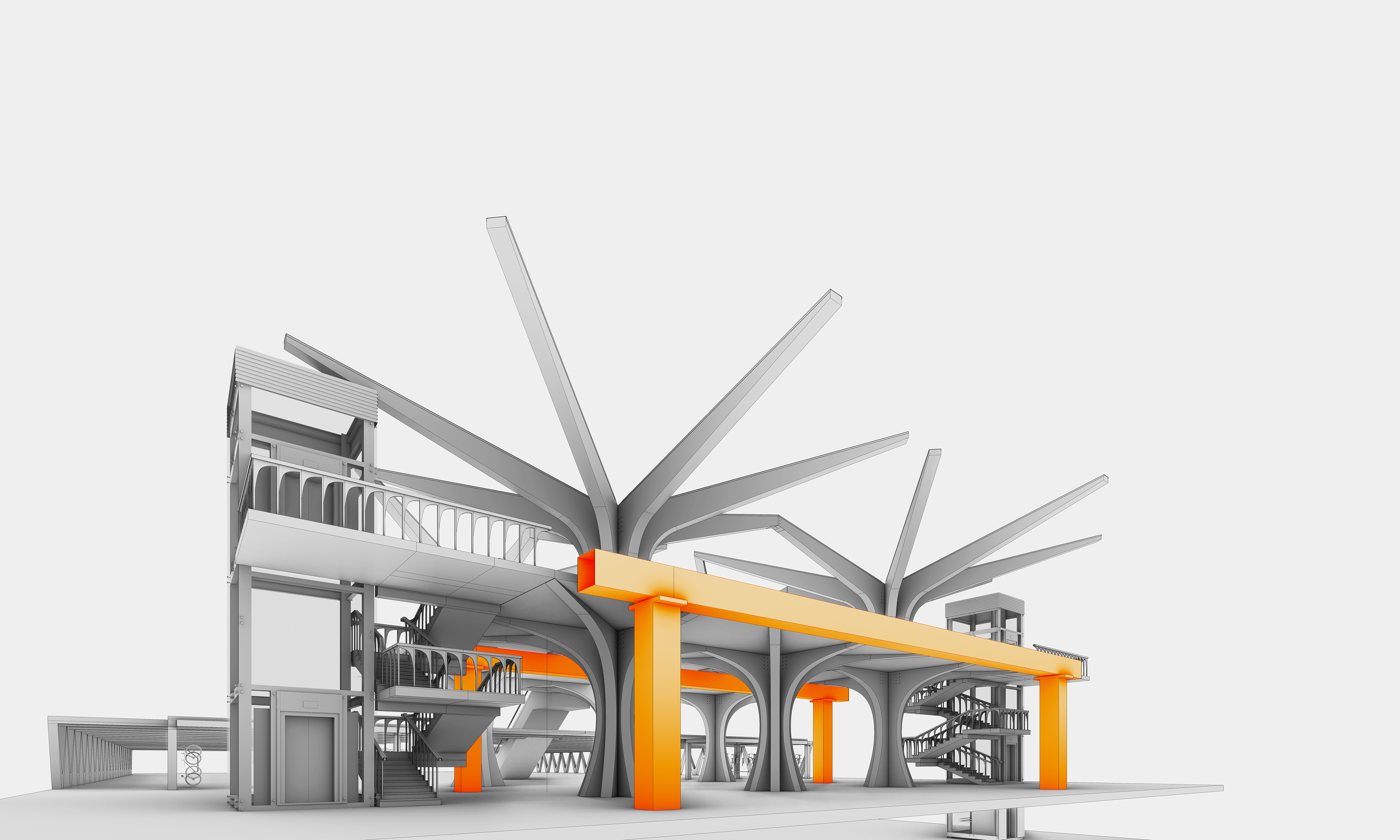
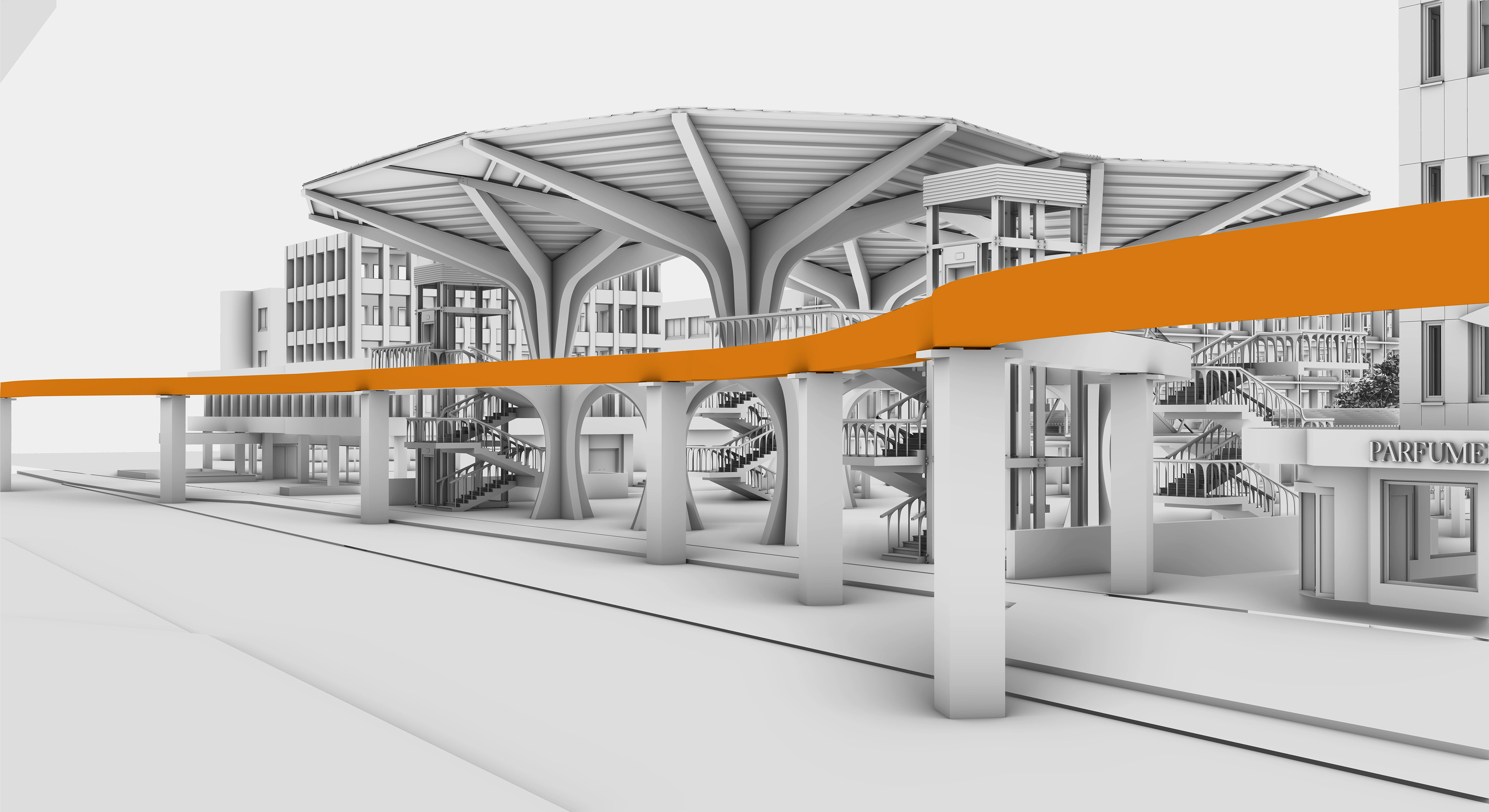
Vaduz Marktplatz Hub: Urban Integration & Station Architecture
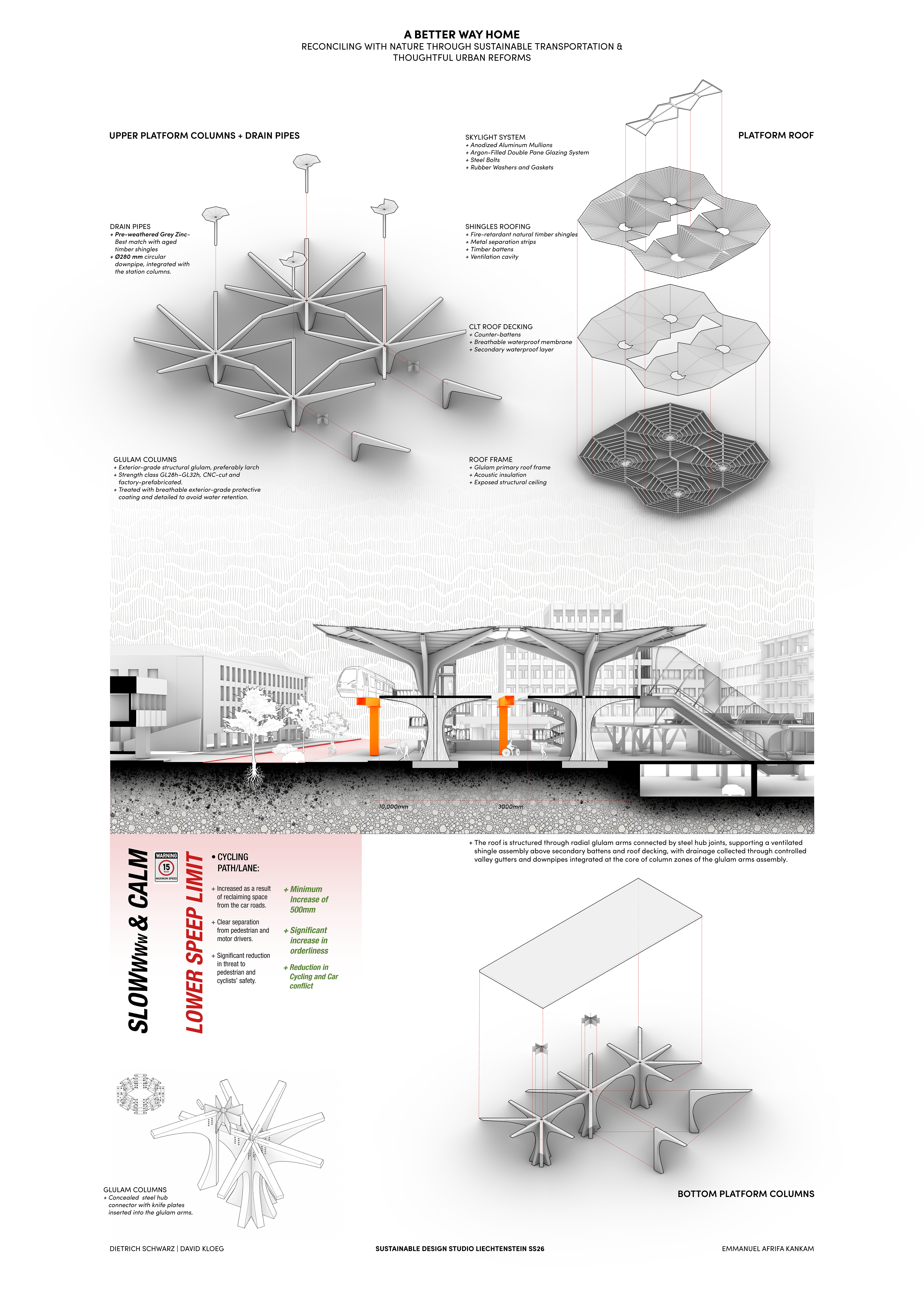
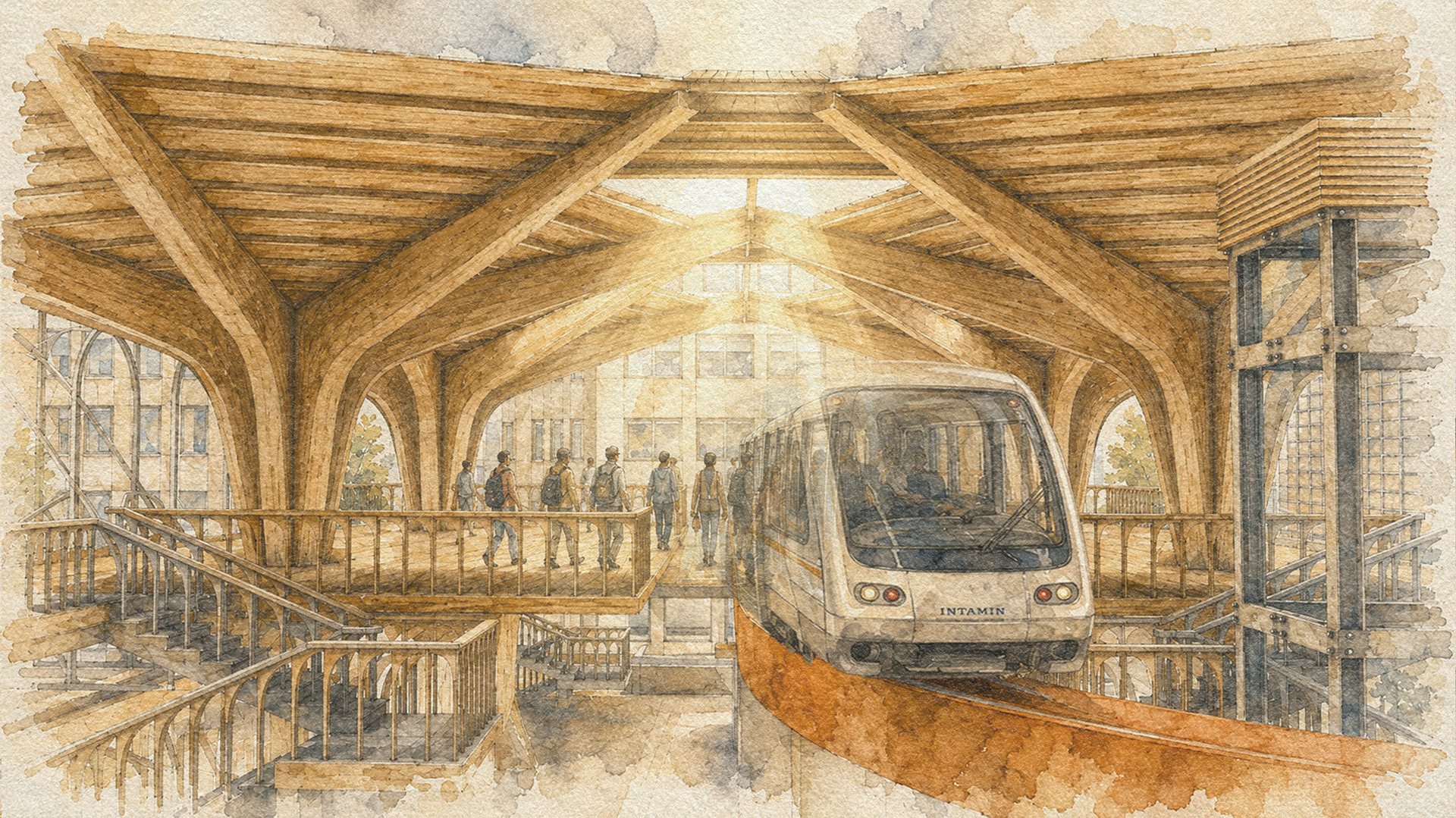
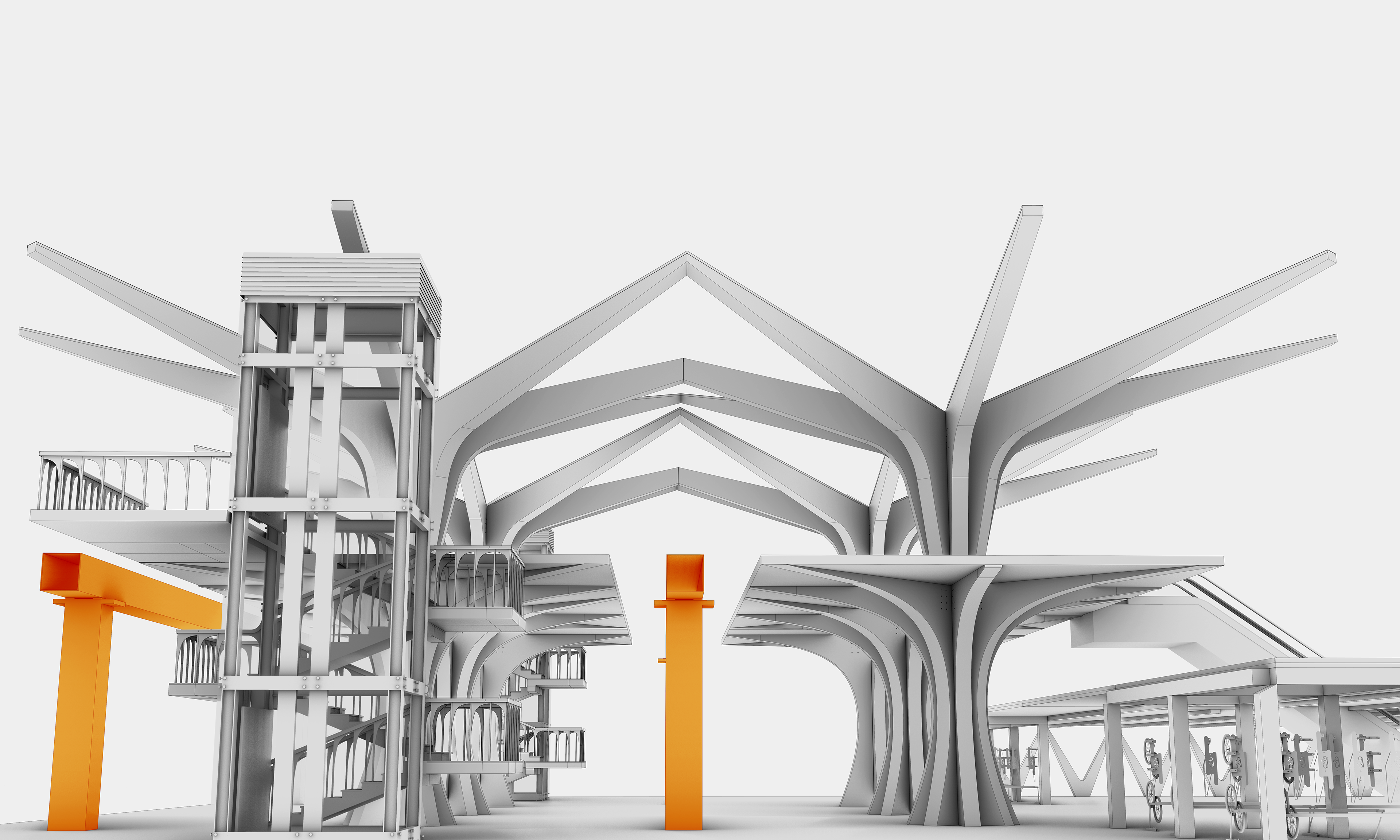
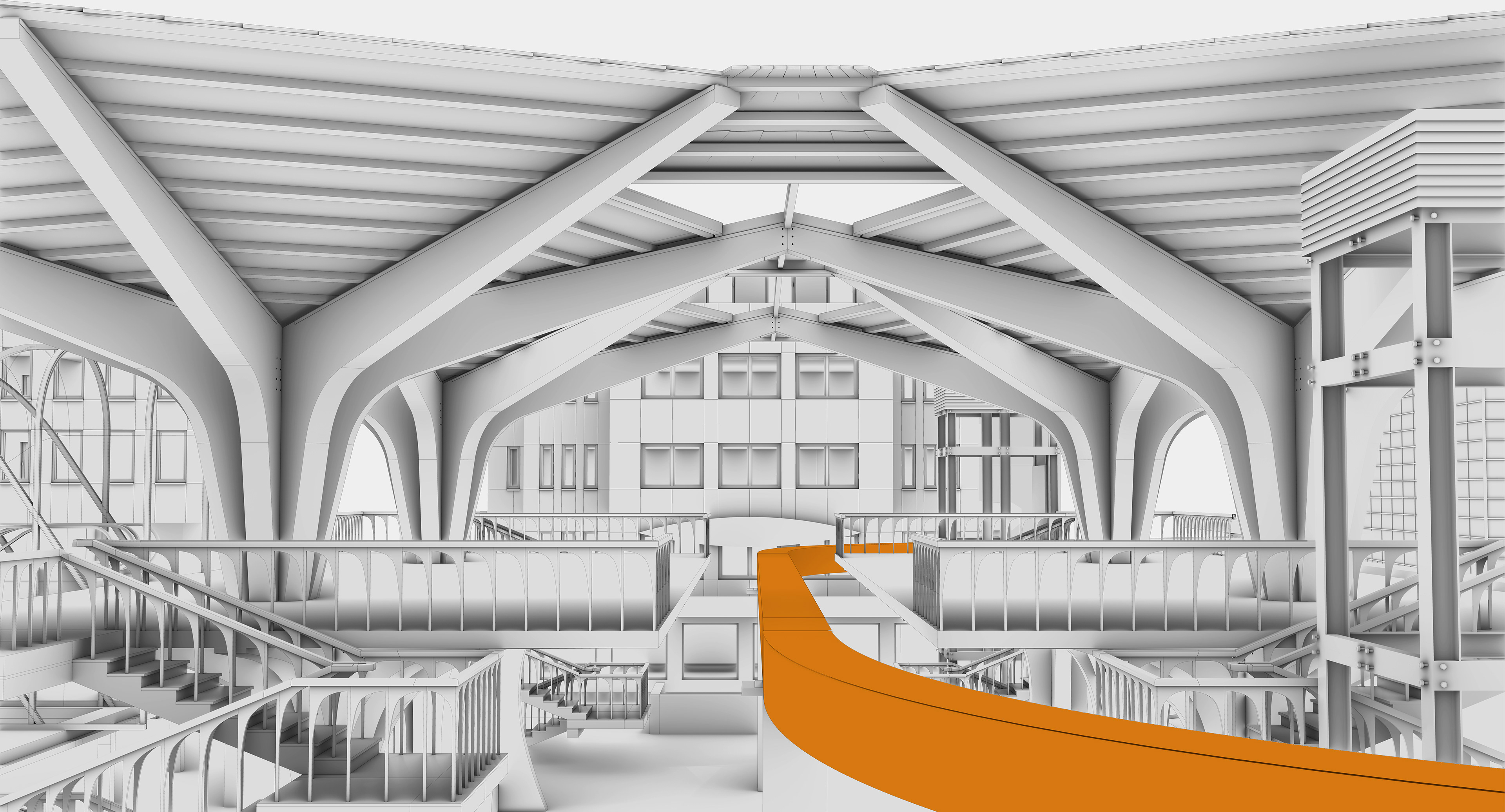
The station design at Vaduz Marktplatz transforms an infrastructure node into a multi-modal, biophilic hub. By elevating the mass transit network and liberating the ground plane, the design mitigates urban congestion, daylights natural systems, and establishes a clear hierarchy between high-speed regional transit and slow-paced civic life.
The project is organized around three primary strategic vectors: The Rehabilitated Spine, The Natural Social Belt, and The Unclogged Artery.
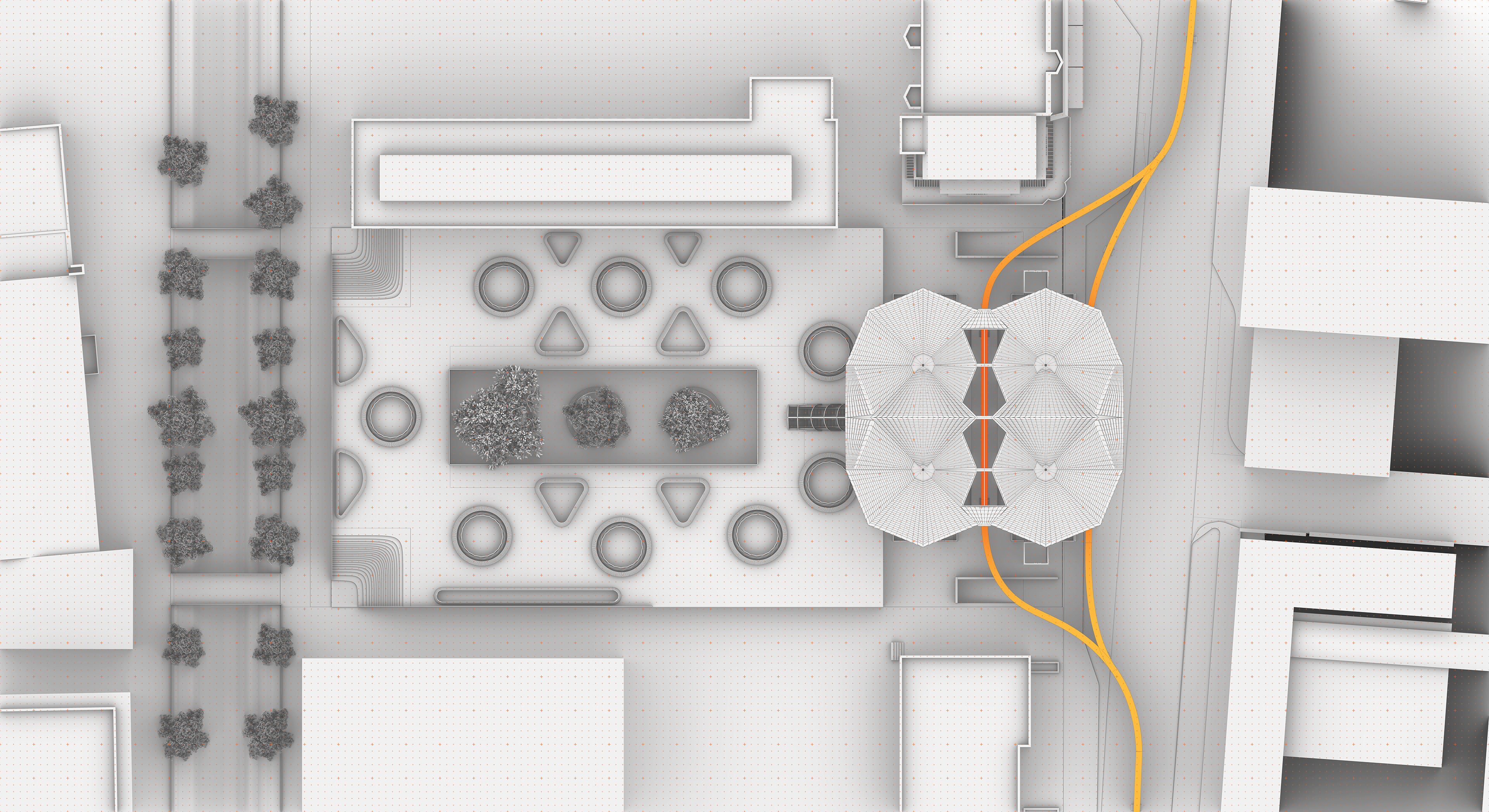
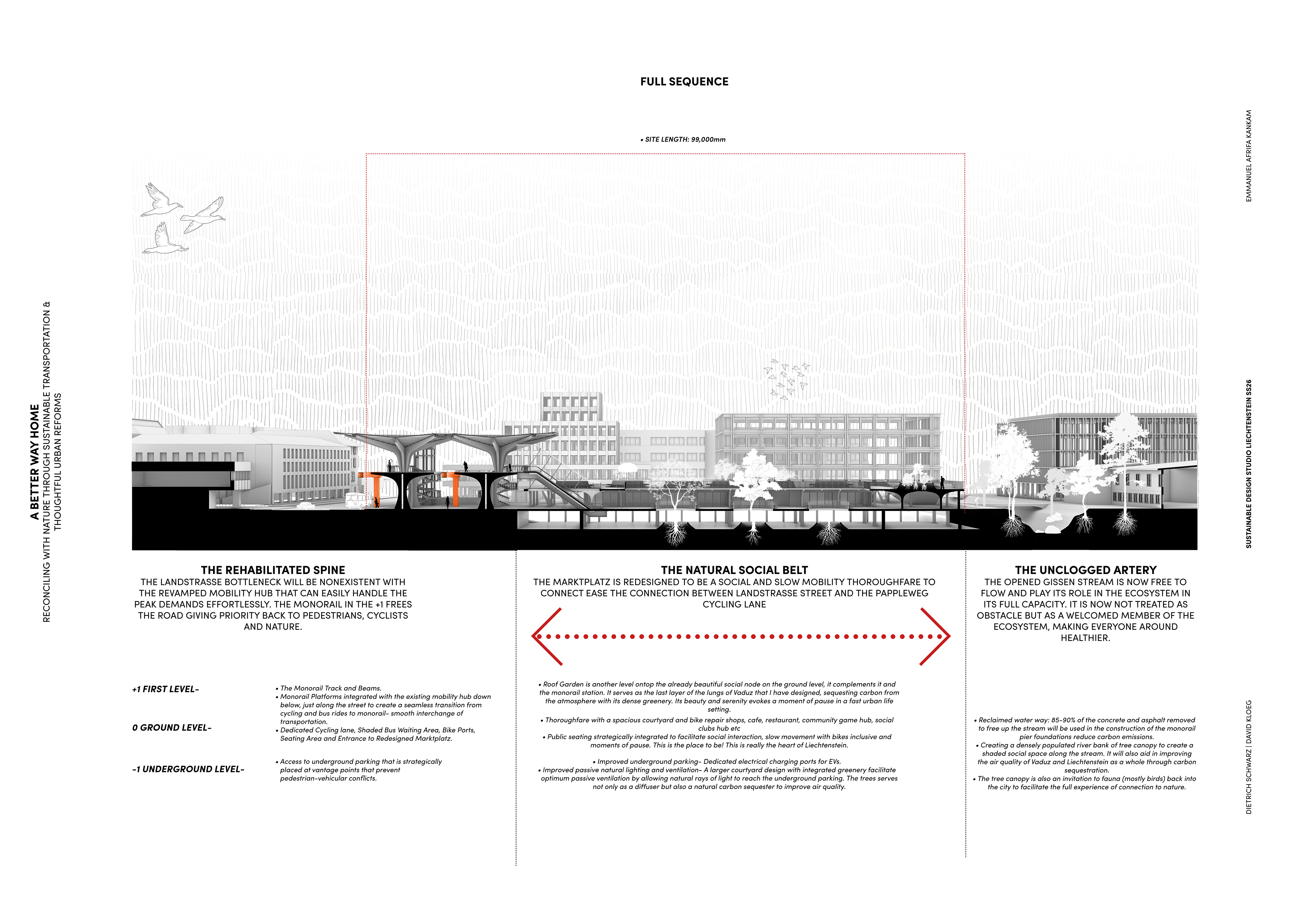
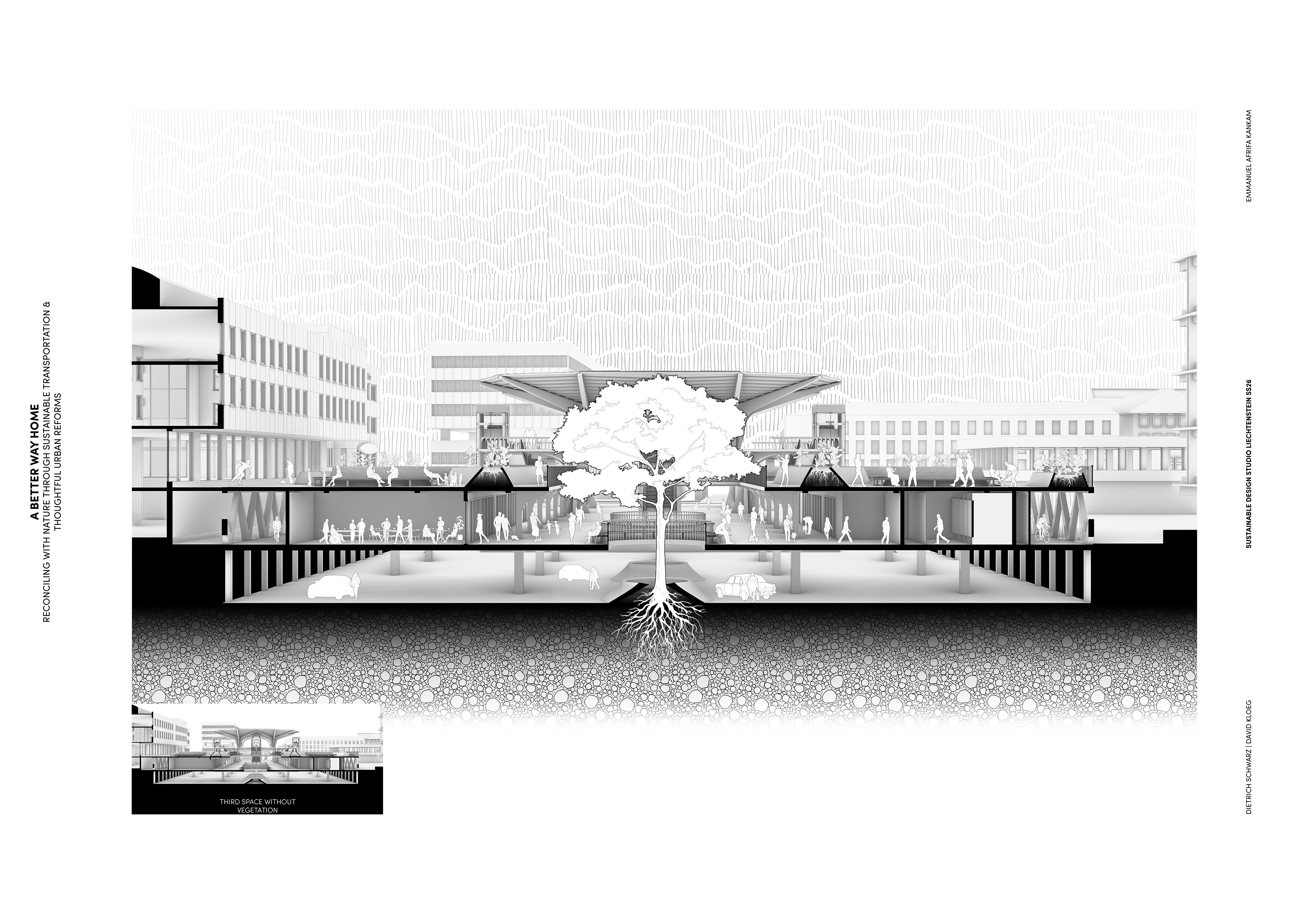
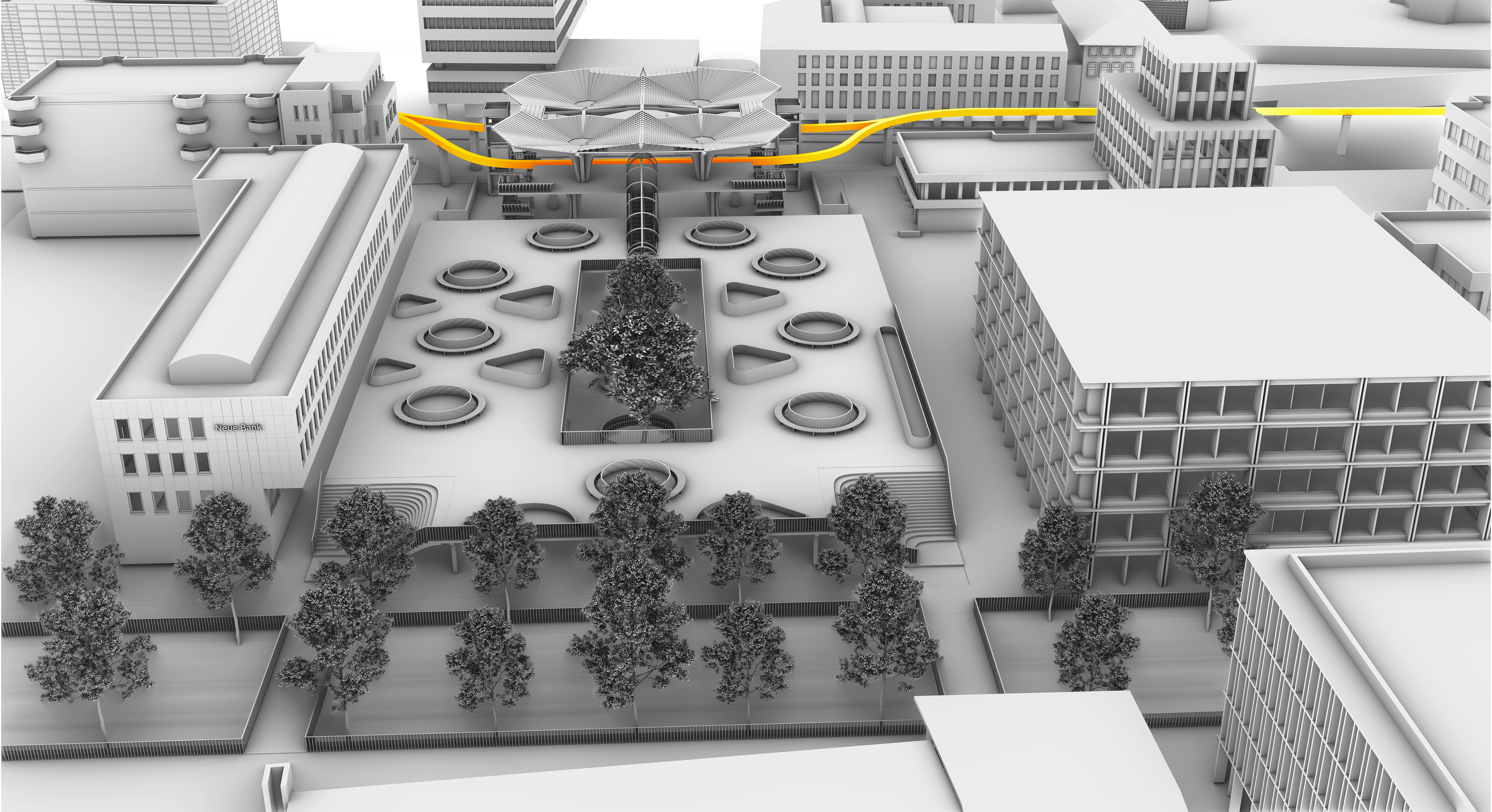
1. The Rehabilitated Spine (Landstrasse)
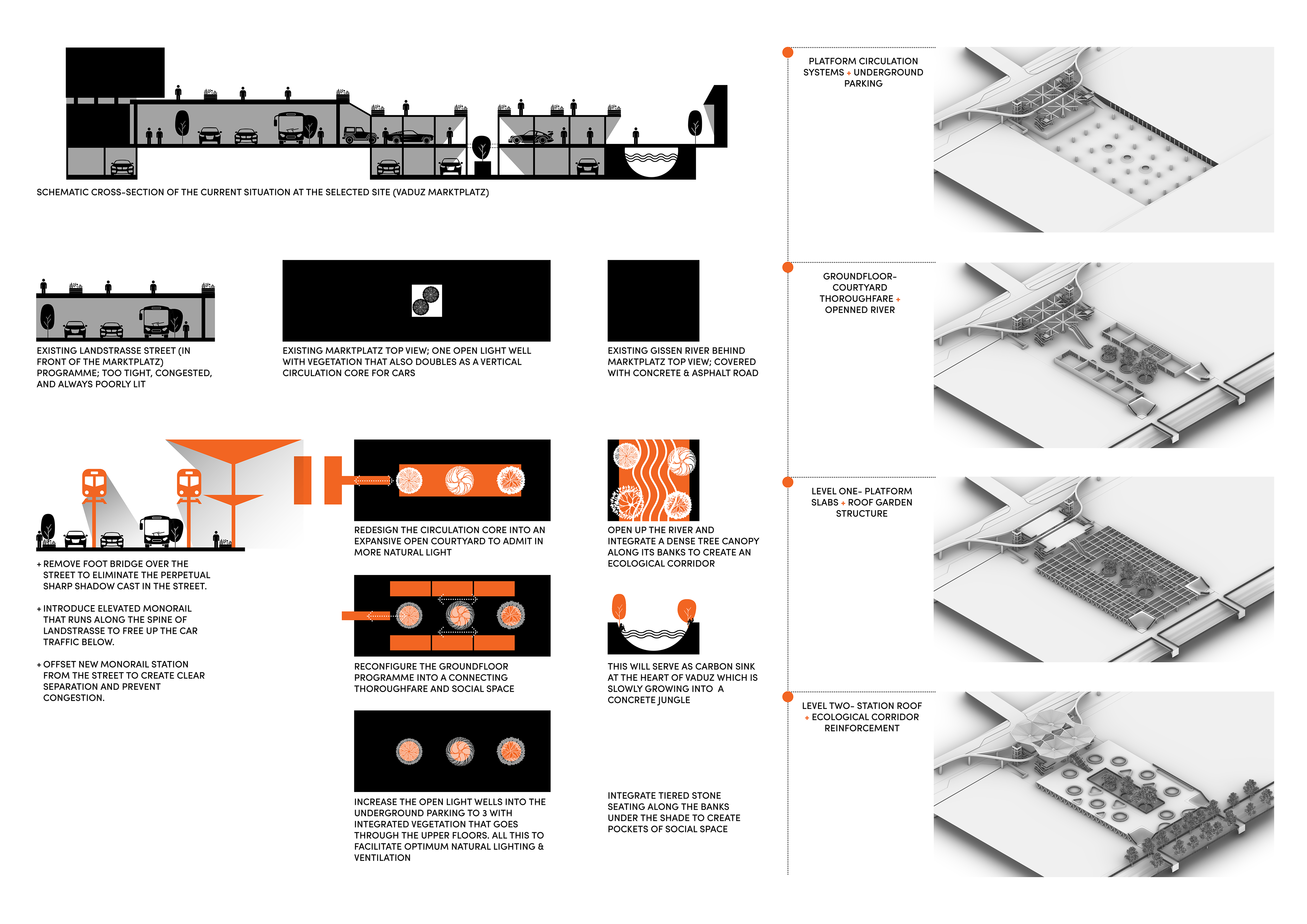
The existing vehicle-heavy Landstrasse is reconfigured by removing the pedestrian footbridge to eliminate harsh street-level shadows. Elevating the Intamin P100 monorail over the central spine frees up the ground plane, shifting commuter transit upward and prioritizing the street level for local traffic, wide pedestrian corridors, and dedicated cycling lanes governed by a 15 km/h speed limit.
2. The Natural Social Belt (Marktplatz)
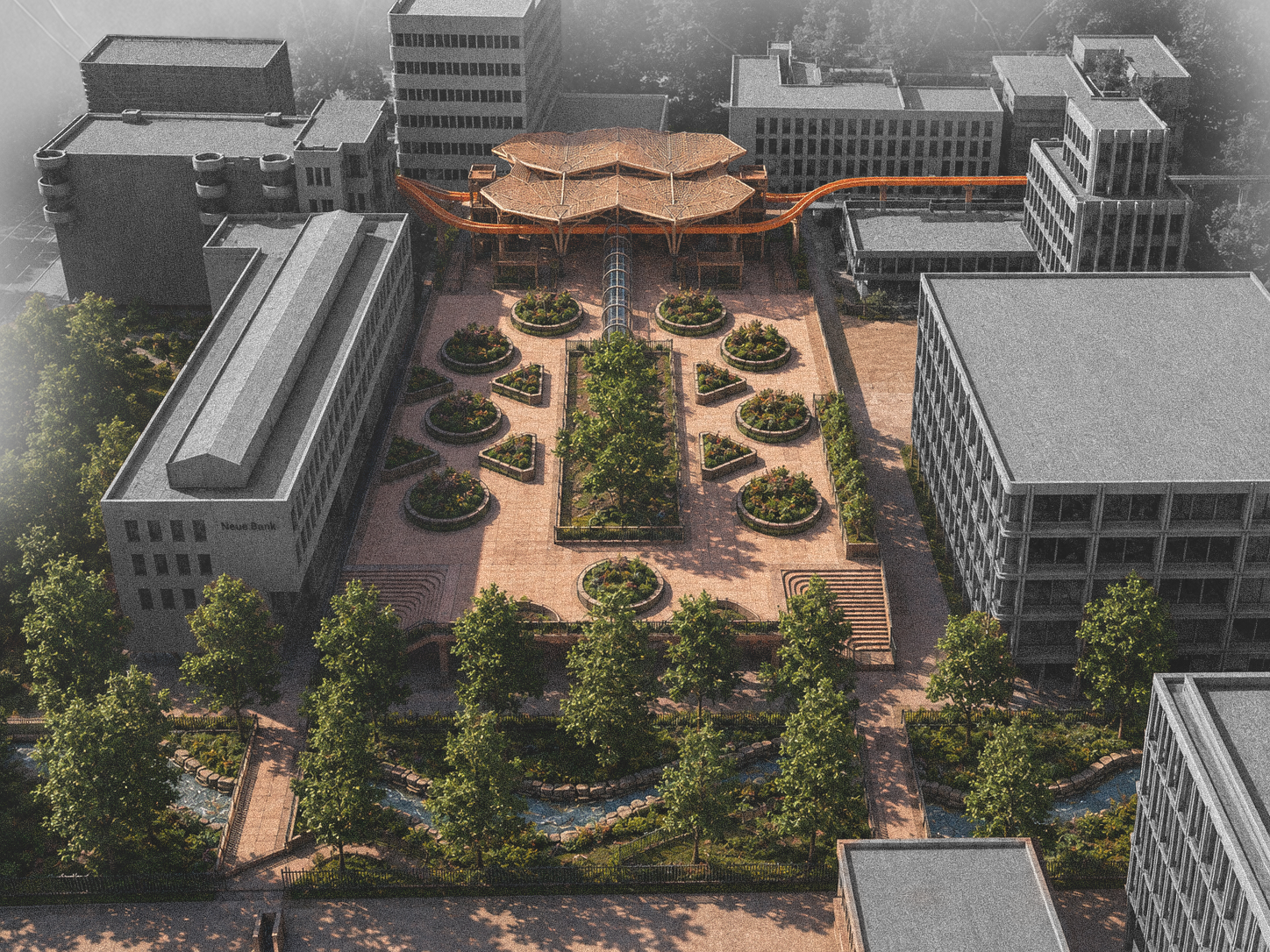
The central urban square is redesigned as a porous, slow-mobility park. The station's footprint is offset from the primary street axis to alleviate bottlenecks. A central courtyard layout introduces large vegetative openings that pierce the ground plane, providing natural daylighting and passive ventilation to the subterranean parking levels below.
3. The Unclogged Artery (Giessen Stream)
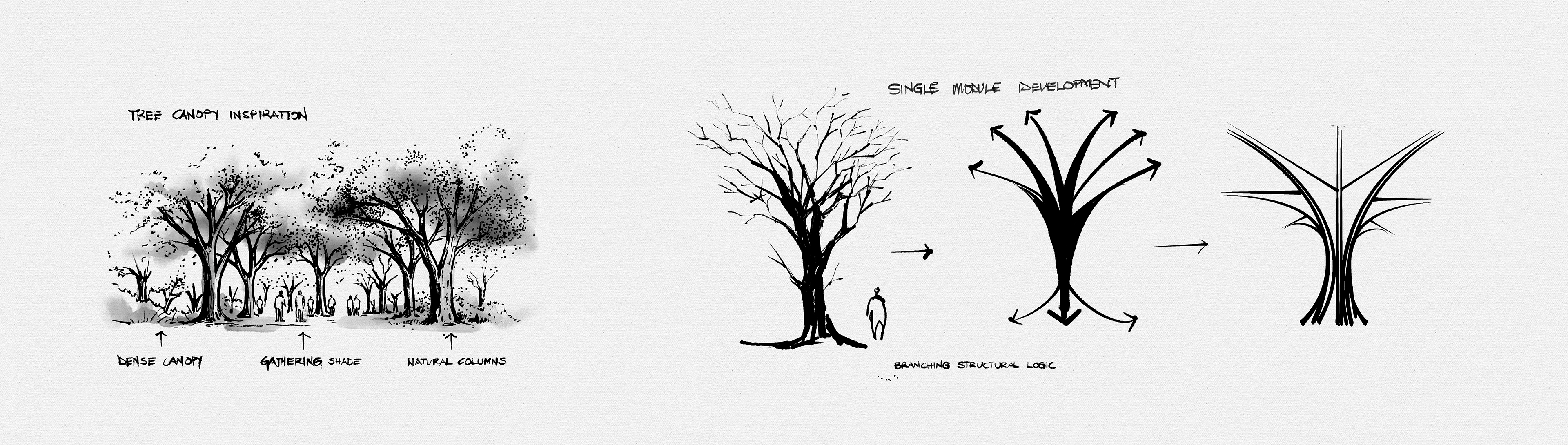
The existing Giessen Stream, previously buried beneath a concrete and asphalt roadway, has been daylighted, reclaiming 85% to 90% of its original water space. The unroofed stream functions as an urban carbon sink and microclimatic cooling agent via evapotranspiration. Its banks are reinforced using natural tiered stone seating shaded by a dense canopy of dioecious trees.
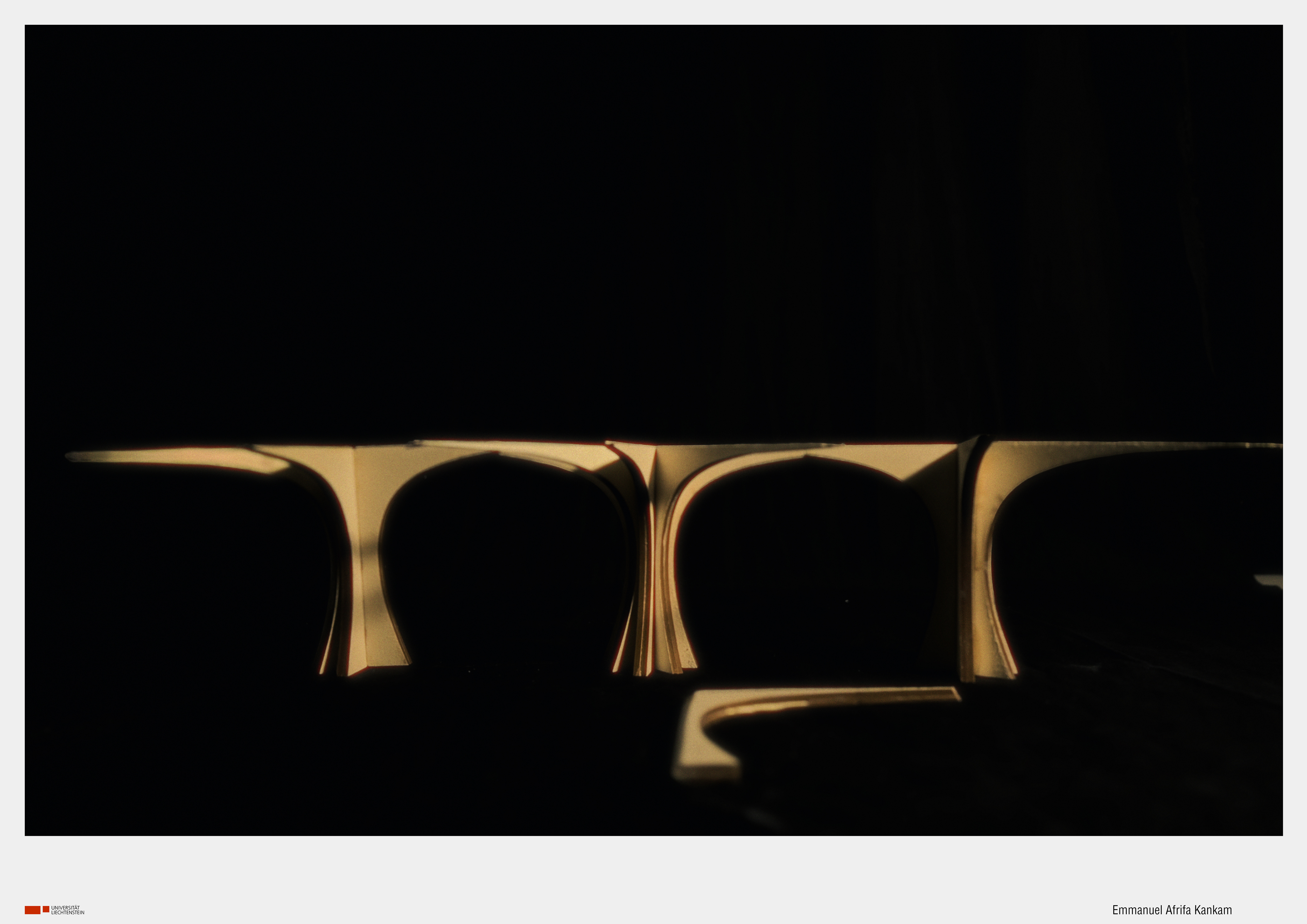
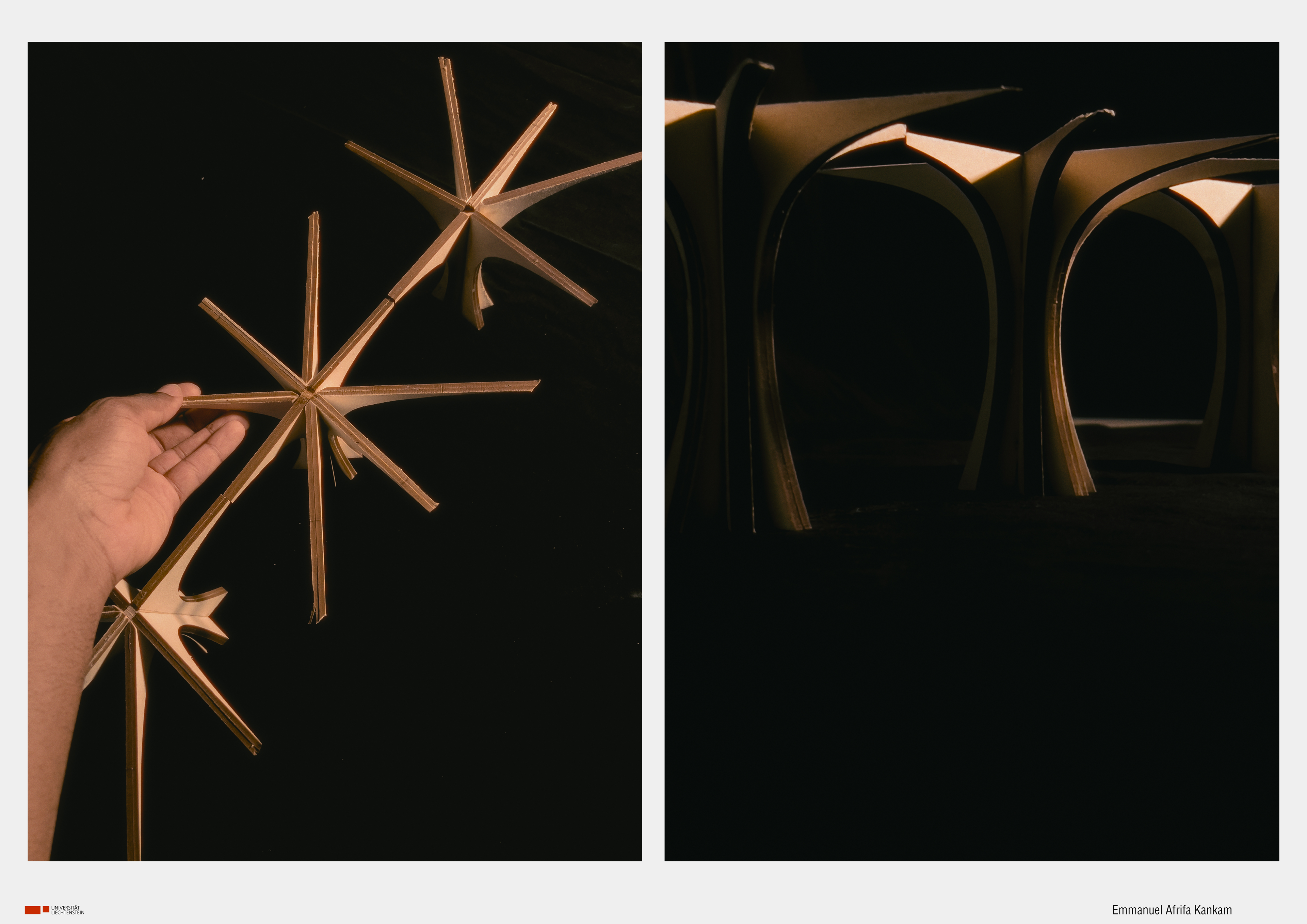
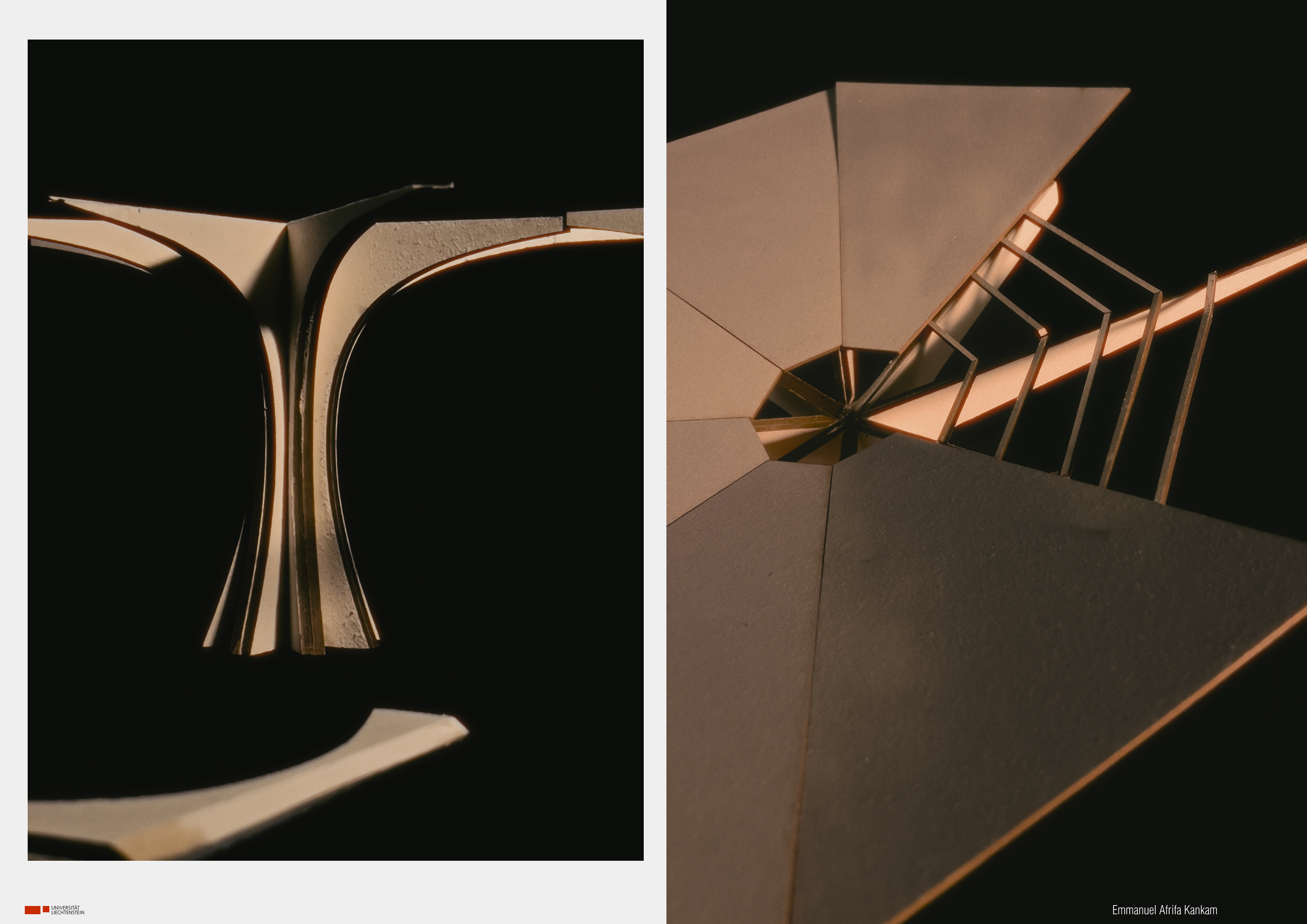
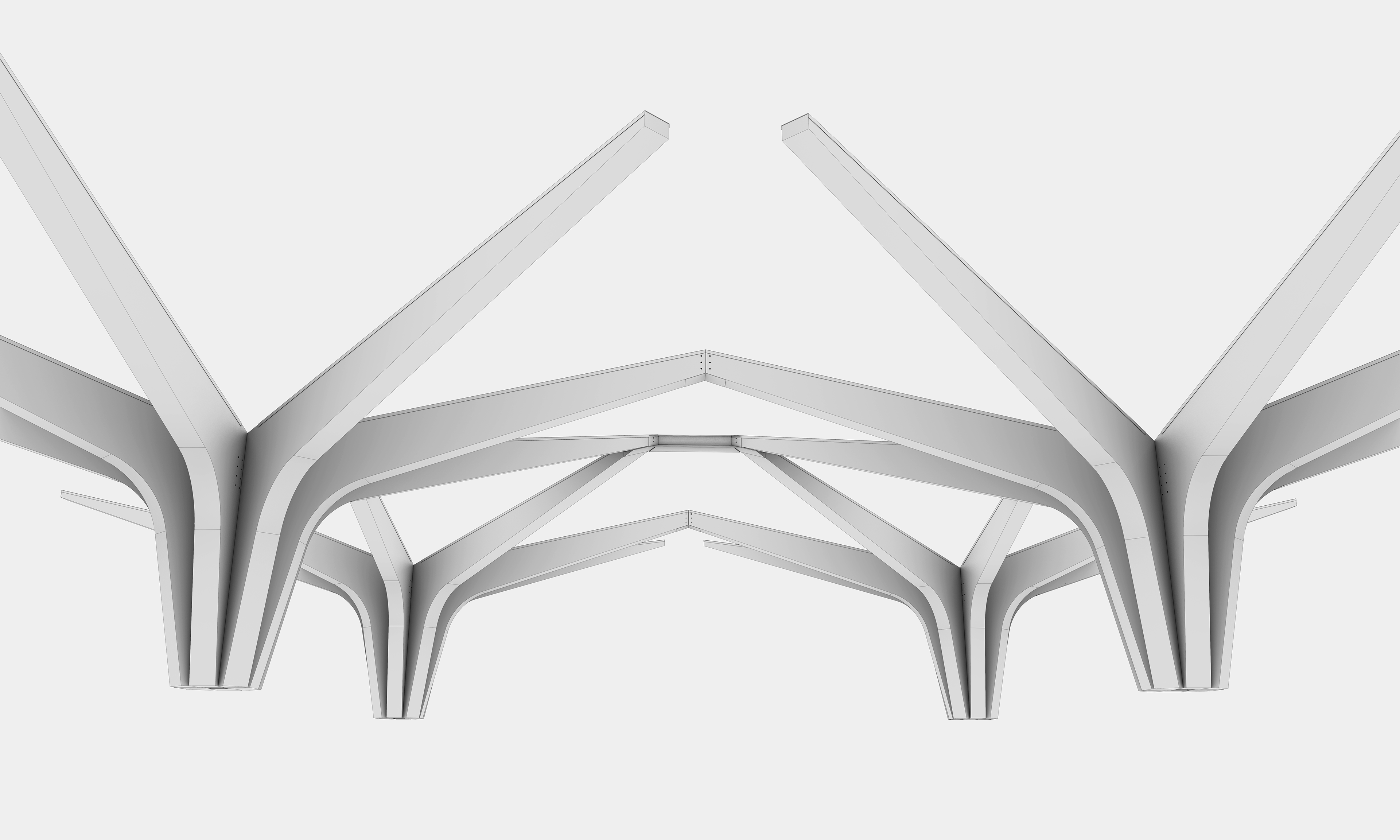
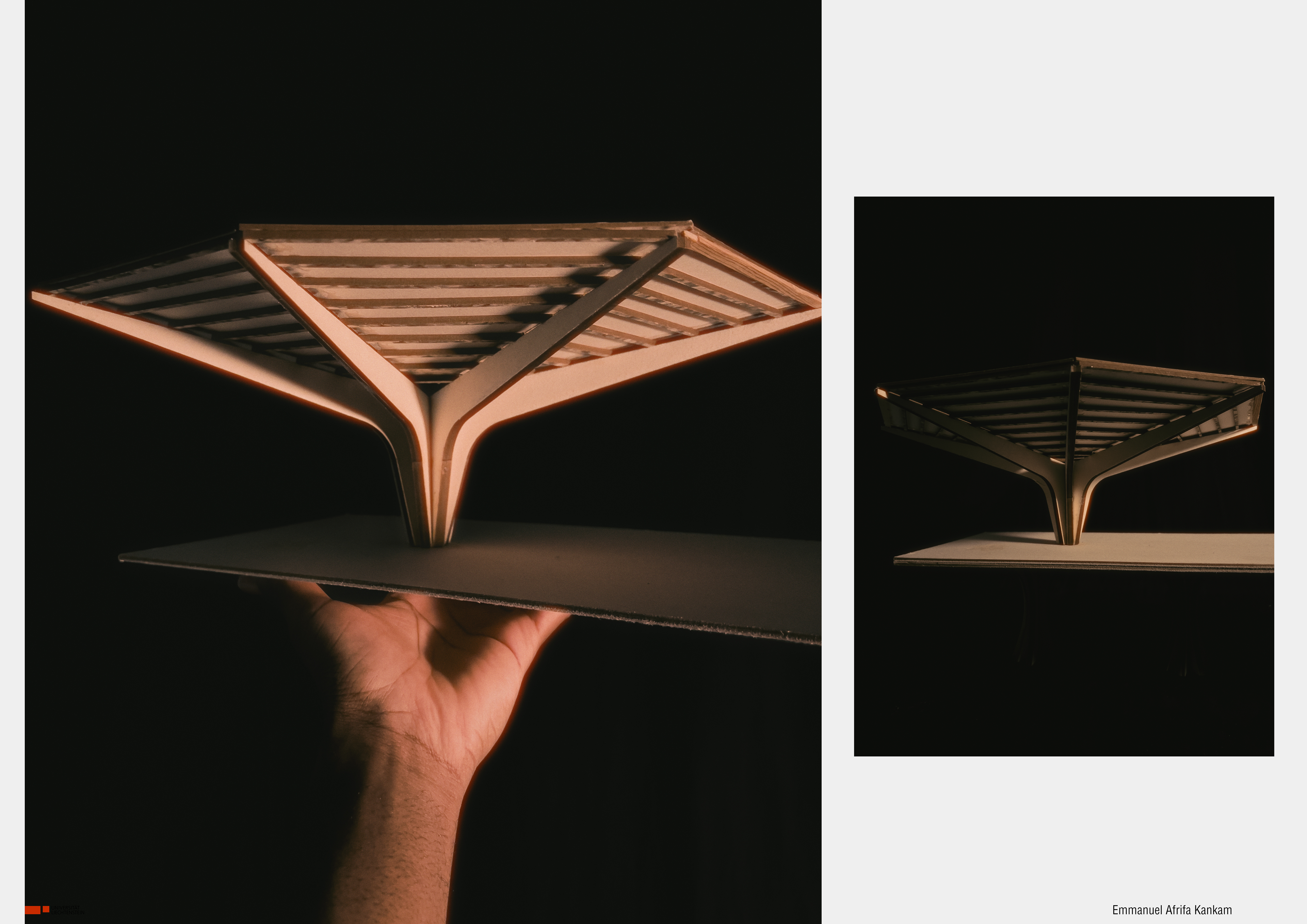
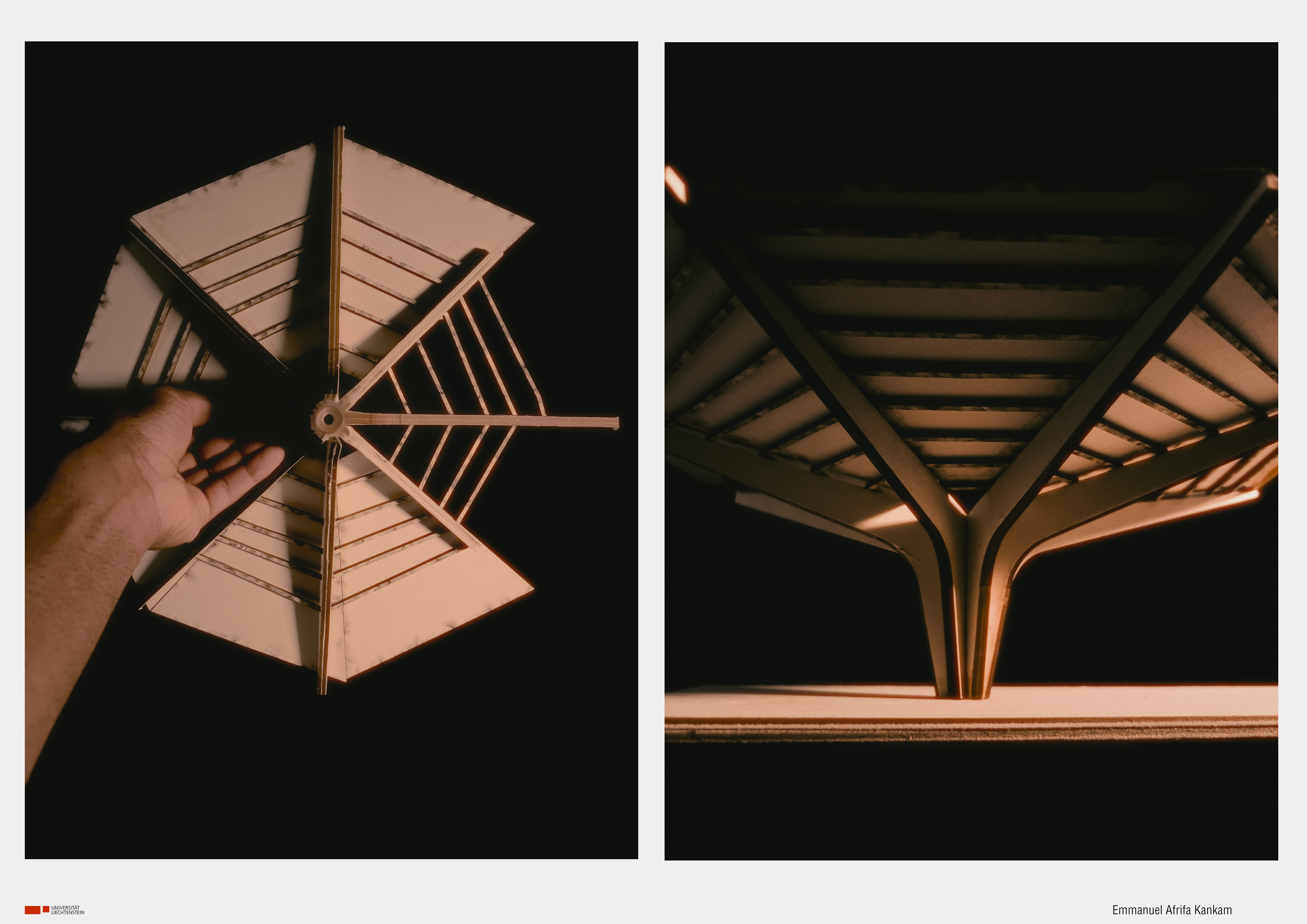
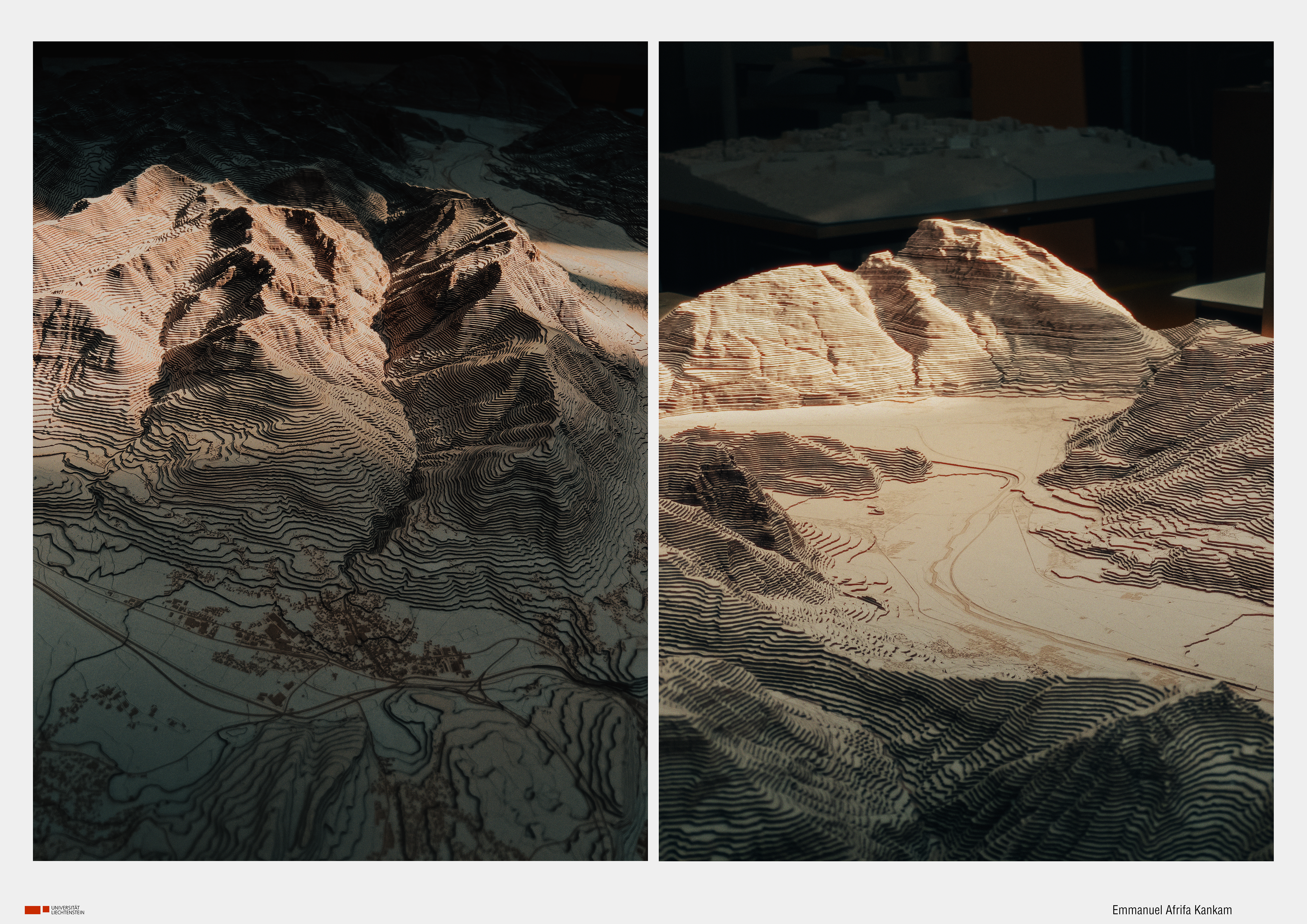
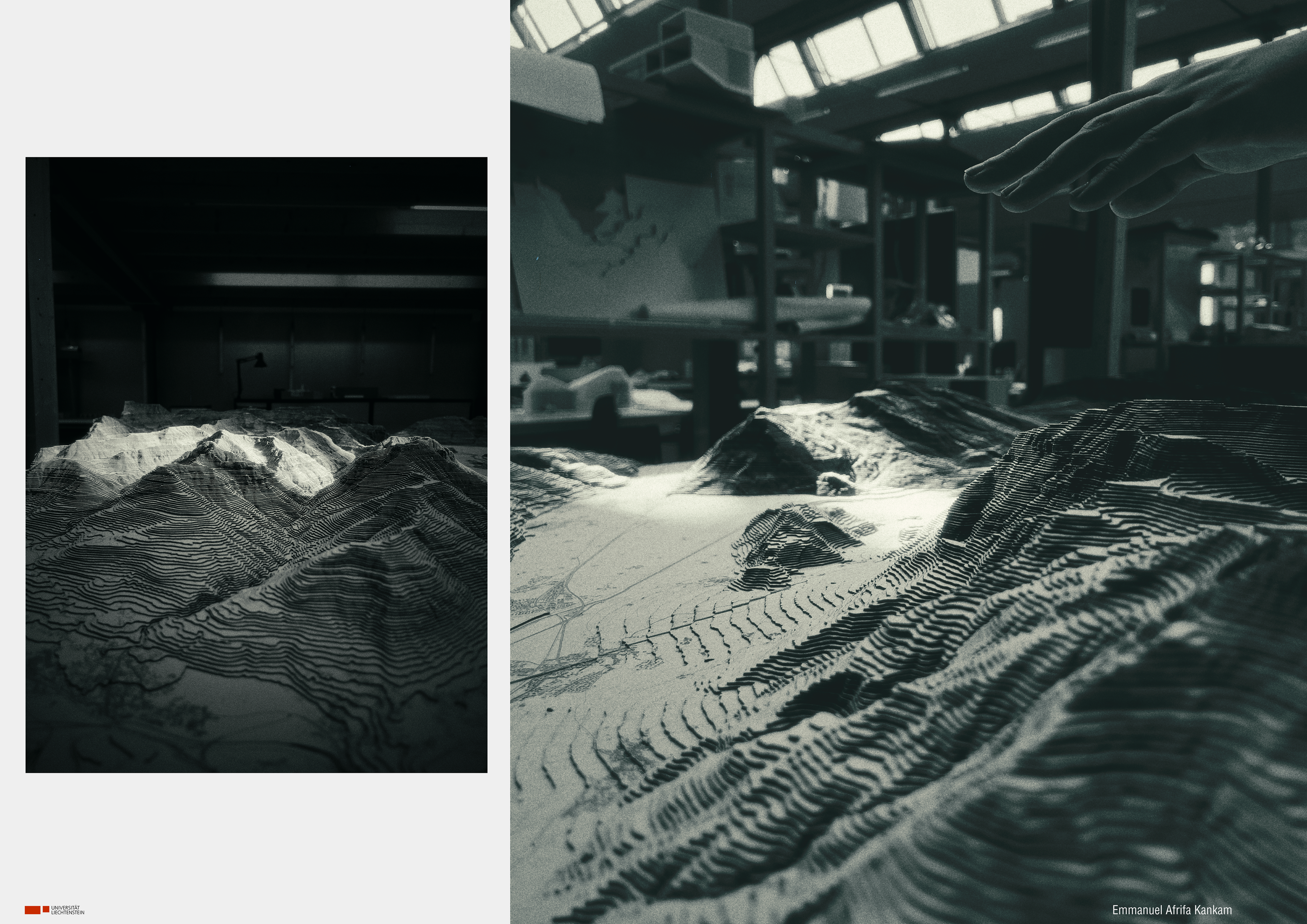
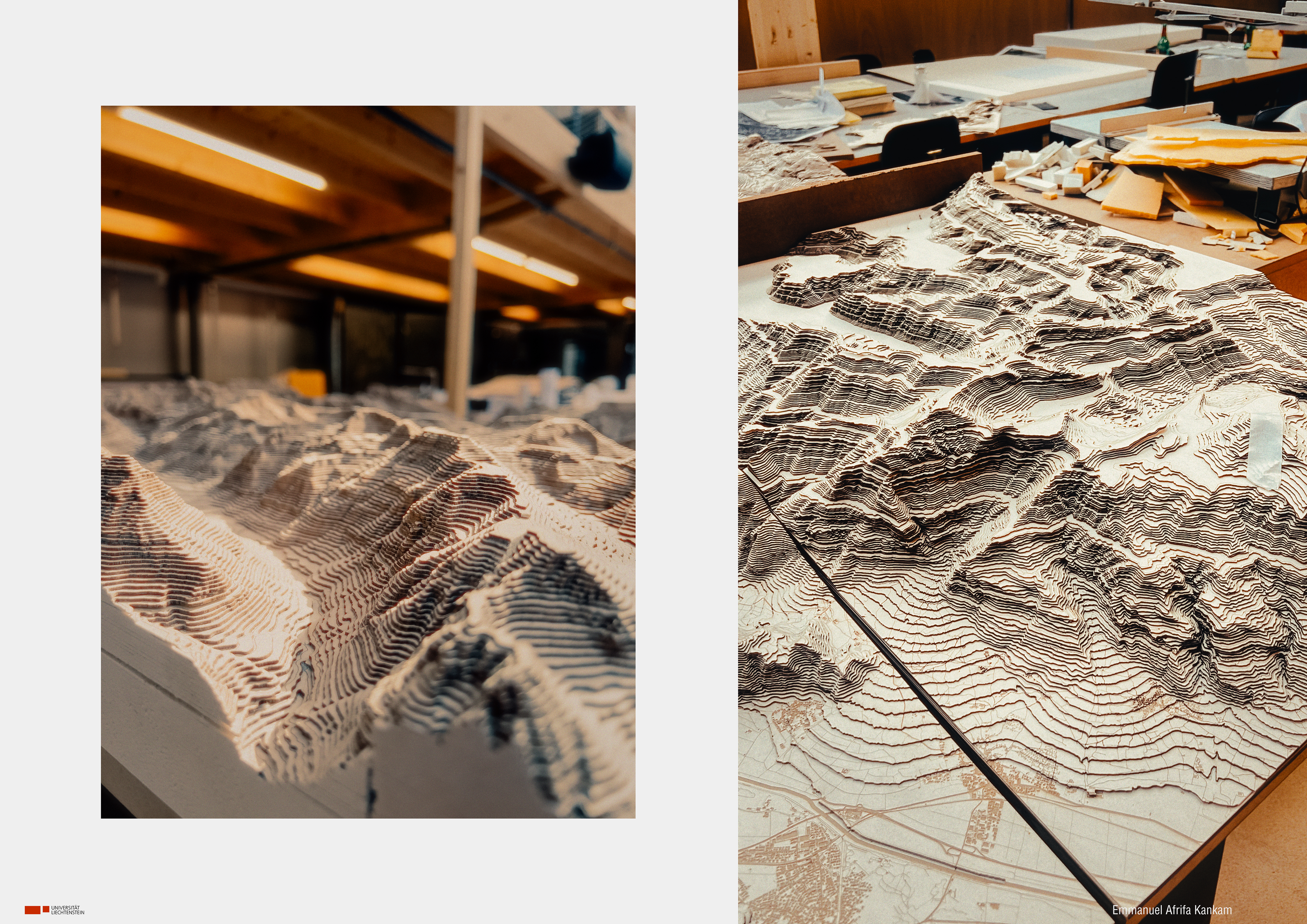
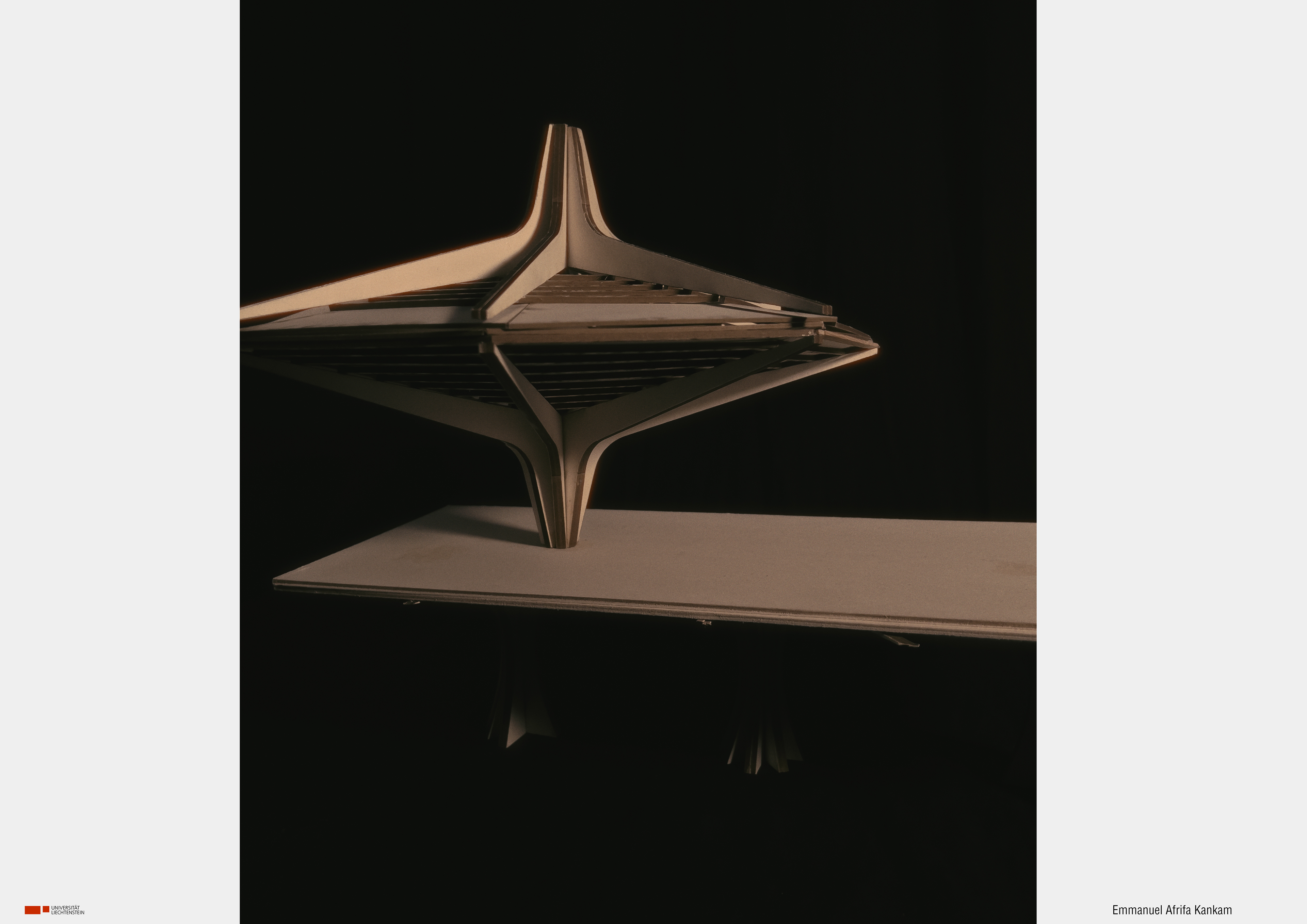
BELOW ARE SOME DISCARDED IDEAS I Tested out